

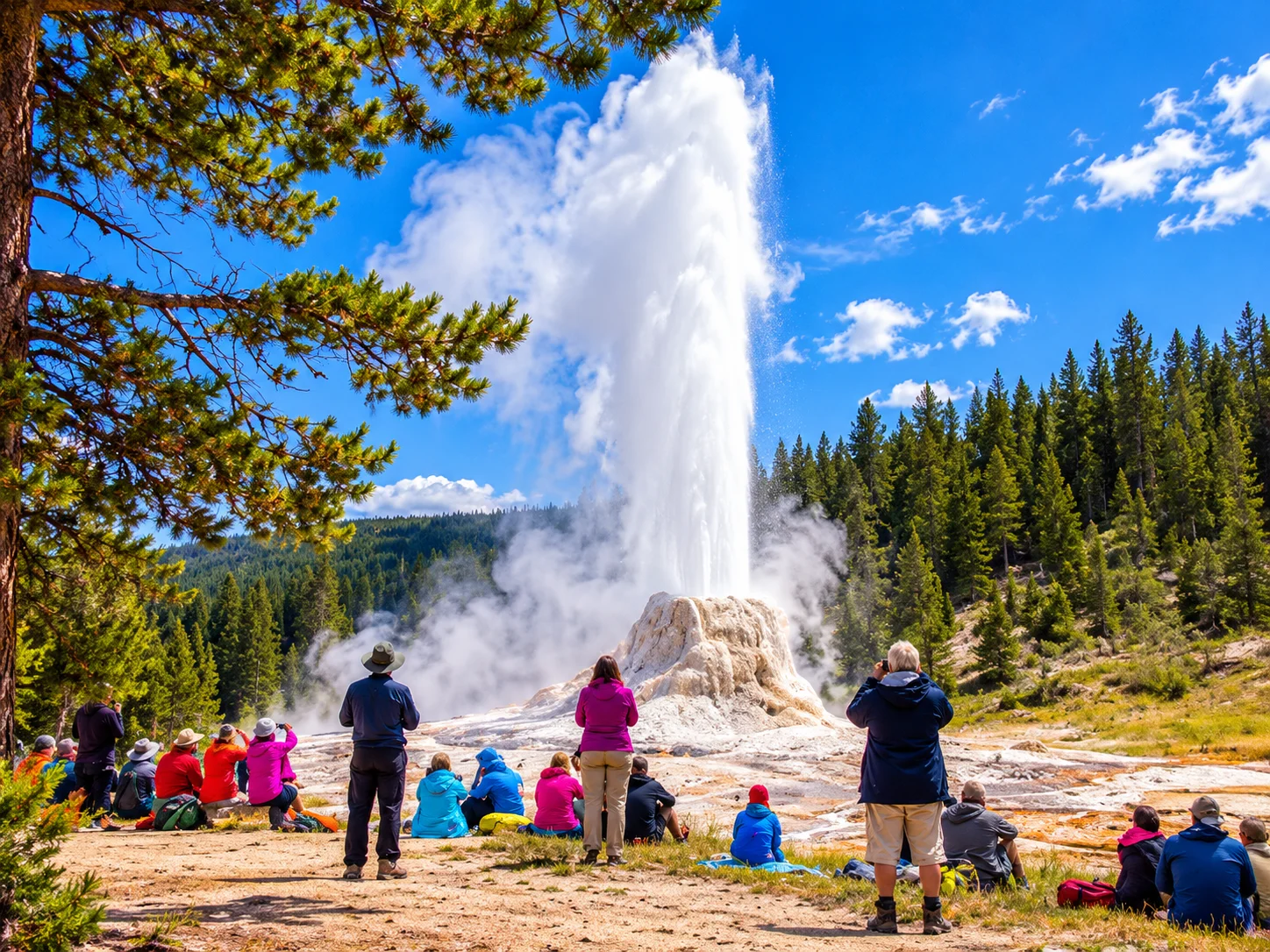
Here’s what nobody tells you before your first trip. The most dangerous thing in Yellowstone isn’t the grizzlies. It’s the drive between the Yellowstone National Park attractions you came to see. The leading cause of visitor death in the park is car crashes on those narrow, winding, bison-jammed roads, and the reason so many first-timers end up frazzled instead of awestruck comes down to one miscalculation: they treat the map like a theme park where the rides are close together. They are not. Old Faithful to Lamar Valley is a two-hour drive on a good day, longer when a herd decides the road is theirs.
So this guide does the thing most listicles skip. It tells you which Yellowstone National Park attractions are worth your limited hours, how far apart they actually sit, and where the crowds thin out. Consider it the version a friend who’s driven those loops would give you over coffee, not the brochure. We’ll cover everything a first-timer needs, from the don’t-miss sights to what the trip costs in 2026.
How Big Is Yellowstone National Park? (Bigger Than You Think)
Start here, because the scale changes how you plan everything else.
Yellowstone covers 2.2 million acres, or about 3,472 square miles. That’s larger than Rhode Island and Delaware combined. The park stretches 63 miles north to south and 54 miles east to west, spilling across three states. Most of it sits in Wyoming (96%), with slivers reaching into Montana (3%) and Idaho (1%).
There are five entrances, 466 miles of road, and roughly 1,000 miles of hiking trails threaded through it all. The two main driving routes, the Upper Loop and the Lower Loop, form a rough figure-eight. Most of the famous attractions in Yellowstone National Park hang off those two loops like beads on a string.
Yellowstone National Park Facts That Put the Geology in Perspective
The park holds more than 10,000 hydrothermal features and over 500 active geysers, which is more than half the geysers on the entire planet. It sits on top of a supervolcano, the Yellowstone Caldera, roughly 45 miles across at its widest. The last major eruption was around 640,000 years ago. Yellowstone Lake, near the heart of the park, is the largest high-elevation lake in North America. And there are nearly 290 waterfalls, though only a handful have official names.
Why does size matter for your itinerary? Because the real speed limit isn’t the posted 45 mph. Add traffic, construction, and bison crossings, and you’ll average closer to 25. Budget your day around that number and you’ll never feel rushed.
Top Yellowstone National Park Attractions Every First-Timer Should See
You could spend a month here and not run out of things to see. On a first trip, though, a handful of sights carry the weight. These are the ones you build the trip around.
Old Faithful and the Upper Geyser Basin
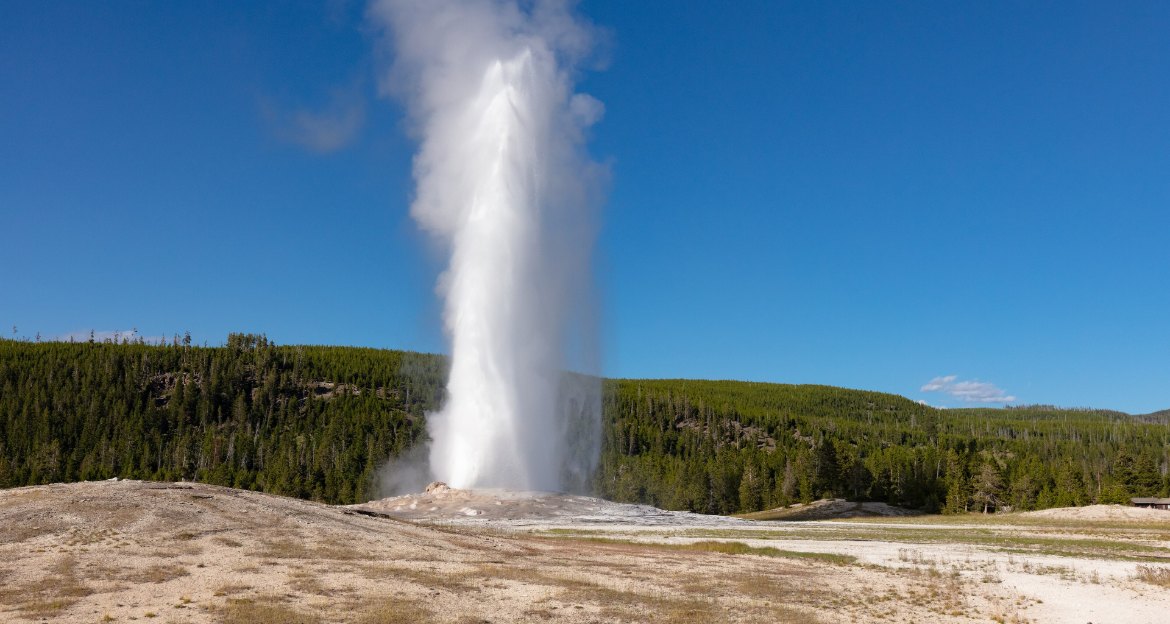
The most famous geyser on Earth erupts every 60 to 110 minutes, sending boiling water 100 to 185 feet into the sky. The National Park Service posts the next predicted eruption at the visitor center, on a sign by the geyser, and inside the historic Old Faithful Inn. Download the GeyserTimes app before you go so you’re not guessing.
Here’s the local move most guides miss: don’t just watch from the packed boardwalk benches and leave. The surrounding Upper Geyser Basin holds the world’s densest cluster of geysers, and a short walk gets you to Castle, Grand, and Riverside with a fraction of the crowd. If you want the postcard shot, hike the 1.1-mile round trip to Observation Point for a bird’s-eye view over the whole spectacle.
Grand Prismatic Spring (and the Overlook Mistake)
This is the rainbow-colored hot spring you’ve seen in every article about the park, that 370-foot pool ringed in orange, gold, and deep blue. The colors come from heat-loving bacteria living at different temperatures around the rim.
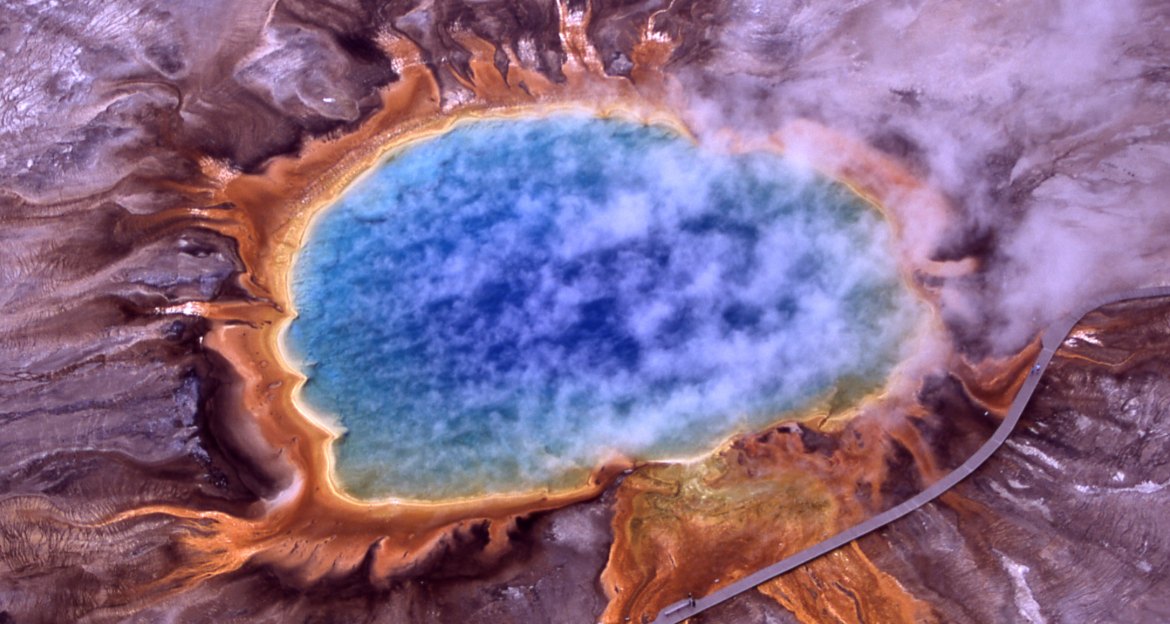
Now the part that saves your trip: most first-timers park at Midway Geyser Basin, walk the boardwalk right up to the edge, and see mostly steam and a sliver of color at ground level. That’s the disappointing angle. To get the aerial rainbow view that made the spring famous, drive about a mile to the Fairy Falls trailhead and hike roughly half a mile up to the Grand Prismatic Overlook. Only from above do the colors read the way the photos promise. Skipping this is the number-one regret first-timers post about afterward.
Grand Canyon of the Yellowstone
Bright yellow volcanic walls, a V-shaped gorge, and Lower Falls thundering 300 feet down into it. The color is where the park gets its name.
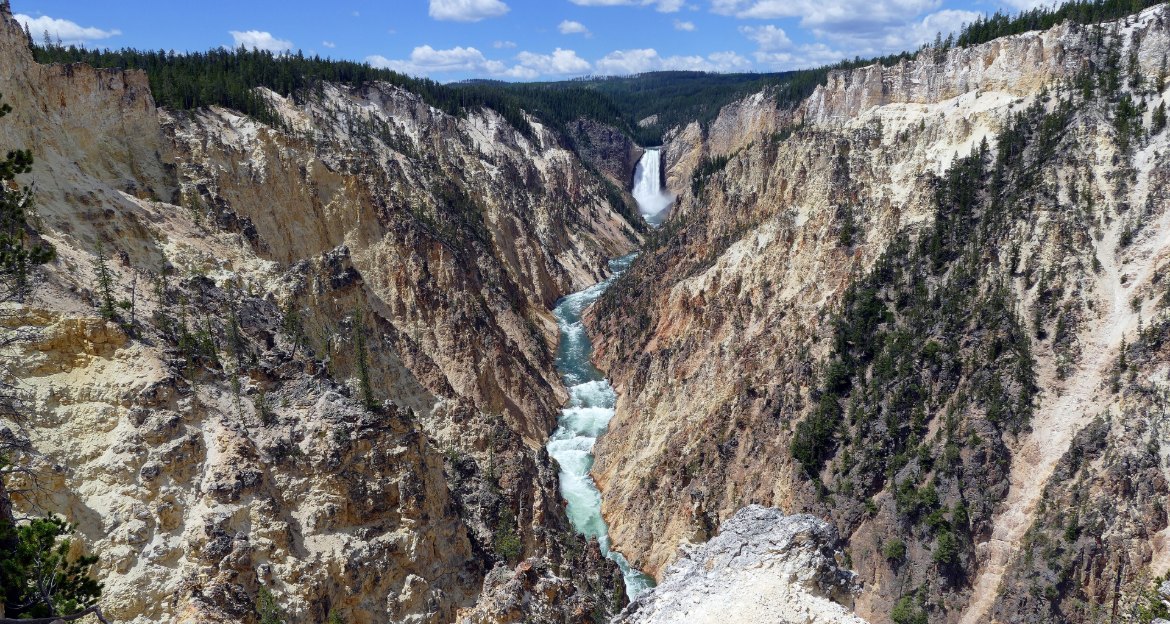
Hit Artist Point on the South Rim for the classic view of the falls, then drive the North Rim for Lookout Point and the top of Lower Falls. Early morning light turns the canyon walls gold, so this is a good sunrise stop if you’re staying nearby at Canyon Village.
Mammoth Hot Springs
Up in the park’s northwest corner sit the travertine terraces of Mammoth, which look less like a hot spring and more like a frozen white waterfall built from limestone. Boardwalks wind through the upper and lower terraces. The formations shift year to year as the water changes course, so what you see won’t match last season’s photos. Elk often lounge on the lawns of the old Fort Yellowstone National Park Attractions buildings nearby, unbothered by the crowds.
Lamar and Hayden Valleys (Where the Wildlife Lives)
If you came for bison, wolves, elk, and the chance of a grizzly, this is where you go. Lamar Valley in the northeast gets called “America’s Serengeti” for good reason. Hayden Valley, in the center of the park, is prime bison and grizzly territory in spring and early summer.
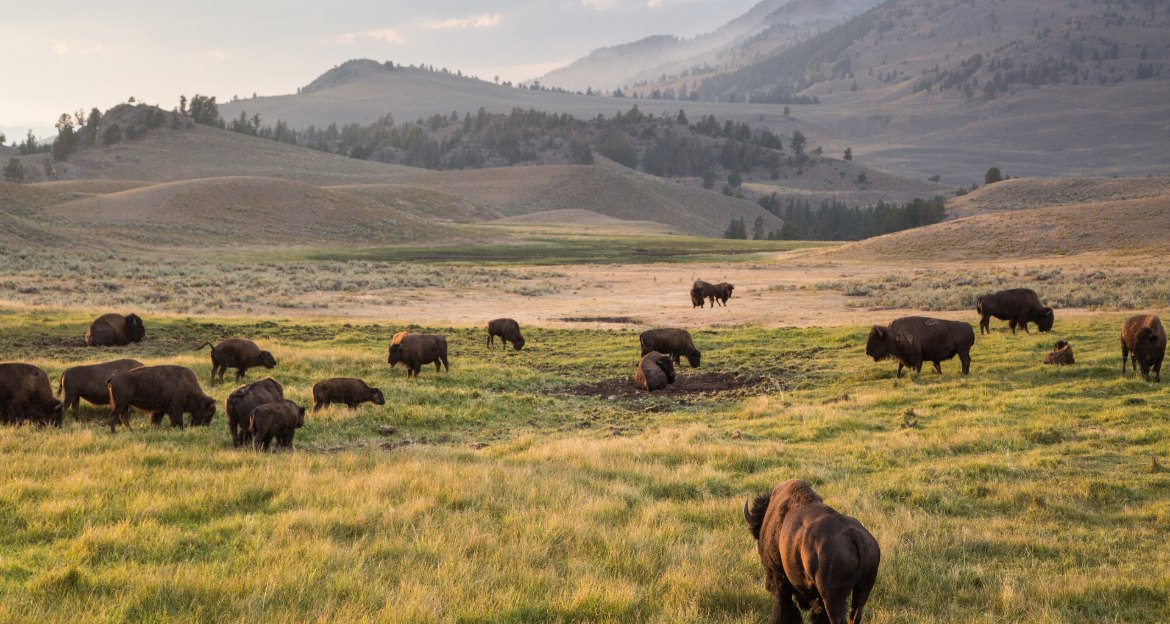
The rules are simple and non-negotiable: dawn and dusk are when animals move, and midday is mostly a wildlife dead zone. Bring binoculars or a spotting scope. And look for the wolf-watchers, the folks with lawn chairs and huge scopes parked at pullouts. They’ve usually already found what you’re hoping to see, and most are happy to let you look.
Keep your distance. The park requires at least 25 yards from bison and elk and 100 yards from bears and wolves. Bison injure more people here than any other animal, and they run three times faster than you.
Norris Geyser Basin
The hottest and most changeable thermal area in the park, and one where the crowds thin out. Steamboat Geyser here is the tallest active geyser in the world, though it erupts on no schedule anyone can predict. Even without a major eruption, the alien, bleached landscape of Norris is worth the stop.
More Attractions in Yellowstone National Park Beyond the Boardwalk
Ticking off the headline Yellowstone National Park attractions is the easy part. The trips people remember tend to include a few things that aren’t on the top-ten lists.
Wade into the Firehole River swim area in summer, where thermal runoff takes the chill off the river (it’s seasonal, and the popular Boiling River soak has been closed since the 2022 floods, so check current conditions before you go). Paddle a kayak on Yellowstone National Park Attractions Lake at first light. Drive the Beartooth Highway just outside the Northeast Entrance, a road so scenic it’s been called the most beautiful drive in America, which reopened for the season on May 22, 2026.
Or walk one of the lesser-known basins a local guide would send you to: Black Sand Basin, West Thumb along the lakeshore, or the eerie hiss of Roaring Mountain. They deliver the same geothermal drama as the marquee spots with a fraction of the foot traffic.
When to Visit Yellowstone National Park Attractions: Seasonal Information
Timing shapes your trip more than almost any other choice.
Summer (July to August) is peak everything. Full road access, all facilities open, warm days, and the biggest crowds of the year. If you visit then, the single best thing you can do is start before 8 a.m. The busy hours run roughly 10 a.m. to 6 p.m., and Old Faithful and Canyon jam up hard in that window. Get in early, see the popular sights, and you’ll swear you visited a different park than the afternoon arrivals did.
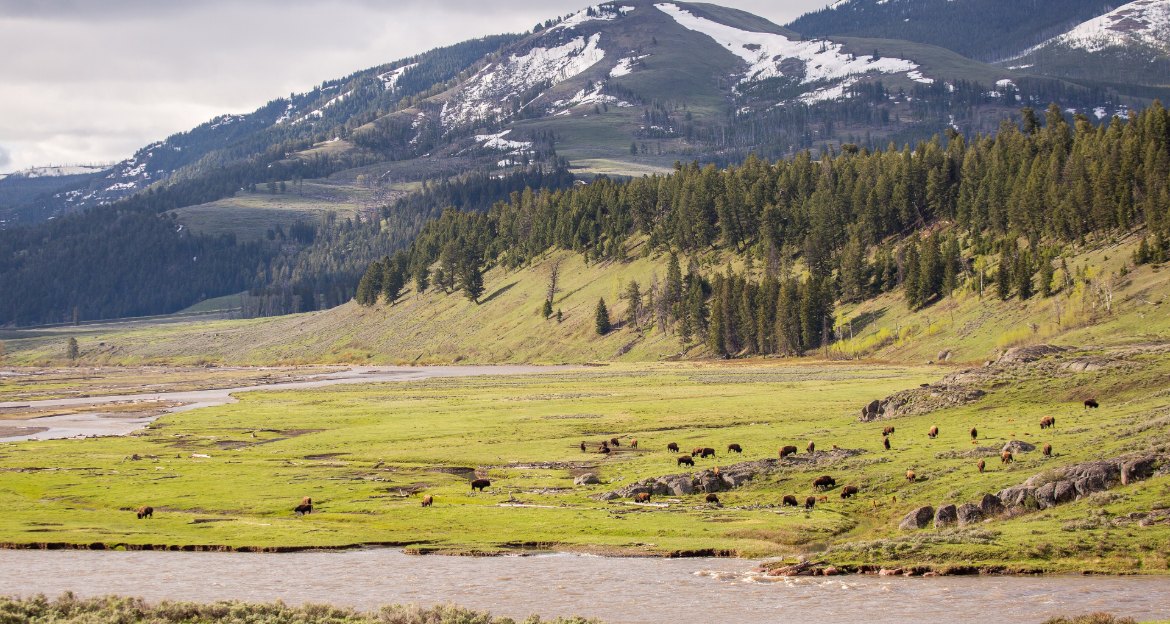
Late spring (May to June) brings baby bison, active bears emerging from dens, and fewer people, though some high roads open late. Dunraven Pass between Canyon and Tower, for instance, opened May 22 in 2026.
Fall (September to October) is the sweet spot many repeat visitors swear by. Thinner crowds, elk bugling during the rut, and crisp light for photos. Visiting after Labor Day is the easiest way to dodge the summer crush.
Winter transforms the place into a snowbound wilderness reachable only by snowcoach or snowmobile from the west and south entrances. It’s magic, and it’s a completely different (and more expensive) kind of trip.
Travel Costs: What Yellowstone Runs in 2026
Good news for the base cost: it’s cheap for what you get.
The entrance fee is $35 per private vehicle, valid for seven days, and it covers everyone in the car. That same pass also gets you into neighboring Grand Teton National Park, which is one of the best deals in the park system.
One important 2026 change to know about. Starting January 1, 2026, the Department of the Interior added a $100 surcharge for non-U.S. residents at eleven of the busiest parks, Yellowstone included, on top of the standard entry fee. A U.S. resident annual America the Beautiful pass still runs $80, while the non-resident annual pass is now $250. To get the resident price on an annual pass, you’ll need to enter a ZIP code and show a photo ID.
Beyond the gate, your real costs are lodging and gas. In-park lodges (Old Faithful Inn, Canyon Lodge, and Lake Yellowstone National Park Attractions Hotel) book out six months to a year ahead and cost a premium. Gateway-town hotels and campgrounds run cheaper. Fuel adds up fast given how much you’ll drive, so factor that in.
Insider Tips: What Most Guides Get Wrong
This is where the trip gets good or falls apart. A few things the promotional content won’t tell you:
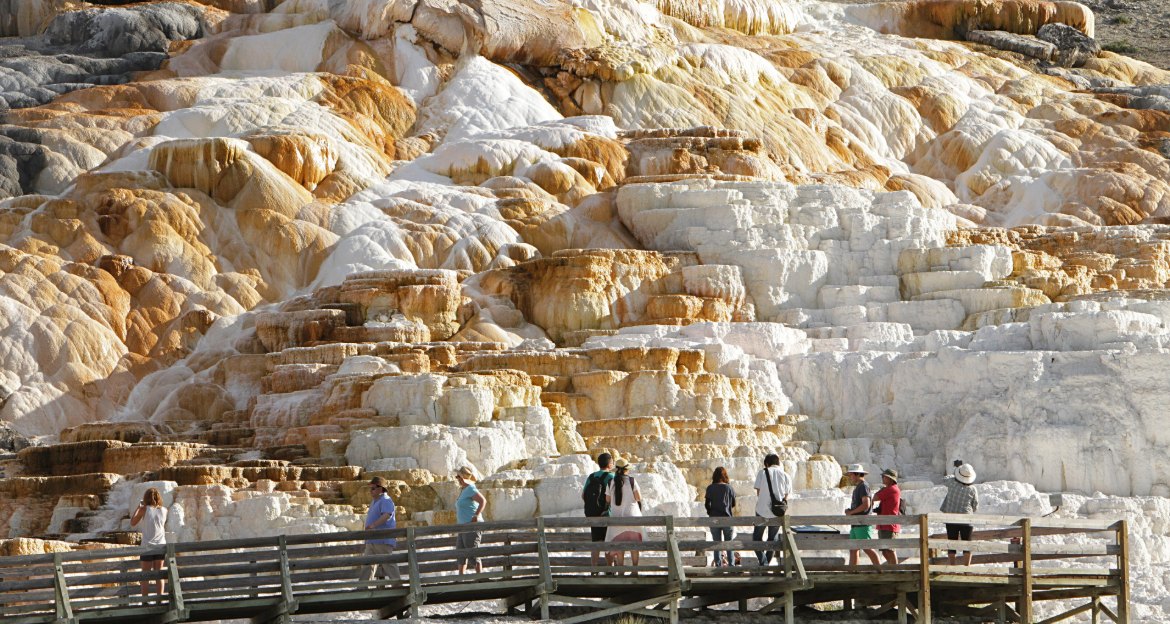
Stay on the boardwalks. Every time. The ground around thermal features is a thin crust over boiling, acidic water. People have died stepping off. If you ever wonder how serious this is, look closely into some hot springs and you’ll spot bones. They belong to baby bison that broke through the crust.
Split your lodging. The biggest planning mistake first-timers make is basing themselves in one spot for the whole trip. The park is too big for that. Spend a couple of nights near the geyser basins in the southwest, then move to Canyon Village or the north for wildlife. Canyon is the most central base if you only want one.
Assume you have no cell service. Coverage inside the park ranges from spotty to nonexistent. Download offline maps and the GeyserTimes app before you arrive.
Underpromise on your daily plan. Pick two or three major stops per day, not eight. A bison jam can eat 45 minutes without warning. Flexibility is the difference between a great day and a stressed one.
Skip peak-hour Old Faithful if you can. A safari guide’s advice that stuck with me: everyone funnels to Old Faithful and Grand Prismatic at midday, so hit those at open or near close, and fill the middle of the day with quieter basins.
Where to Take the Best Yellowstone National Park Attractions Photos
If great Yellowstone National Park photos are high on your list, match the spot to the light. Shoot Lower Falls from Artist Point in the morning, when the sun lights the canyon walls. Save the Grand Prismatic Overlook for a sunny, warm afternoon, when there’s less steam hiding the colors. Catch Old Faithful from Observation Point to get the geyser and the whole basin in one frame. And bring a long lens to Lamar Valley at dawn, because the wildlife there won’t come to you, and it shouldn’t.
Gateway Towns: Where to Base Yourself
Yellowstone has five entrances, and each opens onto a different gateway town with its own personality. Three of the five sit in Montana, which surprises people who assume the whole park is Wyoming.
- West Yellowstone, Montana (West Entrance): the busiest and most convenient hub, loaded with hotels, restaurants, and quick access to the geyser basins.
- Gardiner, Montana (North Entrance): the only entrance open to cars year-round and your gateway to Mammoth and Lamar Valley wildlife.
- Cooke City, Montana (Northeast Entrance): tiny, remote, and closed to through-traffic in winter, but the closest base to Lamar.
- Cody, Wyoming (East Entrance): leans into Old West character.
- Jackson, Wyoming (South Entrance): the upscale option that pairs a Yellowstone National Park Attractions trip with Grand Teton and world-class dining.
For a first trip in summer, West Yellowstone plus a second base at Canyon Village inside the park covers the most ground with the least backtracking. Pairing Yellowstone with Jackson also makes it one of the best romantic mountain getaways in the USA for couples.
Accessibility and Need-to-Know Basics
Yellowstone is more accessible than its wild reputation suggests. Many of the marquee sights, including Old Faithful, Grand Prismatic, Mammoth, and the canyon overlooks, are reached by paved boardwalks and short, flat paths. The park publishes an accessibility guide covering wheelchair-accessible trails, lodging, and restrooms, and accessible viewing areas exist at the most popular thermal features.
A few essentials for everyone:
- Carry bear spray on any trail and know how to use it. It works better than a firearm in a bear encounter.
- Fill your gas tank at the gateway town. In-park fuel is limited and pricey.
- Pack layers. Mornings can hover near freezing even in July, and afternoons warm up fast at this elevation.
- Check the NPS current conditions page before you go. Trail and area closures, like those around Biscuit Basin in recent seasons, can change your plans.
How Much Time You Need (and a Sample Route)
One day lets you see the Lower Loop highlights (Old Faithful, Grand Prismatic, and the Grand Canyon of the Yellowstone National Park Attractions) if you start at dawn and keep moving. It’s a taste, not a meal.
Two days is the realistic minimum for a proper first visit. Day one in the southwest for the geyser basins, day two in the northeast for Lamar Valley wildlife and Mammoth.
Three to four days is the sweet spot. You get the highlights without racing, plus room for a hike, a paddle, or a slow wildlife morning.
A clean two-day route for first-timers:
- Day 1 (Lower Loop): Sunrise at the Grand Canyon of the Yellowstone National Park Attractions, then Old Faithful and the Upper Geyser Basin, then the Grand Prismatic Overlook in the afternoon.
- Day 2 (Upper Loop): Dawn wildlife drive through Lamar Valley, then Mammoth Hot Springs, then Norris Geyser Basin on the way out.
Options for Every Budget
Shoestring: Camp inside the park or in a national forest campground nearby, pack your own food, and let the $35 vehicle pass do the heavy lifting. Your only real costs are gas and groceries. It’s also a great fit if you’re looking at the best places to travel solo in the USA.
Mid-range: Book a gateway-town hotel in West Yellowstone or Gardiner, eat a mix of packed lunches and casual dinners, and rent a spotting scope for wildlife days.
Splurge: Reserve a room at the Old Faithful Inn or Lake Yellowstone Hotel a year out, hire a private wildlife guide for a dawn Lamar Valley safari, and let someone else handle the logistics so every hour is spent looking up, not at a map.
Whichever tier you pick, the scenery costs the same. That’s the beauty of a national park, and if you’re building a bigger parks list, our guide to the national parks in California is a good next read.
The Takeaway on Yellowstone National Park Attractions
The mistake first-timers make isn’t picking the wrong sights. Old Faithful, Grand Prismatic, the canyon, and Lamar Valley are the right calls every time. The mistake is treating the park like a checklist instead of a place with real distances, real crowds, and real hazards.
Get in early. Split your lodging. Stay on the boardwalks. Drive the two hours to the good wildlife light instead of hoping a bison wanders past your lunch spot. Do that, and the attractions in Yellowstone National Park Attractions stop being a list to conquer and become the once-in-a-lifetime trip everyone promised you. For more trip ideas across the U.S. and beyond, browse TravelerTribes.
Now go download those offline maps. You’re going to need them.
FAQs About Yellowstone National Park Attractions
How big is Yellowstone National Park, really?
It covers 2.2 million acres, about 3,472 square miles, which is larger than Rhode Island and Delaware combined. It spans Wyoming, Montana, and Idaho, and driving from one side to the other takes hours, not minutes.
What is the number one attraction in Yellowstone National Park Attractions?
Old Faithful is the most visited and most famous, thanks to its predictable eruptions every 60 to 110 minutes. Grand Prismatic Spring is a close second for sheer visual impact, especially from the overlook trail.
How many days do you need to see Yellowstone National Park Attractions?
Two days covers the essential first-timer highlights. Three to four days lets you slow down, add hikes and wildlife mornings, and avoid the rushed feeling that comes from underestimating drive times.
When is the best time to visit Yellowstone?
September, right after Labor Day, is a favorite: thinner crowds, cooler weather, elk in rut, and great light. July and August offer full access but the heaviest crowds, so start your days before 8 a.m.
Is Yellowstone in Montana or Wyoming?
Mostly Wyoming (96%), with 3% in Montana and 1% in Idaho. But three of the five entrances open onto Montana gateway towns (West Yellowstone, Gardiner, and Cooke City), which is why the Montana connection runs deep.
How much does it cost to get into Yellowstone in 2026?
$35 per private vehicle for seven days, and that same pass includes Grand Teton. Note the 2026 change: non-U.S. residents now pay a $100 surcharge on top of standard entry.