


Omio, Imagine you’re sitting in a bright, sun-soaked cafe in Florence, sipping espresso and planning your next trip to Paris. You need a high-speed train to Milan, a cheap bus to make it across the border, and a quick flight to get your evening dinner reservation in France.
That has always been achieved by juggling four different browser tabs, dealing with clunky regional transit websites (often poorly translated), and hoping your foreign credit card wouldn’t get flagged for fraud.
Enter Omio.
Formerly known as GoEuro, aims to eliminate the disjointed nature of global transit by consolidating trains, buses, flights, and ferries into one very sleek, easy-to-use, and easy-to-navigate interface.
But in a world where digital middlemen are everywhere, is it a good idea to book on Omio, or is it better to book directly? We have all the luxury and travel experts at Traveler Tribes put it through a full test today.

What is Omio?
Omio is a multi-modal travel aggregator. In other words, rather than just showing you flights (like Skyscanner) or just showing you rails (like Trainline), it provides all the practical ways of going from Point A to Point B across 45 countries and is focused heavily on Europe, the US, and the fast-growing region of Southeast Asia and South America.
When you see what Omio train search results are, people often wonder if Omio actually has a transit line of its own. Now, Omio doesn’t have trains, tracks, or buses, of course. It has a lot of real-time inventory from over 2,000 trusted transport providers, Deutsche Bahn, SNCF, Trenitalia, Amtrak, and Eurostar, and you can buy all the tickets right from their app.
The User Experience: Where Omio Shines
For the modern traveler who cares about time more than comfort, Is an absolute masterclass in digital design.
The Comparison Engine: By typing in “London to Edinburgh,” Omio shows clear, horizontal toggles on the travel time and price of the train, Omio bus, and flight tickets in a single click.
Language and Currency Unity: You’ve ever tried to decipher the French SNCF app or a local Eastern European bus portal, and you know how scary it is to be translating. Everything is done in flawless English (and a multitude of other languages) and accepts PayPal, Apple Pay, and other major credit cards in your preferred currency.
The Digital Wallet: No printing vouchers. Your train tickets, bus passes, and airline boarding passes are stored in a single, offline digital wallet in the app.

Is Omio Reliable for Train Tickets?
This is the question every traveler asks before giving over their credit card: Is Omio reliable for train tickets?
The answer is yes, of course; it is totally legitimate and reliable. When you buy Omio train tickets, the platform issues an official electronic ticket with a barcode that corresponds directly with the rail operator’s system. In Spain (Renfe), Italy (Trenitalia), and Germany (Deutsche Bahn), we have used at the boarding gate without a hitch.
But as a third-party platform, you need to understand the trade-off:
The Middleman Trade-off: If you can get the whole transit system to run smoothly is great. But if a regional railway union suddenly goes on strike or the weather turns nasty, you need to deal with a booking broker. Local station agents are used to dealing directly with people who sell tickets, and it takes longer to get a refund through a middleman.
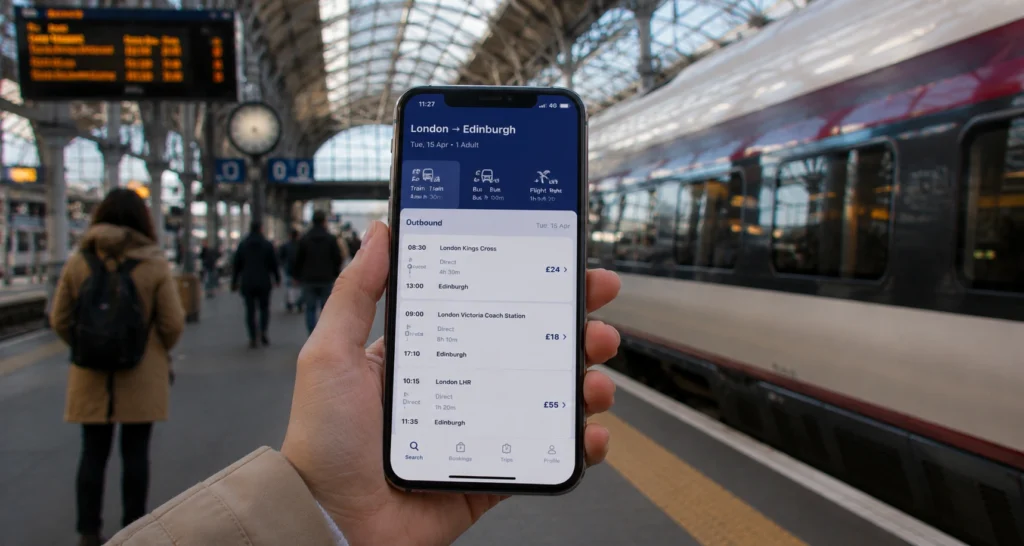
Booking Buses and Flights: A Nuanced Look
Omio is very much the best service for rail travel, but it handles other parts of your trip just as well.
Omio Buses Tickets
For budget and off-the-beaten-path routes that don’t have trains in sight, Omio Buses tickets are easy to get. It’s a combination of cheap carriers like FlixBus, National Express, and ALSA. The main advantage is route mapping: will suggest a train-to-bus connection if there’s no track to your final boutique hotel all the way to the train station.
Flights on Omio
But while it is easy to hop on Ryanair or EasyJet at the airport and fly back home with the airline, we generally recommend getting long-haul premium flights directly with the airline. Why? Because airline ticket rules are so tough, you always need to know how to cancel an Omio flight ticket in case things go wrong in an emergency.

Realities to Keep in Mind
1. Booking Fees
Booking Fees Omio charges a nominal service fee that is baked into the checkout price to make the platform as easy as possible to use. It’s usually a few dollars/euros, but for a family booking multiple legs, it can add up. If you’re all budget-conscious, you can use to figure out what you’re going to do and then use the operator’s website to save a few cents.
2. The Refund Trap
A common complaint on travel forums is cancellations. If, in fact, you buy a non-refundable but non-changeable economy ticket from the operator, it is not refundable on Omio. Introduces a premium “Omio Flex” add-on at checkout to cover up to 85% of the price if you cancel prior to departure. If you want a lot of flexibility, always purchase the flex upgrade.
How to Cancel a Flight or Train Ticket on Omio
With your travel schedule changing, and you need to cancel a trip on this site, how can you do so? We can take care of it all.
1. Access Your Bookings:
Takes 1-2 mins
Access your bookings from your app or website and go to the “Your Bookings” or “My Trips” section.
2. Select the Specific Ticket:
Check eligibility
Look for eligibility to cancel the ticket you wish to cancel (i.e., plane, train, or bus trip you would like to cancel). Three, check the details related to the ticket. Is it refundable?
3. Initiate the Cancellation:
Automated processing
Hit the “Cancel Booking” button. The app will show you a breakdown of the refund amount based on the provider’s native policy and whether you bought Omio Flex.
4. Confirm and Await the Refund:
Processing window
Confirm cancellation. If approved, refunds are credited back to your original payment method, which takes from 3 to 15 business days (depending on the transit operator).
Omio Pros & Cons
| The Pros | The Cons |
| All-in-one mapping: Seamlessly displays train, bus, and flight options together. | Booking Fees: Small processing fee added at checkout. |
| Flawless UX: Highly intuitive app eliminates language and localized payment barriers. | Customer Service Latency: Solving disruption claims can take longer than direct channels. |
| Centralized tickets: Keep your entire multi-leg journey organized in one dashboard. | Limited Advanced Seating: Complex seat selection upgrades are occasionally stripped out. |
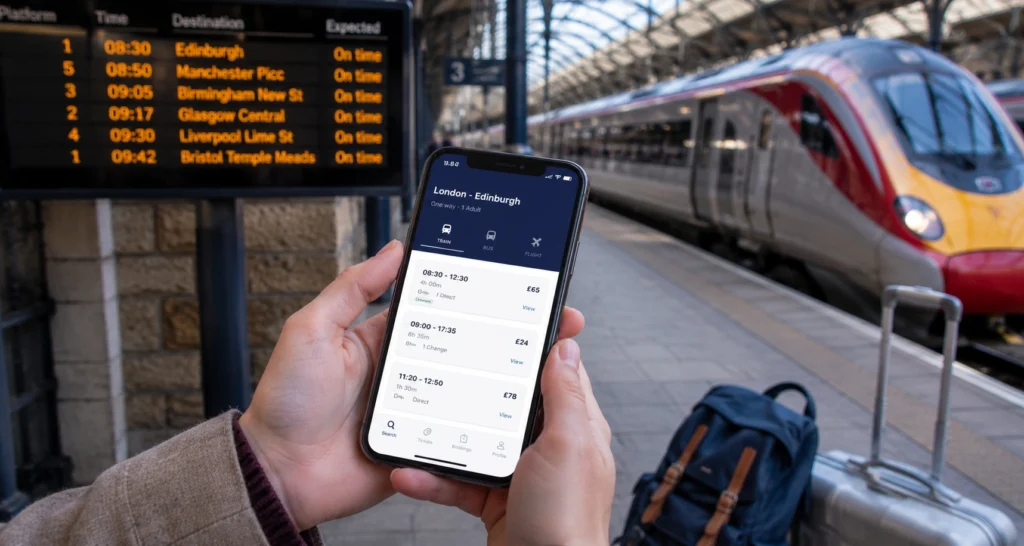
Omio’s Customer Support: What to Expect When Things Go Sideways
Booking the ticket is the easy part. The real test of any travel platform is what happens when a connection gets missed, or a refund needs chasing, and this is where Omio’s “digital middleman” identity shows its other side.
Omio’s support center handles most of its requests through an online ticketing system and live chat, and the company says it pays for 24/7 customer support through a small service fee added to bookings. Phone support is available, too, but it’s less than you would think: English-language phone calls are from 9 am to 5:30 pm, Monday to Friday, Central European Time, so if your overnight train to Vienna falls apart at 2 am on a Saturday, a phone call isn’t going to be the solution.
Getting in Touch
The Disruption Reality
On forums and review sites, the most common complaint isn’t about the booking process itself but about response speed when something goes wrong mid-trip, a missing ticket email, a confusing refund timeline, or a bus number that doesn’t match what’s posted at the station. It’s none of this to say Omio is unreliable; it just means that the support loop is a little longer than walking up to a station counter.
How to Stack the Odds in Your Favor
- Save your booking reference and a screenshot of your itinerary before you travel, not after something breaks.
- Be sure to use in-app chat for anything time-sensitive; email tends to take longer.
- If you have a disruption in the immediate moment (a missed connection or a cancelled platform), then go to the local station or gate staff first and bring Omio in for the paperwork afterward.
Bottom line: Omio is solid for the 95% of trips that go well. And for the messy 5% of trips, budget a little more patience.

The Verdict: Is Omio Worth It?
If you’re a veteran expat who speaks fluent Italian, lives in Rome, and only goes back and forth to Florence twice a year and only ever uses Trenitalia, you don’t need Omio.
But for a larger multi-city trip through an unknown region (where regional trains connect to cross-border buses and short-haul flights are connecting you to new places), Omio will save you a lot of trouble. The sanity gained from not having to go through broken regional transit websites, not traveling through lines, and keeping the whole trip schedule of your trip in one digital pocket are far better than the small booking fees.
For the modern traveler, Omio does what it is designed to do: to provide you with a stress-free transit journey.
FAQs
Q1. Is Omio safe to buy tickets from, and why?
A. Omio is a legitimate, global travel tech company with a lot of international investors. All transactions are secure, the electronic tickets are encrypted, and transit staff know how to use the ticket in their native language.
Q2. Are tickets cheaper on Omio?
A. In general, no. Omio follows the average rates set by the transit companies, and there is a small platform service fee. However, Omio frequently offers student discounts, seasonal promo codes, and referral bonuses that can make it cheaper than buying direct tickets.
Q3. What happens if my train gets delayed or cancelled?
A. Since Omio is a booking agent, the driver is the one who actually carries you out. For immediate assistance (like missing a connecting train due to a delay), it is best to speak to a local station master or agent directly. For refund purposes, you will submit a ticket through Omio’s help center.
Q4. Do I need to print my Omio tickets?
A. In 95% of cases, no. Mobile tickets downloaded directly within the Omio application are sufficient for conductors to scan on buses and trains. The few exceptions are certain regional bus routes or non-EU train operators, which will be clearly flagged on your digital ticket instructions before they are issued.