

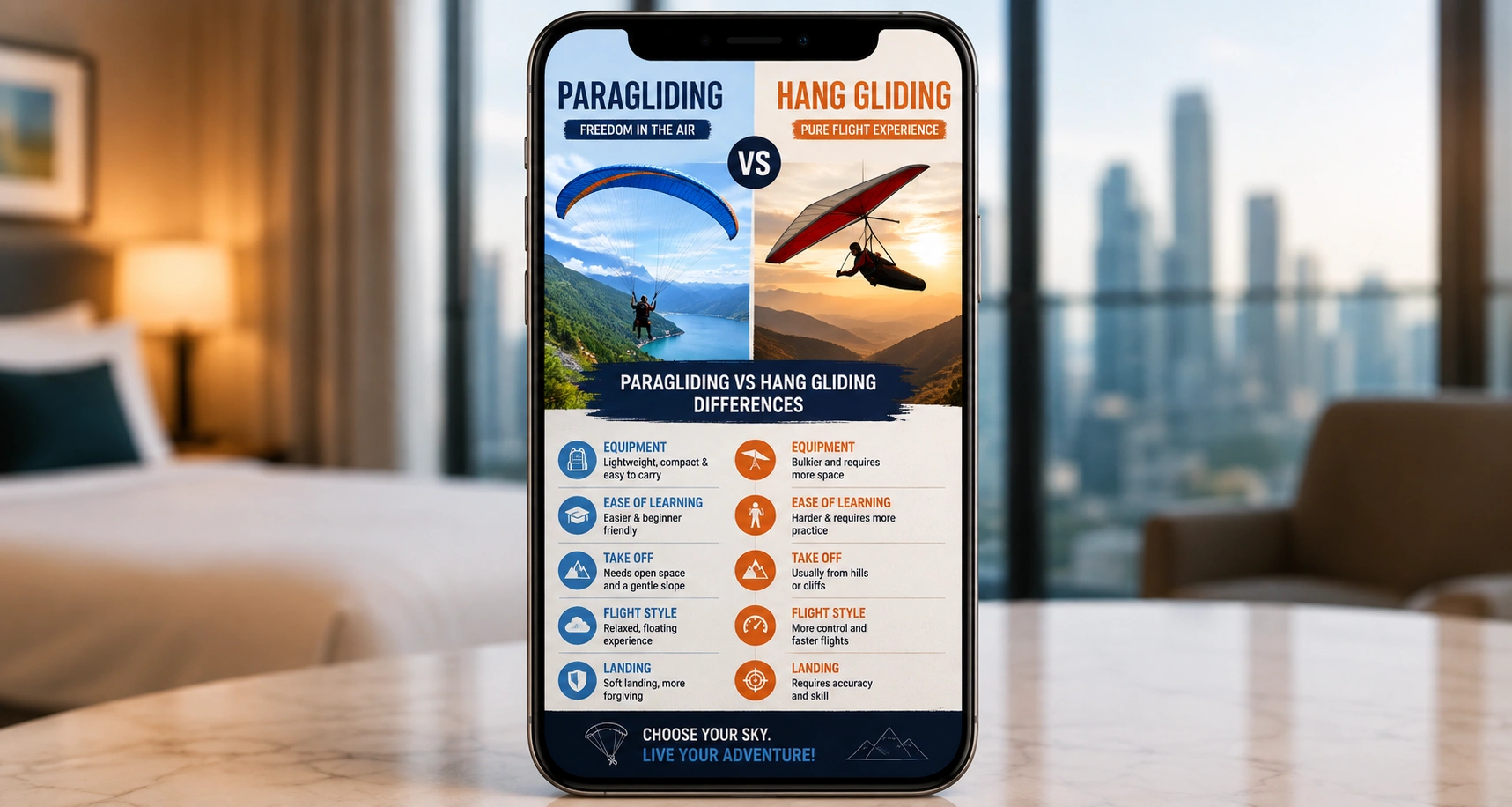
There is a special kind of freedom that comes from leaving the ground with nothing but a wing above you and open sky ahead. For anyone chasing that feeling, two sports usually sit at the top of the list. From a distance they look almost identical, a single person floating silently along a ridge, but the moment you look closer the Paragliding vs Hang Gliding Differences start to show up everywhere.
The wing itself, whether you sit or lie down, how fast you travel, how you steer, and how long it takes to learn all set the two apart. Paragliding uses a soft fabric wing that folds into a backpack and lets you fly sitting upright, while hang gliding uses a rigid framed wing that you control by shifting your body weight. One feels calm and scenic; the other feels fast and full of energy.
Neither is simply “better.” The right choice depends on your experience level, how much adventure you are after, and how comfortable you feel once your feet leave the earth. This guide walks through every practical difference, from equipment and safety to cost and the best places to fly, so you can decide which sport suits you before you ever take off.
What Is Paragliding?
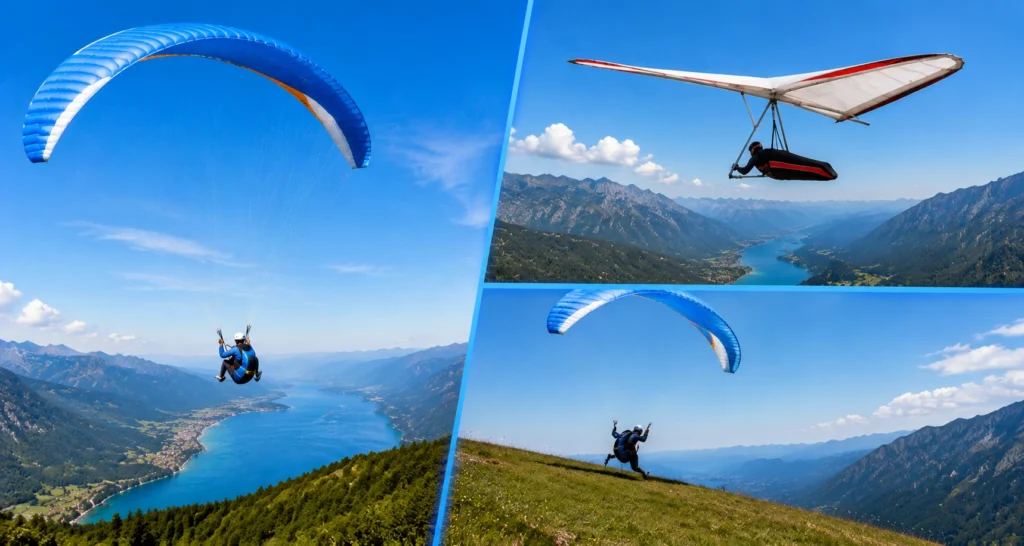
Paragliding is the sport of flying a lightweight, free-flying wing that has no rigid frame at all. The wing, called a canopy, is made from two layers of fabric joined by internal cells. Air rushes in through openings along the front edge, inflates those cells, and the whole wing takes on a curved shape that generates lift. The pilot sits in a harness suspended below, almost like relaxing in a chair in the sky.
The sport grew out of parachuting in the late 1970s and 1980s, when mountaineers in the French Alps began running off slopes with steerable canopies instead of hiking back down. Today’s wings are far more refined, but the core idea has not changed: no engine, no frame, just fabric and air.
Control is refreshingly simple. Two brake handles connect to the trailing edge of the wing. Pull the right handle and you turn right; pull both together to slow down and flare for landing. That gentle learning curve is a big reason beginners gravitate toward paragliding first.
Portability is another draw. A complete kit, including wing, harness, reserve parachute and helmet, usually weighs between 12 and 20 kilograms and folds into a single rucksack you can hike with. Tandem flights, where you fly strapped in front of a qualified pilot, are widely available, so first-timers can experience real flight with no training at all. Naturally, many newcomers ask “Is Paragliding Safe?” before they book, and the honest answer depends heavily on weather, training and equipment, which we cover in detail further down.
What Is Hang Gliding?
Hang gliding is the older of the two sports and is built around a rigid wing. A triangular aluminium or composite frame holds a taut fabric sail, usually Dacron or mylar, in a fixed aerofoil shape. Because the structure is solid rather than inflatable, the wing keeps its form in the air no matter the air pressure, which gives it very different flying characteristics.
Modern hang gliding took shape in the late 1960s and 1970s, when enthusiasts refined the flexible-wing designs inspired by NASA’s Rogallo wing. What began as daring coastal flying matured into a precise, well-regulated sport with formal pilot ratings and training standards.What is Parasailing HModern hang gliding took shape in the late 1960s and 1970s, when enthusiasts refined the flexible-wing designs inspired by NASA’s Rogallo wing. What began as daring coastal flying matured into a precise, well-regulated sport with formal pilot ratings and training standards.
The pilot does not sit. Instead you hang horizontally in a prone harness, lying flat beneath the wing with your body stretched out behind a triangular control bar. Steering is done entirely by weight shift: push out, pull in, or move your body left and right to change pitch and direction. It feels far closer to flying an aircraft than drifting under a canopy, which is exactly why many experienced pilots prefer the control and performance that hang gliding offers.
That performance comes with trade-offs on the ground. A hang glider does not fold into a backpack. The disassembled frame is long and must be carried on a roof rack or trailer, and rigging it for flight takes noticeably longer than laying out a paraglider. Setup, transport and storage all demand more space and effort, a fair price, enthusiasts say, for the speed and glide the rigid wing delivers.
Paragliding vs Hang Gliding Differences: Key Comparison
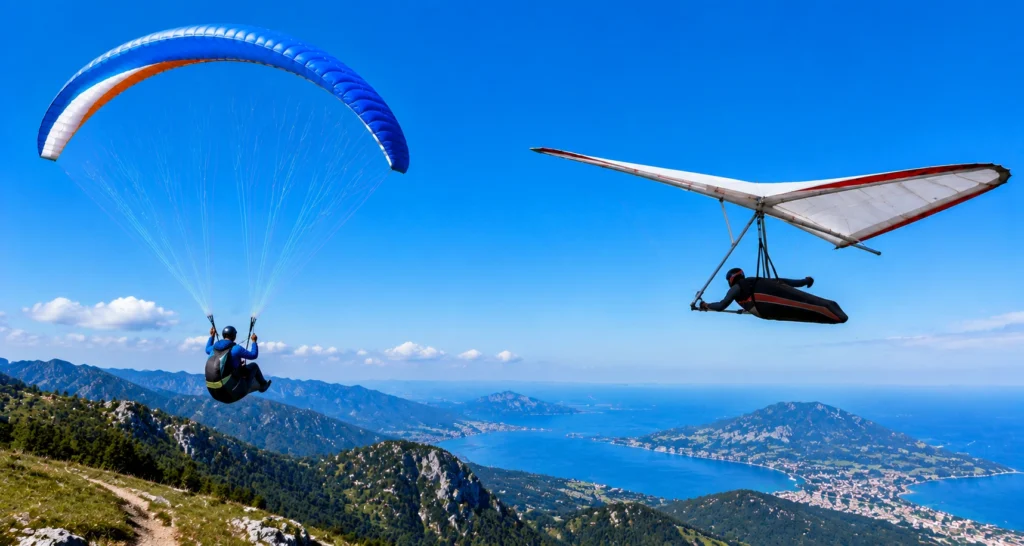
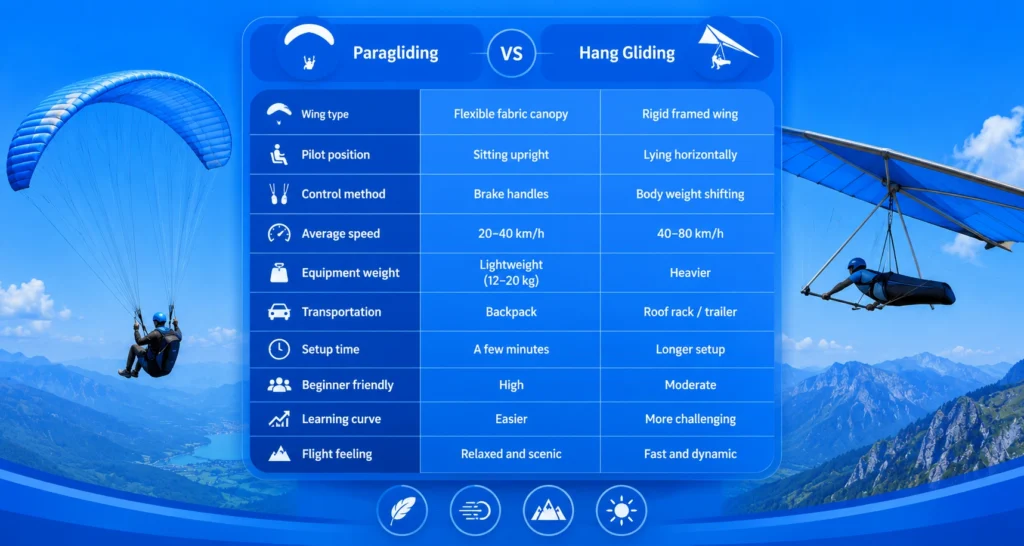
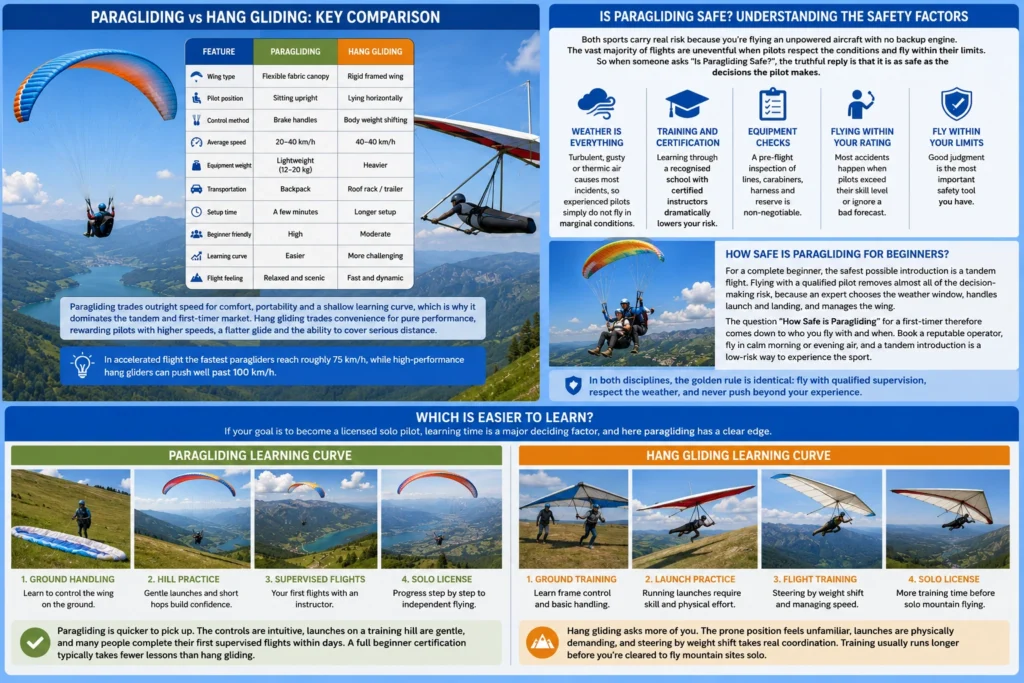
The main difference between paragliding and hang gliding is the wing. Paragliding uses a soft, foldable fabric canopy and a seated pilot who steers with hand brakes, giving a slow, relaxed flight. Hang gliding uses a rigid framed wing and a pilot lying flat who steers by shifting body weight, producing faster, more dynamic flight.
| Feature | Paragliding | Hang Gliding |
|---|---|---|
| Wing type | Flexible fabric canopy | Rigid framed wing |
| Pilot position | Sitting upright | Lying horizontally |
| Control method | Brake handles | Body weight shifting |
| Average speed | 20–40 km/h | 40–80 km/h |
| Equipment weight | Lightweight (12–20 kg) | Heavier |
| Transportation | Backpack | Roof rack / trailer |
| Setup time | A few minutes | Longer setup |
| Beginner friendly | High | Moderate |
| Learning curve | Easier | More challenging |
| Flight feeling | Relaxed and scenic | Fast and dynamic |
These contrasts add up to two genuinely different experiences. A paraglider trades outright speed for comfort, portability and a shallow learning curve, which is why it dominates the tandem and first-timer market. A hang glider trades convenience for pure performance, rewarding pilots with higher speeds, a flatter glide and the ability to cover serious distance.
It is worth noting that the speed figures above describe normal cruising, not the extremes. In accelerated flight the fastest paragliders reach roughly 75 km/h, while high-performance hang gliders can push well past 100 km/h. For most recreational flights, though, the everyday ranges in the table are what you will actually feel. Understanding these paragliding vs hang gliding differences early makes the rest of your decision, from safety to cost, far easier to weigh up.
Equipment and Wing Design Differences
Once you understand the wings, the rest of the gear starts to make sense. The equipment behind each sport is designed around a completely different flying philosophy.
Paragliding Equipment
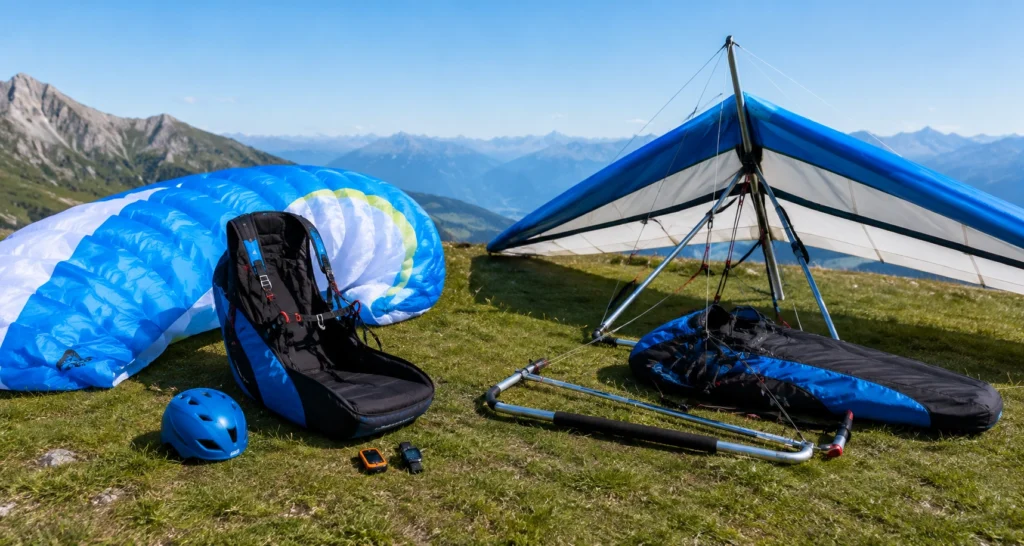
A paraglider is a study in simplicity. The soft canopy is stitched from ripstop fabric and shaped by dozens of internal air cells that inflate on launch. Below it sits the harness, a padded seat that also holds a reserve parachute for emergencies. Because there is no frame, the entire package collapses into a backpack, making it easy to store at home, check onto a flight, or carry up a mountain on foot.
- Soft inflatable canopy with internal cells
- Padded seat harness with built-in reserve parachute
- Helmet and basic instruments (variometer, GPS)
- Everything folds into one rucksack for easy transport
Hang Gliding Equipment
A hang glider is closer to a small aircraft. The rigid aluminium or composite frame supports a tensioned sail and a triangular control bar the pilot holds while lying prone. A cocoon or pod harness zips around the body to reduce drag. All of this is strong and high-performing, but it does not shrink. The frame breaks down into a long bundle that needs a roof rack or trailer and a garage-sized space to store.
- Rigid aluminium or composite airframe
- Tensioned Dacron or mylar sail
- Triangular control bar for weight-shift steering
- Prone pod harness and larger storage requirements
Flying Experience: Which One Feels Better?
Choosing between the two is not only a technical decision. The feeling each one delivers in the air is genuinely different, and for many people that is the deciding factor.
The Paragliding Experience
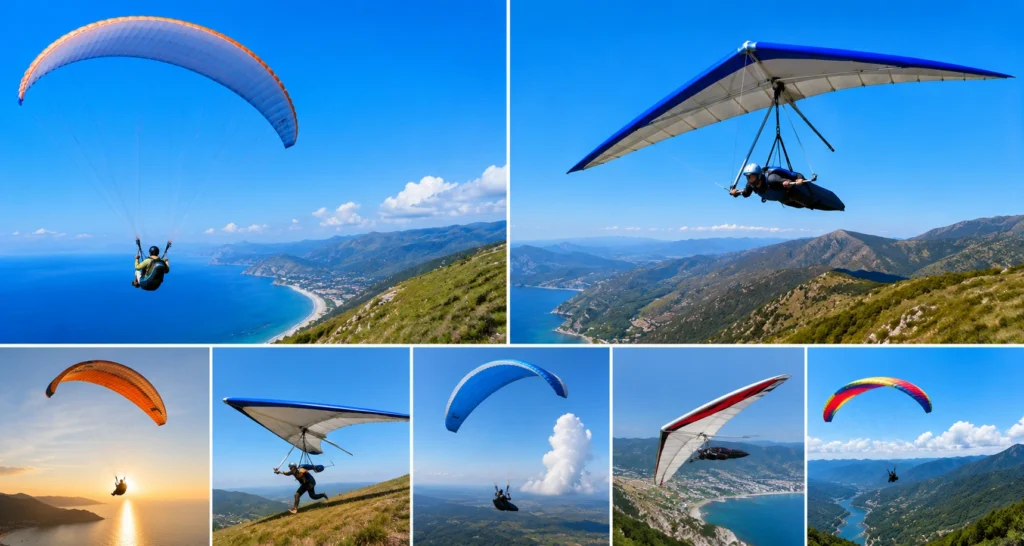
Paragliding feels calm and unhurried. You sit upright with an open view of everything below and drift along at gentle speeds, riding thermals and coastal breezes. Because you are seated and the pace is slow, it is easy to relax, take photos and simply soak in the scenery. This makes it ideal for scenic flights, sunset tandems and anyone who wants the magic of flight without the adrenaline overload.
The Hang Gliding Experience
Hang gliding feels fast and physical. Lying flat and streamlined, you sense the air rushing past and the wing responding crisply to every shift of your body. Turns are more dynamic, the glide is flatter, and the whole experience feels closer to piloting an aircraft. For thrill-seekers who want speed, precision and a real sense of flying the machine, that dynamic character is hard to beat.
Speed, Height and Flight Performance Comparison
Performance is where the rigid wing really pulls ahead. A hang glider’s solid structure produces a flatter glide and higher top speeds, which translate into longer cross-country flights. A paraglider is slower and more affected by wind, but it climbs beautifully in thermals and is far more forgiving to fly.
| Performance factor | Paragliding | Hang Gliding |
|---|---|---|
| Speed | Lower | Higher |
| Glide ratio | Moderate | Better |
| Long-distance flying | Good | Excellent |
| Wind sensitivity | Higher | Lower |
| Maneuverability | Smooth | Precise |
Both sports stay aloft the same way: by finding rising air. Thermals are columns of warm air that lift a wing skyward, while ridge lift is the upward flow created when wind hits a slope or cliff. Skilled pilots link these together to fly for hours and travel cross-country. Thanks to its flatter glide, a hang glider generally covers more ground between thermals, which is why record-setting distance flights are more common in hang gliding. A paraglider, being lighter and slower, can often core a tight thermal more efficiently, but it loses more height when pushing forward into wind.
Is Paragliding Safe? Understanding the Safety Factors
Safety is the first thing most people ask about, and it deserves an honest answer. Both sports carry real risk, because you are flying an unpowered aircraft with no backup engine. That said, the vast majority of flights are uneventful when pilots respect the conditions and fly within their limits. So when someone asks “Is Paragliding Safe?”, the truthful reply is that it is as safe as the decisions the pilot makes.
A few factors matter far more than the sport you choose:
- Weather is everything. Turbulent, gusty or thermic air causes most incidents, so experienced pilots simply do not fly in marginal conditions.
- Training and certification. Learning through a recognised school with certified instructors dramatically lowers your risk.
- Equipment checks. A pre-flight inspection of lines, carabiners, harness and reserve is non-negotiable.
- Flying within your rating. Most accidents happen when pilots exceed their skill level or ignore a bad forecast.
How Safe Is Paragliding for Beginners?
For a complete beginner, the safest possible introduction is a tandem flight. Flying with a qualified pilot removes almost all of the decision-making risk, because an expert chooses the weather window, handles launch and landing, and manages the wing. The question “How Safe is Paragliding” for a first-timer therefore comes down to who you fly with and when. Book a reputable operator, fly in calm morning or evening air, and a tandem introduction is a low-risk way to experience the sport.
When people compare the two disciplines directly, hang gliding tends to have fewer beginner-friendly tandem options and a steeper physical launch, while paragliding’s gentle canopy and simple controls make supervised first flights more accessible. In both cases, though, the golden rule is identical: fly with qualified supervision, respect the weather, and never push beyond your experience.
How safe is paragliding? (quick answer): Paragliding is generally safe when done with certified instructors, good equipment and calm weather. Most accidents come from poor conditions or pilot error, not the gear itself. For beginners, a supervised tandem flight in gentle morning or evening air is the lowest-risk way to fly.
Which Is Easier to Learn?
If your goal is to become a licensed solo pilot, learning time is a major deciding factor, and here paragliding has a clear edge.
Paragliding Learning Curve
Paragliding is quicker to pick up. The controls are intuitive, launches on a training hill are gentle, and many people complete their first supervised flights within days. A full beginner certification typically takes fewer lessons than hang gliding, and the huge availability of tandem flights means you can try the sport before committing to a course.
Hang Gliding Learning Curve
Hang gliding asks more of you. The prone position feels unfamiliar at first, launches involve running down a slope while controlling a rigid frame, and steering by weight shift takes real physical coordination. Faster speeds leave less margin for error, so training usually runs longer before you are cleared to fly mountain sites solo. For committed pilots the payoff is a high-performance wing, but the road there is steeper.
Cost, Equipment and Practical Differences
Budget and lifestyle matter just as much as flying performance. Paragliding tends to be the more affordable and convenient sport overall, especially for beginners.
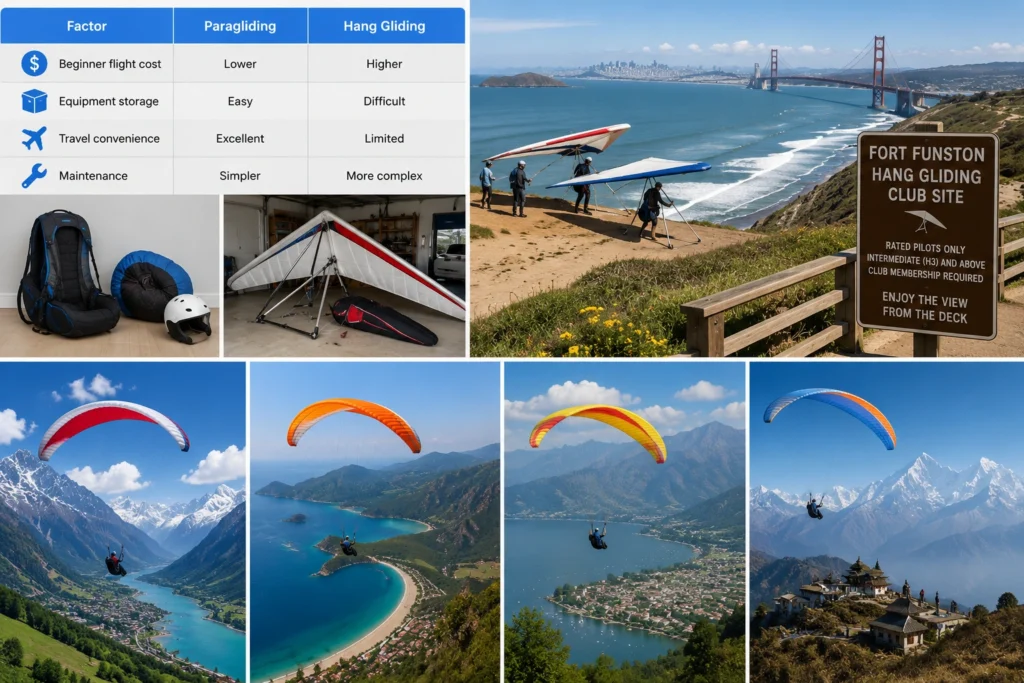
| Factor | Paragliding | Hang Gliding |
|---|---|---|
| Beginner flight cost | Lower | Higher |
| Equipment storage | Easy | Difficult |
| Travel convenience | Excellent | Limited |
| Maintenance | Simpler | More complex |
A tandem paragliding flight is usually cheaper and easier to book than a comparable hang gliding experience, partly because tandem hang gliders are less common. Owning gear tells the same story: a paraglider packs into a cupboard and travels as checked luggage, while a hang glider needs a roof rack, a trailer or a garage and more involved upkeep of its frame and rigging. If you travel often or lack storage space, paragliding wins on practicality; if you are chasing performance and have room for the kit, hang gliding justifies the extra effort.
Best Places to Try Paragliding and Hang Gliding
Location shapes the whole experience, and some sites have become world-famous for reliable wind and stunning scenery.
Hang Gliding San Francisco
When people search for Hang Gliding San Francisco, one place comes up again and again: Fort Funston. Its 200-foot sandy bluffs on the city’s southwest coast catch a steady onshore breeze, making it one of the premier hang gliding sites in the United States and an unbeatable spot to watch pilots launch and soar along the cliffs.
One important detail worth knowing before you go: Fort Funston is a club flying site for rated pilots, not a place where a visitor can walk up and book a flight. Launching there requires an intermediate (USHPA H3) rating and club membership, so if you are not already a licensed pilot, Fort Funston is best enjoyed from its wheelchair-accessible viewing deck. If you want to actually get airborne near San Francisco as a beginner, tandem paragliding runs regularly from the nearby Mussel Rock area in Daly City, just a few miles south along the same coastline.
Popular Paragliding Destinations
Paragliding travels well, and some destinations have become bucket-list flights for good reason:
- Mountain sites such as Interlaken in Switzerland and Ölüdeniz in Turkey, famous for dramatic alpine and coastal launches
- Coastal cliffs like those along the Mediterranean and California coast, where reliable sea breezes create smooth ridge lift
- Adventure-tourism hubs such as Pokhara in Nepal and Bir Billing in India, both known for long thermic flights and stunning Himalayan backdrops
What Is Parasailing and How Is It Different?
People often mix up these sports, so it helps to answer “What is Parasailing” clearly. Parasailing is not free flight at all. You wear a harness attached to a parachute-style canopy, and a boat tows you into the air over water. You go up because the boat pulls you, and you have no real control over direction; the boat decides where you go and when you come down.
That makes it a completely different activity from paragliding, where you launch from a hill or mountain and fly freely under your own control. Parasailing is a short, gentle, tourist-friendly ride over the sea, while paragliding is a genuine flying sport that takes skill to master.
| Activity | Paragliding | Parasailing |
|---|---|---|
| Power source | Wind and thermals | Towed by a boat |
| Control | Pilot controlled | Boat controlled |
| Location | Mountains and coasts | Beaches and open water |
| Experience | Free flight | Towed flight |
Which One Should You Choose?
By now the picture is clear, and the paragliding vs hang gliding differences point most people toward one sport fairly quickly. It comes down to what you value most in the air.
Choose Paragliding If:
- You are a beginner and want the gentlest learning curve
- You prefer relaxed, scenic flying over raw speed
- You value portability and easy storage
- You want an easy, widely available tandem experience
Choose Hang Gliding If:
- You love speed and a fast, dynamic ride
- You are aiming for advanced, high-performance flying
- You enjoy the technical challenge and want to cover long distances
If you are still unsure, the smartest first step is a tandem flight in whichever sport is easiest to book near you. There is no better way to feel the difference than to leave the ground yourself.
FAQs
1. What is the main difference between paragliding and hang gliding?
Ans: The main difference is the wing and how you fly it. Paragliding uses a soft fabric canopy with the pilot seated upright, steering by hand brakes for a slow, relaxed flight. Hang gliding uses a rigid framed wing with the pilot lying flat, steering by weight shift for faster, more dynamic flight.
2. Is paragliding safer than hang gliding?
Ans: Both are broadly comparable in risk, and safety depends far more on the pilot, the weather and the training than on the sport itself. Paragliding is often considered more beginner-friendly because of its gentle launches and wide availability of supervised tandem flights, but neither sport is “safe” if you ignore conditions or fly beyond your skill.
3. How safe is paragliding for first-time flyers?
Ans: For a first-timer, a tandem flight with a certified pilot is the lowest-risk option. The instructor chooses the weather, manages launch and landing and controls the wing, so your job is simply to enjoy the view. Flying in calm morning or evening air with a reputable operator keeps the risk low.
4. Which is easier to learn, paragliding or hang gliding?
Ans: Paragliding is easier and faster to learn. Its controls are intuitive and beginners often make supervised flights within days. Hang gliding takes more physical coordination, has a steeper launch technique and usually requires a longer training period before solo mountain flights.
5. How fast can a hang glider fly?
Ans: A typical hang glider cruises at around 40 to 80 km/h, noticeably faster than a paraglider’s 20 to 40 km/h. High-performance hang gliders can exceed 100 km/h in accelerated flight, which is why they excel at long cross-country distances.
6. Where can I try hang gliding in San Francisco?
Ans: Fort Funston is the famous Hang Gliding San Francisco site, but it is a club location for rated pilots only, so beginners cannot simply book a flight there. It is a fantastic place to watch experienced pilots. To actually fly near the city as a beginner, look into tandem paragliding at the nearby Mussel Rock area in Daly City.
Conclusion
When you strip everything back, the biggest of the paragliding vs hang gliding differences is simple: paragliding is accessible, portable and beginner-friendly, while hang gliding is faster, more technical and built for performance. One invites you to relax and enjoy the view; the other invites you to fly the machine.
Your ideal sport depends on three things: your experience level, the kind of adventure you crave, and how comfortable you feel with speed and complexity. If you want a gentle, scenic introduction to flight, start with paragliding. If you are drawn to speed, distance and technical flying, hang gliding will reward the extra effort.
Whichever way you lean, do it the right way. Book a certified tandem flight, learn from professional instructors, and always put safety and good weather ahead of the urge to fly. The sky is not going anywhere, and the best flights are the ones you walk away from grinning, ready to go again.