

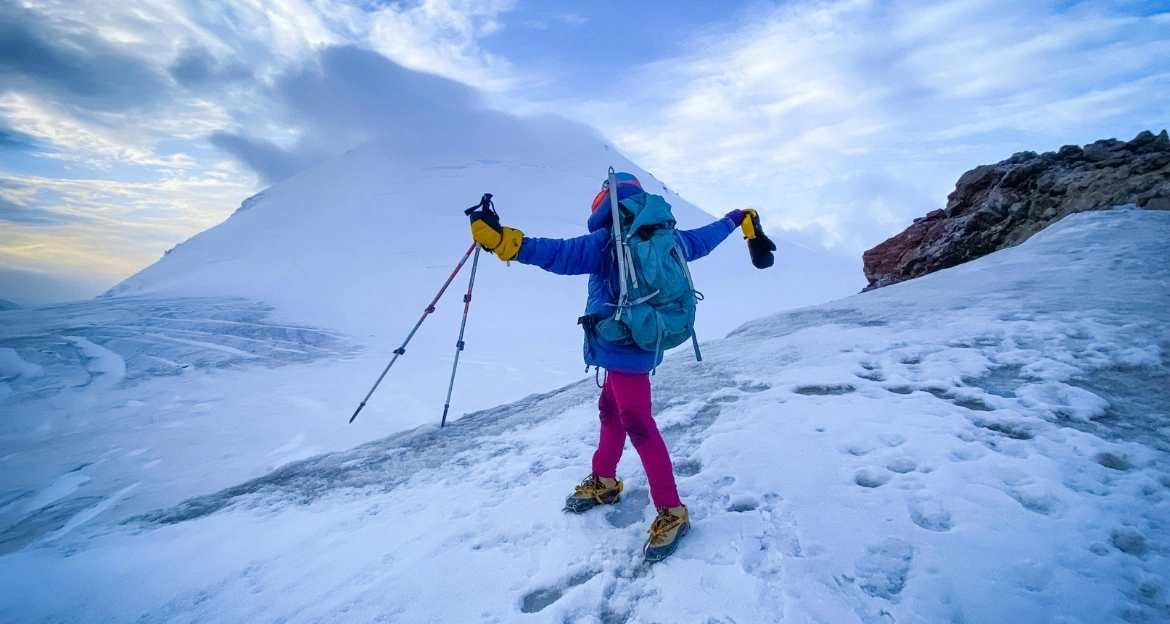
There’s a particular type of silence you only find hanging off a wall of blue ice, crampons biting into frozen water that took decades to form. That’s when most people fall in love with ice climbing, somewhere between the burn in their forearms and the view of a glacier valley stretching out below them. If you’ve been scrolling through photos of frost-blue seracs and wondering whether you could actually do that, you’re not alone. Ice climbing has quietly become one of the most sought-after adventure travel experiences for people who want something rawer than a ski resort and more physical than a scenic hike.
But here’s the one thing nobody tells you in advance: Not all ice climbing tours are built the same. There are gentle half-days of guided ice climbing for total beginners. There are multi-day ice mountain climbing trips that require real fitness and nerve. But the wrong one can turn a dream trip into a miserable, overpriced slog— or worse, an unsafe one. This guide will tell you what the best adventure for you is and why, and how to pick the right one (based on your skill level, your goals, and your tolerance for cold toes).
What Exactly Is Ice Climbing?
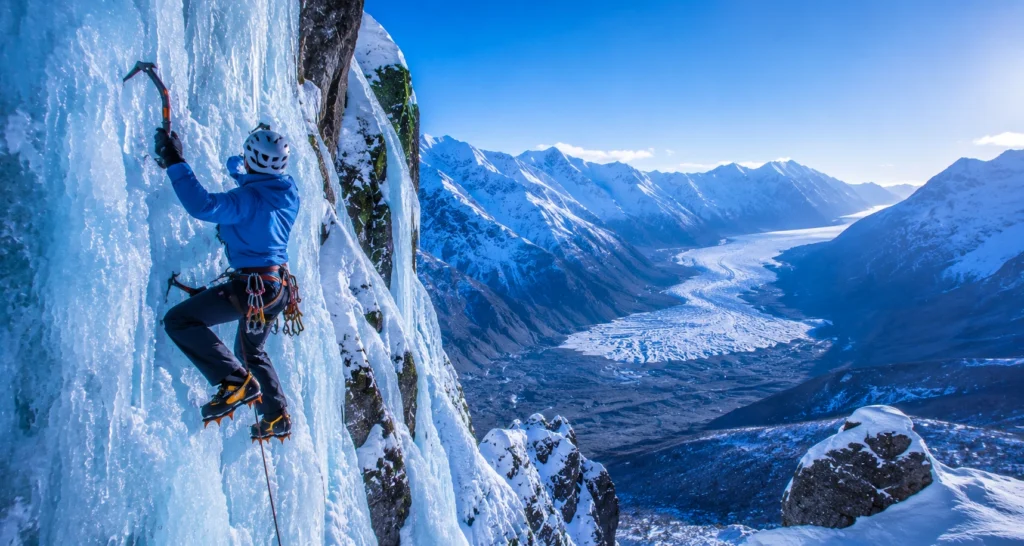
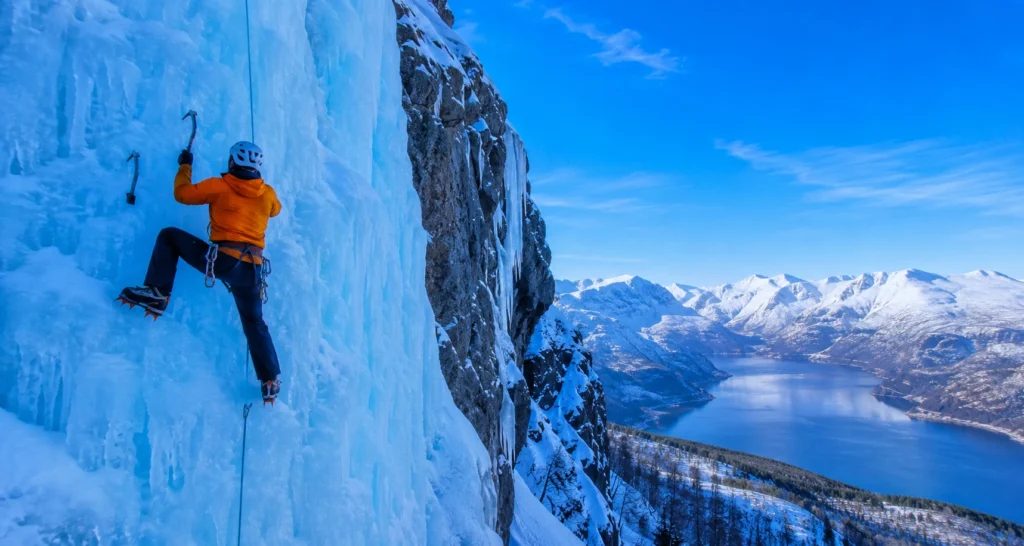
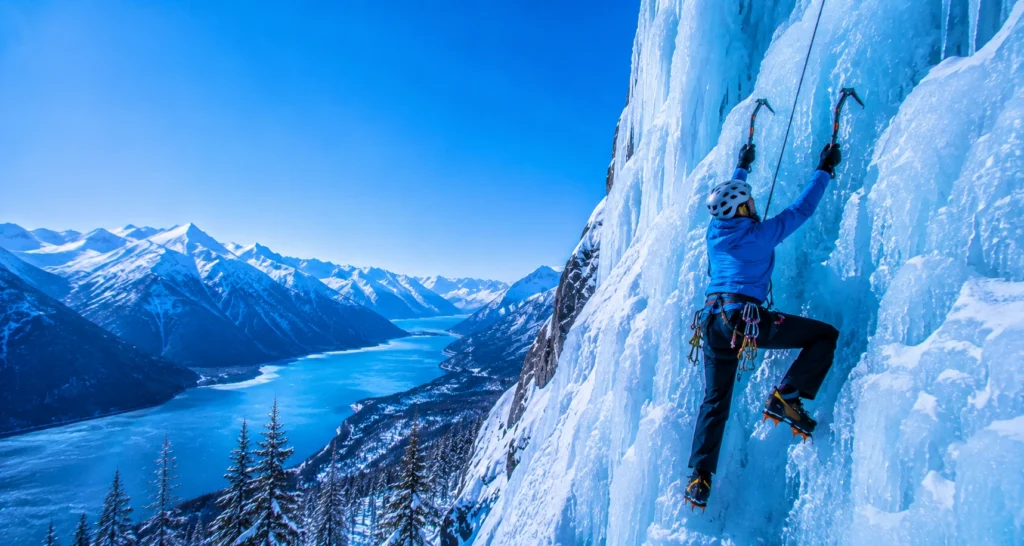
At its core, ice climbing is a sport of climbing frozen waterfalls, ice-covered rock faces, or glacier walls with specialized tools: crampons on one’s feet and an ice axe (or two) in the other. In rock climbing, where you are searching for natural holds, in ice climbing you’re creating your own, kicking and swinging your way up a surface that’s constantly shifting with temperature and light.
Two broad styles are worth knowing:
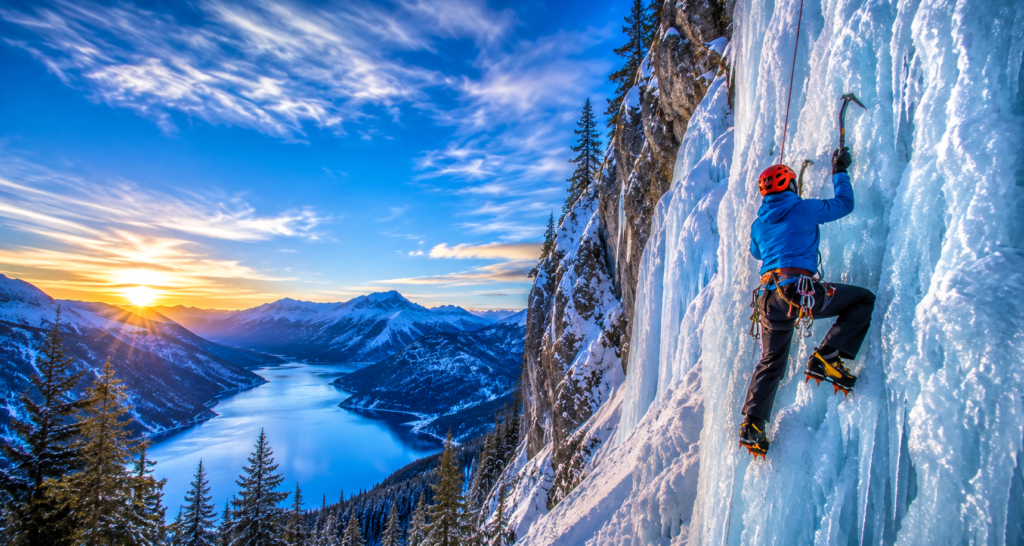
- Water ice climbing: frozen waterfalls, often found in places like Alaska, Colorado and the Canadian Rockies.
- Alpine or glacier ice climbing: climbing on glaciers themselves, usually as part of a larger mountaineering route.
Most first-time users start with water ice on a guided tour, so we’re looking for a real question people are looking for, which is the real question we are going to answer.
It’s worth saying, too, that ice climbing has a longer history than most people think. Mountaineers were cutting steps into glacier ice with hand axes over a century ago, long before crampons and ice screws made the sport accessible to recreational climbers. What used to be a niche activity for expedition mountaineers has turned into a full travel category of its own (with festivals, guiding companies, and destination towns that build their winter economies around it). That history is why the culture of ice climbing tours is still built around mentorship: most of the guides have been taught by someone before them, and the same hands-on, patient teaching style permeates both beginner tours and the industry today.
Is Ice Climbing Dangerous?
Let’s address it directly, because it’s the question on everyone’s mind before they book. Is ice climbing dangerous? In truth: it is, and so is skiing or scuba diving, as well. Ice can break up unpredictably, weather can change quickly in the mountains, and falls without proper protection can be dangerous.
But that said, is ice climbing safe when done through a good outfitter? Most of the time, yes. Professional guides check ice conditions daily, use certified anchors and ropes, and don’t take clients on dangerous routes. Most of the injuries in this sport happen to unguided, overconfident climbers, not tourists on a well-run guided tour. If you’re going to do your first climb with a licensed guide service, your risk profile is much more like a supervised zipline than an extreme sport.
The real safety variables are the guide’s experience, the quality of gear provided, and how well the company communicates conditions. We’ll look at how to vet all three below.
It’s also important to know where the real risk is in this sport (and that is not usually where beginners think it’s in front of them). Most of the serious incidents in ice climbing take place during unpredictable ice fractures, sudden temperature swings that destabilize a route, or human error with anchor placement (not climbing itself).
On a guided beginner tour, your guide is constantly reading the ice, watching temperature, and adjusting the route or calling the day off entirely if conditions are bad. That’s precisely why the question of whether ice climbing is dangerous deserves a nuanced answer rather than a flat yes or no: the sport itself is inherently dangerous, but a well-managed tour is a real way to engineer most of that risk into your experience.
If you want an extra layer of reassurance, ask your outfitter how long they have operated at that particular site. A company that’s been running the same route for years knows its quirks, where the ice thins, which sections get unstable in warm spells, and how the formation behaves after fresh snow. That site-specific knowledge doesn’t appear in a brochure, but it’s often the single biggest safety factor on the mountain.
Ice Climbing in Alaska: Why It’s a Bucket-List Destination
If there is one place that keeps showing up in every serious climber’s search history, it’s Alaska. Ice climbing in Alaska’s landscape offers something most other destinations simply can’t: scale. You’re not climbing a 40-foot roadside waterfall; you’re climbing up formations carved out of glaciers that have been moving for thousands of years and framed by mountain ranges that make you feel really small.
Matanuska Glacier, a couple of hours outside Anchorage, has become one of the most popular entry points for beginners because it is accessible by vehicle but still has the genuine, awe-struck feeling of “I can’t believe I’m here.” And beyond that far north, into more remote terrain, experienced climbers can find multi-pitch routes that rival anything in the world.
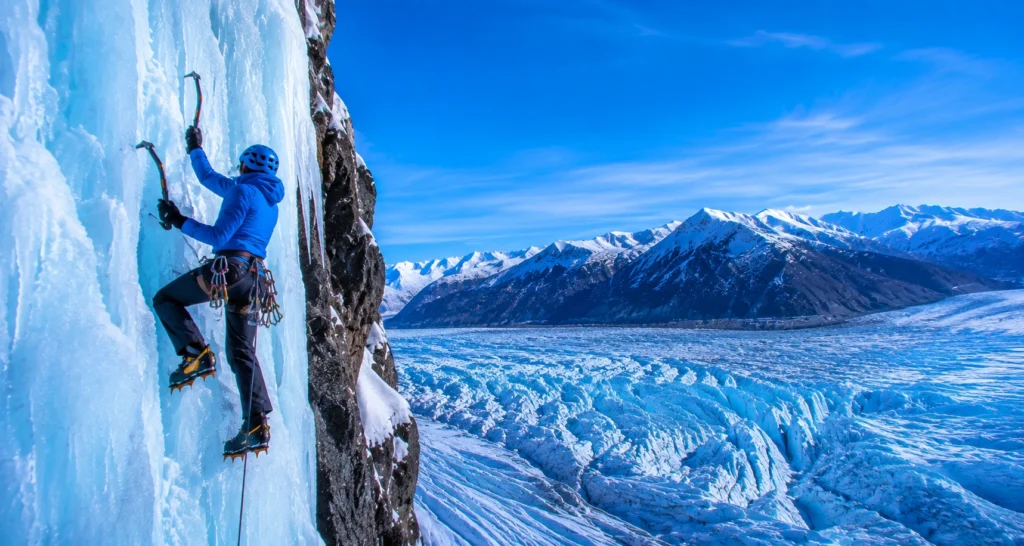
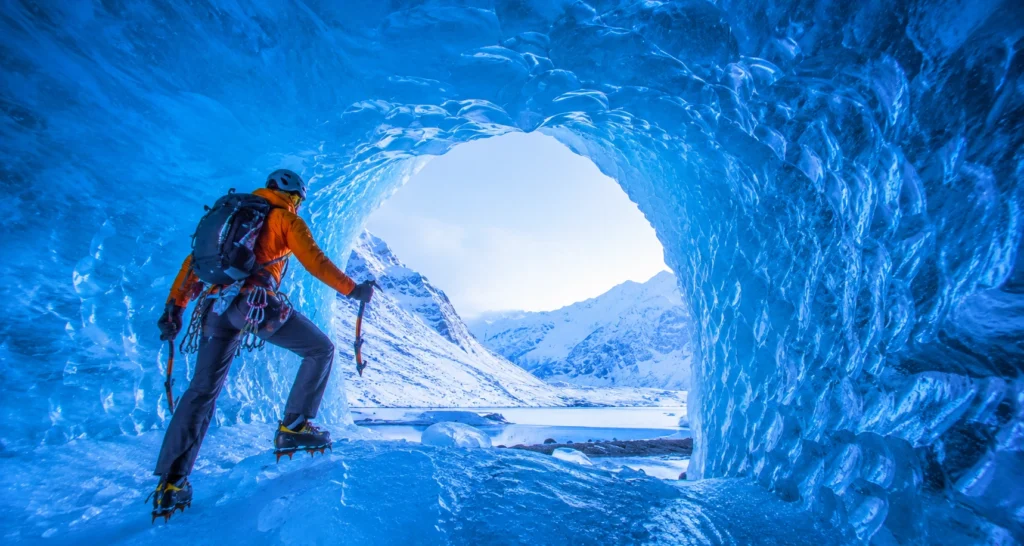
What makes ice climbing in Alaska so special for travelers is that it pairs adventure with a landscape that most people don’t know about: turquoise ice caves, crevasse fields, and silence only interrupted by wind and the occasional crack of shifting ice. It’s not just a sport here, but a full sensory experience.
Beyond Matanuska, the Chugach and Wrangell-St. Elias ranges offer some of the most dramatic backcountry areas in North America, and a few of the most specialized outfitters run multi-day trips that combine glacier trips, ice cave exploration, and technical climbing as one big adventure. These trips tend to attract those people who have already done a beginner tour in the area and want to try something more involved (longer pitches, colder mornings, and campsites pitched directly on the ice). If that sounds intriguing, know that ice climbing in Alaska at this level typically requires prior experience or, at minimum, a good show on a warm-up day arranged by the outfitter before the main expedition begins.
Ice Climbing Destinations Beyond Alaska
Alaska dominates the search results, but it’s not the only serious option, and comparing destinations is useful to consider before booking flights and gear.
Colorado’s Ouray Ice Park is generally called the birthplace of accessible ice climbing tours in the U.S. It’s a man-made ice park with manufactured routes ranging from beginner-friendly to truly intimidating, and its proximity to Denver makes it one of the easiest destinations to combine with a larger ski trip.
The Canadian Rockies, especially around Banff and Canmore, provide some of the most photographed ice formations on the continent, with a guiding culture that has been honed over generations. Here there are short, forgiving climbs and committed, multi-pitch alpine lines.
Norway’s fjord country has become a favorite for European travelers looking to enjoy dramatic, moody landscapes and technical climbing; often within driving distance of small fishing villages that provide a great base camp for a memorable visit. We are all different; all of these destinations are different. Colorado suits travelers who want to be in a structured and accessible environment. The Canadian Rockies are ideal for postcard landscapes and good guiding. Norway suits the traveler who wants the trip to be like an expedition even if you’re not very far into your trip. And Alaska is still the benchmark for size and remoteness for most people.
Ice Climbing Destinations Beyond Alaska
This is where most people get stuck, so let’s break it into a clear decision process.
1. Match the Tour to Your Actual Skill Level
Be honest with yourself. A tour marketed as “beginner-friendly” ice mountain climbing should include:
- A full gear briefing and hands-on training before you touch the ice.
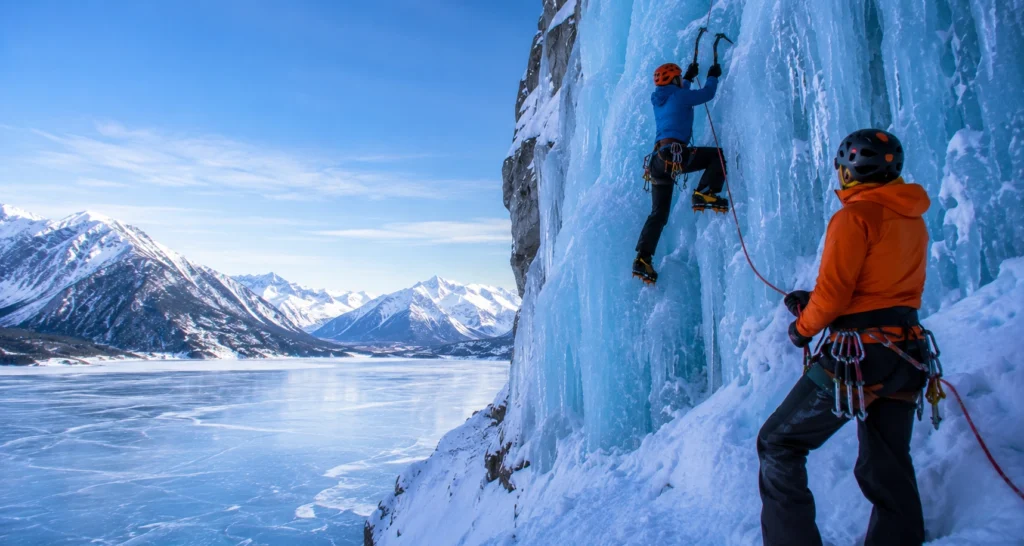
- Top-rope setups (the rope is anchored above you, so falls are minimal).
- A guide-to-client ratio of roughly 1:4 or lower.
If a listing mentions “expedition,” “lead climbing,” or “multi-pitch” and you have never held an ice axe, that’s not your starting point, no matter how good the photos look.
2. Check Guide Certification
Look for certified mountaineering guides. That is the first thing that separates trustworthy ice climbing tours from a business based solely on feelings. Don’t be afraid to ask a company directly what certification their guides have; a genuine outfitter would answer without hesitation.
3. Understand What’s Actually Included
Cheaper tours may exclude boots, crampons, or insulated layers, so you need to source your own last-minute gear. Premium tours will usually come with a technical gear rental, transportation to the site, and usually hot drinks or dinner after. Read the fine print before you compare the price; the “cheaper” option isn’t always cheaper when you’re renting gear separately.
4. Consider Group Size
Smaller groups mean more individual coaching time, more flexibility if the weather changes, and generally a more personal experience. If you’re in search of that kind of quiet, almost meditative element of ice climbing, don’t go for fifteen people on one small ice face.
5. Read Reviews for Weather Transparency
The best operators would reschedule or change routes when the conditions turn unsafe, rather than wait for the schedule. Reviews that include a company being upfront about weather calls are a strong trust signal.
6. Think About What Happens After the Climb
It’s only a small detail, but it says a lot about an operator: what happens when you’re back off the ice? The best ice climbing tours build in time to warm up, talk about the climb, and often include pictures (or footage) taken on the day. Tours that put you right back to a parking lot the second the climb is over do not feel like a real experience, and that can be seen in how the entire day feels in hindsight. Beyond Alaska
This is where most people get stuck, so let’s break it into a clear decision process.
1. Match the Tour to Your Actual Skill Level
Be honest with yourself. A tour marketed as “beginner-friendly” ice mountain climbing should include:
- A full gear briefing and hands-on training before you touch the ice.
- Top-rope setups (the rope is anchored above you, so falls are minimal).
- A guide-to-client ratio of roughly 1:4 or lower.
If a listing mentions “expedition,” “lead climbing,” or “multi-pitch” and you have never held an ice axe, that’s not your starting point, no matter how good the photos look.
2. Check Guide Certification
Look for certified mountaineering guides. That is the first thing that separates trustworthy ice climbing tours from a business based solely on feelings. Don’t be afraid to ask a company directly what certification their guides have; a genuine outfitter would answer without hesitation.
3. Understand What’s Actually Included
Cheaper tours may exclude boots, crampons, or insulated layers, so you need to source your own last-minute gear. Premium tours will usually come with a technical gear rental, transportation to the site, and usually hot drinks or dinner after. Read the fine print before you compare the price; the “cheaper” option isn’t always cheaper when you’re renting gear separately.
4. Consider Group Size
Smaller groups mean more individual coaching time, more flexibility if the weather changes, and generally a more personal experience. If you’re in search of that kind of quiet, almost meditative element of ice climbing, don’t go for fifteen people on one small ice face.
5. Read Reviews for Weather Transparency
The best operators would reschedule or change routes when the conditions turn unsafe, rather than wait for the schedule. Reviews that include a company being upfront about weather calls are a strong trust signal.
6. Think About What Happens After the Climb
It’s only a small detail, but it says a lot about an operator: what happens when you’re back off the ice? The best ice climbing tours build in time to warm up, talk about the climb, and often include pictures (or footage) taken on the day. Tours that put you right back to a parking lot the second the climb is over do not feel like a real experience, and that can be seen in how the entire day feels in hindsight.
What Ice Climbing Tours Typically Cost
Pricing is not fixed at all for a destination, for group size, and for trip length, but knowing the general ranges allows you to find a good deal.
- Half-day beginner tours (Colorado and Canadian Rockies): probably the cheapest, with everything from gear rental, instruction, and a short climbing session bundled into one price.
- Full-day guided tours (Alaska, glacier-based): higher in price due to remote access, transportation logistics, and longer instruction time.
- Multi-day expeditions: The most expensive, with a lot of camping gear, meals, and multiple climbing days, closer to a full guided mountaineering trip than a single activity.
A good rule of thumb: if a quoted price seems dramatically lower than comparable tours in the same region, ask what is included. Almost always gear, guide ratio, or access to the site are the two things you don’t want to be missing on the morning of your climb.
Best Time of Year for Ice Climbing Tours
Timing is of more importance in this sport than almost any other outdoor activity. Ice needs to be thick enough to hold weight safely, which typically means:
Alaska and the Rockies: Late November through March, and peak conditions are often in January and February.
Alpine glacier routes: Summer months when glacier ice is more stable and accessible.
And at peak season you’re not just going to book during peak season for convenience; you’re going to see people climbing on rock-solid, well-formed ice and climbing on something far less predictable.
What to Pack (Even If Gear Is Provided)
And even fully-outfitted tours require you to bring your own base layers. A good rule of thumb:
- Moisture-wicking thermal base layers (skip cotton entirely).
- A warm, insulated mid-layer.
- A windproof, waterproof outer shell.
- Wool socks, thick but not so thick your boots don’t fit.
- Glove liners and insulated outer gloves.
- A neck gaiter or buff for wind protection.
Dress like the weather will be ten degrees colder and windier than the forecast says. At a belay station waiting for your turn, you will get cold fast, even in mid-climb.
Common Mistakes First-Timers Make
Even well-prepared travelers tend to trip over the same handful of avoidable mistakes when booking their first ice climbing tour.
- Unaware of the cold during downtime. While it is the actual climbing that keeps you warm so much, the wait between turns isn’t. Have more insulation than you think you will need for that cold in place.
- Booking based on price alone. As mentioned above, the cheapest option usually strips out gear, guide ratio, or site quality, all things that directly affect safety and enjoyment.
- Ignoring the cancellation policy. Weather-dependent activities need flexible rebooking terms. If there is no refund policy on a trip, which is completely dependent on ice conditions, it will make it a red flag before you pay.
- Skipping the fitness conversation. When you tell your guide about your fitness level and any physical limitations, they can tailor the route better than when they discover some mismatch halfway up a wall.
- Forgetting travel insurance. For many of these tours, insurance for adventure activities is worth it given the remote places they are based and relatively small extra costs.
Ice Climbing Etiquette and Environmental Responsibility
As ice climbing has grown as a travel activity, so has its footprint on fragile alpine and glacier environments. Environmental care is a part of the experience now where responsible travelers and the outfitters are alike.
Simple practices make a real difference: staying on established access trails rather than cutting new paths across delicate terrain, packing out all waste including food scraps, and respecting seasonal closures to allow ice formations to recover or wildlife to roam undisturbed. Many ice climbing tours now include a brief briefing on local conservation efforts as part of the pre-climb orientation, particularly in glacier environments where visible retreat has made sustainability a visible, felt issue rather than an abstract one.
Good etiquette extends to climbers as well. Sharing routes slowly, not rushing other people on shared ice, and following your guide’s lead on pacing all contribute to a safer, more pleasant day for everybody on the ice, not just your group.
Conclusion
Ice climbing is not only a sport that you finish on a list, but it’s also a mindset that changes how you think about cold, height, and your own capabilities. And whether you have your first tentative swing of an axe on a beginner route or are on the verge of a full expedition through ice climbing in Alaska, the right tour is the one that determines a trip you’ll remember for years and one you’d rather forget.
Have done your homework; make sure to match the tour to your skill level, vet the guides, know what’s included, compare destinations accurately, and plan your trip for peak ice conditions. Get those things right, and you’re not just booking an activity; you’re booking a memory that will last more than the blisters.
FAQs
1. Are beginner ice climbing tours required to have prior experience?
Ans: No. Most are for beginners and include full training before you start climbing.
2. How dangerous is ice climbing for someone who has a fear of heights?
Ans: Many guides are very good at coaching nervous climbers through the first few feet where most anxiety lives. The rope system is designed to catch you well before any real fall.
3. What is the minimum age to do ice climbing tours?
Ans: This varies by operator, but many accept climbers as young as 10 to 12 on beginner routes as long as they are tall enough and strong enough for gear fit.
4. How physically fit do I need to be?
Ans: General fitness is important for ice climbing, but more so for technique and leg strength than strength of the upper body. Most reasonably active adults can take a beginner tour.
5. Why is Alaska one of the best places to ice climb?
Ans: Ice climbing in Alaska offers accessible glacier terrain with an imposing scale and landscape that’s difficult to match anywhere else, plus an extensive network of experienced local guides.
6. Can I have a phone and camera in my hands while climbing?
The majority of guides allow it during breaks or at the base but don’t allow it during the climb for safety reasons. If this is something that matters to you, ask your outfitter about photo opportunities before booking.