

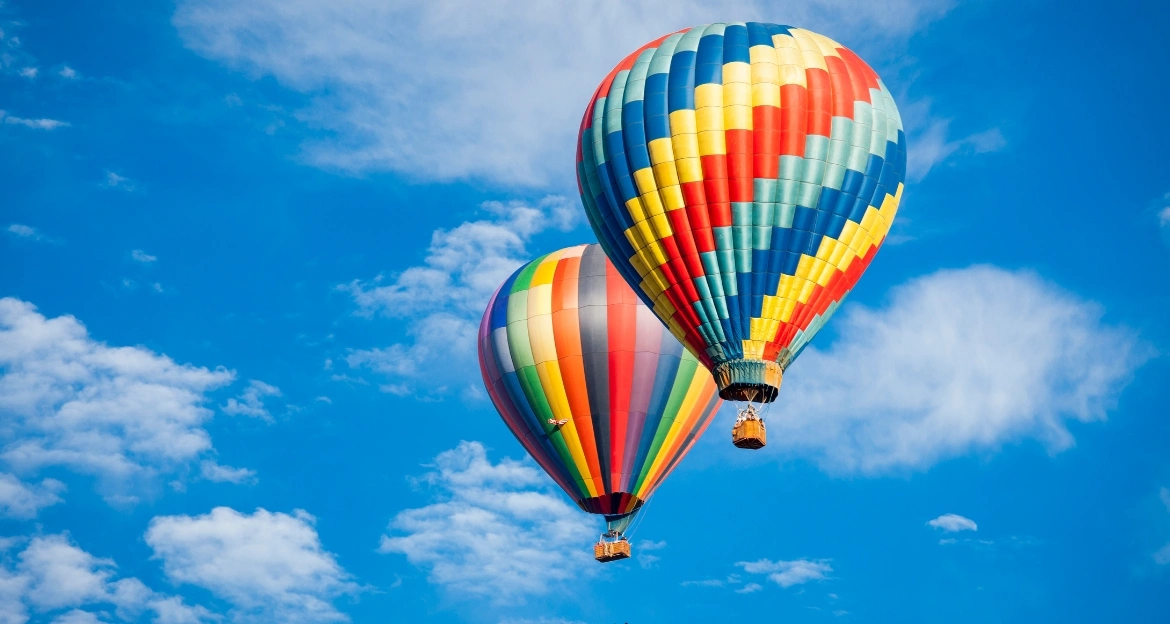
Standing in a wicker basket while the ground falls away beneath you is unlike any other form of flight. There is no engine roar, no window between you and the sky, and no sensation of speed. A hot air balloon simply rises, and the world opens up below in every direction. That quiet, open-air view is why a hot air balloon ride sits on so many travel wish lists, and why most people who try it once start planning their second flight before they land.
Most balloon flights launch at dawn, when the air is cool and stable. You watch the envelope inflate in the half-dark, climb aboard, and lift off just as the sun clears the horizon. Whether that horizon holds the rock valleys of Cappadocia, the vineyards of Napa, or the wildlife of the Maasai Mara, the view from 300 to 900 metres up rewards the early alarm.
This guide covers everything you need before you book. You will learn how a hot air balloon actually works, where the best hot air balloon rides in the world are, what a flight costs in different countries, how safe ballooning really is, what to wear, and how to avoid the mistakes first-time riders make. Included are tables that compare various types of flights, the packing list for hot air balloon rides, and answers to the most common questions asked by passengers.
A balloon flight suits almost everyone: couples marking an anniversary, families with school-age children, photographers chasing golden-hour light, and travellers who want adventure without an adrenaline spike. If you can stand for an hour and climb into a basket, you can fly.
What Is a Hot Air Balloon?
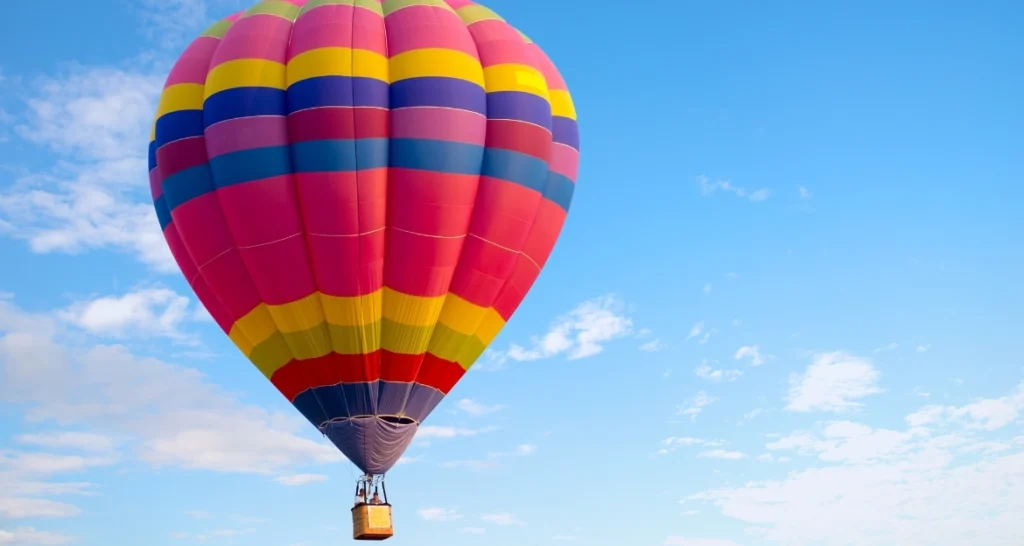
A hot air balloon is a lighter-than-air aircraft that flies because the heated air inside its fabric envelope weighs less than the cooler air outside. A burner heats the trapped air, the balloon rises, and the wind carries it across the landscape. It is the oldest successful human flight technology, and the basic design has barely changed since 1783.
Definition
In aviation terms, a hot air balloon is an unpowered aircraft that gains lift through buoyancy rather than wings or rotors. The pilot controls altitude with heat, while horizontal direction depends on wind currents at different heights.
Components of a Balloon
Every modern balloon has three main parts: the envelope (the large fabric bag, usually ripstop nylon), the burner system that produces the flame, and the basket, or gondola, where the pilot and passengers stand. Propane cylinders inside the basket fuel the burners.
How Passengers Travel
Passengers stand in the open-topped wicker basket, which typically holds anywhere from 2 to 24 people depending on its size. Wicker is still used because it is light, strong, and absorbs the shock of landing better than metal.
Types of Balloons
Standard passenger balloons dominate the tourism market, but you will also see special-shape balloons at festivals, small one-person hopper balloons, and hybrid Rozière balloons that combine hot air with helium for long-distance record attempts.
How Does a Hot Air Balloon Work?
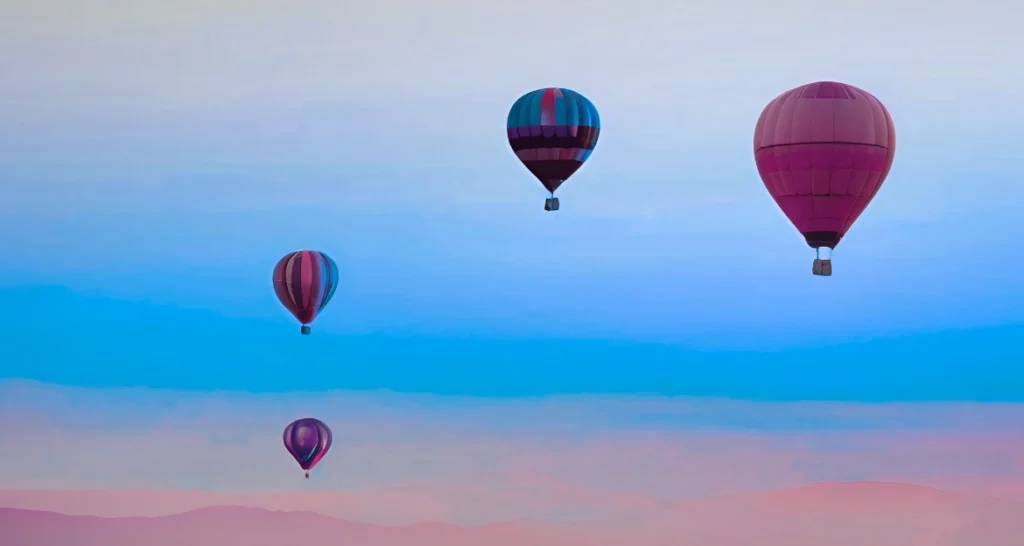
The science behind ballooning fits in one sentence: hot air is less dense than cold air, so a bag full of it floats. Everything else on the aircraft exists to create, contain, and control that heated air.
The Principle of Hot Air
When the burner heats the air inside the envelope to around 100°C (212°F), the air molecules spread out and the air inside becomes lighter than the surrounding atmosphere. Buoyancy then pushes the balloon upward, the same force that floats a cork in water. To descend, the pilot lets the air cool or vents hot air through a valve at the top of the envelope.
Burner System
The burners sit on a frame above the passengers’ heads and mix liquid propane with air to produce a flame that can exceed 3 metres in length. Most commercial balloons carry double or triple burners for redundancy. Short blasts of a few seconds are enough to maintain or gain altitude.
Envelope
The envelope is sewn from panels of ripstop nylon coated to resist heat and UV damage. A typical passenger envelope holds 3,000 to 12,000 cubic metres of air. At the crown sits the parachute valve, a fabric disc the pilot opens with a rope to release hot air for descent and to deflate the balloon after landing.
Basket
The basket hangs from the envelope on stainless-steel cables. Larger baskets are divided into compartments so passengers stay balanced and braced during landing. Padded leather trim, rope handles, and step holes for climbing in are standard.
Fuel Tanks
Stainless-steel or aluminium propane cylinders stand in the corners of the basket. A one-hour flight for a mid-size balloon typically burns 60 to 120 litres of propane, and pilots always carry a reserve.
Steering Using Wind Currents
Balloons have no steering wheel. Wind often blows in different directions at different altitudes, so pilots climb or descend to catch a current heading the right way. This is why every balloon flight is followed by a ground crew in a chase vehicle, ready to meet the basket wherever it lands.
History of the Hot Air Balloon
Ballooning made humans airborne 120 years before the Wright brothers flew. Its story begins with two French paper-makers and a very confused sheep.
The First Successful Flight
Brothers Joseph-Michel and Jacques-Étienne Montgolfier noticed that hot air lifted paper bags above a fire and scaled the idea up. In September 1783 they sent a sheep, a duck, and a rooster aloft at Versailles to prove the air above was survivable. Two months later, on 21 November 1783, Pilâtre de Rozier and the Marquis d’Arlandes made the first free manned flight, drifting about 9 kilometres over Paris in 25 minutes.
Modern Ballooning
The modern era began in 1960, when American engineer Ed Yost flew the first balloon powered by an onboard propane burner with a nylon envelope. His design made flights repeatable, affordable, and safe enough for passengers. Long-distance milestones followed, including the first non-stop round-the-world balloon flight by Bertrand Piccard and Brian Jones in 1999.
Recreational Ballooning Today
Today, hot air ballooning is a global industry. The Albuquerque International Balloon Fiesta, founded in 1972, now launches more than 500 balloons each October, and commercial sunrise flights operate on every inhabited continent, from Cappadocia to Jaipur to the Serengeti.
Why Ride a Hot Air Balloon?
People book balloon flights for very different reasons, and the experience delivers on most of them.
A Peaceful Flying Experience
Between burner blasts, a balloon is almost silent. Because you move with the wind, you feel no rush of air at all. Many passengers describe it as the calmest form of flight they have ever experienced.
Sunrise Views
A sunrise flight puts you in the sky for the best light of the day. Watching the sun rise over valleys, deserts, or vineyards from an open basket is the image most passengers remember years later.
Photography
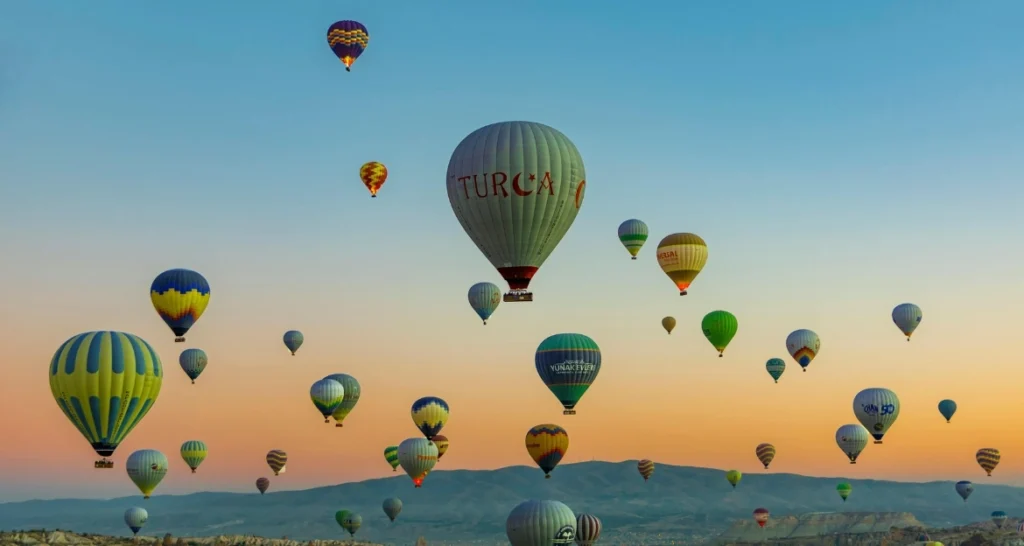
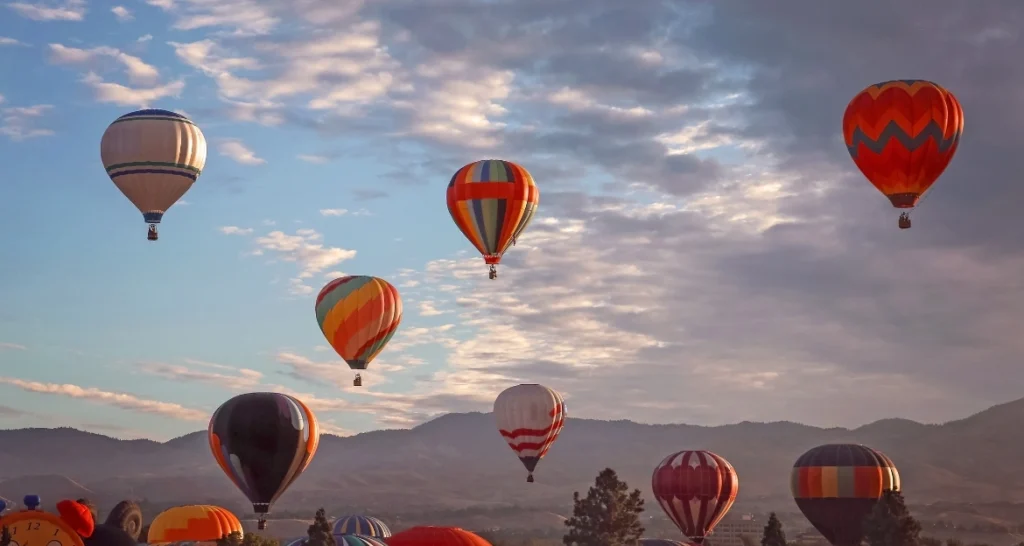
With 360-degree views and no window glass, a balloon is a flying photography platform. Golden-hour light plus dozens of other balloons in the sky, as in Cappadocia, produces frames you cannot get anywhere else.
Romantic Occasions
Private balloon rides are a favourite setting for proposals and anniversaries. Many operators offer two-person baskets with sparkling wine on landing.
Adventure Travel
Ballooning offers a genuine aviation adventure without extreme physical demands. It pairs well with safaris, wine tours, and desert trips.
Family Experiences
Most operators welcome children from about age 6, provided they are tall enough to see over the basket edge (usually 1.2 metres). A balloon flight is one of the few adventures grandparents and grandchildren can share.
Top 10 Reasons to Try a Hot Air Balloon Ride
- Unmatched panoramic views with no windows in the way
- Near-silent, smooth flight with no turbulence
- Spectacular sunrise and golden-hour light
- A bucket-list experience accessible to most ages
- Exceptional photo opportunities
- Romantic setting for proposals and celebrations
- A living piece of aviation history
- Unique perspective on wildlife, deserts, and vineyards
- No two flights are ever the same
- Traditional post-flight toast and celebration
Top Locations for Hot Air Balloon Rides Worldwide
Where you fly shapes the entire experience. These ten destinations offer the most rewarding hot air balloon rides on Earth, each with its own season, scenery, and price range.
Cappadocia, Turkey
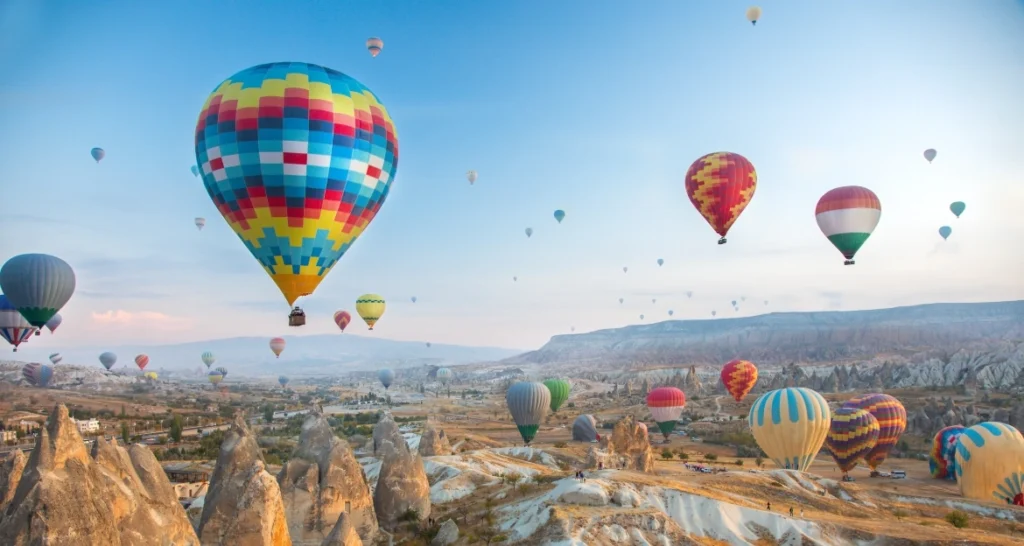
The world capital of ballooning. Up to 100 balloons lift off together over fairy chimneys, cave dwellings, and rose-coloured valleys. Flights run most of the year, but April to June and September to October offer the most stable weather. Expect to pay $200 to $350 for a standard one-hour flight.
Canterbury, New Zealand
Flights from the Canterbury Plains near Methven give you the Southern Alps on one horizon and the Pacific on the other, with a patchwork of farmland below. The season runs October to April, and prices start around NZ$390.
Queenstown, New Zealand
New Zealand’s adventure capital delivers alpine ballooning over Lake Wakatipu and the Remarkables mountain range. Weather windows are tighter here, which makes a successful flight feel even more special. Budget NZ$450 or more.
Serengeti, Tanzania
A balloon safari over the Serengeti during the Great Migration (June to October) lets you drift silently above wildebeest herds, elephants, and lions at dawn. Flights end with a bush breakfast on the savannah. Prices run $500 to $600.
Napa Valley, USA
California’s wine country from above is a grid of vineyards, mist, and morning light. Flights operate year-round with the best conditions from May to October, typically $250 to $400, often paired with a champagne brunch.
Albuquerque, USA
Home of the Albuquerque International Balloon Fiesta each October, when hundreds of balloons fill the sky at once. The local “Albuquerque Box” wind pattern can even carry balloons back toward their launch site. Rides cost $150 to $300, among the best value in the USA.
Dubai, UAE
Sunrise flights over the Dubai desert reveal red dunes, wandering oryx and gazelle, and the Hajar Mountains in the distance. Some operators even fly with a falconer on board. The season runs October to May, with prices from about $250.
Bagan, Myanmar
Floating over more than 2,000 ancient temples at sunrise is one of travel’s iconic images. The flying season is November to March, at roughly $300 to $400. Check your government’s current travel advisories before planning a trip to Myanmar.
Maasai Mara, Kenya
Kenya’s answer to the Serengeti offers balloon safaris over big game country, at their best during the July-to-October migration months. Expect $450 to $550 including a champagne bush breakfast after landing.
Loire Valley, France
Ballooning began in France, and the Loire Valley keeps the tradition alive with flights over Renaissance châteaux, rivers, and vineyards from May to September. Prices range from €200 to €280 for 60 to 75 minutes aloft.
| Destination | Best Season | Flight Time | Approx. Price | Scenic Highlight |
|---|---|---|---|---|
| Cappadocia, Turkey | Apr–Jun, Sep–Oct | 60 min | $200–$350 | Fairy chimneys & rock valleys |
| Canterbury, New Zealand | Oct–Apr | 60 min | NZ$390–$495 | Southern Alps & plains |
| Queenstown, New Zealand | Oct–Apr | 60 min | NZ$450+ | Lake Wakatipu & The Remarkables |
| Serengeti, Tanzania | Jun–Oct | 60 min | $500–$600 | Great Migration herds |
| Napa Valley, USA | May–Oct | 45–60 min | $250–$400 | Vineyards & morning mist |
| Albuquerque, USA | Oct (Fiesta) | 45–60 min | $150–$300 | Mass balloon ascensions |
| Dubai, UAE | Oct–May | 45–60 min | $250–$350 | Desert dunes & wildlife |
| Bagan, Myanmar | Nov–Mar | 45–60 min | $300–$400 | 2,000+ ancient temples |
| Maasai Mara, Kenya | Jul–Oct | 60 min | $450–$550 | Big game on the savannah |
| Loire Valley, France | May–Sep | 60–75 min | €200–€280 | Châteaux & river valleys |
Best Time for a Hot Air Balloon Ride
Timing matters more in ballooning than in almost any other activity, because balloons only fly when the air is calm and stable.
Sunrise Flights
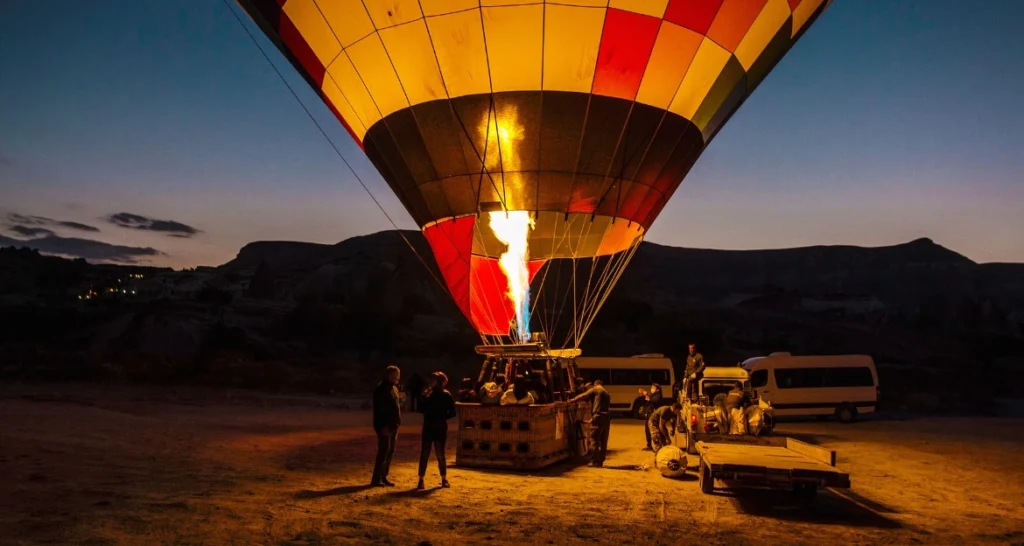
Dawn is the gold standard. Overnight cooling leaves the air at its stillest, winds are light, and the low sun paints the landscape. Nearly all commercial operators schedule their main flights within an hour of sunrise.
Sunset Flights
Some regions also fly in the last two hours before sunset, once daytime thermals fade. Evening flights offer warm light and a more relaxed start time, but they are cancelled more often than morning slots.
Seasonal Recommendations
Shoulder seasons usually deliver the best mix of stable weather and clear skies: spring and autumn in Turkey and Europe, the dry winter months in desert destinations like Dubai and Rajasthan, and the June-to-October dry season for African balloon safaris.
Weather Considerations
Build a spare morning into your itinerary. Even in peak season, flights get postponed for wind or rain, and travellers with only one available date are the ones most often disappointed.
What to Expect While on a Hot Air Balloon Ride?
Knowing the sequence in advance removes most first-timer nerves. A typical flight experience runs three to four hours door to door, with about an hour in the air.
1. Booking Confirmation
The evening before, the operator checks the weather forecast and confirms or reschedules your flight, usually by message or phone. Keep your phone on.
2. Arrival
You arrive at the launch field before dawn, often via hotel pickup. Most operators serve tea, coffee, and a light snack while the crew runs final wind checks with a small helium pilot balloon.
3. Safety Briefing
The pilot explains how to climb into the basket, where to hold on, and how to adopt the landing position: knees bent, back against the basket wall, holding the rope handles.
4. Inflating the Balloon
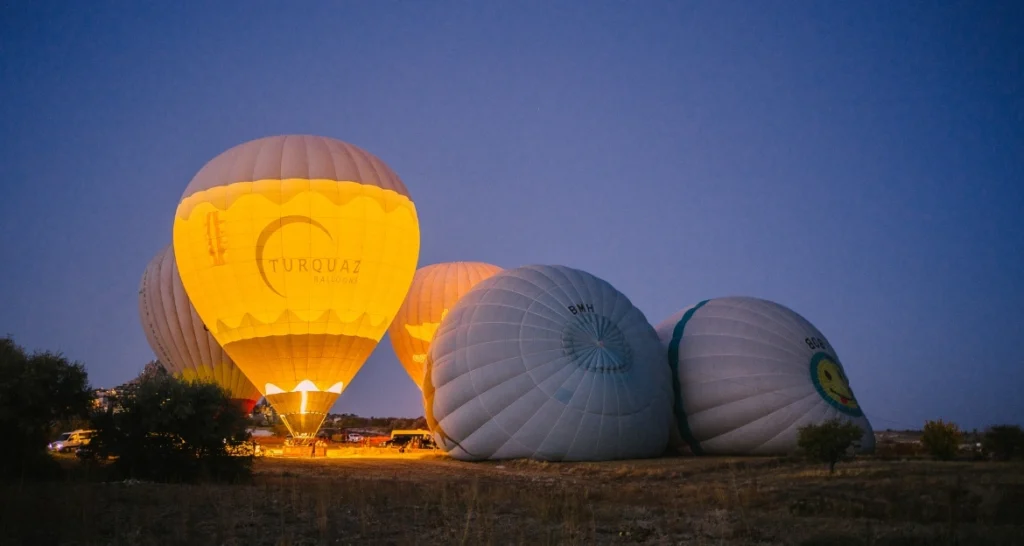
Watching inflation is half the show. The crew spreads the envelope on the ground, fills it with cold air using large fans, then the pilot fires the burner, and the balloon rears upright in minutes.
5. Take-Off
Lift-off is so gentle that many passengers only realise they are airborne when the ground crew starts to shrink below. There is no jolt and no sensation of speed.
6. The Flying Experience
Cruising altitude varies from treetop height to around 900 metres, and pilots often vary it during the flight, dipping low over rivers or fields, then climbing for the big panorama. Because the balloon moves with the wind, the air around you feels perfectly still.
7. Landing
The pilot selects a suitable field and radios the chase crew. Landings range from feather-soft to a few gentle bumps and a slow tip of the basket in fresher breeze, which is why you brace as briefed. It is normal and part of the fun.
8. Celebration After Landing
Ballooning tradition dates to 1783, when French pilots carried champagne to placate startled farmers in whose fields they landed. Today most operators mark landing with a toast, a flight certificate, and stories on the drive back.
How Much Does a Hot Air Balloon Ride Cost?
Hot air balloon ride cost varies widely by country, group size, and season, but the global average for a standard shared sunrise flight sits between $150 and $350 per person.
Average Prices Worldwide
Turkey and India offer some of the best value, while African balloon safaris and private European flights sit at the premium end. The table below shows typical per-person prices for shared flights.
| Country / Region | Typical Price (per person) | Flight Duration |
|---|---|---|
| Turkey (Cappadocia) | $200–$350 | 60 min |
| India (Jaipur, Lonavala) | ₹9,000–₹15,000 | 45–60 min |
| USA (Napa, Albuquerque) | $150–$400 | 45–60 min |
| UAE (Dubai) | $250–$350 | 45–60 min |
| France (Loire Valley) | €200–€300 | 60–75 min |
| New Zealand | NZ$390–$500 | 60 min |
| Kenya / Tanzania (safari) | $450–$600 | 60 min |
Private Rides
A private basket for two typically costs $700 to $1,500 depending on the destination. You get a lower flight path, a flexible route, and the pilot’s full attention, which is why proposals almost always happen on private flights.
Luxury Experiences
At the top end, expect gourmet champagne breakfasts in the bush, extended 90-minute flights, professional photography packages, and combined balloon-and-safari itineraries that can exceed $1,000 per person.
Factors Affecting Prices
Five variables move the price most: destination, season (festival weeks and peak migration months cost more), flight length, basket size (fewer passengers means a higher fare), and inclusions such as transfers, breakfast, and photos.
Ways to Save Money
Book directly with the operator rather than through resellers, travel in shoulder season, choose a larger shared basket, and look for weekday departures. Booking two to three months ahead often unlocks early-bird rates of 10 to 20 percent.
Is a Hot Air Balloon Safe?
Yes. Commercial ballooning is one of the safest forms of recreational aviation. Accidents are rare because the aircraft is mechanically simple, flights only happen in calm conditions, and pilots hold commercial licences. Aviation authorities such as the FAA in the United States and the DGCA in India regulate operators the same way they regulate other commercial aircraft.
Safety Standards
Commercial balloons undergo scheduled airworthiness inspections covering the envelope fabric, burner system, fuel lines, and basket cables. Reputable operators will show you their certification if you ask.
Licensed Pilots
Your pilot holds a commercial balloon licence, which requires documented flight hours, written exams, and check flights. Many tourism pilots log hundreds of flights a year in the same region, so they know the local winds intimately.
Weather Requirements
Flights are grounded when surface winds exceed roughly 15–20 km/h, or when rain, fog, or storms are forecast. A cancellation is the safety system working, not a failure of it. Good operators cancel without hesitation and rebook or refund you.
Emergency Procedures
Pilots carry redundant burners, backup ignition, reserve fuel, radios, and instruments. Even with a burner failure, a balloon descends slowly as the air cools, and pilots train for off-field landings as a routine skill.
Who Should Avoid Balloon Rides
Operators generally decline pregnant passengers and anyone with recent hip, knee, or back surgery, because landings can involve a firm bump. Children usually must be at least 6 years old and 1.2 metres tall. If you have limited mobility or a heart condition, talk to the operator and your doctor before booking.
What Should You Wear on a Hot Air Balloon Ride?
Dress as you would for an early-morning countryside walk, not for a flight. The basket is open to the air, launch fields are dusty or dewy, and temperatures swing between pre-dawn chill and burner warmth.
Clothing
Wear breathable layers you can remove as the sun climbs: a t-shirt, a fleece or light jacket, and long trousers. Natural fibres are more comfortable near the burner’s heat than synthetics.
Shoes
Closed, flat shoes with grip are essential. Trainers or hiking shoes are ideal. Sandals, heels, and slip-ons are unsafe for climbing in and out of the basket and for uneven landing fields.
Accessories
Bring a cap or brimmed hat (it shields your head from radiant burner heat), sunglasses, and sunscreen. A small crossbody bag keeps your phone secure.
What Not to Wear
Skip loose scarves, dangling jewellery, flowing skirts, and anything highly flammable. Leave large bags, tripods, and selfie sticks with the ground crew.
Clothing Checklist
- Layered tops (t-shirt + fleece or jacket)
- Long, comfortable trousers
- Closed flat shoes with good grip
- Cap or brimmed hat
- Sunglasses and sunscreen
- Small secure bag for phone and essentials
Photography Tips for a Hot Air Balloon Ride
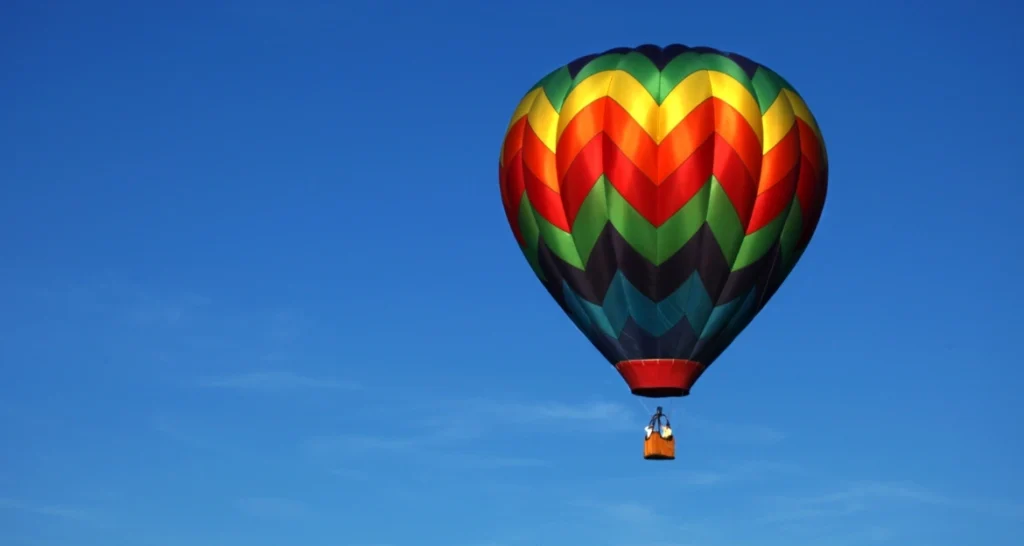
A balloon flight gives you golden-hour light, a moving vantage point, and zero window glare. A little preparation turns that into portfolio-grade photos.
Best Camera Settings
Shoot in aperture priority around f/5.6–f/8 with a minimum shutter speed of 1/250s to counter basket movement, and let ISO float. A 24–70mm zoom covers most scenes; add a longer lens for wildlife or distant balloons. Use a wrist or neck strap at all times.
Phone Photography
Modern phones handle balloon flights well. Lock focus and exposure on the horizon, shoot bursts during take-off and landing, and record a few seconds of video during burner blasts for the sound. Keep a firm grip or use a lanyard; dropped phones are gone forever.
Best Angles
Shoot upward into the envelope during burner blasts, capture other balloons at eye level for scale, and frame your fellow passengers against the sunrise. On landing approach, low-altitude shots over fields often beat the high panoramas.
Drone Rules
Personal drones are banned from the basket by virtually every operator and prohibited near balloon launch sites in most countries. If you want aerial footage of your own balloon, book an operator that offers licensed drone or chase-crew photography packages.
Weather Conditions That Affect Hot Air Balloon Flights
Weather is the single biggest factor in whether you fly. Pilots assess conditions at the surface and aloft before every launch.
Wind
Surface winds above roughly 15–20 km/h make inflation and landing risky, so flights are postponed. Light, steady wind is ideal: enough to travel, calm enough to land softly.
Rain
Balloons do not fly in rain. Water cools the envelope, adds weight, and can damage the fabric. Even a passing shower in the forecast can ground a flight.
Fog
Dense fog eliminates the visibility pilots need for launch and landing. Thin valley mist, on the other hand, often burns off at sunrise and makes for spectacular photos.
Storms
Thunderstorms anywhere in the region cancel flights outright, because storm outflows can produce sudden violent wind shifts many kilometres away.
| Condition | Typical Limit | Effect on Flight |
|---|---|---|
| Surface wind | Above ~15–20 km/h | Flight postponed or cancelled |
| Rain | Any | Cancelled |
| Dense fog | Visibility below minimums | Delayed or cancelled |
| Thunderstorms | Within the wider region | Cancelled |
| Thermals (midday heat) | Strong daytime heating | Flights limited to dawn/dusk |
Pros and Cons of Riding a Hot Air Balloon
Ballooning is a remarkable experience, but it is fair to weigh both sides before spending the money.
| Pros | Cons |
|---|---|
| Silent, smooth, panoramic flight | Weather cancellations are common |
| Suitable for most ages and fitness levels | Very early start times |
| Iconic sunrise views and photography | Higher cost than many tours |
| Safe, simple, well-regulated aircraft | You must stand for the whole flight |
| Memorable once-in-a-lifetime feel | No toilets and no route control |
Hot Air Balloon vs Helicopter Ride
Both put you in the sky, but they deliver opposite experiences. A balloon is slow, silent, and open; a helicopter is fast, loud, and enclosed. Choose the balloon for atmosphere and photography, the helicopter for speed, route control, and covering distance.
| Feature | Hot Air Balloon | Helicopter |
|---|---|---|
| Speed | 8–15 km/h (with the wind) | 150–250 km/h |
| Noise | Near silent between burns | Loud; headsets required |
| Duration | 45–90 minutes | Usually 10–30 minutes |
| Route control | Wind-dependent | Fully steerable |
| Openness | Open-air basket, 360° views | Enclosed cabin with windows |
| Typical price | $150–$400 per hour | $200–$500 for 15–30 min |
| Best for | Sunrise scenery, photos, romance | Landmark tours, tight schedules |
| Weather sensitivity | High | Moderate |
Tips for Booking the Best Hot Air Balloon Ride
Book Early
In hotspots like Cappadocia and the Serengeti, sunrise slots sell out weeks ahead in peak season. Book as soon as your travel dates are fixed, and take the earliest date of your trip so you have rebooking room.
Choose Licensed Operators
Verify that the company holds a commercial air operator certificate from the local aviation authority and that its pilots are commercially licensed. A cheap, uncertified ride is never worth the saving.
Read Reviews
Look for recent reviews that mention pilot professionalism, group size, and how the operator handled cancellations. Repeated complaints about overcrowded baskets or pushy rebooking are warning signs.
Keep Travel Dates Flexible
Give yourself at least two possible flight mornings. Operators automatically move weather-cancelled passengers to the next slot, but only if you are still in town.
Check the Cancellation Policy
Confirm in writing that weather cancellations earn a full refund or free rebooking. Also check the operator’s policy if you cancel, and whether your travel insurance covers missed activities.
Common Mistakes First-Time Riders Make
Most first-flight problems are avoidable. Watch out for these five.
- Wearing the wrong clothes: sandals, skirts, or a single thin layer make the launch field and the landing uncomfortable.
- Forgetting sunglasses: you will spend an hour looking toward a rising sun.
- Booking during bad-weather season to save money, then losing the flight entirely.
- Carrying loose items: unsecured phones, lens caps, and hats end up in farmers’ fields.
- Arriving late: launches run on the sunrise, not on your alarm. Miss the briefing, and you miss the flight.
FAQs
1. How safe is a hot air balloon ride?
Ans: Very safe. Commercial ballooning has one of the lowest accident rates in recreational aviation. Flights only operate in calm weather, aircraft are inspected on fixed schedules, and pilots hold commercial licences.
2. How long does a hot air balloon ride last?
Ans: Most flights last 45 to 60 minutes in the air, with the full experience (arrival, inflation, flight, landing, and celebration) taking three to four hours.
3. What is the average cost of a hot air balloon ride?
Ans: Globally, shared sunrise flights average $150 to $350 per person. Balloon safaris in Africa run $450 to $600, while private two-person flights cost $700 to $1,500.
4. Can children ride in a hot air balloon?
Ans: Yes, with most operators, children aged 6 and above who are at least 1.2 metres tall can fly. Infants and toddlers are not permitted.
5. What should I wear for a hot air balloon flight?
Ans: Comfortable layers, long trousers, closed flat shoes, and a hat. Avoid sandals, heels, loose scarves, and dangling accessories.
6. Can hot air balloon rides be cancelled due to weather?
Ans: Yes, and it happens often. Wind, rain, fog, or nearby storms will postpone a flight. Reputable operators rebook you or issue a full refund.
Conclusion
A hot air balloon ride earns its place on the bucket list honestly. No other experience combines genuine flight, total calm, and an uninterrupted 360-degree view of the world at sunrise. From the first roar of the burner to the traditional toast after landing, the whole morning feels like a small ceremony, and it has felt that way since 1783.
The planning rules are simple. Fly at sunrise, book early with a licensed operator, keep a spare morning in your itinerary for weather, dress in layers with closed shoes, and secure everything you carry. Follow those five points and the rest of the experience takes care of itself.
Where you fly is up to you. Chase the crowded, colourful skies of Cappadocia, drift over lions in the Maasai Mara, toast the vineyards of Napa or the Loire, or start closer to home with a flight over Jaipur’s forts. Every destination offers a different view, but the feeling of stepping out of the basket afterwards is the same everywhere: quiet amazement, and an urge to do it again.
Pick your destination, block a sunrise on your calendar, and book with an operator you trust. The sky is waiting.