

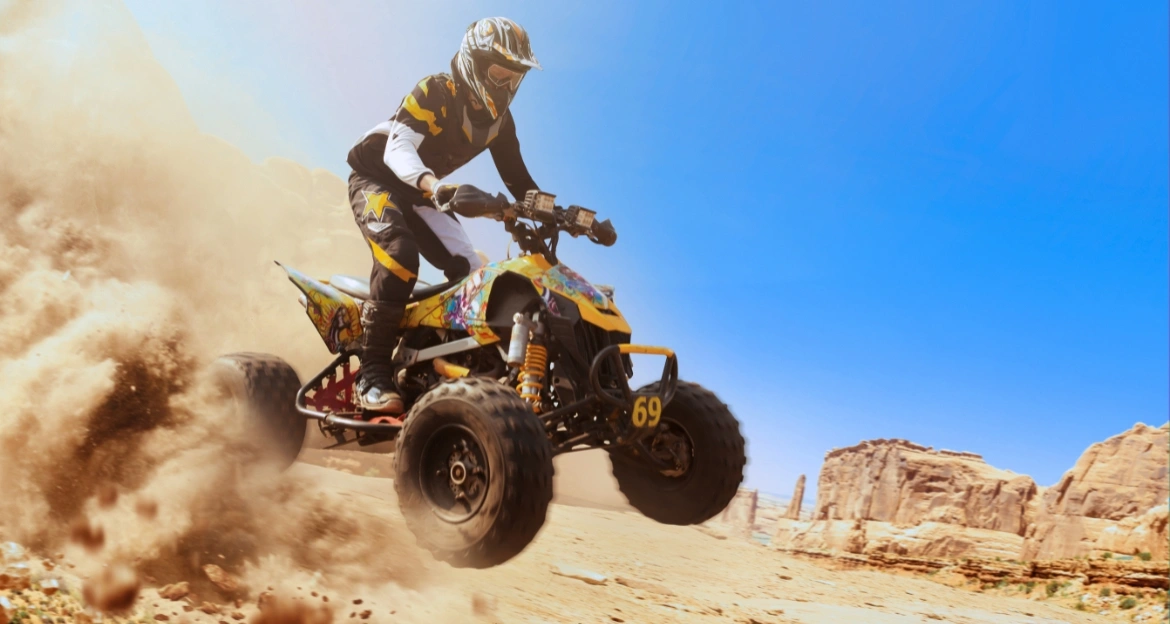
Imagine you are on a muddy Highland field, helmet strap tightening, engine idling beneath you, and a nagging little voice in your head asks the one question that every beginner asks before their first ride: is this safe? If you’re planning a quad biking trip anywhere in the UK, and especially if you’re in search of Quad Biking Scotland routes out among heather-covered glens, that is something that deserves a proper answer, not a vague reassurance.
The reality is that quad biking is one of the most exhilarating outdoor activities, and when it’s done at the right level with good gear, a competent instructor and a genuine reverence for the machine, it’s incredibly safe. Thousands of first-time quad bikers every year put on a helmet and come away buzzing, mud-stained and ready to go on to the next quad bike adventure. But like any sport involving speed, terrain and a powerful engine, safety isn’t built automatically. It’s done in time, through training.
This guide goes through everything a beginner should know before their wheels touch the trail, what makes quad biking safe, the specific risks of off road quad biking, and how families can get along with quad biking for kids without worrying about them at all. We envision this as the conversation a good instructor would have with you five minutes before you set off, if they were given the time to explain all of it in detail.
Is Quad Biking Actually Safe? The Real Answer
Let’s address the elephant in the room first. Go to Google and find quad biking statistics and warning headlines for a long time, and find that it is available. It’s fair to feel a flicker of nerves. But context matters a lot here.
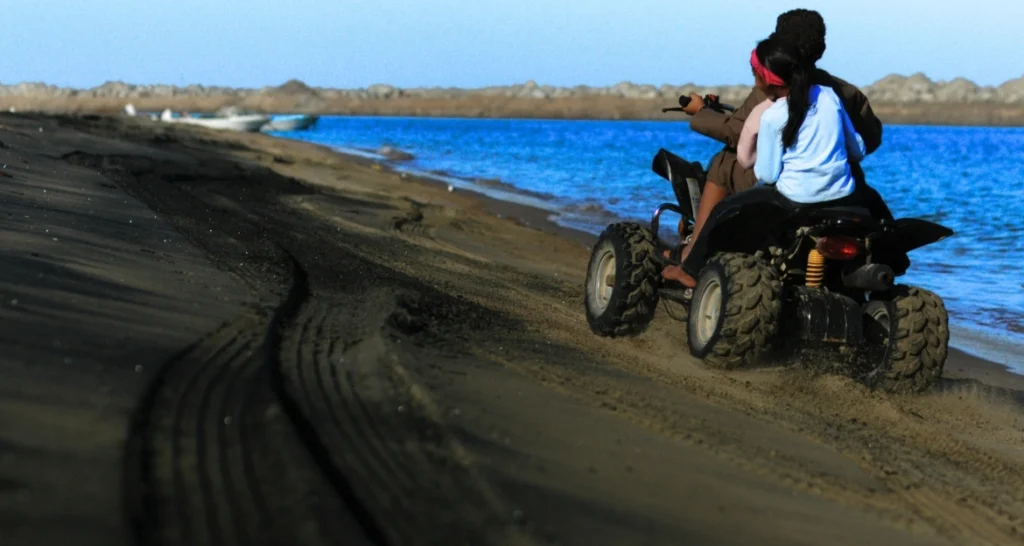
The majority of quad biking incidents happen in unsupervised and uninstructed settings: unlicensed farm usage, unsupervised teenagers or riders going off the beaten path and never being properly briefed in terms of their safety. Structured quad biking experiences run by licensed operators are a very different story. Professional centres fit every quad with speed limiters, ensure safety briefings, provide full protective gear and keep instructors on the trail with every group. That single difference, supervision and preparation, is the difference between a fun quad bike adventure and a real danger.
If you’re booking through a good operator for Quad Biking Scotland, you can expect:
- A pre-ride safety briefing for controls, braking and emergency stops.
- Correctly fitted helmets and often goggles or face protection.
- Quads tailored to your experience level and body size.
- A guide leading the group at a controlled pace.
- Clear terrain boundaries that avoid unnecessary risk.
So in short: quad biking with a licensed provider is a managed activity, not a gamble.
Is Quad Biking Actually Safe? The Real Answer
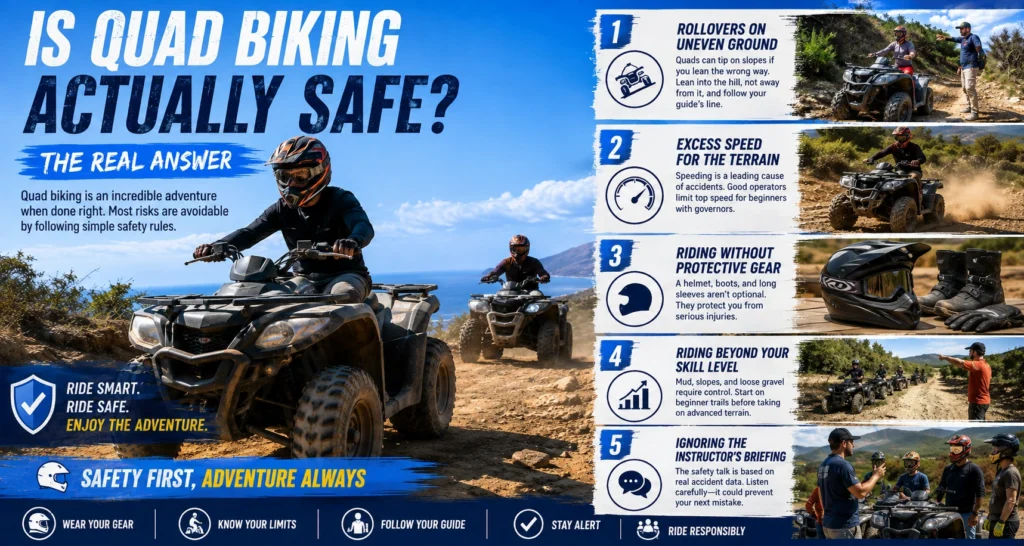
To ride safely, we need to understand where the risk comes from. Quad biking accidents typically are not caused by bad luck, but are caused by a handful of avoidable factors.
1. Rollovers on Uneven Ground
Quads have a high centre of gravity compared to a car, and that makes them great for tackling rough terrain, but they can also tip if a rider leans incorrectly on a slope. This is one of the biggest risks in off road quad biking, especially on side-hills. The solution is simple: lean into the hill, never away from it, and always follow your guide’s line rather than taking a shortcut.
2. Excess Speed for the Terrain
Confidence builds once you are able to control the throttle, and that is when the riders tend to speed up beyond what the ground allows. Good quad biking centres have governors that restrict top speed for beginners, so that a lot of this risk is eliminated before you even start.
3. Riding Without Protective Gear
A helmet isn’t an optional decoration; it’s the one piece of equipment that most likely will prevent a serious head injury. Any operator who offers quad biking without insisting on a helmet, boots and long sleeves shouldn’t be trusted to keep your safety.
4. Riding Beyond Your Skill Level
This is especially true on off road quad biking where mud, gradients and loose gravel make for more control than a flat gravel track. Beginners should start on a beginner’s path before going on to more advanced trails, no matter how tempting the steeper hills look on day one.
5. Ignoring the Instructor’s Briefing
It’s obvious, but rushing through the safety talk because you’re excited to ride is one of the most common (and preventable) causes of minor incidents. Every operator running quad biking sessions builds their briefing around real accident data; it’s worth every minute.
Essential Safety Tips for First-Time Riders
All these fundamentals apply always when you climb aboard, whether you are booking a taster session or a full-day quad biking adventure.
Wear the full kit, every time. Helmet, gloves, boots that cover the ankle, and clothing you don’t mind getting muddy. Long sleeves and trousers keep branches, gravel spray, and minor scrapes away, all little things that add up big in a two-hour ride.
Keep both feet on the footpegs. It sounds simple, but dangling a foot near the ground during quad biking is one of the quickest ways to twist an ankle if the quad shifts unexpectedly on rough ground.
Brake with both hands as much as possible. All quad bikes have a hand brake and a foot brake, and when used together they give you smoother and more controlled stopping power, especially useful during off road quad biking on wet or loose surfaces.
Never overtake without permission. Group rides rely on everyone following the same line at the same pace. Overtaking without a signal from your guide is one of the quickest means of causing a collision.
Respect the throttle. New riders often grip harder than they mean to when they hit a bump. Practising a light, steady throttle hand in the first few minutes of any quad biking session pays off for the rest of the day.
Stay within your comfort zone. A good instructor will always provide a slower alternative route. It’s not a failure: This is how experienced riders built their confidence in the first place.

Quad Biking Scotland: Why the Terrain Demands Extra Care
Scotland’s landscape is precisely what makes Quad Biking Scotland experiences so unforgettable, and precisely why safety preparation matters more here than on a flat, groomed track elsewhere. Forest trails and river crossings in Aviemore and the Highlands can be found, as well as heather moorland and great elevation changes. It’s the kind of scenery that makes riding feel like an adventure, rather than a trip around a paddock.
That richness comes with variable conditions. Scottish weather changes quickly; trails can get muddy within an hour of rain, and visibility on higher runs can change quickly. Reputable operators running Quad Biking Scotland tours build their routes around these realities; they teach riders grip changes and pace changes based on weather and keep groups tighter on technical areas. When booking a Highland quad biking adventure, ask your operator how they modify routes to seasonal conditions; a good answer is a strong sign of a well-run centre.
Layered clothing, waterproof outer gear and grippy boots aren’t just comfort choices in Scotland; they’re part of the safety picture. A cold, distracted rider makes more mistakes than a warm, focused one. So Quad Biking Scotlandis quite a popular bucket-list activity in the first place. It’s not just the terrain that you look forward to— it’s the remoteness.
Riding through a working Highland estate with deer tracks and old stone bridges, and through the sights and sounds of a working Highland estate, it’s so far from a typical theme-park thrill ride (such as a horse-riding adventure) and a ride that’s about something more than just safety. Quad Biking Scotland operators who work on Quad Biking Scotland tend to get into that storytelling aspect of the experience and point out wildlife, local history and hidden perspectives along the way as they’re making a safety-conscious ride into a memorable experience rather than just a ride for fun.
If you’re travelling from further afield specifically for a Quad Biking Scotland trip with a little flexibility around your time, then it’s worth having some flexibility in your schedule. As the routes are weather-dependent, the best operators will shorten, reroute or reschedule a session rather than push ahead in truly unsafe conditions, and that willingness to adapt is a far better sign of professionalism than a company that goes regardless of the forecast.
Off Road Quad Biking vs Trail Riding:
Not all quad bikes are the same, and knowing that is one of the things that helps you to make the right choice.
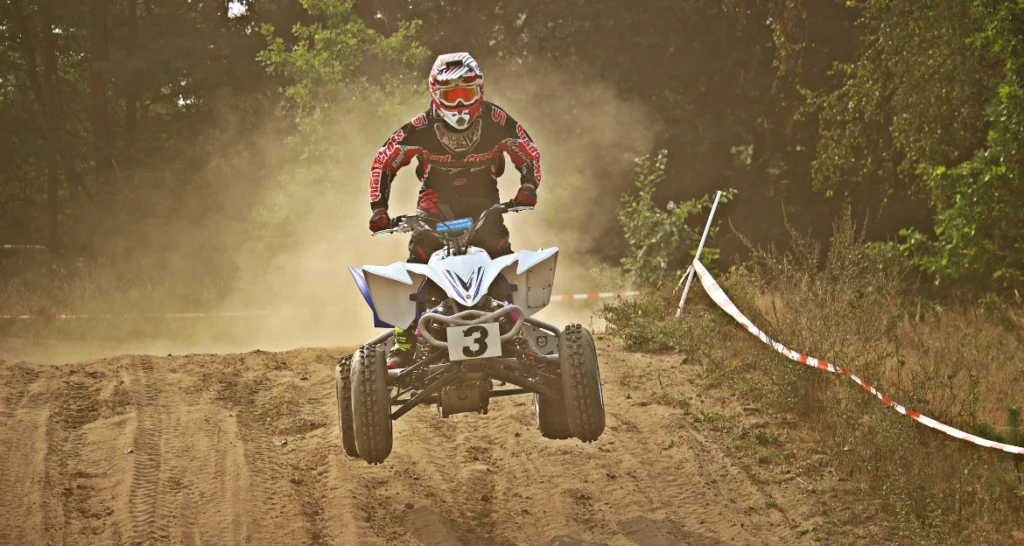
As a sport, trail riding tends to follow well-kept paths with gradual gradients, perfect for beginners and families. Off-road quad biking, however, goes over rough terrain: mud, forest tracks, stream crossings and steeper hills that take active body positioning and reflexes.
While both are quite fun, off road quad biking has a higher skill requirement. If it’s your first time, there is no shame in starting with a trail session and working up. Most of the centres providing off road quad biking packages will also examine your comfort level on the first briefing run and adjust the route to match your comfort level; a great operator will try to slow the group down rather than push anyone to the limit.
Is Quad Biking Safe for Kids?
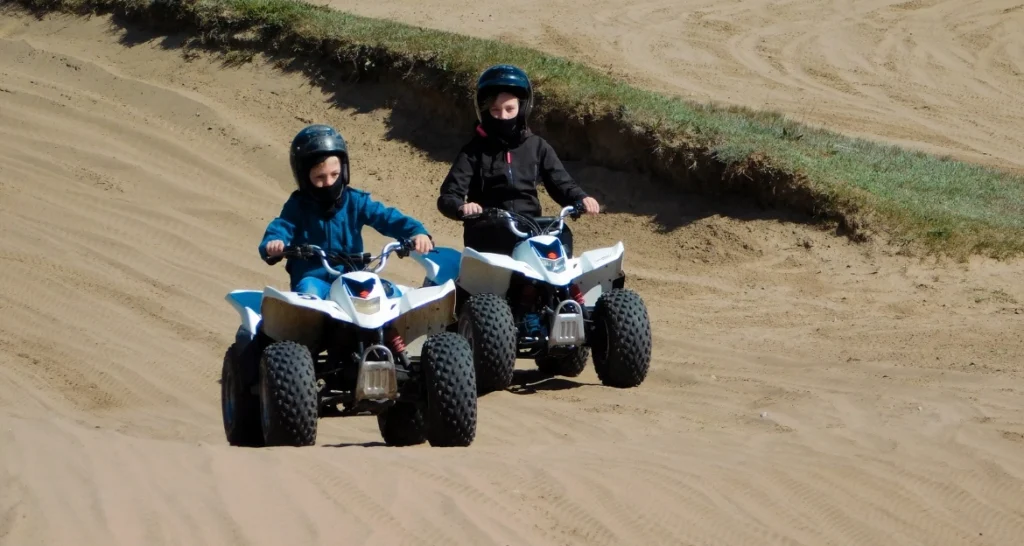
That’s one of the most searched questions about the sport, and in good faith, parents want the thrill without unnecessary risk. The short answer: quad biking for kids can absolutely be safe, provided the experience is age-appropriate and properly supervised.
Established centres that offer quad biking for kids generally use:
- Smaller, lower-powered youth quads sized to a child’s height and strength.
- Strict age and height minimums (commonly around 6–8 years for supervised junior sessions).
- Closed, flat practice areas separate from adult trails.
- One-to-one or small-group instructor supervision at all times.
- Full protective gear, no exceptions.
Parents should never allow a child to ride an adult-sized quad; no matter how capable the child is, the weight, power and handling are simply designed for a different body. When booked through the right operator, quad biking for kids is a great confidence-building lesson: slow, controlled speeds, clear lines of control and instructors trained specifically for younger riders. It’s often the moment a child falls in love with the outdoors in a whole new way.
The way the operator designs quad biking lessons for kids sessions is just as important as the equipment. Look for centres that separate junior groups and adult trail rides from each other and not just slow that mixed group down. A dedicated junior circuit means instructors can be really focused on the children in their care, the right posture and throttle control in real time, and then you end the session with a proper debrief that brings back what you learned. Parents sitting on the sidelines always say that this hands-on, patient teaching approach is what puts their mind at ease more than any single piece of safety gear.
It is also worth asking whether quad biking for kids sessions include a short theory chat beforehand; even five minutes explaining why we lean into corners, or why we never let go of the handlebars, gives children a sense of ownership over their own safety rather than simply following instructions blindly. That small shift in understanding tends to produce noticeably calmer, more attentive young riders.
One last point for parents comparing providers: don’t be shy about asking to watch a session before booking, or asking for a short trial run on the practice circuit before committing to a full package. Any operator confident in their quad biking for kids programme will happily let you observe, and that transparency is usually the clearest signal you’ll get that the experience is genuinely built around safety rather than just marketed that way.
Choosing a Safe Quad Biking Operator
Not every provider of quad biking experiences is up to the same standard, so research is critical before booking and is critical.
You need operators who are transparent about their safety record, insurance, and qualifications for instructors and operators. A good quad biking centre will happily answer questions about group sizes, terrain challenges and how hard it is for the group in bad weather. Reviews are always helpful here, and not just the star rating but what the past riders have to say about how thorough the safety briefing felt and how attentive the guides were on the trail.
There are a few green flags worth watching for:
- Speed-limited quads for beginners
- Small group sizes (around 6–8 riders per guide)
- Clear age, height, and weight requirements
- Full protective equipment provided, not optional
- Good, detailed reviews mentioning safety specifically
If an operator seems vague about any of these, treat it as a warning sign rather than an oversight.
It’s also worth checking whether the operator publishes clear pricing and package details for different rider categories, solo adult sessions, group quad biking adventure packages, and quad biking for kids add-ons often come with different equipment, group sizes, and instructor ratios, and a transparent breakdown of all three tells you they’ve genuinely thought through the safety needs of each group rather than treating every rider the same way. A little homework here, before you ever put your card details in, saves a lot of second-guessing on the day itself.
What to Expect on Your First Quad Biking Adventure
The flow of a typical session takes away a lot of first-timer anxiety. Most quad biking adventure bookings are as follows: arrival and registration, a kit for helmets and gear, a full safety briefing with controls and hand signals, and a short practice loop on flat ground, then a main ride (coached by your instructor) on the ground at a pace that suits the group.
So expect your guide to stop in a few times to check in, point out terrain changes and switch the pace if things change. This isn’t a race; the best quad biking experience is all about enjoyment and control over speed, and riders consistently recall the slower, more relaxed landscapes that they have the best time of. There’s something really grounding about being totally in control in a Highland glen, with nothing but the sound of the engine and birdsong to listen to.
By the end of a successful off road quad biking session, most beginners are surprised by how quickly nerves turn into real confidence. And that shift, from cautious first throttle to grinning at the finish line, is really the point.
Final Thoughts
Quad biking rewards respect. Respect for the machine, the terrain and the instructor standing beside you before you set off. If done right, it is an adrenaline-rich experience without the risk of dying (which is why it’s still one of the most popular outdoor activities in the UK and particularly in the Highlands where Quad Biking Scotland routes offer some of the most beautiful backdrops you’ll ever see).
Whether you are looking to go on a solo thrill-seeking day out or a family quad biking adventure and your first quad bike experience in your kids’ lives, the formula for safety is the same: choose a trustworthy operator, put on the full kit, listen to your briefing, and ride in your comfort zone. Do that, and the only thing you will be worried about is how soon you can return to quad biking for a ride.
FAQs
1. Is quad biking dangerous for beginners?
Ans: Not if it is operated by a licensed operator. The most effective way to do it is with speed-limited quads, full protective gear and close supervision by an instructor; the safety of learning from them is far better than unsupervised riding.
2. At what age can kids start quad biking?
Ans: Most centres that offer quad biking for kids should start at 6-8 years old for supervised junior sessions on smaller, youth-specific quads.
3. Should I learn to ride quad bikes before booking a quad bike adventure?
Ans: No. Most quad bike adventure packages are for absolute beginners, with just a briefing and practice loop before heading off the trail.
4. Is off-road quad biking tougher than trail riding?
Ans: Yes, generally. Off-road quad biking involves rough terrain and higher gradients and less predictable surfaces, so it suits those who have some confidence first.
5. What should I wear for quad biking in Scotland?
Ans: Layered, waterproof clothing, good ankle-covering boots and gloves are required for Quad Biking Scotland trips, and all that, especially when it comes to weather and trail conditions, is variable at a time when quad bike trips are relatively unpredictable.
6. Is quad biking safe in wet or muddy conditions?
Ans: It is, if the operator adjusts pace and route accordingly. No doubt the centre will reduce speed and maintain tight group spacing when wet conditions are on the way, and quad bike riding will be safe in changeable weather.