

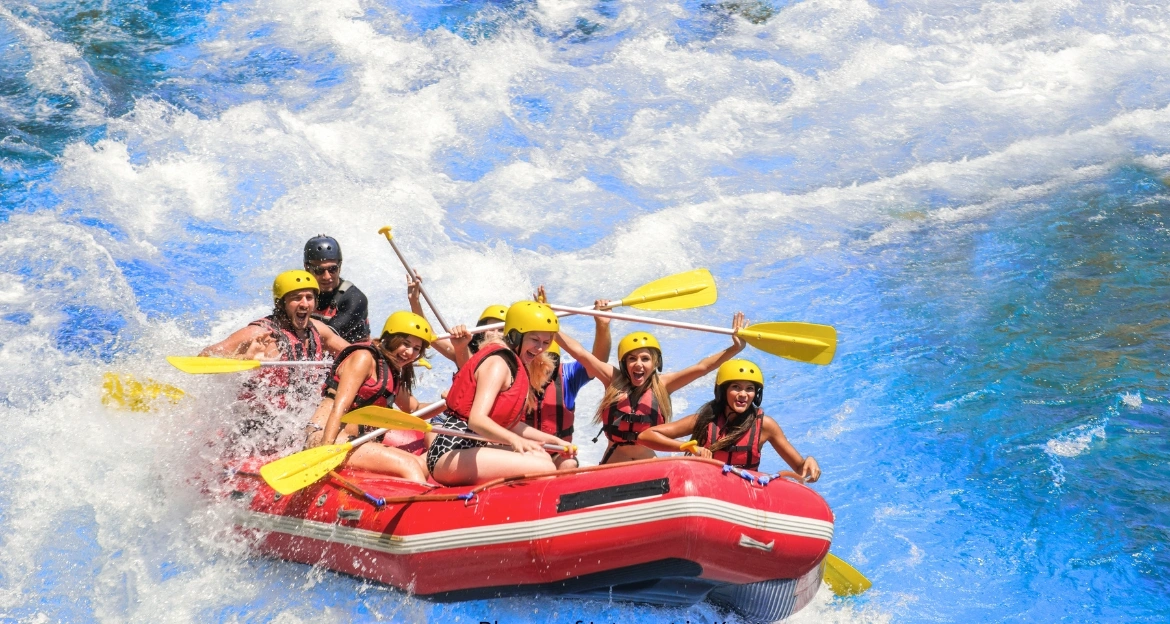
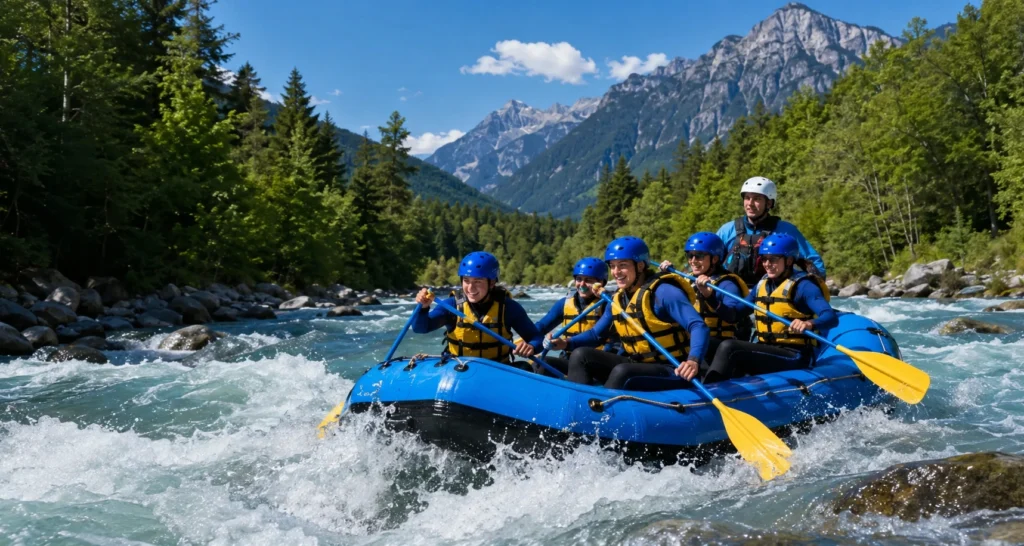
The roar reaches you before the rapid does. Then the raft tips forward, the valley disappears behind a wall of spray, and eight strangers scream in perfect unison. Welcome to the Noce.
Most people come to Italy for the food, the art, and the slow golden afternoons. Then someone hands them a paddle in a valley beneath the Dolomites, and everything changes. Rafting Trentino is the side of Italy that rarely makes the postcards: glacial rivers crashing through pine forests, pale limestone towers above, and rafts of strangers who become friends somewhere in the third rapid.
I’ll say it directly. If your Italian itinerary is all piazzas and no paddles, you are missing one of the most exhilarating experiences the country offers. This guide covers everything: why rafting in Trentino has gained a global reputation, which river matches your nerve, when to go, what it costs, and how to fold a morning of rapids into a genuinely premium alpine holiday.
Grab a coffee. By the end of this, you’ll be checking flights to Verona.
Trentino Rafting at a Glance
| Quick Facts | Details |
| Star River | River Noce, Val di Sole (listed among National Geographic’s world top 10 rivers for rafting) |
| Rapid Grades | Grade II to IV+, depending on the route |
| Season | May to September |
| Minimum Age | Around 6 years for family routes (participants must know how to swim) |
| Typical Price | €40–€70 per adult, including equipment |
| Duration | 2 hours to full-day descents |
| Nearest Airports | Verona, Bergamo, Bolzano |
What Makes Rafting Trentino So Special?
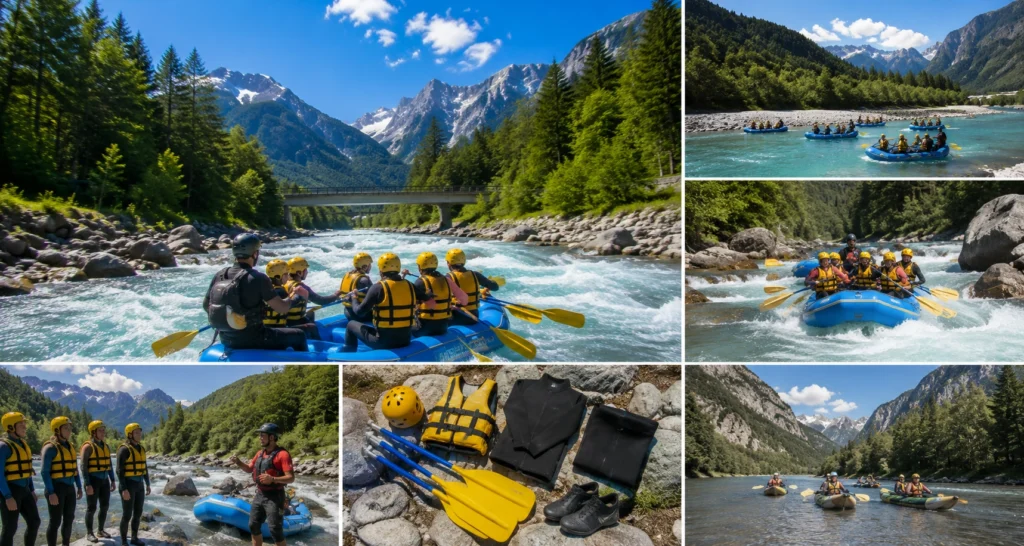
Trentino lies at the far north of Italy, between the Dolomites and the north shore of Lake Garda. Every spring, snowmelt flows down the peaks and glaciers into a network of rivers that stay cold. Fast and wonderfully reliable all summer long. The combination of altitude, geology, and water volume here makes white water rafting one of Europe’s best.
The star of the show is the Noce in Val di Sole. National Geographic has placed it among the top ten rivers in the world for river rafting, and once you’re on it, you know why. The Noce cuts roughly 28 kilometers through forested gorges, moving from playful wave trains to adrenaline-spiking rapids with the Brenta Dolomites standing guard.
And unlike the great rafting rivers of Costa Rica or Nepal, this one comes with an espresso bar at the take-out point and a UNESCO World Heritage mountain range on the horizon. That contrast between wild water and Italian civility is exactly what makes rafting here feel so different from anywhere else.
But what other guides will not tell you is that the Noce is only the beginning.
The Best Rivers for River Rafting in Trentino
The quiet benefit of rafting in Trentino is choice. Different rivers are suited to different moods, and you can match that water with your nerve.
| River | Valley | Best For |
| Noce | Val di Sole | Adrenaline seekers, sporty groups |
| Avisio | Val di Fiemme | First-timers, scenic floats |
| Sarca | Giudicarie / Garda | Families, young children |
The River Noce, Val di Sole
The Noce is where serious paddlers go. Its upper sections offer genuine white-water rafting on grade III and IV rapids during peak snowmelt, while the lower stretches mellow out enough for families and school groups. Rafting centers are mostly in Dimaro, Caldes, and Croviana, so there is no issue of finding a launch point. If you only have a day to raft in the region, spend it here.
The River Avisio, Val di Fiemme
The Avisio flows through one of Trentino’s prettiest valleys, through larch forests and villages that smell of woodsmoke and fresh bread. A descent here feels more like a scenic float with occasional bursts of excitement, which is a nice introduction for anyone nervous about their first time in a raft. Cameras required; the quiet stretches are made for it.
The River Sarca, near Lake Garda
The Sarca runs from the Adamello-Brenta glaciers down to Lake Garda, so you can raft in the morning and be sipping a spritz lakeside in the afternoon. The gorges are dramatic, the water a surreal glacial blue, and the routes appropriate for beginners and children who are taking their first white water rafting course. It also works well if you are going to spend your holiday on Garda instead of in the valleys.
This variety is why Trentino wild rafting has such a devoted following all over Europe. You’re never tied to one river, one difficulty, or one landscape.
What a Descent Actually Feels Like
“You don’t remember the cold. You remember the third rapid, when the whole raft went silent for half a second, and then everyone started laughing at once.” — every first-timer, roughly
I will walk you through it, because the brochures never quite convey the texture of the thing.
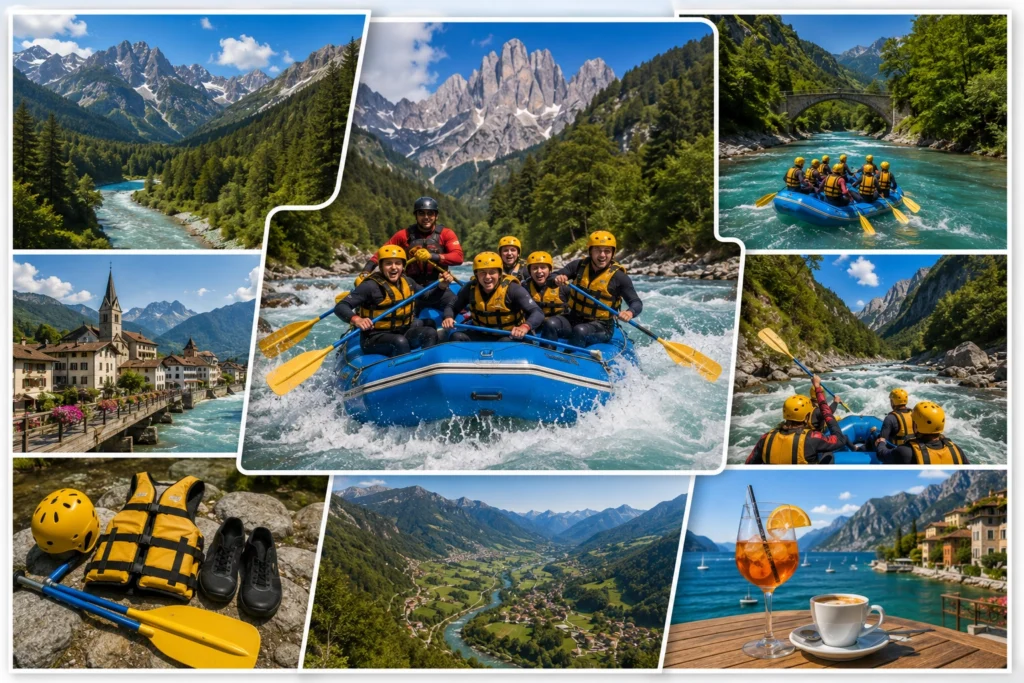
You arrive at the rafting center at mid-morning. There’s a cheerful chaos of wetsuits hanging on racks, helmets in crates, and guides in flip-flops carrying paddles like they weigh nothing. You wriggle into neoprene (an awkward move, but embrace it), buckle your life jacket, and shuffle into the briefing area where your guide, usually deeply tanned and disarmingly relaxed, tells you the commands: forward, back, stop, hold on, get down.
Then the water. The Noce doesn’t ease you in politely. Within minutes the current grabs the raft, and the valley starts moving past at speed. The first splash over the bow lands like a slap of pure glacier, and someone at the back yelps. By the second rapid, the yelps have turned into whoops.
There are stretches of calm in between the white stuff where the raft drifts, and you finally look up: pine forest rising steeply on both sides, the pale teeth of the Brenta Dolomites above, maybe a heron lifting off from a gravel bar. Your guide points out peaks, tells you which rapid is coming next, and lets you catch your breath before the river tilts again.
Ninety minutes later you’re standing on the bank, dripping and grinning, already telling the story to people who were in the same raft. That grin is the whole reason these river descents end up as the highlight of so many Italian holidays.
Is White Water Rafting in Trentino Safe for Beginners?
Short answer: yes, and more so than most first-timers expect.
Every commercial descent in the region is operated by a certified professional guide in the raft. Before you go into the water, guides tell you paddle commands, safety positions, and what to do if there is an unplanned swim (spoiler: float on your back, feet downstream, and enjoy the world’s coldest bath until they scoop you out). Rafts can hold between four and eight people, so if you’re going solo or as a couple, you’ll be traveling with others, which is actually half the fun.
The only real requirement for rafting in Trentino is that you can swim. Children are welcome on gentler routes, often from around age six depending on the operator and water levels. If you want to make things more massive, look for the advanced sections of the Noce, where Trentino wild rafting gets its name, and the rapids will happily rearrange your idea of a quiet Italian holiday.
One honest note: water is cold. It’s snowmelt, after all. You’re in a wetsuit, at least in the first place; that first splash in your face is a wake-up call you’ll remember fondly.
Rapid Grades, Decoded
Rafting routes are graded on an international scale, and having that in your hands will help you choose the right one rather than the loudest one.
| Grade | What It Means | Who It Suits |
| I–II | Gentle current, small waves | Young families, photographers |
| III | Lively rapids, real splashes, and exciting moments | Most first-timers and groups |
| IV | Powerful, technical rapids with thrilling challenges | Confident paddlers |
| V–VI | Expert-level rapids, usually not commercially rafted | Professionals only |
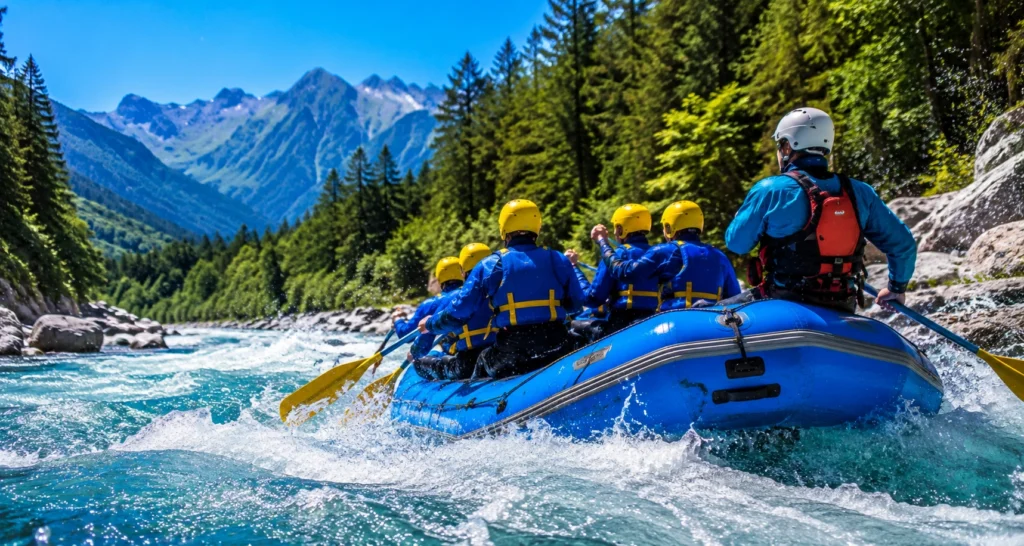
Most classic descents on the Noce are in the III to IV range at peak flow, which is the sweet spot: exciting enough to feel wild and controlled enough to be safe. Family routes on the Sarca and Avisio hover around I to II. When you book, just tell the center honestly what you’re looking for; guides are good at matching people to water.
When Is the Best Time for Rafting Trentino Adventures?
The rafting Trentino season generally runs from May to September, and each window has its own personality.
May & June: The Big Water
lt fills the rivers; rapids are at their most powerful, and experienced paddlers plan whole trips around these weeks. If you want Trentino wild rafting at full volume, this is your moment. The valleys are green, the mountains still have snow, and the rivers are spectacular.
July & August: The Family Sweet Spot
Warmer air, steadier flows, and the friendliest river rafting conditions for families. This is peak season, so book your descent a few days ahead, especially on the Noce, and try to have it in the morning before the classic alpine afternoon thunderstorms come through.
September: The Connoisseur’s Pick
The crowds thin, the larches begin to turn gold, and the rivers still carry enough push for a proper white water rafting run. Combine it with Trentino’s autumn food festivals, and you have a very good week indeed. If I could choose only one month of the whole experience, it would be this one.
What to Wear and What’s Provided
The rafting centers are the best place for your luggage: technical kit.
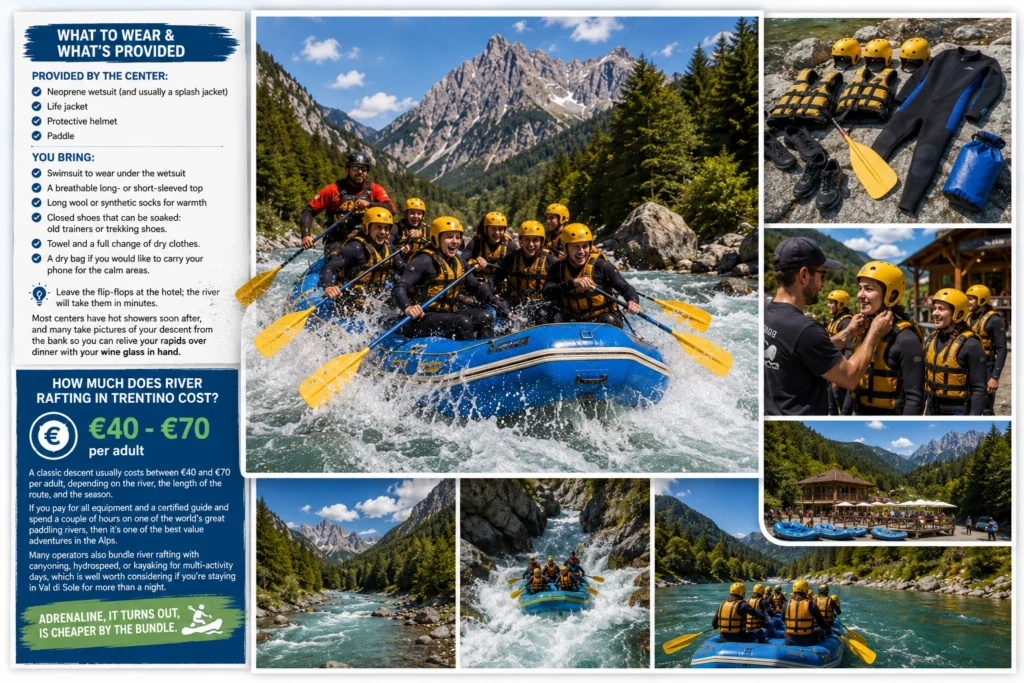
Provided by the center:
- Neoprene wetsuit (and usually a splash jacket)
- Life jacket
- Protective helmet
- Paddle
You bring:
- Swimsuit to wear under the wetsuit
- A breathable long- or short-sleeved top
- Long wool or synthetic socks for warmth
- Closed shoes that can be soaked: old trainers or trekking shoes.
- Towel and a full change of dry clothes.
- A dry bag if you would like to carry your phone for the calm areas.
Leave the flip-flops at the hotel; the river will take them in minutes. Most centers have hot showers soon after, and many take pictures of your descent from the bank so you can relive your rapids over dinner with your wine glass in hand.
How Much Does River Rafting in Trentino Cost?
A classic descent usually costs between €40 and €70 per adult, depending on the river, the length of the route, and the season. Family routes on the Sarca or lower Noce are at the gentler end of that range, and longer white water rafting descents with transport and photo packages cost more.
If you pay for all equipment and a certified guide and spend a couple of hours on one of the world’s great paddling rivers, then it’s one of the best value adventures in the Alps. For comparison, on a gondola ride in Venice, you will pay similar money, and only one of the two involves grade IV rapids.
Many operators also bundle river rafting with canyoning, hydrospeed, or kayaking for multi-activity days, which is well worth considering if you’re staying in Val di Sole for more than a night. Adrenaline, it turns out, is cheaper by the bundle.
Choosing a Rafting Centre: Where Trentino Wild Rafting Comes to Life
The choice of a rafting centre: Where Trentino Wild Rafting Comes to Life
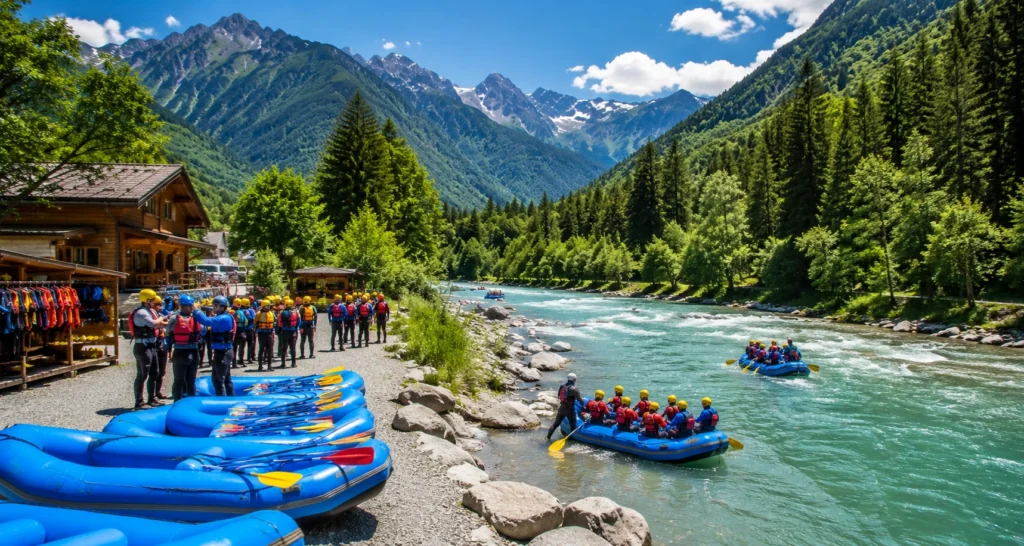
Val di Sole is home to many of the best rafting centers; the bigger names, including the Trentino Wild rafting base in Caldes and the long-running centers around Dimaro, have been guiding descents for decades. And booking with an established center matters more than most travelers realize. Local guides know exactly how the Noce behaves at every water level, which lines to take through every rapid, and when a Trentino wild rafting descent should be dialed up or toned down for the group in the boat.
Most centers have several departures a day in summer, from two-hour taster sessions to full-day descents out of the Noce’s most recognized areas. Search for centers linked to the Italian Rafting Federation, read through the latest reviews, and do not be shy of emailing ahead with questions; the good operators answer quickly and honestly.
Traveler Tribes tip: If you are visiting in July or August, book two or three days ahead and request the first morning departure. Best water, best light, emptiest river.
A Perfect 3-Day Rafting Trentino Itinerary
How do we build a long weekend around the rivers?
Day 1: Arrive & acclimatize. Fly into Verona and drive two hours north to Val di Sole. Check into a spa hotel in Dimaro or Malé, stretch your legs on a valley floor walk along the Noce (Sizing up your opponent), eat like royalty: canederli dumplings, local cheeses, and a glass of Teroldego.
Day 2: The Main Event. Morning descent of the Noce’s classic stretch, grade III–IV, about two hours of rapids and laughter. Lunch at a mountain agriturismo. Afternoon in the hotel spa, warm water doing what cold water did. Evening stroll and gelato.
Day 3: Gentle Glory. Drive south for a family-friendly river rafting float on the Sarca through its blue-green gorges, then go to Riva del Garda for a lakeside aperitivo before returning home. Two rivers, three days, one very smug photo album.
A Perfect 3-Day Rafting Trentino Itinerary
Here’s where rafting in Trentino truly differs from adrenaline trips elsewhere: the scene around the river is just as memorable as the river itself.
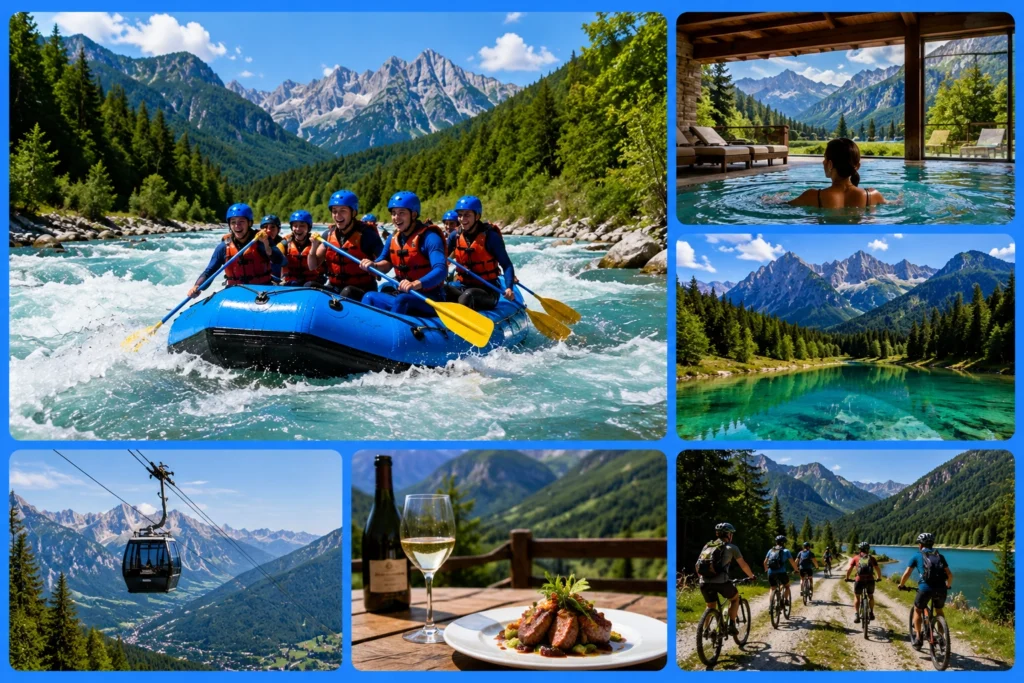
In Val di Sole or Madonna di Campiglio, you can make a holiday that walks a fine line between wild and refined. Morning on the rapids. An afternoon in an alpine spa, all cedar wood and mountain views. Trentodoc sparkling wine and slow-cooked venison in a wood-paneled dining room where the sommelier knows every vineyard by name.
The Dolomites are a UNESCO World Heritage Site, so even your rest days come with world-class scenery: cable cars to high pastures, e-bike trails along the valley floor, and lakes the color of cut emerald. Add the Trentino Guest Card (included by many hotels), and public transport, museums, and cable cars get dramatically cheaper.
This is the appeal for travelers who want to live in comfort. A Trentino wild rafting morning is the raw thrill; the region takes care of everything after. So few places on earth can transfer you from grade IV rapids to a Michelin-starred dinner in three hours.
Insider Tips Before You Book
Some things experienced paddlers wish they had realized before the day of their first descent:
1. In summer, book morning slots. Flows are usually best early in the day, and you’ll beat the afternoon thunderstorms that come through the Alps in July.
2. Tell your guide what you want. Guides read the river all the time and can make a descent gentler or splashier with lines in the river. Say the word, and they’ll find you the waves.
3. Actually listen to the safety briefing. The commands matter, and rafts full of people who paddle together have far more fun (and stay drier) than rafts full of passengers.
4. Combine rivers. With two days, do the Sarca for the landscape and the Noce for adrenaline. It’s the fastest way to understand the full range of Trentino wild rafting.
5. Don’t over-plan the afternoon. Post-rafting euphoria pairs beautifully with a long lunch and absolutely nothing else on the calendar.
6. Pack a second towel. Trust us.
Final Thoughts: Why Rafting Trentino Belongs on Your Bucket List
Italy will always be pasta, frescoes, and long lunches, and thank goodness for that. But another Italy is waiting in the north, one measured in rapids rather than ruins, and rafting Trentino is the fastest way to meet it. World-class rivers, professional guides, family-friendly routes, and some of the best white water rafting in Europe, with the Dolomites watching over every paddle stroke: few trips pack this much into one morning.
So next time you’re drawing out an Italian itinerary, leave a day between museums and vineyards empty. Fill it with cold water, loud laughter, and a river that National Geographic thinks is one of the best on the planet. You’ll come home with wet shoes, a slightly hoarse voice, and the best story of the whole trip.
Trentino is more than a place to go out to fish. It is when your Italian holiday turns into an adventure.
FAQs
1. Where is the best rafting in Trentino?
Ans: The Noce River in Val di Sole is widely regarded as the best of Trentino’s rafting rivers and is named one of the world’s best by National Geographic. The Sarca and Avisio are great alternatives for families and first-timers.
2. Do I have to have experience of white water rafting in Trentino?
Ans: No. Certified guides accompany every raft and teach you everything on the spot. The only requirement is that you can swim. Beginners can enjoy gentler sections, while more advanced Trentino wild rafting routes on the upper Noce are there for experienced paddlers.
3. What is the best month for rafting Trentino trips?
Ans: May and June bring the biggest rapids with snowmelt, making them ideal for wild rafting in Trentino. July and August are best suited for families, and September offers quieter rivers, golden larches, and bright light.
4. How much does rafting from Trentino cost?
Ans: Expect a standard descent to cost €40–70 per adult (with all equipment and a professional guide included). Long river rafting routes, transport, and photo packages cost slightly more.
5. Can children go river rafting in Trentino?
Ans: Yes. Many operators welcome children from around age six on calm routes like the Sarca or the lower Noce, provided they can swim. Family descents are among the most popular river rafting experiences in the region.
6. What should I wear for white water rafting in Trentino?
Ans: Operators offer wetsuits, helmets, life jackets, and paddles. You bring a swimsuit, a breathable top, long socks, and closed shoes that can get wet, plus a towel and dry clothes for the well-earned coffee afterwards.