

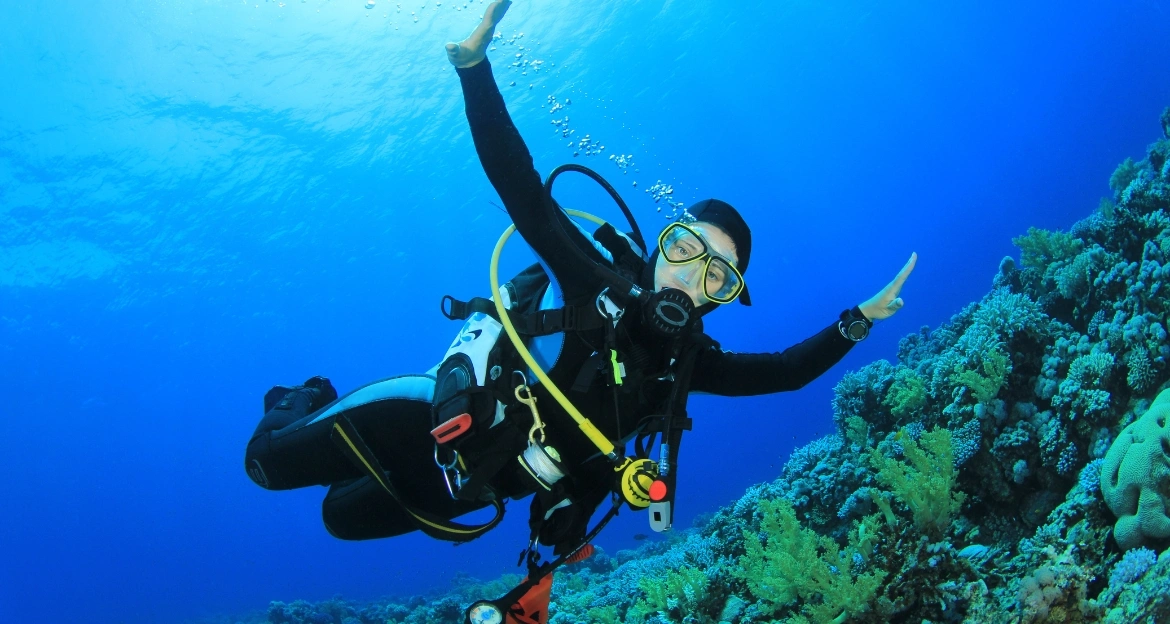
The first time you actually breathe down there and realize you can do so, something rewires in your brain. Suddenly, the ocean isn’t a postcard. It’s a whole living room you get to hang out in. That first breath is why scuba diving hooks people for life and why where you start matters more than most new divers think.
Here’s something nobody tells you: not every famous reef is friendly to a first-timer. Some have ripping currents, deep walls, and cold water that punish beginners. The best scuba diving destinations for beginners have an even more subdued personality. Warm water. Gentle conditions. Shallow, forgiving reefs. Instructors who have taught thousands of nervous students to clear a mask without panicking.
We have prepared this list for that traveler. Whether you are about to get certified next month or you are just done with your Open Water course and want to go to some place magical for dives two to twenty, these fifteen places make the learning curve feel like a drift rather than a curve.
You will also find honest notes about cost, best seasons, and what actually swims around down there, because the perfect first scuba diving trip is as much about logistics as it is about the reef. We’ve thrown in real safety guidance too, the kind experienced divers wish someone had drilled into them earlier. Let’s get you in the water.
What Makes a Destination Beginner-Friendly?
Before the list, a quick gut check on what we actually looked for. Calm, protected water so you’re not fighting the sea while you’re still figuring out your fins. Good visibility, because 30 meters of blue builds confidence quickly. Shallow reefs in the 5 to 18 m range where new certifications top out. Warm temperatures that let you skip the thick, bulky wetsuit. And a genuine culture of dive schools with patient, well-reviewed instructors.
Get those five things right, and scuba diving is not so intimidating. There is also one more quiet factor that matters: a relaxed pace. The best beginner spots don’t rush you through skills to hit a boat schedule. They let you take a breath, literally, and enjoy the descent. Here are the fifteen spots that do all of these things.
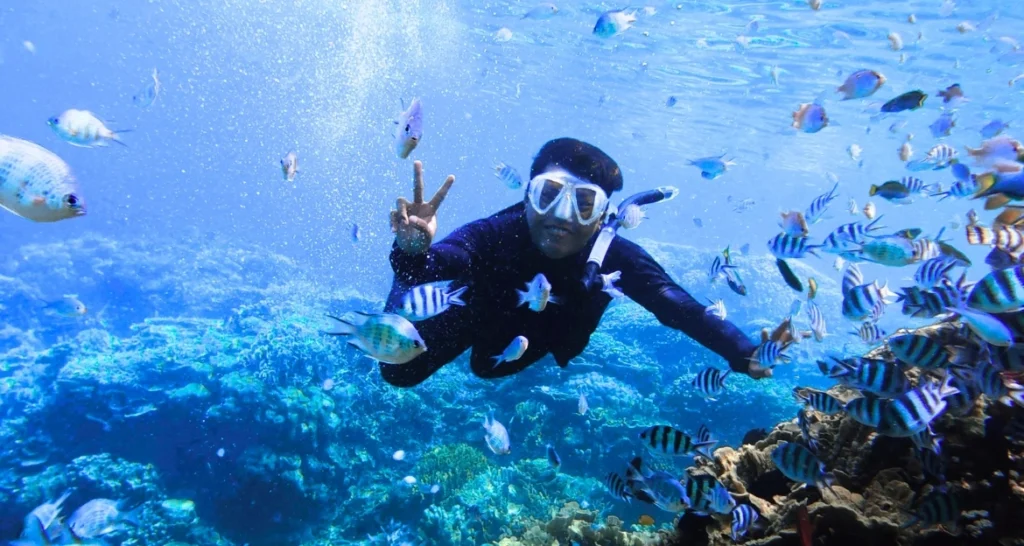
The 15 Best Diving Locations for Beginners
1. Koh Tao, Thailand
If scuba diving had a college campus, it would be Koh Tao. This little island certifies more new divers each year than almost anywhere else on the planet, and the reason is simple: shallow, bath-warm bays like Mango and Shark Bay stay calm most of the year. Certification here is famously cheap as well, often a fraction of what you’d pay in the Caribbean. You’ll share the water with parrotfish, blacktip reef sharks, and, if you’re lucky, the odd whale shark cruising through.
Good food, cheap bungalows, and a backpacker crowd make solo travel easy. The best months of the year are from March to September when the sea is glassy. This is where scuba diving costs the least, with no cutting corners on instruction, if you are only concerned with budget.
Best for: budget certification and solo travelers.
When to go: March to September.
Don’t miss the whale sharks and the blacktip reef sharks at Shark Bay.
2. Bonaire, Caribbean Netherlands
Bonaire is the shore diving capital of the world, and that’s a gift for beginners. There are no boat schedules, no seasickness. You can wade in from the beach as often as you want. The entire coastline is a protected marine park, so reefs are healthy and shallow, and visibility frequently exceeds 30 meters. Rent a truck, fill your tanks, and dive at your own speed. Few of the best diving locations give you this much freedom to practice on your own terms. For self-guided scuba diving, where you set the pace, nothing beats it.
Best for: shore diving at your own pace.
When to go: year-round (driest May to October).
Don’t miss: the drive-and-dive coastline with 30m+ visibility.
3. Cozumel, Mexico
Cozumel has a reputation for drift diving, and it sounds scary until you really do it. The currents are gentle and predictable here, and you just float along this stunning wall while the reef does all the work. Splendid Toadfish (found nowhere else on Earth), eagle rays, and turtles are in frequent rotation. The water is warm, the view is ridiculous, and the island is only a ferry ride from Playa del Carmen, so you can pair reef days with Mayan ruins. Take the November-to-May window for the calmest conditions. Cozumel is proof that scuba diving can feel effortless even when the guidebook uses the word “current.”
Best for: easy, gentle drift diving.
When to go: November to May.
Don’t miss: the Splendid Toadfish, found nowhere else on Earth.
4. Bali, Indonesia
Bali has a lot to offer on one island. Beginners love Tulamben, a shipwreck of the USS Liberty, which lies in shallow water just off the beach. You can snorkel over it or dive it, and the coral has completely swallowed the hull. Amed and Padang Bai are relatively quiet reefs nearby that are quite nice to dive. And on those dives, there are temples, rice terraces, and some of the cheapest eats in Asia. It’s a rare place where non-diving partners will never get bored. Diveable year-round, though the dry season from April to October brings the clearest water. For all-in-one value, Bali is the best scuba diving base in Asia.
Best for: divers traveling with non-diving partners.
When to go: April to October.
Don’t miss: the coral-covered USS Liberty wreck at Tulamben.
5. Gili Islands, Indonesia
Just a short hop from Bali, the three Gili Islands (Trawangan, Meno, and Air) are car-free, laid-back, and stuffed with sea turtles. Meno, especially, is known as the turtle capital, and beginners often encounter sea turtles for the very first time on open-water dives. This is easily one of the best places on this list to start scuba diving without pressure, as the reefs are very shallow, the sea is warm, and the atmosphere is relaxed.
Best for: guaranteed turtle sightings on early dives.
When to go: May to September.
Don’t miss: the turtle-filled reefs off Gili Meno.
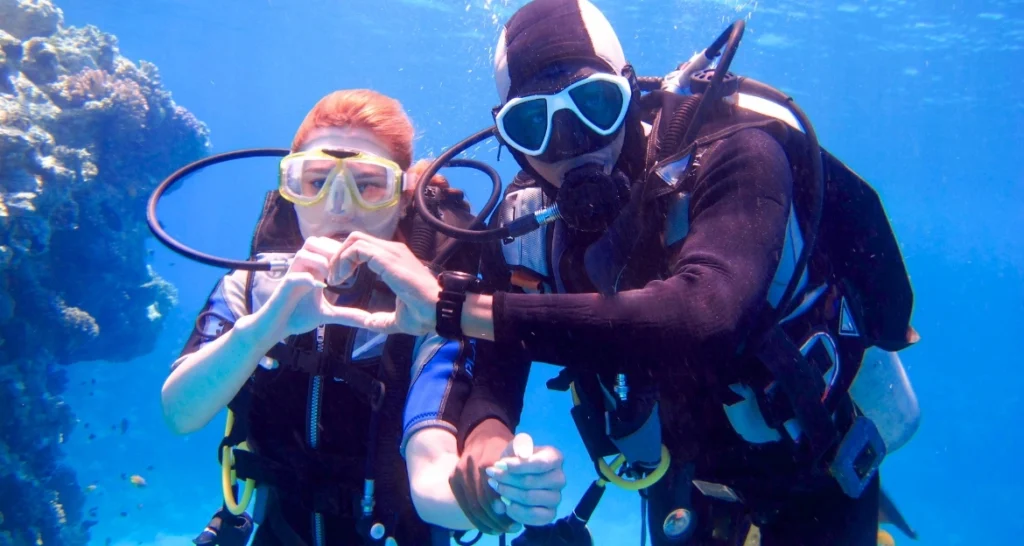
6. Roatán, Honduras
Roatán is on the second-largest barrier reef in the world, and it gives Caribbean beauty at a far friendlier price than most of its neighbors. The reef starts close to shore, the water is calm, and the dive operations are excellent for beginners. There are big schools of fish, healthy hard coral, and even the occasional dolphin. West End is one of the cheaper bases; West Bay is the resort side. The weather is warm throughout most of the year, and the calmest season is from March to September. It hits the sweet spot between Caribbean postcard looks and the low-key, affordable scuba diving you get in Southeast Asia.
Best for: affordable Caribbean reef diving.
When to go: March to September.
Don’t miss: the healthy hard coral of the Mesoamerican Reef.
7. Dahab & Sharm el-Sheikh, Egypt (Red Sea)
The Red Sea is a bucket-list name that is beginner-gold. The water clarity is magical, the coral is some of the most colorful ever, and Dahab’s shallow lagoon provides ways to learn diving in near-swimming-pool conditions. Sharm offers easy boat dives over reefs stuffed with anthias and clownfish. And it’s warm almost year-round and remains one of the cheapest, best diving locations to earn your certification.
Best for: colorful coral on a small budget.
When to go: year-round (best March to May, September to November).
Don’t miss: Dahab’s calm, near-pool-like training lagoon.
8. Great Barrier Reef, Australia
Yes, the big one. Many outer-reef operators have set out on trips of this kind, which are for people who have never been in front of a regulator at Cairns or Port Douglas. The shallow reef gardens are so calm, warm, and bustling with life: huge clams, reef sharks, turtles, and more fish than you can name. Diving the world’s largest reef system as your first real adventure is a story you’ll keep with you forever. June to October brings the best visibility, and the weather is cooler and drier on the coast. It’s not the cheapest entry into scuba diving, but few places carry this many bragging rights for a first logbook entry.
Best for: a bucket-list first dive.
When to go: June to October.
Don’t miss the giant clams and reef sharks on the outer reef.
9. Maldives
The Maldives seems like a honeymoon flex, and it is, but many resorts have a house reef you can just dive from the jetty. These lagoons are calm, shallow, warm, and full of reef fish, so they’re great for diving early in the morning between naps in your overwater bungalow. When you’re ready to level up, the same area has manta and whale shark activities too. Pure luxury meets easy learning. If you like scuba diving with a butler and sunset cocktails after that, start here.
Best for: luxury and easy house-reef diving.
When to go: November to April.
Don’t miss: Manta and whale shark trips once you’ve had a few dives in.
10. Curaçao
Curaçao, Bonaire’s quieter neighbor, offers the same easy shore diving but with a little more to do topside and a colourful Dutch-Caribbean capital in Willemstad. The Tugboat wreck is on shore in shallow water and is a beginner favorite with a coral-crusted and photogenic look. Calm seas, warm water, and no crowds. If you want Bonaire with more of a vacation-town feel, this is your pick.
Best for: shore diving with more to do topside.
When to go: year-round (driest May to October).
Don’t miss: the shallow, coral-crusted tugboat wreck.
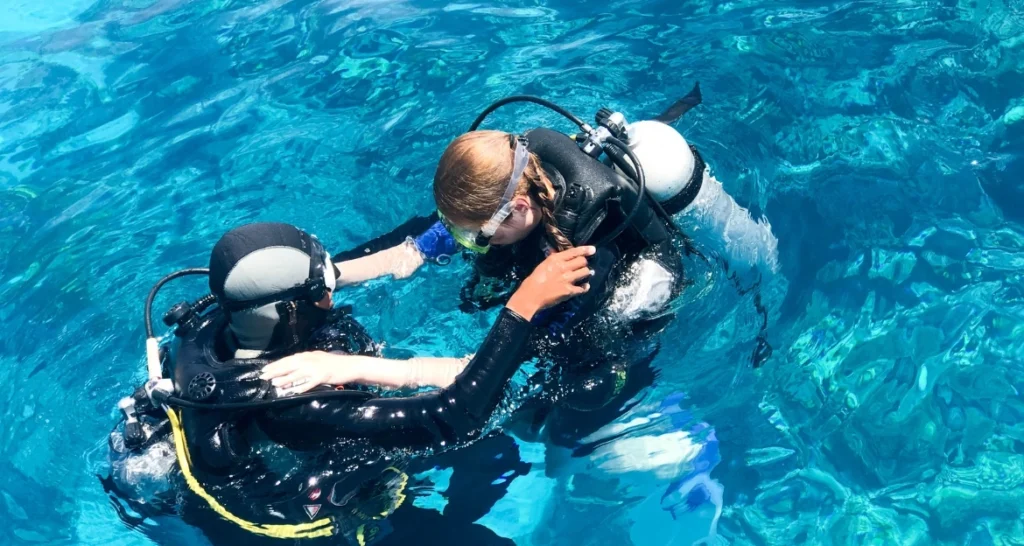
11. Ambergris Caye, Belize
Belize is famous for the deep, advanced Blue Hole, but ignore that for now. The reefs around Ambergris Caye and Hol Chan Marine Reserve are shallow, protected, and packed with nurse sharks and southern stingrays you can hover right beside. The water is warm and clear, and the whole vibe is barefoot island time. Perfect for easing into scuba diving before you tackle anything ambitious.
Best for: close encounters with harmless nurse sharks.
When to go: April to June.
Don’t miss: the stingrays and sharks of Hol Chan Marine Reserve.
12. Grand Cayman
Grand Cayman is sleek and easy to navigate and endlessly photogenic. Stingray City is the star of the show, a shallow sandbar where friendly southern stingrays glide right up to you in waist-deep water. The reefs have some of the best visibility in the Caribbean, and the dive infrastructure is world-class. It’s a bit pricier than others, but for stress-free and high-comfort scuba diving, a few places can compare. Diveable all year round, with the calmest seas usually from April to October.
Best for: high-comfort, polished first trips.
When to go: April to October.
Don’t miss: hand-feeding depth at Stingray City’s shallow sandbar.
13. Kona, Hawaii (Big Island)
Kona brings a unique experience to the table: the manta ray night dive. The divers settle on a shallow sandy patch, and giant mantas loop and barrel roll alongside the surface and feed on plankton attracted to dive lights. The day-to-day reefs are calm and easy with lava-rock structures and Hawaiian green sea turtles. It’s a little bit of a splurge, but a good first big diving trip, not to mention one with no passport for U.S. travelers, and it’s hard to beat. The manta encounter alone puts Kona on many divers’ all-time scuba diving highlight reels.
Best for: U.S. travelers who want no passport.
When to visit: year-round (calmest from April to October).
Don’t miss: the manta ray night dive.
14. Utila, Honduras
Roatán’s smaller sibling, Utila, is a legend in the budget diving world. Certification is very cheap, the vibe is scrappy and fun, and there’s a real chance of swimming with whale sharks, which pass through these waters more reliably than almost anywhere. The reefs are shallow and calm, and the town is a dive culture town. If you want the most scuba diving for your money, this island wins.
Best for: the cheapest certification with a shot at whale sharks.
When to go: March to September (whale sharks are March to April).
Don’t miss: the laid-back, dive-obsessed island town.
15. Fiji
Fiji is known as the soft coral capital of the world, and even the shallow reefs explode with color. The water is warm, the locals are famously welcoming, and most of the resorts are on protected lagoons that are perfect for beginners. It is further away for most tourists, but the rewards are reefs that look computer-generated and a real sense of being somewhere remote and special. The dry season from May to October is prime time.
Best for: vivid soft coral and warm hospitality.
When to go: May to October.
Don’t miss: the color-saturated soft coral reefs
If you have one of these you want to go for, the ingredients are the same: warm water, soft conditions, and reefs that reward you for showing up. That’s the whole recipe for beginner scuba diving done right.
Diving Safety Tips Every Beginner Should Know
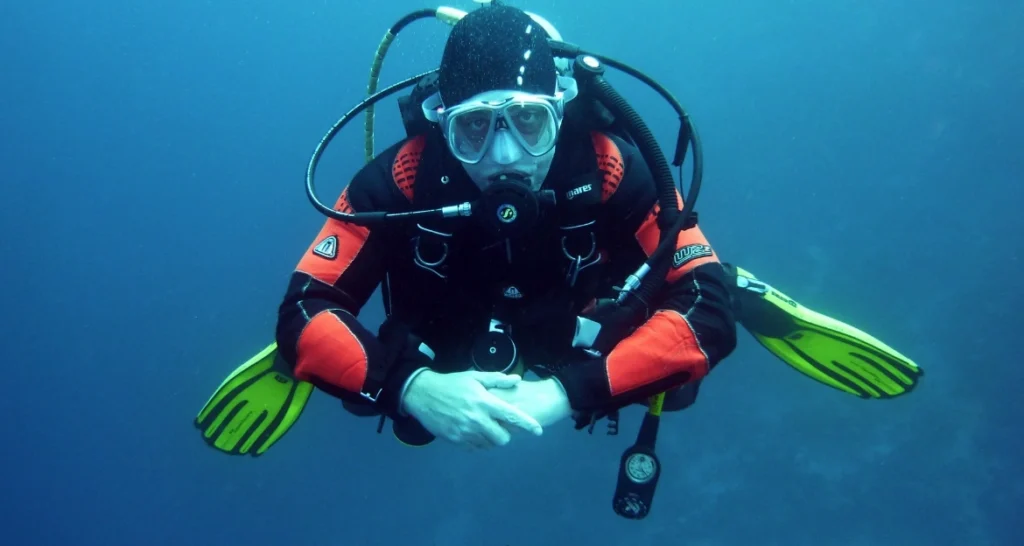
Great destinations only matter if you dive smart. A few diving safety tips turn a nervous first-timer into a confident diver fast, and they’re the same habits that keep veteran divers safe after thousands of dives. None of them is complicated. All of them matter. Take these diving safety Tips on board, and scuba diving remains one of the safest adventure sports out there.
Never hold your breath. It is the golden rule of scuba diving, because holding your breath while ascending can result in serious damage to your lungs, as long as you hold your breath when you’re trying to breathe too slowly and slowly and steady. Always keep breathing, slow and steady.
- Ascend slowly and do your safety stop. Jumping to the surface is how divers are hurt. A three-minute pause at five meters keeps your body from off-gassing nitrogen safely.
- Check your air frequently and dive with a buddy. Half a tank should get you thinking about coming back. Your buddy is your backup brain and your backup air.
- You must abide by your training. Your Open Water certification has a depth cap for good reason. The reef at 15 meters is just as beautiful as at 30 and far safer for a beginner.
- Equalize early and often. Pinch, blow gently, and start before your ears even ask. Never push through pain.
Oxygen Toxicity Diving: What Beginners Actually Need to Know
You’ll hear the term “oxygen toxicity diving” more often, especially when people start talking about nitrox (enriched-air tanks). Here is the plain English version.
Breathing oxygen at high pressure, which happens as you go deeper, can eventually become toxic to your central nervous system. That’s the risk of oxygen toxicity diving, and it’s why every gas blend has a maximum operating depth. For recreational divers on standard air, you’d have to go so much deeper than your certification allows before it becomes an issue, so beginners typically don’t encounter it.
The topic matters most for nitrox divers because enriched air lowers the depth at which oxygen partial pressure becomes dangerous. And that’s the trade-off: longer bottom times, shallower depth limits. If you take a nitrox course, your instructor will drill the numbers into you. For now, the takeaway on oxygen toxicity diving is simple: respect the depth limits your training gives you, and this is a non-issue.
How Long After Scuba Diving Can You Fly?
This question gets to almost every new diver planning a trip, and getting it wrong can hurt you. So, How Long After Scuba Diving Can You Fly?
The short answer is to wait at least 18 hours after your last dive before boarding a plane. The body absorbs nitrogen underwater, and flying too soon (when cabin pressure drops) can cause decompression sickness even after dives that felt totally safe.
Practically speaking, How Long Can You Fly From Scuba Diving?
- Single no-decompression dive: wait at least 12 hours.
- Multiple dives in a day, or several days of diving: wait 18 hours or more.
- Playing it safest: round up to a full 24 hours
That last row is basically every dive vacation, so build your trip around it. Most experienced divers simply want 24 hours, and truly, that’s the best habit to build.
The real-world advice: make your last dive day a rest day. Snorkeling on the beach or exploring inland and then flying the next morning. Building that buffer into your itinerary is the easiest way to answer How Long After Scuba Diving Can You Fly? without cutting your trip short and risking your health.
Conclusion
The hardest part of scuba diving isn’t the equipment or the skills. It’s just deciding to take the plunge. And the fifteen places above that are truly gentle and the most jaw-dropping runways to a hobby that really changes the way you travel.
Start with warm and forgiving. Safety habits: respect them and provide yourself with that buffer before flying home. Do that, and your first descent becomes a hundred more.
So pick one place from this list, book the course, and let the rest make sense. Good scuba diving doesn’t call for you to be fearless. It just asks you to show up and breathe. The ocean has been waiting down there the whole time. Go say hello.
FAQs
1. Does anyone need to know how to swim well to start scuba diving?
Ans: You must feel confident to get in the water, but you do not need to become an Olympic swimmer. Most certification agencies ask you to swim a short distance (around 200 meters, with no time limit) and float or tread water for about 10 minutes, and if so, you’re ready to start.
2. Where is the cheapest place to get scuba certified?
Ans: Koh Tao in Thailand and Utila in Honduras are consistently the most budget-friendly places on Earth to earn your Open Water certification. The Red Sea in Egypt is another good low-cost option, especially for European travelers.
3. Is scuba diving safe for beginners?
Ans: Yes, and yes, if it is in your training and safety measures are taken into account. Recreational diving has a great safety record. The key is to choose calm places for beginners, listen to your instructor, and never go above your certified limit.
4. When is the best time of year to plan a beginner diving trip?
Ans: It depends on the region, but generally you want the dry season for calm seas and good visibility. Southeast Asia shines from roughly March to October, the Caribbean is great outside hurricane season (roughly December to April), and the Red Sea is diveable almost year-round.
5. How deep will I go as a newly certified diver?
Ans: Openwater divers are certified to a maximum depth of 18 meters (about 60 feet). Most of the reefs on this list have their best, most colorful life well within that range, so you won’t miss a thing.
6. If I have glasses or contacts, can I still dive? Yes or no?
Ans: You can take soft contact lenses, and you can order a mask with prescription lenses built in. Lots of divers with poor eyesight go to reefs every day.