

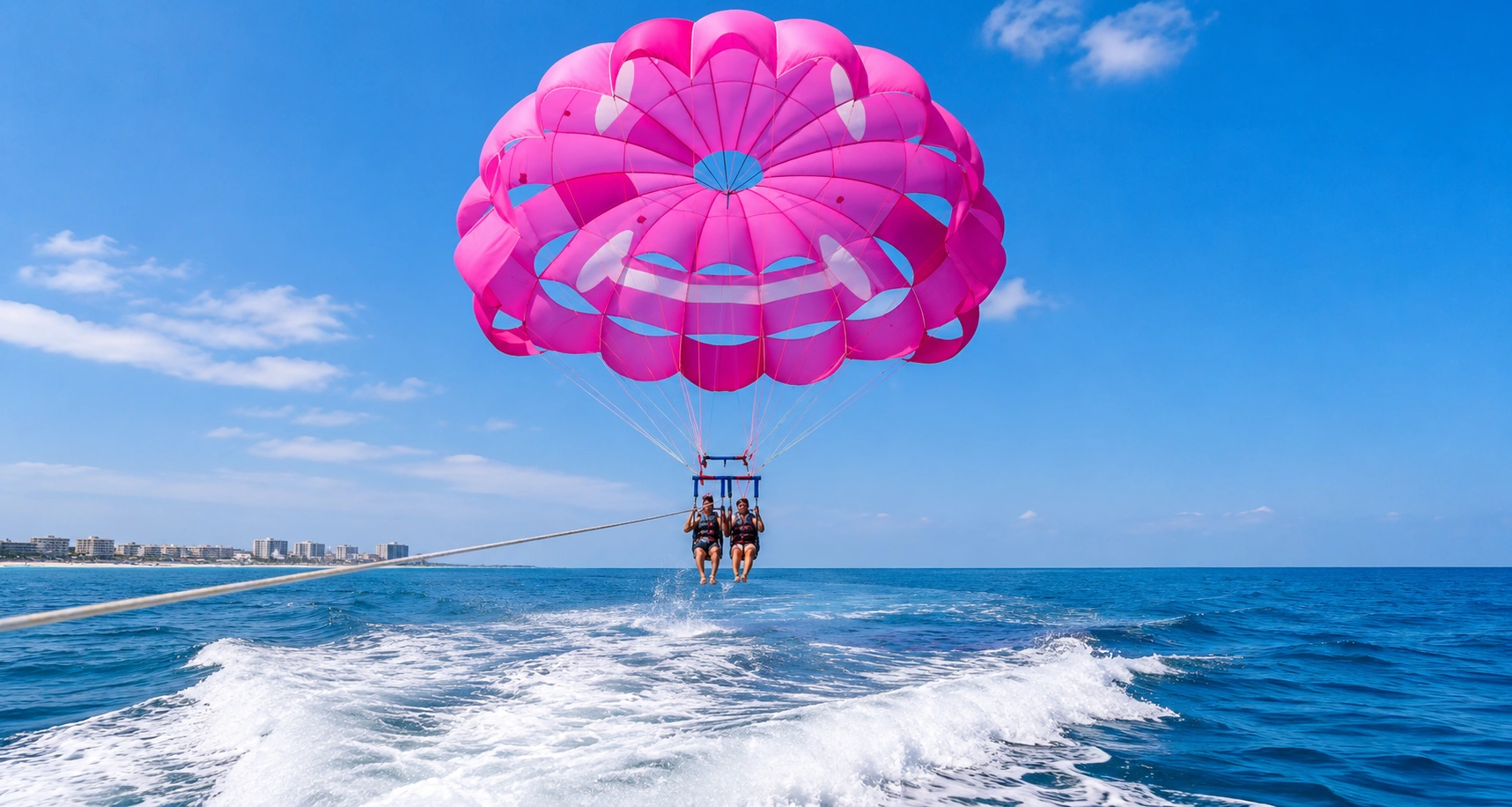
There’s one second you’ll never forget. The boat’s engine drops to a hum, the towline pays out behind you, and the deck just falls away under your feet. One breath you’re on a padded flight bench with the crew clipping your harness, and the next you’re floating in warm Gulf air, and the entire coastline falls away to the ground as if someone had closed a sliding door. That first lift is why Clearwater Beach parasailing has become one of the most talked-about things to do on Florida’s Gulf Coast and why many first-timers come down grinning and ask when they can go again.
If you’re going to this stretch of sugar-white sand west of Tampa, this is your no-fluff guide to the whole experience: what it actually costs, when the Clearwater Beach Parasailing weather cooperates, how safe it really is, and what happens from the moment you check in to the moment your feet touch the deck again. Think of it as the version a friend who has been up there would tell you over coffee.
Why Clearwater Beach Is Built for This
Clearwater Beach Parasailing is situated on a barrier island above the Gulf of Mexico, and the geography is the one that does a lot of the heavy lifting. The water here is shallow, clear, and famously turquoise, and the Gulf tends to be calmer than the open Atlantic. That combination is exactly what you want under a parachute: soft swells, good visibility, and a horizon that seems to go on forever.
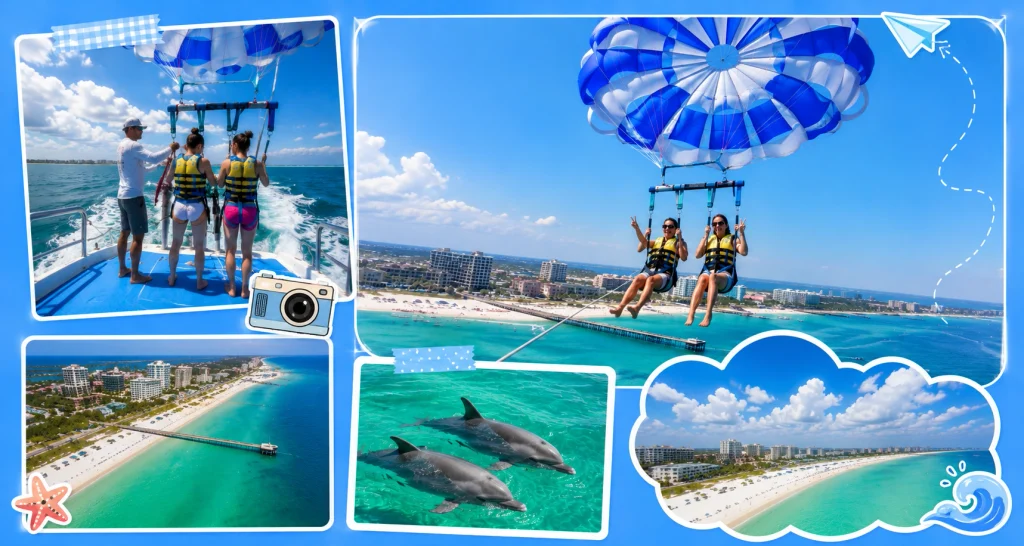
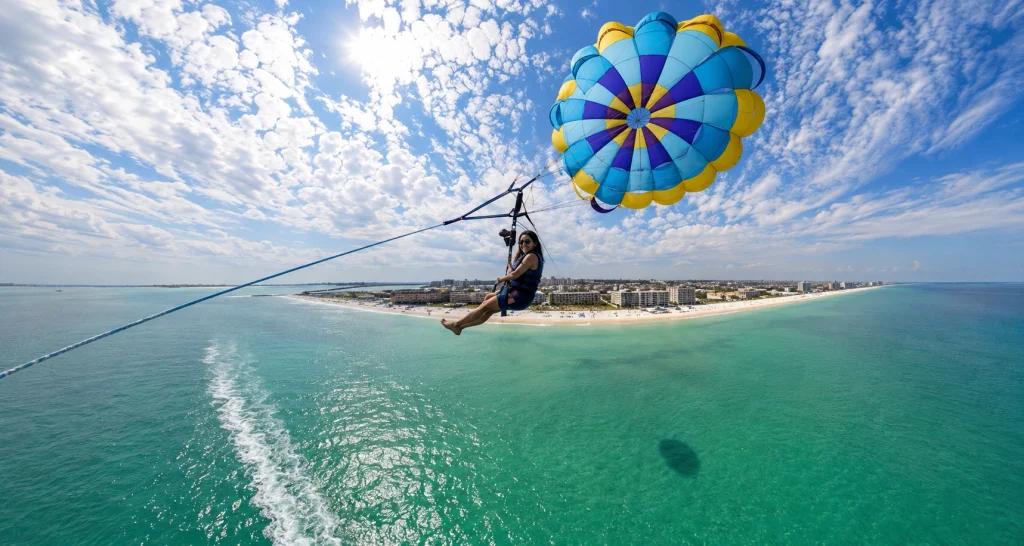
From 400 feet up, the view is truly surreal. You get the full sweep of the beach, one of the highest-rated in the US, and the causeway looping back to the mainland, the Intracoastal Islands, and, if the light is right, pods of dolphins cutting silver lines through the shallows below. Riders talk about the silence more than anything. Once you are up, you don’t hear the engine noise, and it’s just wind, water, and that slightly ridiculous floating-in-a-beach-chair feeling. Clearwater Beach parasailing is a thrilling and calm experience at once, and that’s something very rare.
Parasailing Clearwater Beach Prices: What You’ll Actually Pay
Let’s talk money because it’s usually the first real question. Parasailing Clearwater Beach prices settle in a pretty predictable band, and knowing the range keeps you from overpaying or, worse, booking the suspiciously cheap outfit.
In general, a standard flight should cost no more than $80 to $110, depending on the operator, the season, and how long you’re on the water. A few references from the booking platforms today:
| What You’re Booking | Typical Price (per flyer) | Rough Duration | Details |
| Standard Single / Tandem Flight | $89–$104 | ~1 hour on the boat | Standard flight experience |
| “Above the Gulf”: A Longer Experience | $82–$91 (often discounted) | ~1.5 hours total | Extended boat/flight package |
| Observer / Ride-Along Seat | $25–$35 | Full trip duration | Spectator seat; no flight included |
| Photo or Video Package (Add-on) | ~$20–$40 | N/A | Digital keepsake media of your flight |
Some things that you have to understand before you tap “book”:
In general, the price is per person, not per boat. Since most flights go up as a tandem (two riders) or triple (three side-by-side riders), a couple flying together is typically paying two flyer fees. That is normal.
Season moves the needle. During spring break and peak winter weeks, parasailing Clearwater Beach prices creep up, and popular slots sell out days ahead. In the slower summer stretch, you will sometimes find better rates, with the weather trade-off we will shortly explore.
Cheapest isn’t the goal. This is one activity you truly want a properly permitted operator with a U.S. Coast Guard–inspected vessel. A budget outfit or a reputable one is often only ten or fifteen dollars, and it will buy you a crew that reads the conditions correctly. Make the difference.
Look for the fine print. Many operators charge the full price for late arrivals or same-day cancellations, and some will add a fee (usually around $25 per flyer) if you have to reschedule your slot. Pay attention to the fine print. Bring cash for observer add-ons because they’re usually not available online and can’t be booked online.
When to Go: Clearwater Beach Weather, Season by Season
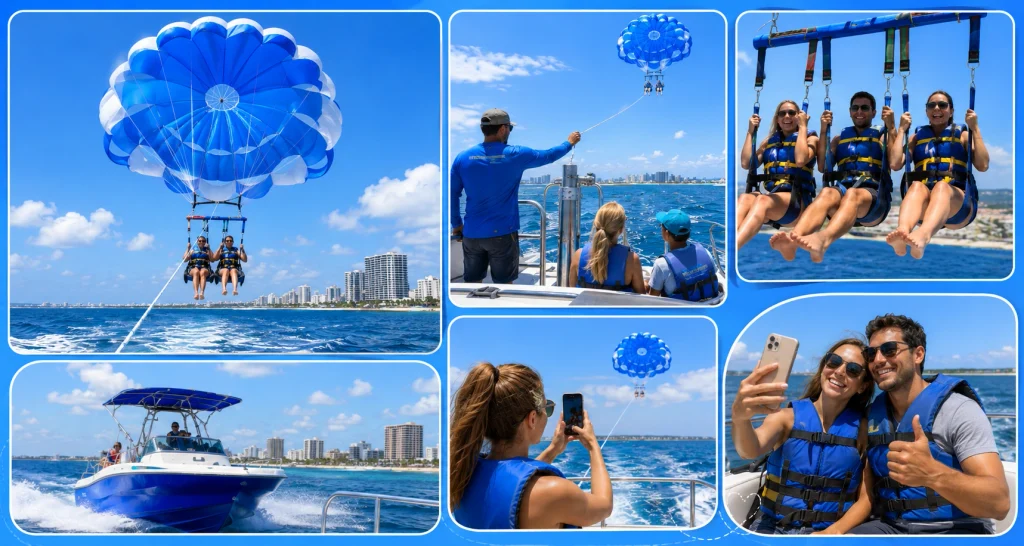
Timing is everything here, because parasailing is weather-dependent; no good crew flies you in unsafe conditions. Learning the Clearwater Beach weather rhythm helps you to choose a window that is beautiful and reliable.
Clearwater has a warm, wet climate with a very clear seasonal pattern. August is the hottest and the rainiest month of the year, with about 20 rainy days on average, and December is the driest, with about a quarter of that rainfall. So the weather Clearwater Beach gives in late October is nothing like a soggy afternoon in mid-August.
Here’s how the seasons break down for flyers specifically:
Fall (October–December): the sweet spot
If you want the odds stacked in your favor, this is it. Humidity drops, crowds thin out, and rainfall is at its lowest point of the year. Highs settle comfortably in the 70s, the light turns golden, and there’s a real chance of near-empty Clearwater Beach Parasailing on a weekday. That’s the consensus among locals, who will tell you October to December is the best time to visit Clearwater, and parasailing conditions follow suit. (One caveat: October still technically falls within Atlantic hurricane season, so keep your eye on the forecast.)
Spring (March–May): warm, lively, popular
Spring is the other standout window. Temperatures climb into the mid-70s and 80s, the Gulf warms up, and the vibe gets festive; this is peak season, and March in particular draws big crowds and top-dollar pricing. Late April and May are the smart play: great weather Clearwater Beach regulars swear by, and the spring-break rush is already fading.
Summer (June–August): hot, humid, and all about the morning
Summer is the off-season for a reason. Expect temperatures in the 90s, sticky humidity, and the classic Gulf Coast pattern of clear mornings leading to loud afternoon thunderstorms. The good news is that those storms are usually predictable and late in the day. If you have a vacation to go parasailing at Clearwater Beach during the summer, book the earliest flight you can. Calm morning air means smoother rides and a much better chance to get off the dock before the sky starts to get really dark.
Winter (January–February): mild but breezy
Winter stays pleasantly mild by most standards, with highs in the 60s and low 70s, but the Gulf water cools, and wind can pick up. Flights still run on good days, but a cold snap or windy front is more likely to cancel or delay them. Pack a light layer; 400 feet up in January, with air moving past you, it’s cooler than the Clearwater Beach Parasailing suggests.
The one-line takeaway: morning flights, shoulder-season months, and a quick check of the forecast the day before are your three best friends. The Clearwater Beach weather is generous most of the year; you just want to meet it halfway.

Is It Safe? What the Rules Actually Say
Parasailing looks daring and reads as gentle, and both are true. Modern operations are highly regulated, and knowing the guardrails makes the whole thing far less nerve-wracking.
Coast Guard-inspected boats. Clearwater operators fly from U.S. Coast Guard–inspected vessels with licensed captains who know the local wind thresholds and load limits cold. This is the single most important thing to verify before you book: find an operator that states it plainly and has verifiable reviews.
Winch-boat technology. Many Clearwater Beach Parasailing crews have “winch boats,” which means you take off and land from the back of the boat, rather than running along the Clearwater Beach Parasailing or transferring at sea. A mechanical winch moves the towline in and out so that your launch and landing are smooth and controlled. It’s the difference between a graceful descent on a padded deck and the chaotic one you’ve seen in old bloopers. Height limits. Under FAA rules, parasailers are limited to 400 feet, and operators must use long towlines to meet height limits. If you’re told by a company that you are flying very high, take that as a red flag, not a selling point.
Weight and age. Combined flyer weight limits typically follow 425-475 lb and are tighter in low-wind conditions because the parachute must be able to carry enough weight to fly. The minimum flyer weight is usually 100-130 lbs, which is why smaller kids fly tandem with an adult. Most operators have a minimum age of 5, require anyone under 18 to have a parent-signed waiver, and pair younger children with an adult on the bar. The captain has the final say on how your group flies.
Line strength. The towlines are designed with such a big safety margin that they could hold thousands of pounds against loads that in practice rarely come close. Parachutes are also designed to settle behind you rather than over you in the unlikely event of a problem.
None of this means you switch your brain off; you should still choose a licensed, insured operator, read the conditions, and speak up about any relevant medical problems like heart problems, recent surgery, or back injuries. But the honest summary is that a well-run Clearwater Beach parasailing flight is one of the most accessible adrenaline activities on the water, and the industry has made it that way for decades.
What to Expect, Step by Step
Here’s the thing most guides skip: you’re on the boat for about an hour but only airborne for about six to ten minutes. That pacing is intentional, and it’s actually part of the fun.
Check in (arrive 15 minutes early). You’ll find your operator’s booth near the Clearwater Beach Parasailing Beach Marina; one of the well-known crew flies a red booth between two of the causeway restaurants. You must sign your waiver, settle payment, and meet your captain.
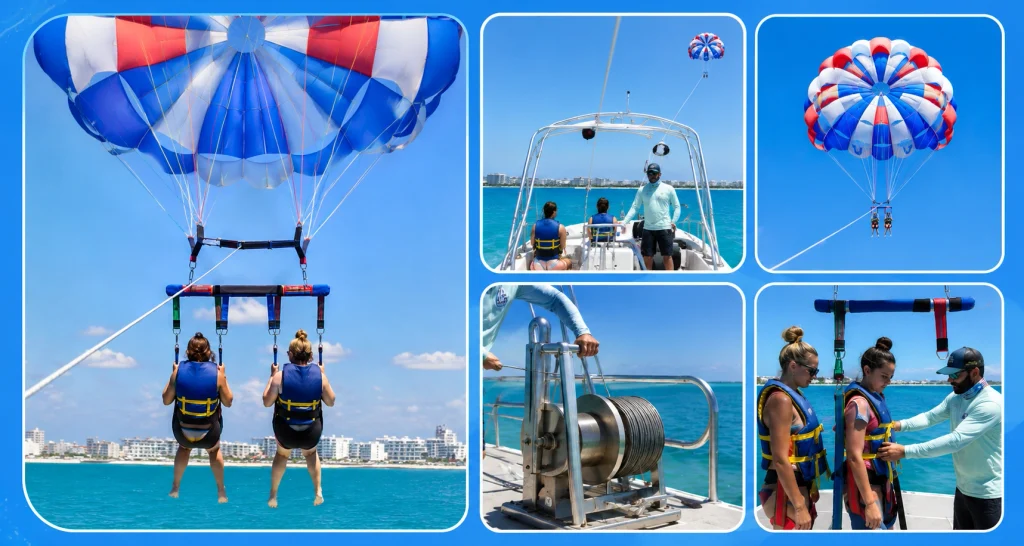
Boarding and briefing. You load directly from the dock. The crew runs through the safety briefing, sizes your harness, and settles everyone down. This is your moment to ask questions; good crews truly want you relaxed.
The ride out. The boat motors from the marina out to the launch zone in the open Gulf. Keep your eyes on the water; dolphin sightings on this leg are common, and they’re half the reason regulars love the boat ride as much as the flight.
Launch. When it’s your turn, a crew member walks you to the flight deck at the stern, clips you into the already-inflated chute, and has you sit back. The winch feeds out the line, and you lift off the deck smoothly. There is no running, no jumping, no drama; you simply rise.
The flight. This is the payoff. You float in almost silence with the coastline spread beneath you, the Gulf shimmering, and that unmistakable weightless calm settling in. You can ask for a “toe dip,” a gentle dunk into the water at the low point of the ride for an extra jolt of fun, or stay completely dry. Your choice.
Landing. The winch pulls you back in, and you settle onto the deck where you started. Then it’s a scenic cruise back to the dock, usually with a boatload of people comparing how loudly they screamed.
Wear a swimsuit or shorts and a T-shirt, bring reef-safe sunscreen, and secure everything loose, with sunglasses on a strap and the phone zipped away or in a floating case. Everything else the operator supplies.
“Parasailing Tampa,” Read This If That’s What You Searched
Many of the visitors who live in the city type parasailing Tampa into their phones and get slightly confused by the result. Tampa proper is on the bay, not the open Gulf, so most of the region’s marquee parasailing actually takes place from the Clearwater Beach Parasailing just west of the city.
Clearwater Beach is only a 30- to 40-minute drive from downtown Tampa and Tampa International Airport and is the natural home base for those in search of that Gulf-view flight. So if you have been studying parasailing in Tampa, you are really looking at the beach towns of Pinellas County, and Clearwater Beach Parasailing is the leader. Plan your trip around the Clearwater Beach parasailing experience, then make an easy morning of the short drive over the causeway. You get the city-size convenience and the postcard coastline in the same trip.
Insider Tips for a Better Flight
A few things learned the way you learn most travel lessons, slightly the hard way:
Book the first slot of the day. Calmer air, better light, smaller crowds, and the best insurance against afternoon weather cancellations. This is especially true in summer.
Fly tandem or triple if you can. Sharing the bar with someone you love is what people remember. It is often the cheapest way to experience it, and smaller flyers are often in need of a partner for enough load to be successful.
Buy the photo package. You physically can’t take good pictures of yourself while parasailing, and using a phone at 400 feet is a truly bad idea. If the operator offers shots from the boat, it’s worth the twenty-odd dollars.
Reconfirm the forecast the night before. Things change quickly on the Gulf. A quick check saves you a wasted drive and lets you rebook proactively if an incoming front is set in quickly.
Ask about the toe dip. If you want the extra thrill, say so before you launch. And if heights already stir your heart with pleasure, ask to stay dry and high; the crew will tailor the ride.
Don’t over-schedule the day. Between check-in, the ride out, your flight, and the cruise back, block off a comfortable couple of hours and let the experience breathe.
The Takeaway
Some vacation activities are worth the money because they photograph well. This one is worth it because of the feeling of that first weightless lift, the instant silence, and the whole turquoise coast laid out beneath your dangling feet, a dolphin flashing by like the Gulf is showing off. A Clearwater Beach Parasailing flight is safer, gentler, and more accessible than it seems, and it delivers a genuine wow that stays with you long after the tan fades.
If you are planning your trip, keep it simple: pick a shoulder-season month, book the first flight of the day with a properly permitted operator, plan for prices in the $80–$110 range, and consult the forecast the night before. Do that, and your Clearwater Beach Parasailing experience won’t just be an entry in your itinerary; it’ll be the story you tell when someone asks how the trip was. Book the morning slot. Trust the crew. Look down.
FAQs
1. How much does Clearwater Beach parasailing cost?
Ans: Most flights run about $80–$110 per flyer, with longer “above the Gulf” experiences and peak-season slots at the higher end and slower summer weeks sometimes cheaper. Observer seats for non-flyers usually add $25–$35; photo packages are about $20–$40. Always confirm whether the quote is per person or per group.
2. How high do you go, and how long is the flight?
Ans: You will fly at or below about 400 feet, according to FAA rules. The flight itself takes about six to ten minutes, while the full trip, check-in, boarding, ride out, and cruise back, takes about an hour.
3. Is parasailing in Clearwater Beach safe for beginners and kids?
Ans: Yes. It requires no experience, launches and lands from the boat via a controlled winch, and welcomes children (most of them age five and up, flying tandem with an adult). The key is finding a licensed operator with a Coast Guard-inspected vessel and a captain who won’t fly in marginal conditions.
4. What is the weight limit?
Ans: Combined flyer weight limits usually sit in the 425-475 lb range and can drop on low-wind days, with a minimum flyer weight usually around 100-130 lbs. The captain will decide on single, tandem, or triple flights and will make the final decision.
5. When is the best time to go based on the weather?
Ans: Fall (October-December) has the driest, least humid, and least crowded conditions, and spring (March-May) is warm and lively. In summer, book the earliest morning flight to beat the afternoon thunderstorms. Given that the weather at Clearwater Beach Parasailing is seasonal and fluctuating, always check the forecast the day before.
6. Will I get wet?
Ans: Only if you want to. Request a “toe dip” for a gentle splash at the low point of your ride or ask for a completely dry flight and landing. Wear a swimsuit just in case, and bring sunscreen.