

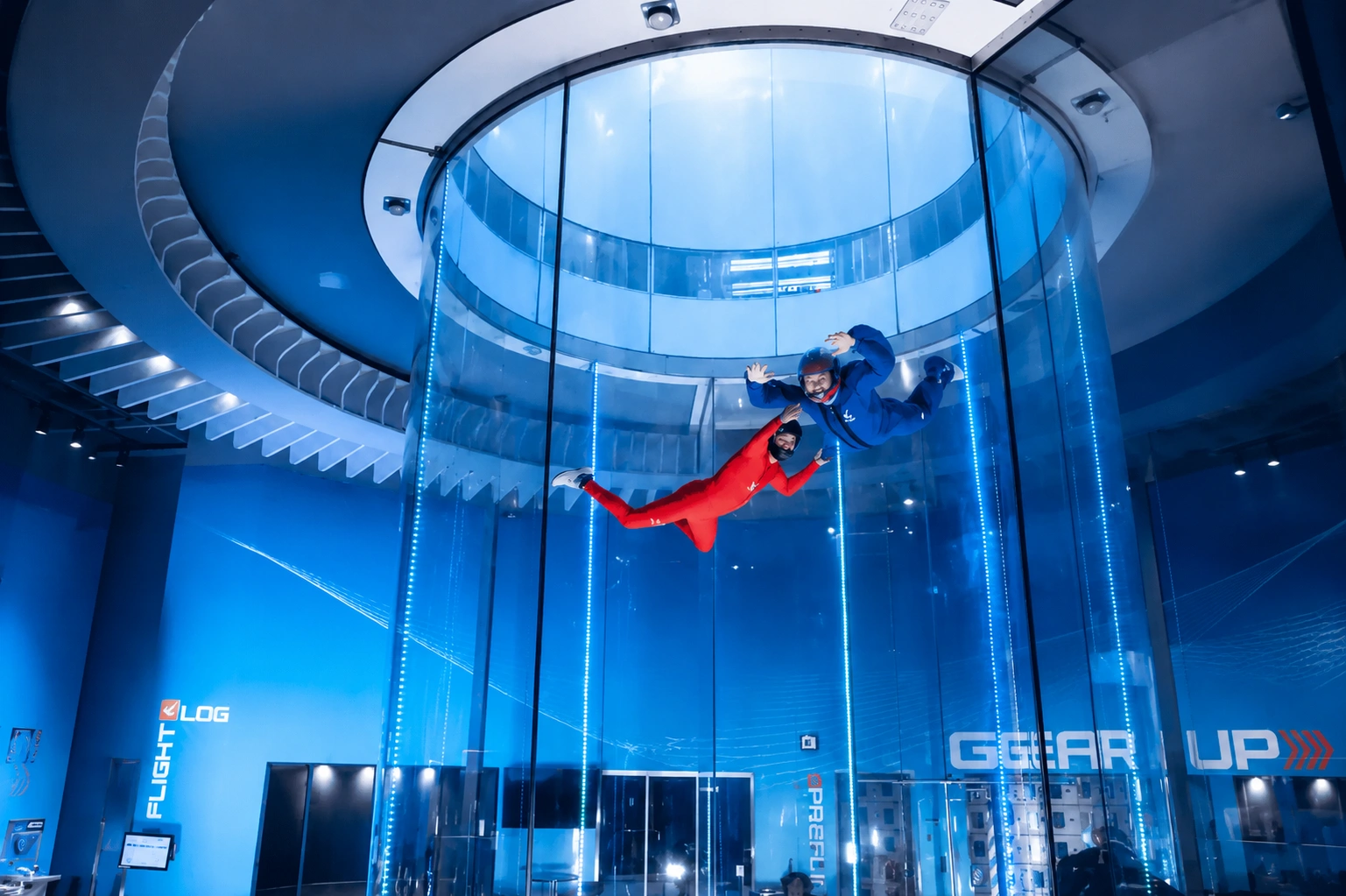
If you’ve ever wanted to feel what it’s like to fly without ever leaving the ground, indoor skydiving is probably already on your radar. It’s one of the fastest-growing adventure activities in the country, and for good reason: a vertical wind tunnel generates enough upward airflow to let a person float, spin, and glide in mid-air, all inside a controlled indoor space.
Unlike traditional skydiving, indoor skydiving doesn’t involve an airplane, a parachute, or jumping from thousands of feet in the air. That makes it approachable for almost anyone, including first-timers who have never worn a flight suit in their life. Families, birthday groups, thrill-seekers, and even competitive skydivers use wind tunnels to train and play.
This guide covers everything you need to know before you book a session: how the technology works, whether is safe, what your first flight actually looks like, how much it costs, what to expect at a facility like iFly Indoor Skydiving, and how to find Indoor Skydiving Atlanta options near you. Pricing, age limits, and specific policies vary by operator, so always confirm details with your chosen facility before booking.
What Is Indoor Skydiving?
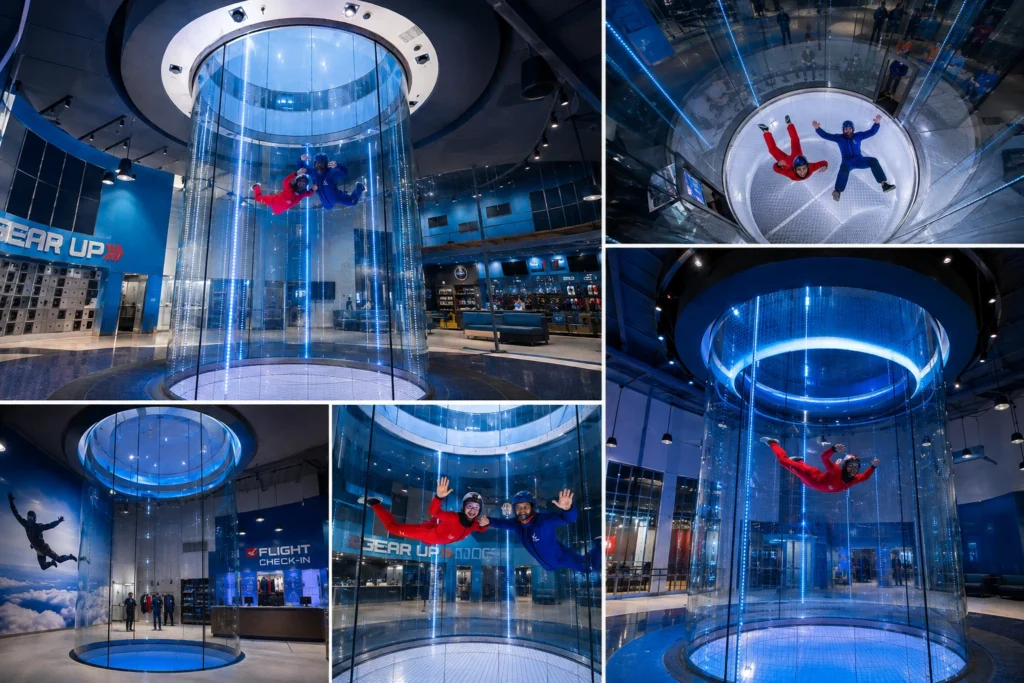
Skydiving is a simulated freefall experience created inside a vertical wind tunnel. A powerful, controlled column of air moves upward through a flight chamber at a speed strong enough to support a person’s body weight, allowing them to float in a stable, cushioned position rather than falling to the ground.
Quick definition: Indoor skydiving is the practice of flying inside a vertical wind tunnel, where a column of fast-moving air lets a person experience the sensation of freefall without jumping from an aircraft.
How a Wind Tunnel Creates the Feeling of Flight
Inside the flight chamber, large fans push air upward through a mesh floor or grate. That air resistance pushes back against the body with enough force to keep a flyer suspended. Instructors help beginners find a stable, arched body position — chest up, arms and legs bent — which is the same basic shape used in real freefall.
Is Indoor Skydiving Real Skydiving?
Indoor skydiving recreates the freefall sensation of outdoor skydiving, but it isn’t identical to it. There’s no airplane, no altitude, and no parachute involved. Instead, a recirculating column of air replaces gravity’s pull, and the entire experience happens in a controlled, weatherproof environment. Many competitive skydivers actually practice body control before jumping from a plane.
Who Invented the Modern Indoor Wind Tunnel?
Vertical wind tunnels were originally developed for aerospace and military training, long before they became a recreational activity. Over the past few decades, the technology has evolved from a specialized training tool into the entertainment and sport now known as bodyflight, with dedicated facilities opening in cities around the world.
How Does Indoor Skydiving Work?im
Understanding the mechanics behind it helps explain why it feels the way it does — and why it’s considered approachable for beginners.
How Fast Does the Air Move?
There’s no single universal wind speed used across every facility. The airflow needed to support a flyer depends on:
- Body weight
- Body position
- Skill level
- Tunnel design
- Instructor adjustments in real time
Instructors typically control the wind speed from outside the chamber, increasing or decreasing it as needed to keep each flyer stable.
How Does Your Body Stay in the Air?
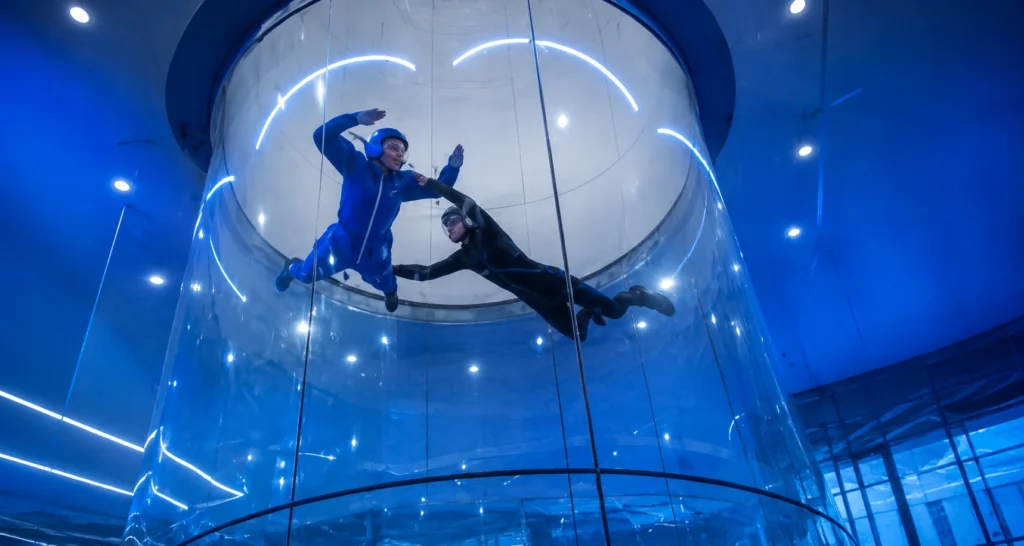
Staying airborne comes down to a balance of air pressure, drag, and surface area. When a flyer spreads their arms and legs and arches their body, they increase the surface area exposed to the airflow, which creates enough resistance to counteract gravity. Small shifts in balance and body tension help keep the flyer centered in the column of air.
Why Do You Need to Move Your Arms and Legs?
Tiny arm and leg movements act like a rudder. Extending an arm slightly can rotate the body, while bending the knees more can raise or lower a flyer within the tunnel. Instructors guide first-timers through these adjustments using hand signals during the flight.
Can You Breathe While Indoor Skydiving?
Yes. Breathing during Skydiving works the same as normal, even with wind rushing past your face. Most flyers instinctively breathe through their mouth during the flight, and the sensation feels similar to sticking your head out of a car window.
Can You Fly Upside Down or Perform Tricks?
Beginners typically start in a standard belly-to-earth position with instructor support. More experienced flyers can progress to back flying, head-down orientation, spins, and other advanced maneuvers as their skill level grows, often over multiple sessions.
How Does Indoor Skydiving Feel?
What Does the First Flight Feel Like?
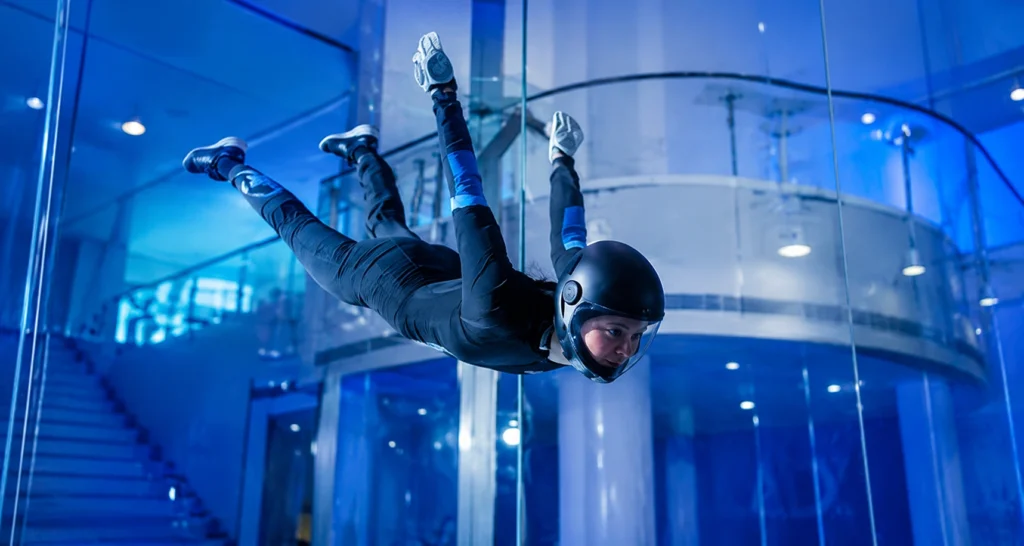
Most first-timers describe an initial rush of wind pressure followed by a floating sensation once their body finds a stable position. An instructor is in the chamber the entire time, holding the flyer steady and helping correct body position, so nervous energy tends to fade quickly once the flight begins.
Is Indoor Skydiving Scary?
Is indoor skydiving scary? For most people, no — there’s no height, no jumping, and no free-falling from an aircraft. The loud rush of air and unfamiliar sensation can feel intense for a few seconds, but the controlled environment and hands-on instructor support make it one of the more approachable adventure activities for people who are nervous about heights.
Is Indoor Skydiving Hard?
Holding a stable position takes practice. First-time flyers often find it tricky to keep their body relaxed, their arms in the right position, and their legs from drifting. It’s completely normal to feel a little wobbly during your first minute in the tunnel — that’s exactly what the instructor is there to help correct.
How Long Does an Indoor Skydiving Flight Last?
Individual flight time in the tunnel is typically short, often just one to two minutes per rotation, since it’s a physically demanding activity. Most first-timer packages include two or more separate flights, and the full session — including gearing up, the briefing, and waiting your turn — usually runs 60 to 90 minutes from arrival to departure.
What Happens During Your First Indoor Skydiving Flight?
Knowing the full process ahead of time can make your first session feel far less intimidating, since is easiest to enjoy once you know exactly what’s coming.
Step 1 — Arrive and Check In: Plan to arrive well before your scheduled flight time to complete registration.
Step 2 — Complete the Waiver: Every facility requires a signed liability waiver before you can fly, and minors typically need a parent or guardian’s signature.
Step 3 — Attend the Safety Briefing: A trained instructor walks you through body position, hand signals, and what to expect in the tunnel.
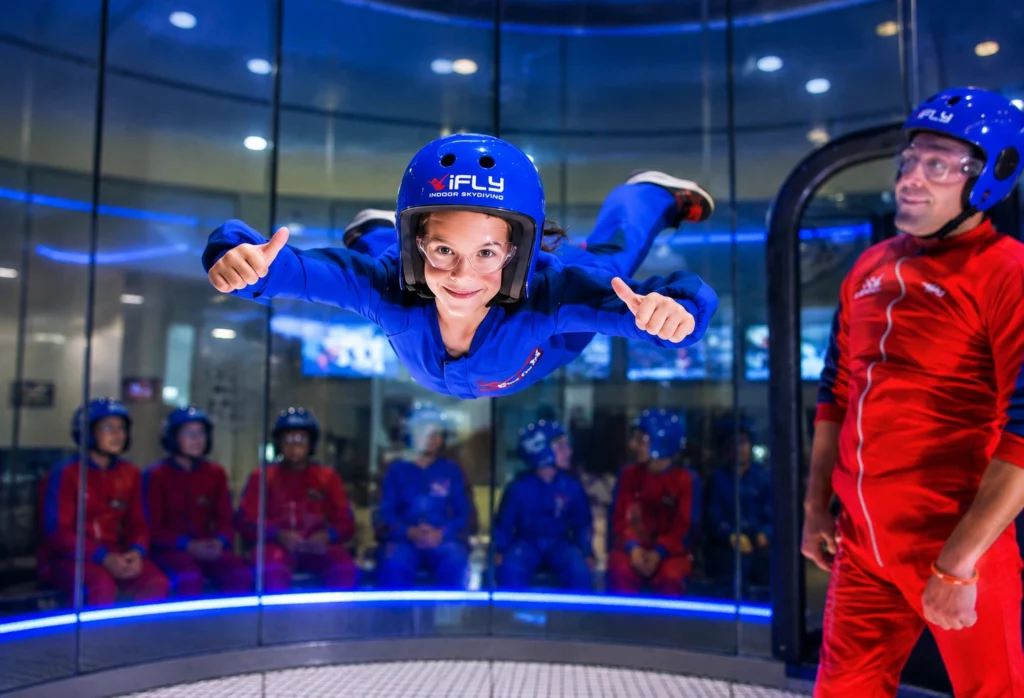
Step 4 — Put on Your Flight Gear: Staff will fit you with a flight suit, helmet, goggles, and earplugs.
Step 5 — Learn Hand Signals: Because it’s too loud to talk once you’re flying, instructors teach a simple set of hand signals used to communicate mid-flight.
Step 6 — Enter the Wind Tunnel: You’ll wait your turn alongside other flyers in your group.
Step 7 — Fly With an Instructor: The instructor stays right beside you, physically guiding your position and helping you stabilize.
Step 8 — Try Advanced Movements or a High Flight: Where offered, more confident flyers may get the chance to rise higher in the chamber under instructor supervision.
Step 9 — Exit, Debrief and Review Your Experience: Many facilities offer photos or video of your flight, plus tips for improving next time.
How Long Should You Plan to Spend at the Facility?
Don’t confuse your actual airtime with your total visit length. While your combined flight time might only be a few minutes, most first-time visits — including check-in, gearing up, waiting, and the briefing — take about an hour or more.
Is Indoor Skydiving Safe?
Is indoor skydiving safe? This is one of the most common questions people ask before booking, and it deserves a thorough answer rather than a one-line reassurance.
Is Indoor Skydiving Safe for Beginners?
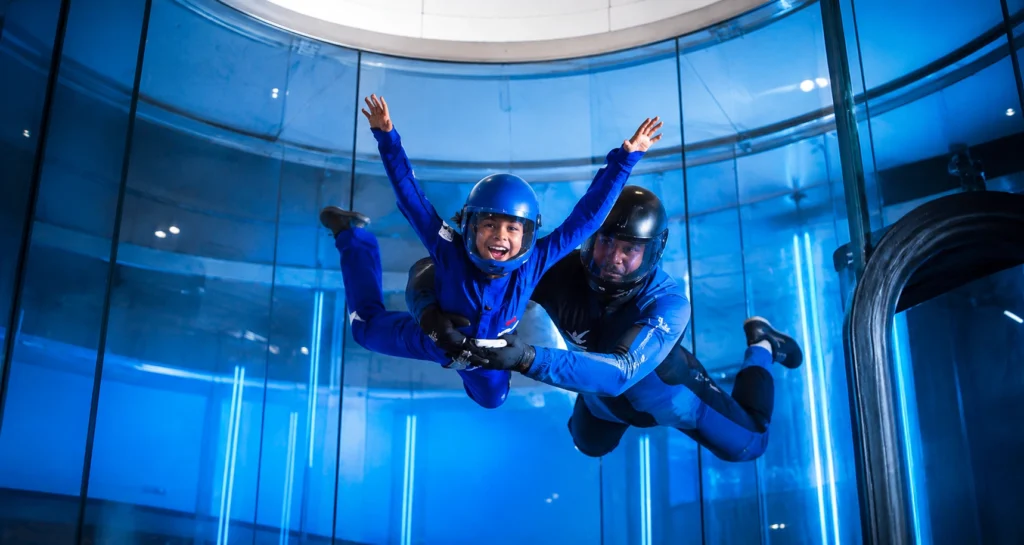
Indoor skydiving is generally considered a low-risk, beginner-friendly activity, largely because there’s no altitude, no parachute, and a trained instructor is physically present in the chamber during every flight. That said, no adventure activity is entirely without risk, and it’s worth understanding what precautions are in place before your visit.
What Safety Equipment Is Used?
Standard safety gear typically includes:
- A helmet
- Goggles
- A flight suit
- Closed-toe shoes
- Earplugs
- Hands-on instructor supervision throughout the flight
What Are the Most Common Risks?
The most frequently reported issues during are minor — think muscle soreness the next day, small bumps or bruises from contact with the tunnel walls, brief disorientation, or the occasional strained muscle. Serious injuries are uncommon precisely because an instructor is actively controlling your position and the airflow throughout the flight.
Who Should Avoid Indoor Skydiving?
Restrictions vary from one facility to another, but common exclusions can include people with:
- Certain recent injuries, especially to the back, neck, or shoulders
- Pregnancy
- Certain cardiovascular conditions
- Other medical conditions flagged on the facility’s waiver
If you have a pre-existing health condition, it’s worth checking your chosen facility’s specific policy and speaking with a healthcare professional before booking.
What Age Can You Start Indoor Skydiving?
Minimum age requirements differ by operator, with many facilities welcoming flyers starting around age three or four, though some set the bar higher. Always confirm the age policy directly with the location you plan to visit.
Are There Weight or Height Restrictions?
Indoor Skydiving, Most facilities do apply some form of weight limit, since it affects how the wind speed needs to be calibrated for a stable flight. These limits vary by tunnel design and operator, so check with the facility ahead of time if this might apply to you.
How Safe Is It Compared With Outdoor Skydiving?
Indoor skydiving is widely viewed as a lower-risk alternative to jumping from an aircraft, mainly because there’s no altitude, no parachute deployment, and constant hands-on instructor support. It isn’t risk-free, but the controlled indoor setting removes many of the variables — weather, equipment malfunction, altitude — associated with outdoor skydiving. This is a big reason that attracts so many nervous first-timers.
One of the biggest draws of indoor skydiving is just how wide its appeal is across ages and fitness levels.
Who Can Try Indoor Skydiving?
Indoor Skydiving for First-Timers
No prior experience is required. Instructors are trained specifically to work with beginners and will guide you through every step.
Indoor Skydiving for Kids
Many facilities welcome young children, often starting around age three, making indoor skydiving a popular option for family outings and kids’ birthday parties.
Indoor Skydiving for Teenagers
Teens tend to pick up body control quickly and often enjoy progressing to more advanced flying techniques after a few visits.
Indoor Skydiving for Adults
Adults of nearly any fitness level can typically participate, whether they’re trying it as a one-time bucket-list activity or working toward more advanced bodyflight skills.
Indoor Skydiving for Older Adults
There’s generally no strict maximum age, though facilities may ask health-related questions on the waiver. Older adults in reasonably good health regularly try it.
Do You Need to Be Physically Fit?
You don’t need to be an athlete to try a beginner flight — most people can manage it with no special training. Advanced tunnel flying, on the other hand, is far more physically demanding and typically requires ongoing practice.
Knowing what to wear ahead of time makes checking in faster and less stressful.
What Should You Wear for Indoor Skydiving?
Clothing to Wear
Choose comfortable, close-fitting clothing that allows you to move freely. Avoid loose, baggy items that could flap in the wind or get caught.
Shoes
Closed-toe athletic shoes with secure laces are typically required. Sandals, flip-flops, and heels aren’t allowed in the tunnel.
What Gear Does the Facility Provide?
Facilities typically supply a flight suit, helmet, and goggles as part of your package, so you don’t need to own specialized gear before your first session.
Can You Wear Glasses or Contact Lenses?
Contact lenses are generally fine. Glasses can sometimes be worn under the goggles, though it depends on the fit — check with staff when you arrive.
What Should You Remove Before Flying?
Before entering the tunnel, you’ll be asked to remove:
- Jewelry
- Watches
- Loose accessories
- Phones or wallets in pockets
Budget is one of the first things most people research before booking.
How Much is Indoor Skydiving?
How much is indoor skydiving? There isn’t one universal price, since cost depends heavily on your location, the package you choose, and how many flights are included.
Average Cost of Indoor Skydiving
Pricing for a typical first-timer package generally depends on:
- Location and local market rates
- Number of flights included
- Total flight duration
- Whether it’s a first-time or repeat-flyer package
- Optional high-flight upgrades
- Group size and any bundled discounts
- Peak versus off-peak booking times
What Is Included in an Indoor Skydiving Package?
Most beginner packages include gear rental, a indoor skydiving briefing, instructor supervision, and two or more individual flights.
Are Extra Flights Worth Paying For?
If you enjoyed your first couple of flights and want more airtime to build confidence and control, add-on flights are usually available for an extra fee.
Are High Flights Included?
A “high flight,” where an experienced flyer rises well above the standard height, is often an optional upgrade rather than a standard inclusion — confirm this when booking.
Do Indoor Skydiving Prices Change by Location?
Yes. Indoor Skydiving Prices can vary meaningfully between cities and even between competing facilities in the same metro area, so it’s worth comparing a couple of options before booking.
Indoor Skydiving Prices: What Affects the Cost?
| Number of flights | More flights generally increase the package price |
| Flight duration | Longer airtime may cost more |
| First-time package | Usually structured for beginners |
| Advanced flying | May require specialized packages |
| High flight | Often an optional upgrade |
| Group booking | May offer package savings |
| Peak periods | Prices may vary by day or time |
| Location | Different markets have different pricing |
How to Compare Indoor Skydiving Prices
Look beyond the base price. Compare what’s actually included — number of flights, gear rental, video or photos, and instructor time — rather than just the sticker price.
Are Discounts or Group Packages Available?
Many facilities offer discounted rates for birthday parties, corporate groups, and larger bookings, so it’s worth asking about group pricing directly.
What Additional Fees Should You Check?
Ask about optional extras like video packages, souvenir photos, certificates, or high-flight upgrades, since these can add to the base price.
iFly Indoor Skydiving: What to Know
What Is iFly Indoor Skydiving?
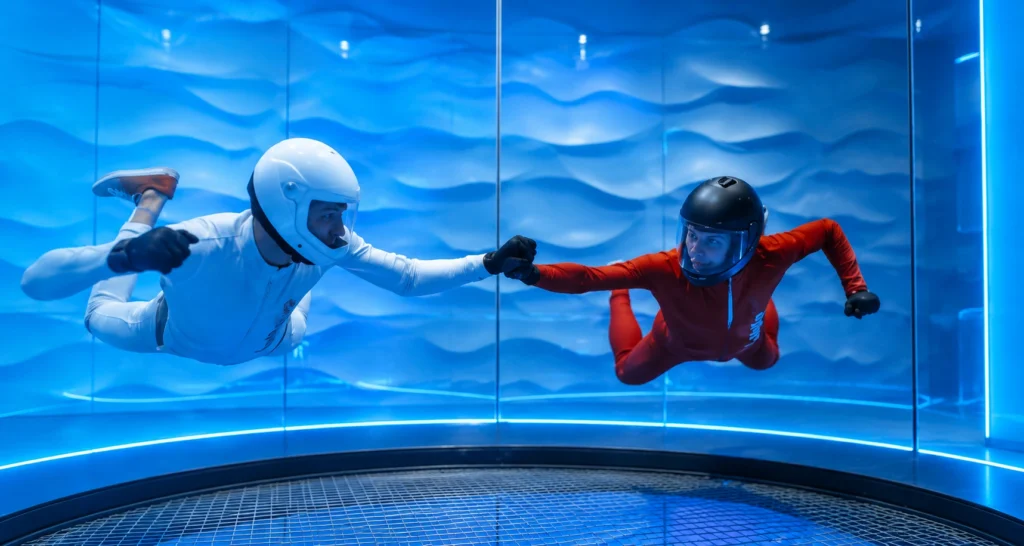
iFly Indoor Skydiving is one of the best-known wind tunnel operators, with locations across multiple states and countries offering beginner-friendly flight experiences.
How Does an iFLY Experience Work?
The general process mirrors most indoor skydiving facilities: check-in, a briefing, gearing up, and then two or more flights with an instructor in the chamber.
What Can First-Time Flyers Expect?
Expect a short training video or in-person briefing, hands-on instructor guidance in the tunnel, and a supportive, beginner-focused environment.
What Packages Does iFLY Indoor Skydiving Typically Offer?
Packages generally range from a basic first-flight experience to multi-flight bundles, group events, and advanced-flyer training packages, though exact offerings vary by location.
Who Is iFLY Suitable For?
iFly Skydiving is generally suitable for a wide age range, from young children to older adults, though specific age and weight policies should be confirmed with the local branch you plan to visit.
How Does iFLY Compare With Other Wind Tunnels?
| Beginner sessions | Widely available | Varies by operator |
| Instructor support | Included | Typically included |
| Flight packages | Multiple tiers | Varies by facility |
| Advanced training | Offered at many locations | Varies by facility |
| Locations | Multiple markets | Fewer, more localized |
| Group experiences | Commonly offered | Varies by operator |
Because pricing, packages, and policies change over time, always check current details directly with the facility before booking.
Indoor Skydiving Atlanta: What to Expect
Where Can You Try Indoor Skydiving in Atlanta?
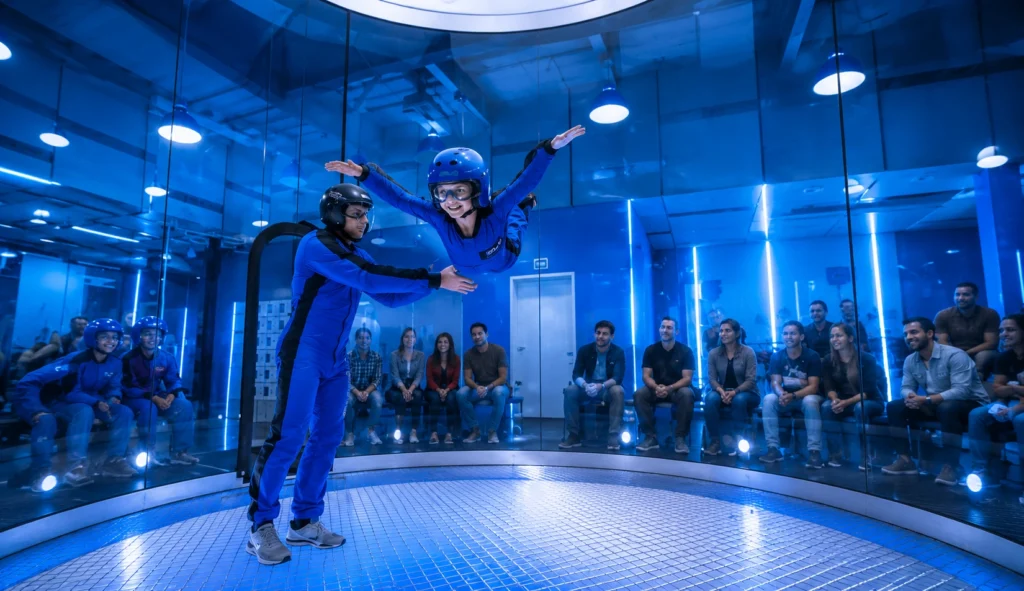
Indoor Skydiving Atlanta options include wind tunnel facilities in and around the metro area, offering the same core first-timer experience found at locations nationwide.
What Should You Know Before Booking?
Before booking an Indoor Skydiving Atlanta session, check:
- Exact facility address and parking
- Current operating hours
- Age and weight requirements
- Session length and number of flights included
- Advance booking or reservation requirements
How Much Does Indoor Skydiving Cost in Atlanta?
Local pricing for Indoor Skydiving Atlanta follows the same general factors as elsewhere — number of flights, package tier, and timing — so compare current rates directly on the facility’s website.
Is Atlanta Indoor Skydiving Good for Beginners?
Yes. Facilities offering Indoor Skydiving Atlanta experiences are generally built around first-time flyers, with trained instructors and structured beginner packages.
Best Times to Book an Atlanta Session
Weekday and off-peak time slots may offer more availability and occasionally better pricing compared to weekend sessions, though this can vary by facility.
| Location | Facility address |
| Hours | Current operating hours |
| Price | Current package pricing |
| Minimum age | Facility policy |
| Weight limit | Facility policy |
| Booking | Advance reservation recommended |
| Session length | Check package details |
If you’re still deciding between the two, here’s how stacks up against jumping from a plane.
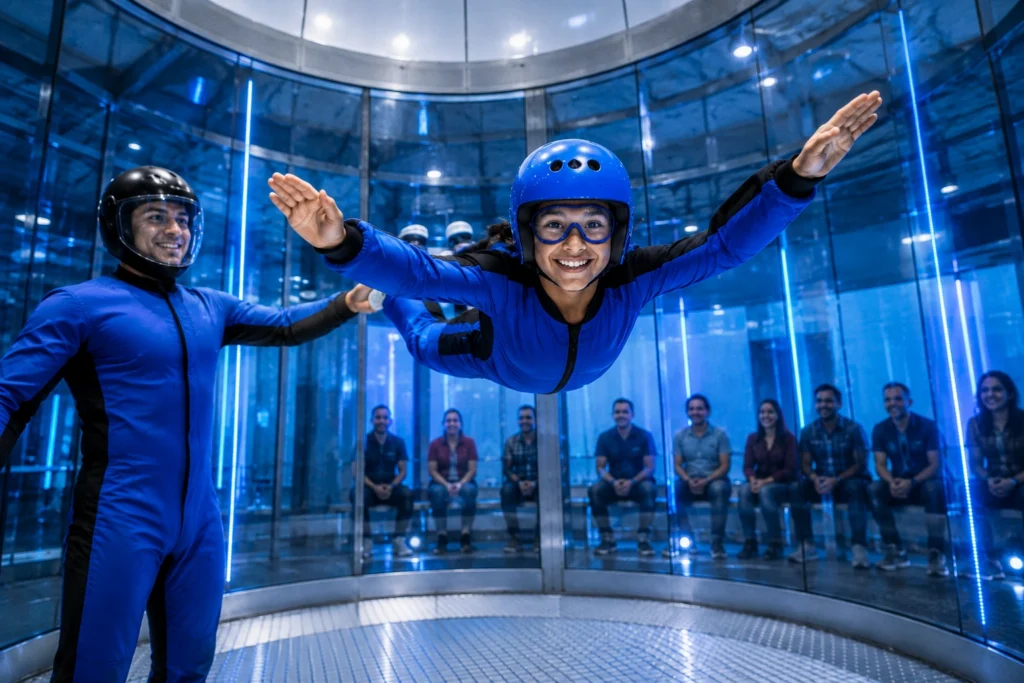
Indoor vs Outdoor Skydiving
Tandem outdoor indoor skydiving involves jumping from a plane while harnessed to a certified instructor. Removes the aircraft and altitude entirely, offering a similar sensation of flight in a controlled, ground-level setting.
Which Is Better for First-Timers?
For people who are nervous about heights or simply want a lower-commitment introduction to the sensation of flight is often the more approachable starting point.
Can Indoor Skydiving Prepare You for Outdoor Skydiving?
Many outdoor skydivers use indoor skydiving to build body control and confidence before their first jump, and some professional skydivers continue training in wind tunnels throughout their careers.
Indoor Skydiving for Kids, Families & Groups
Is Indoor Skydiving Good for Families?
Indoor skydiving works well as a family activity since it typically welcomes a wide age range and doesn’t require prior experience.
Indoor Skydiving Birthday Parties
Many facilities offer dedicated birthday party packages that include flight time, party space, and staff support for the celebration.
Corporate Team-Building
Indoor skydiving has become a popular corporate team-building option, giving coworkers a shared, memorable experience outside the office.
School and Youth Groups
Some facilities accommodate school trips or youth group outings, often with age-appropriate briefings and group rates.
Group Booking Tips
Book your indoor skydiving group session in advance, ask about group discounts, and confirm age and weight requirements for every participant ahead of time.
For some flyers, indoor skydiving eventually grows from a fun outing into a genuine competitive pursuit.
Indoor Skydiving as a Competitive Sport
When Does Recreational Flying Become a Sport?
As flyers progress beyond the basics, many begin training for structured competition, where judges score technical skill, control, and creativity in the tunnel.
Types of Indoor Skydiving Competitions
Competitive disciplines within indoor skydiving include:
- Freestyle
- Dynamic flying
- 2-way dynamic
- 4-way dynamic
- Speed events
How Do Professional Flyers Train?
Indoor Skydiving, Competitive flyers typically log extensive tunnel time, working with coaches to refine body position, transitions, and choreography for competition routines.
Can Beginners Eventually Compete?
Yes — many competitive flyers started as first-time recreational flyers and progressed through regular practice sessions over months or years.
Ready to move past the sport side of things? Here’s what most people actually get out of trying indoor skydiving for the first time.
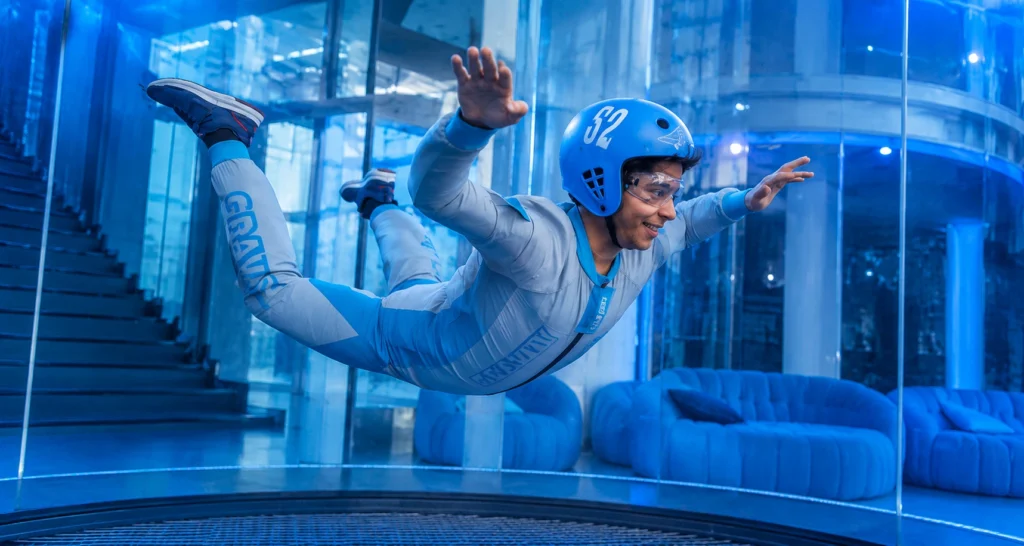
Benefits of Indoor Skydiving
- Builds confidence by pushing past a new physical and mental challenge in a supported environment
- Improves body awareness through the constant small adjustments needed to stay stable
- Provides a full-body physical challenge, engaging core, arm, and leg muscles
- Lets you experience flight without jumping from a plane
- Can support skydiving training for people preparing for outdoor jumps
- Creates a unique social experience for families, friends, and coworkers
These benefits are a big part of why indoor skydiving keeps drawing repeat flyers back to the tunnel.
A little preparation goes a long way toward making your first indoor skydiving flight feel smooth and enjoyable rather than stressful.
Tips for Your First Indoor Skydiving Experience
- Arrive early to allow time for check-in and the indoor skydiving briefing
- Wear comfortable, close-fitting clothing
- Listen carefully during the safety briefing
- Try to relax your body rather than tensing up
- Follow your instructor’s hand signals closely
- Keep your head and body position controlled and steady
- Don’t attempt advanced tricks too early
- Expect the first few seconds to feel unusual — that’s completely normal
- Consider booking additional flight time if you want more practice
Even with a good briefing, first-time indoor skydiving flyers tend to repeat a handful of the same avoidable mistakes.
Common Mistakes First-Time Flyers Make
- Holding the body too rigidly instead of relaxing into position
- Looking down constantly instead of at the horizon
- Overcorrecting small movements
- Forgetting to breathe normally
- Ignoring instructor hand signals Indoor Skydiving.
- Wearing unsuitable clothing or footwear
- Arriving late and rushing the briefing
- Assuming one flight is enough to master body control
- Trying advanced movements before building a stable foundation
So, after all the safety details, pricing breakdowns, and step-by-step walkthroughs, is indoor skydiving actually worth booking?
Is Indoor Skydiving Worth It?
Reasons to Try It
- A genuinely unique experience
- No aircraft or parachute required
- Beginner-friendly with hands-on instruction
- Great for families and groups
- A stepping stone into competitive bodyflight
Reasons It May Not Be for Everyone
- Cost can add up for multiple sessions
- Certain physical or health restrictions may apply
- Fear of enclosed or loud spaces could make it less appealing to some
- Individual flight time is short
- Mild soreness is common the next day
Who Will Enjoy It Most?
Indoor skydiving tends to appeal most to thrill-seekers, families looking for a shared adventure, people curious about real Indoor Skydiving but not ready to jump from a plane, and anyone who simply wants to try something they’ve never done before.
Before you head out the door, run through this quick indoor skydiving checklist.
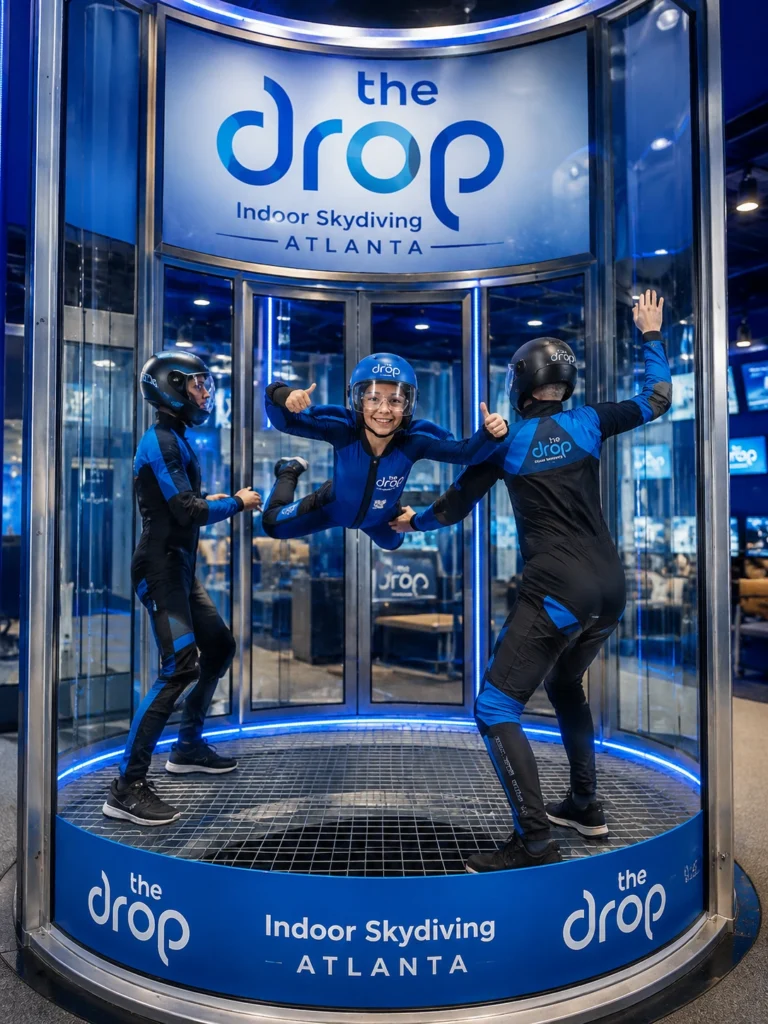
Conclusion
Indoor skydiving offers a genuinely unique way to experience the sensation of flight, using a vertical wind tunnel to recreate freefall without an airplane, altitude, or parachute. It’s approachable for nearly everyone, from young kids at a birthday party to adults training for real Indoor Skydiving, and instructors are with you every step of the way.
Before you book, it helps to keep the practical details in mind: check the facility’s indoor skydiving policies, confirm age and weight requirements, understand what’s included in the price, and prepare with comfortable clothing and closed-toe shoes. Indoor Skydiving Prices and package options vary by location, so a little comparison shopping goes a long way.
Whether you’re chasing an adrenaline rush, planning a family outing, or looking for a way to train before an outdoor jump, indoor skydiving is worth trying at least once. Compare facilities near you, confirm current pricing and requirements, and book a session that fits what you’re looking for.
FAQs
1. What is indoor skydiving?
Ans: Indoor skydiving is a simulated freefall experience inside a vertical wind tunnel, where a controlled column of air lets a person float and fly without jumping from a plane.
2. Is indoor skydiving safe?
Ans: Is Indoor Skydiving Safe? Generally, yes — it’s considered a low-risk activity with instructor supervision throughout every flight, though specific health restrictions can apply, so check with your facility.
3. How much is indoor skydiving?
Ans: How Much is Indoor Skydiving costs depends on your location, the package you choose, and how many flights are included, so pricing varies between facilities.
4. How much do Indoor Skydiving Prices usually cost?
Ans: Indoor Skydiving Prices are influenced by flight count, duration, group size, and timing, so it’s best to check current rates directly with your chosen facility.
5. Can beginners try indoor skydiving?
Ans: Yes. Indoor skydiving is designed to be beginner-friendly, with no prior experience needed and an instructor guiding you through every flight.
6. How long does an indoor skydiving flight last?
Ans: Each individual flight is typically just a minute or two, though most first-timer packages include multiple flights across a session lasting roughly an hour.
7. Can you breathe while indoor skydiving?
Ans: Yes, breathing works normally during indoor skydiving, similar to the feeling of sticking your head out of a moving car window.
8. What should you wear for indoor skydiving?
Ans: Wear comfortable, close-fitting clothing and closed-toe shoes; facilities typically provide a flight suit, helmet, and goggles for your session.