

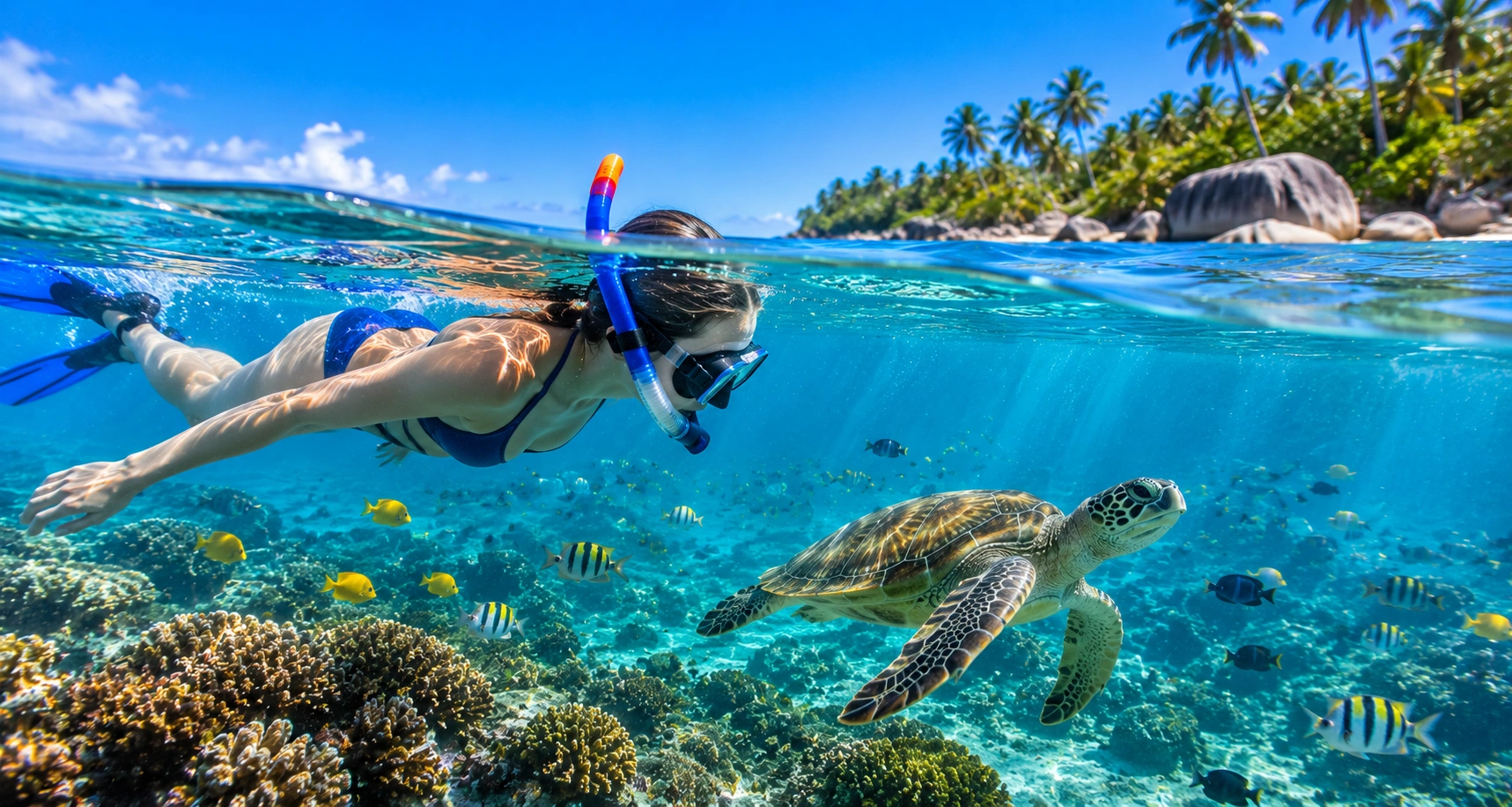
Floating face-down over a coral reef, watching a green sea turtle glide beneath you, is one of the easiest ways to meet the ocean on its own terms. That is the quiet magic of snorkeling. You do not need scuba tanks, weeks of certification, or expensive training. A mask, a tube, a pair of fins, and the confidence to relax in the water are enough to open up an entire underwater world.
This guide is built for real trips, not just inspiration. Whether you are a nervous first-timer or someone chasing the clearest water in the country, you will find practical detail here: how to breathe and float, what gear actually earns a place in your bag, and where to go. We cover the best snorkeling in the USA from Hawaii’s volcanic bays to Florida’s coral gardens, plus the best snorkeling in the Continental US for travelers who want reef time without crossing the Pacific.
You will also get the buying advice most articles skip. We explain the difference between snorkeling and free diving so you pick the right sport, compare the best reef-safe sunscreen for snorkeling now that Hawaii and several counties have banned reef-harming chemicals, and break down the best underwater camera for snorkeling in 2026. Add safety habits, seasonal timing, budgets, and a packing checklist, and you have a complete beginner-to-confident roadmap for a season of great days in the water.
What is Snorkeling?
Snorkeling is swimming at or just below the surface of the water while breathing through a short tube called a snorkel, using a mask to see clearly and fins to move with less effort. You keep your face in the water and breathe steadily through the tube, so you can watch reefs, fish, and the seafloor for long stretches without lifting your head.
How snorkeling works
The mask seals air around your eyes and nose so your vision stays sharp underwater. The snorkel lets you keep breathing while your face stays down, and the fins turn small leg movements into smooth forward motion. Together they let you hover comfortably and observe, rather than fight the water.
Who can snorkel
Almost anyone in reasonable health who is comfortable in water can snorkel, including children with supervision and older adults. Being a strong swimmer helps and is recommended, but in calm, shallow, protected areas a snorkel vest or flotation aid lets even weak swimmers stay safe and relaxed.
Basic breathing technique
Breathe slowly and deeply through your mouth, long inhales and long exhales, and stay relaxed. Panicked, shallow breathing is the most common beginner problem, so the single best skill you can build is calm, rhythmic breathing before you ever add reefs and currents.
Why is Snorkeling So Popular?
Few outdoor activities give back so much for so little effort. Snorkeling sits in a sweet spot between a beach day and a full diving expedition, which is exactly why families, couples, and solo travelers keep coming back to it.
- Easy to learn: Most people are comfortable within their first hour in calm water, no lessons required.
- Affordable: A basic set costs less than a single scuba dive, and rentals are cheap at any beach town.
- Suitable for families: Kids, parents, and grandparents can share the same shallow reef safely.
- Close marine encounters: You float right above turtles, rays, and coral without disturbing them.
- No certification needed: Unlike scuba, there is no course, card, or medical sign-off to get in the water.
Add the rise of affordable waterproof cameras and easy social sharing, and snorkeling has become one of the most accessible adventure activities in travel.
Difference Between Snorkeling and Free Diving
The difference between snorkeling and free diving matters because the two look similar from the beach but demand very different skills and carry very different risks. Snorkeling keeps you at the surface breathing continuously. Free diving is breath-hold diving, where you fill your lungs, submerge, and stay down on a single breath, sometimes to serious depths.
Purpose
Snorkeling is about relaxed observation at the surface. Free diving is about depth, breath-hold performance, and moving vertically through the water column, whether for spearfishing, photography, or the sport itself.
Equipment and depth
Snorkelers use a mask, snorkel, and short fins and rarely go deeper than a body length or two. Free divers use low-volume masks, long-blade fins, and weight belts, and trained divers can reach depths that are dangerous for anyone without instruction.
Training, breathing and safety
Snorkeling needs no formal training, and you never hold your breath for long. Free diving requires structured courses in breath-hold technique, equalization, and, critically, buddy rescue, because the main risk is shallow-water blackout. This is why free diving should never be done alone and why beginners should start with snorkeling.
| Factor | Snorkeling | Free Diving |
|---|---|---|
| Breathing | Continuous, through a snorkel | Single breath-hold, no air source |
| Typical depth | Surface to ~2 m (6 ft) | 10 m to 100 m+ for trained divers |
| Gear | Mask, snorkel, short fins, vest | Low-volume mask, long fins, weights |
| Training | None required | Formal breath-hold courses essential |
| Main risk | Sunburn, currents, fatigue | Shallow-water blackout, barotrauma |
| Difficulty | Beginner friendly | Advanced, high skill |
| Best for | Casual reef watching, families | Depth, spearfishing, sport |
Who should choose which: Start with snorkeling if you want reefs, fish, and easy days with the family. Move toward free diving only after you are fully comfortable snorkeling and can commit to proper, supervised training.
Benefits of Snorkeling
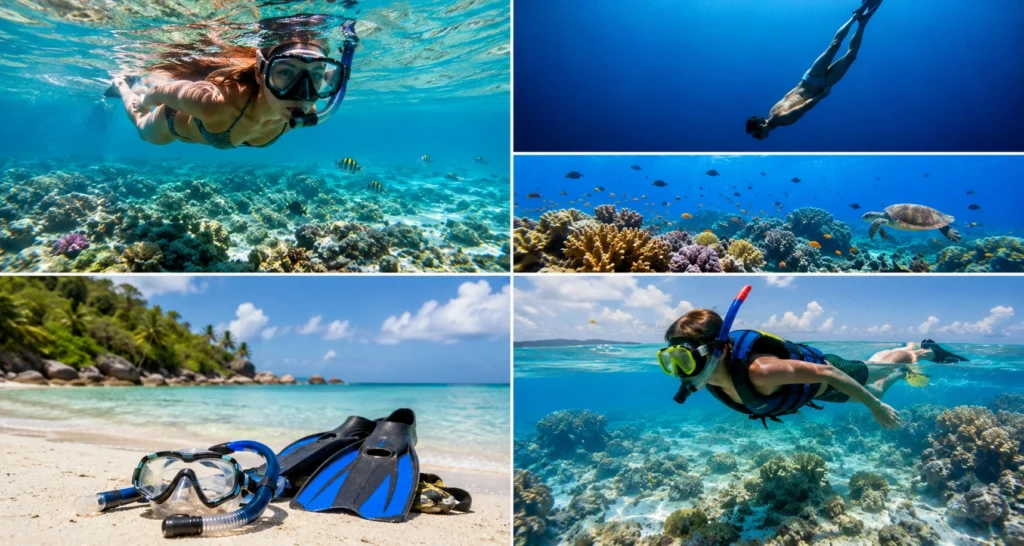
Beyond the obvious fun, snorkeling delivers real physical and mental rewards, which is part of why doctors and travelers alike rate it so highly as a low-impact activity.
- Physical fitness: It is a full-body, low-impact workout that builds cardiovascular endurance and leg strength without stressing your joints.
- Mental health and stress relief: Slow breathing and weightless floating trigger a calming response, and time in blue spaces is linked to lower stress and improved mood.
- Marine education: Seeing a living reef up close teaches you more about ocean ecosystems than any documentary can.
- Family activity: It is a rare adventure that a seven-year-old and a seventy-year-old can genuinely enjoy together.
- Photography: Shallow, well-lit water is ideal for capturing turtles, rays, and coral on a simple action camera.
- Eco-tourism: Snorkelers who understand reefs tend to become advocates for protecting them, supporting sustainable tourism.
Essential Snorkeling Gear
You can rent everything, but even a modest set of your own gear pays off fast in comfort, fit, and hygiene. Here is what actually matters, from must-haves to nice-to-haves, so you spend money where it counts.
The core three
- Snorkel mask: The single most important piece. A leaky or foggy mask ruins the day. Look for tempered glass, a soft silicone skirt, and a fit that seals with gentle suction before you strap it on.
- Dry snorkel: A dry-top snorkel has a float valve that seals the tube when a wave washes over it, keeping water out. A purge valve at the bottom lets you clear any water with a sharp exhale. Far more comfortable than a basic open tube for beginners.
- Fins: Full-foot fins are light and travel-friendly for warm water; open-heel fins worn with booties are more versatile and comfortable for longer sessions. Short travel fins are enough for casual reef snorkeling.
Comfort and safety add-ons
- Full-face snorkel mask: Covers the whole face and lets you breathe through nose and mouth, which many beginners find natural. Choose a reputable brand with good airflow design and only use it at the surface, never for diving down.
- Snorkel vest: An inflatable vest you can top up or deflate. It is the best confidence tool for weak swimmers and tired legs.
- Wetsuit or rash guard: A 2–3 mm shorty adds warmth and sun protection in cooler water; a simple rash guard prevents sunburn on your back in the tropics.
- Water shoes: Protect your feet from sharp rock, urchins, and hot sand on rocky-entry beaches.
- Anti-fog spray: A few drops keep the lens clear; baby shampoo works in a pinch.
- Dry bag and float: A dry bag keeps phones and keys safe, and a small tow float boosts visibility to boats and gives you something to rest on.
| Gear | Priority | Rent or Buy | What to look for |
|---|---|---|---|
| Mask | Essential | Buy | Tempered glass, silicone skirt, tested seal |
| Dry snorkel | Essential | Buy | Dry-top valve, purge valve, soft mouthpiece |
| Fins | Essential | Buy or rent | Comfortable fit, no heel rub, right stiffness |
| Full-face mask | Optional | Buy | Reputable brand, good airflow, surface only |
| Snorkel vest | Recommended | Rent or buy | Inflatable, adjustable, bright color |
| Rash guard/wetsuit | Recommended | Buy | UPF fabric or 2–3 mm neoprene |
| Water shoes | Situational | Buy | Grippy sole for rocky entries |
Best Reef Safe Sunscreen for Snorkeling
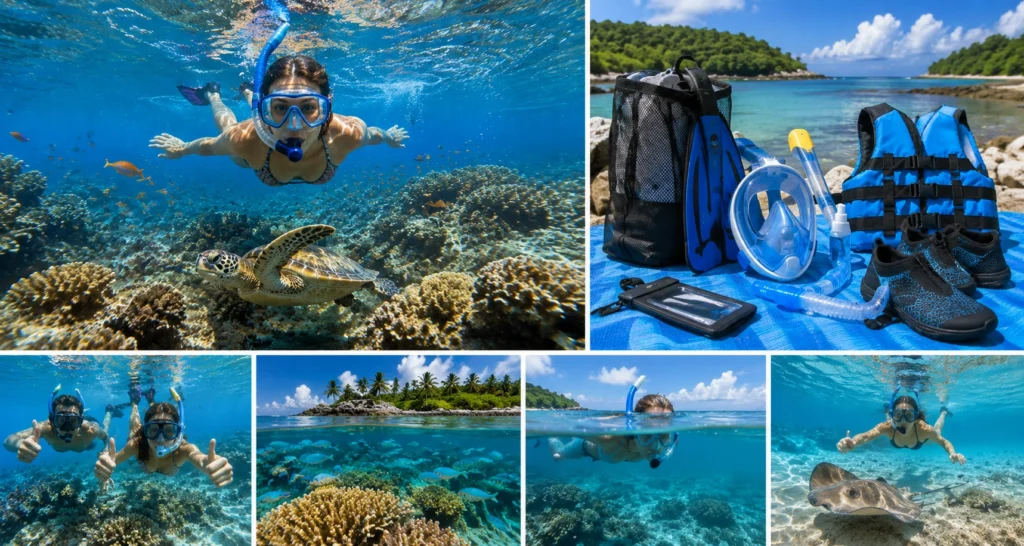
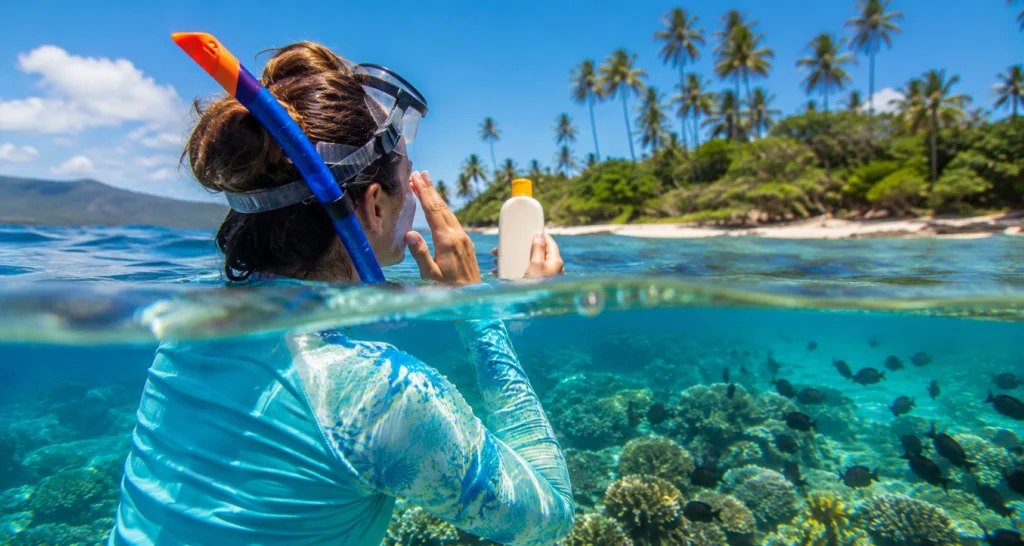
Choosing the best reef safe sunscreen for snorkeling is no longer just an ethical nice-to-have; in parts of the USA it is the law. Hawaii’s statewide Act 104 has banned the sale of sunscreens containing oxybenzone and octinoxate since January 1, 2021, and Maui and Hawaii County go further with mineral-only rules. If you snorkel there, the wrong bottle can be both harmful and illegal to buy on the island.
Why reef-safe sunscreen matters
Common chemical UV filters wash off your skin into the water, where research has linked them to coral bleaching, DNA damage in coral larvae, and stress across reef ecosystems. On a busy beach with thousands of swimmers, that adds up to hundreds of pounds of sunscreen entering the water every day. Switching formulas is one of the easiest ways to protect the reefs you came to see.
Ingredients to avoid
- Oxybenzone and octinoxate: banned in Hawaii and the clearest offenders for coral harm.
- Octocrylene, homosalate and avobenzone: chemical filters flagged in ongoing research and restricted in some counties.
- Nano-sized minerals: choose non-nano zinc oxide and titanium dioxide, which are less likely to be ingested by marine life.
What to choose instead
Look for a mineral sunscreen whose only active ingredients are non-nano zinc oxide, titanium dioxide, or both, labeled broad-spectrum SPF 30 or higher and water-resistant for 80 minutes. Mineral formulas sit on top of the skin and work immediately, though they can leave a light white cast, which tinted versions reduce. Worth knowing for 2026: the FDA approved a new filter called bemotrizinol in June 2026, the first new sunscreen ingredient cleared in the U.S. in about 25 years, so expect newer formulas to appear on shelves.
Pro tip: A rash guard or sun shirt is the most reef-friendly sun protection of all, because clothing never washes into the water. Cover up first, then apply mineral sunscreen only to exposed skin.
| Type | Active ingredients | SPF | Water resistance | Reef safe? | Best for |
|---|---|---|---|---|---|
| Non-nano mineral | Zinc oxide only | 30–50 | 80 min | Yes | Reef days, sensitive skin |
| Mineral blend | Zinc + titanium dioxide | 30–50 | 80 min | Yes | Broad protection, all-day water |
| Tinted mineral | Zinc oxide (tinted) | 30–50 | 80 min | Yes | Reducing white cast, face |
| Chemical filter | Oxybenzone / octinoxate | Varies | Varies | No | Avoid near reefs / banned in HI |
Best Underwater Camera for Snorkeling
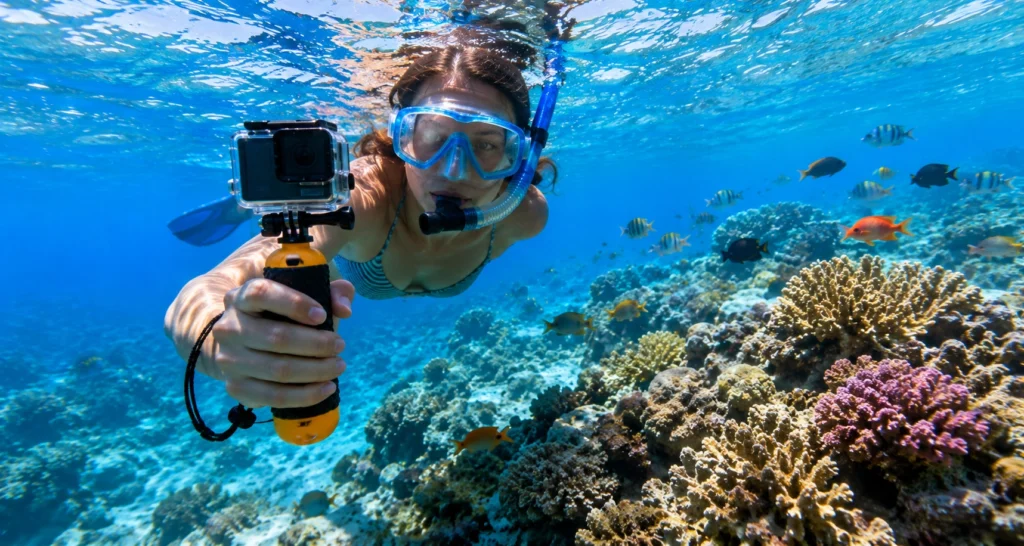
The best underwater camera for snorkeling is the one you will actually carry, that survives salt water, and that captures color in bright, shallow reefs. For most snorkelers that means a compact action camera rather than a bulky housed system, because you are near the surface where there is plenty of natural light.
Action cameras (the sweet spot)
Action cameras are small, rugged, natively waterproof to snorkeling depths, and shoot sharp, stabilized video. They are the default choice for reef days.
- GoPro HERO13 Black: The industry standard for stabilized 5.3K video, a huge accessory ecosystem, and reliable performance. Waterproof to about 10 m (33 ft) as-is, and to 60 m with the optional dive housing.
- DJI Osmo Action 6: The 2026 favorite of many snorkelers thanks to a larger sensor, a dedicated white-balance sensor for truer underwater color, faster charging, and deeper native waterproofing than GoPro.
- Insta360 Ace Pro 2: A cinematic choice with a Leica lens and up to 8K, though its native depth rating is shallow, so plan on the dive case for anything beyond surface splashing.
360 and compact options
- Insta360 X5: A 360-degree camera that lets you reframe shots after filming, great for creative reef and above-water clips in one take.
- Insta360 GO 3S: Tiny and light, shooting up to 4K, ideal as a grab-and-go camera for casual surface snorkeling.
Accessories that make or break your footage
- Floating handle or wrist strap: Action cameras sink, so a float is non-negotiable unless you enjoy donating gear to the seafloor.
- Red filter: Water absorbs red light first, so a filter or the camera’s white-balance mode restores warm color at depth.
- Spare batteries and a fast card: Cold water and 4K recording drain batteries quickly.
| Camera | Video | Waterproof (native) | Standout feature | Best for |
|---|---|---|---|---|
| GoPro HERO13 Black | 5.3K/60 | ~10 m (33 ft) | Stabilization + accessories | All-rounders |
| DJI Osmo Action 6 | 4K/120 | Deeper than GoPro | White-balance sensor, color | Underwater color |
| Insta360 Ace Pro 2 | 8K | ~12 m (housing to 60 m) | Leica lens, low light | Cinematic footage |
| Insta360 X5 | 5.7K 360 | Water-resistant | Reframe after filming | Creative 360 clips |
| Insta360 GO 3S | 4K/30 | Water-resistant | Ultra-compact | Casual, packable use |
Note: Specs and prices change often, so confirm current depth ratings and the latest model before buying.
How to Snorkel Like a Beginner
Good snorkeling is mostly about staying calm and letting the gear do the work. Follow this sequence the first few times and it becomes second nature fast.
- Practice breathing on land: Put the mask and snorkel on, stand in shallow water, and breathe slowly through the tube until it feels normal before you put your face down.
- Fit the mask correctly: Push hair off your forehead, place the mask, and inhale gently through your nose; it should stick without the strap. Then tighten the strap just enough to hold, not to crush.
- Enter the water calmly: On a sandy beach, walk in backward or sideways wearing fins; from a boat or rocks, sit and slide in. Never dive in headfirst wearing a snorkel.
- Float and relax: Lie face-down, arms loose at your sides, and let the water hold you. Kick slowly from the hips, not the knees, with long, lazy fin strokes.
- Equalize if you dip down: If you ever drop below the surface, pinch your nose and gently blow to relieve pressure in your ears; come back up if it hurts.
- Clear your snorkel: If water gets in, exhale sharply to blast it out through the purge valve, or lift your head and drain it. A dry-top snorkel prevents most of this.
- Clear a foggy or flooded mask: Look up, press the top of the frame to your forehead, and exhale through your nose to push water out the bottom.
- Get out safely: Approach the exit facing the beach, remove fins in waist-deep water so you do not trip, and time your steps with the waves.
Golden rule: If you feel panic rising, stop, float, hold onto a buddy or float, and breathe. Almost every snorkeling scare comes from rushing, not from the ocean itself.
Snorkeling Safety Tips
Snorkeling is very safe when you respect the water. Most incidents trace back to a handful of avoidable mistakes, so build these habits from day one.
- Check the weather and water: Only enter in calm conditions with good visibility; skip it in high surf, storms, or murky water.
- Understand currents and rip currents: If you are pulled out, do not fight it; swim parallel to shore until you are free, then head in. Ask locals or lifeguards about known currents first.
- Use the buddy system: Always snorkel with a partner and keep each other in sight. Never snorkel alone in unfamiliar water.
- Keep your distance from marine life: Look, do not touch. Some animals sting or bite when threatened, and touching harms them and you.
- Protect against the sun: Reef-safe mineral sunscreen, a rash guard, and limited exposure prevent the sunburn that sneaks up while your back is in the water.
- Stay hydrated: You lose fluid without feeling it in the water, and dehydration causes cramps and fatigue.
- Know emergency signals: Learn the raised-arm distress signal and carry a whistle on your vest or float.
- Carry basic first aid and know your limits: Come in the moment you feel cold, tired, or uneasy, rather than pushing on.
Marine Life You Can See While Snorkeling
Part of the thrill of snorkeling is never quite knowing what will drift into view. USA waters host an incredible range of species, from gentle giants to flashes of neon on the reef.
| Species | Where you’ll see it | Look but don’t touch |
|---|---|---|
| Green sea turtle | Hawaii, Florida | Keep 3 m distance; never touch or feed |
| Coral reefs | Florida Keys, Hawaii, USVI | Never stand on or brush against coral |
| Clownfish & anemones | Tropical reefs | Harmless; observe quietly |
| Parrotfish | Hawaii, Caribbean | Watch them nibble and ‘make’ sand |
| Manatee | Crystal River, Florida | Passive observation only; no chasing |
| Manta & eagle rays | Hawaii, Florida | Give space; do not block their path |
| Sea lions | La Jolla, California | Curious but wild; keep your distance |
| Reef sharks | Florida, Hawaii | Generally shy; stay calm, do not chase |
| Octopus | Rocky reefs | Shy; approach slowly and quietly |
| Starfish | Sandy shallows | Leave in the water; air harms them |
Best Snorkeling in USA
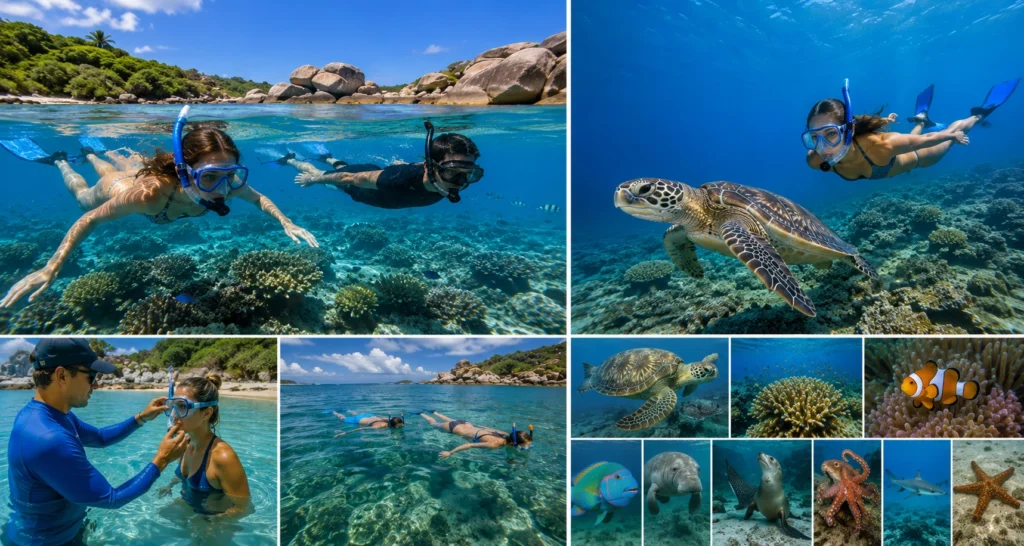
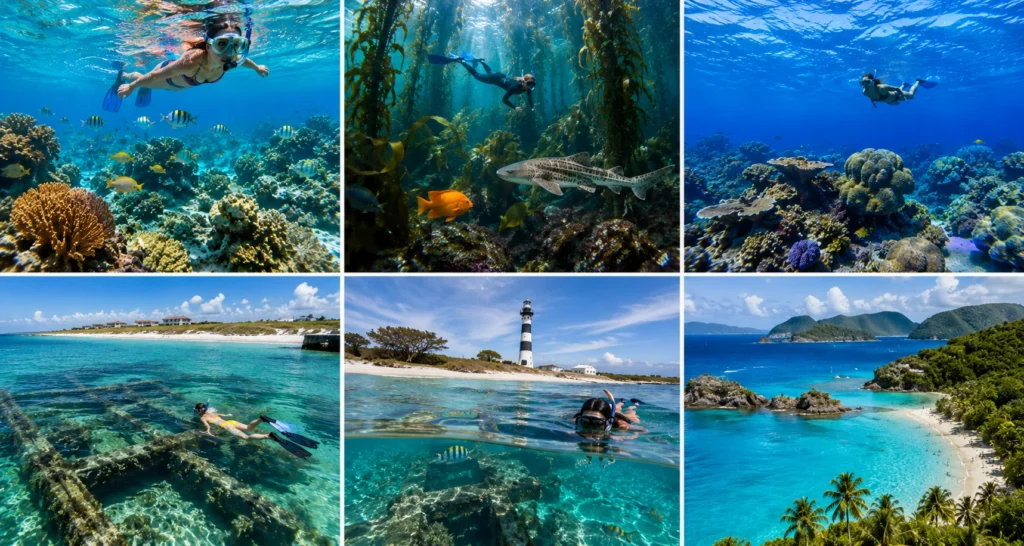
The best snorkeling in the USA rivals anywhere on the planet, and the variety is what makes it special. In a single country you can float over volcanic craters in Hawaii, living coral in Florida, kelp forests in California, and an underwater trail in the Virgin Islands. Here are the standout spots, with the practical details that decide whether a stop is right for your group.
Hanauma Bay, Hawaii
Best for: Beginners and families.
A protected volcanic crater on Oahu with calm, shallow, clear water and an extraordinary density of fish, Hanauma Bay is the best single beginner snorkel in Hawaii. Non-residents pay $25 (ages 13+), children 12 and under are free, and parking is $3. Reservations are required and open online at 7:00 a.m. HST two days before your visit, selling out fast. The preserve is open Wednesday through Sunday, closed Monday and Tuesday, and every first-time visitor watches a 9-minute conservation video before heading down to the beach.
Molokini Crater, Maui
Best for: Clear-water day trips by boat.
A crescent-shaped volcanic islet off Maui, Molokini is reached only by boat and rewards you with visibility that often exceeds 30 m (100 ft) inside the sheltered crater. Expect vibrant reef fish, occasional reef sharks in the deeper back wall, and some of the clearest water in the state. Go with a morning tour before the wind picks up.
John Pennekamp Coral Reef State Park, Florida
Best for: Living coral in the continental US.
The first undersea park in the country, off Key Largo, protects a stretch of the only living coral barrier reef in the continental United States. Boat tours run out to shallow reefs where you will find brain coral, sea fans, and clouds of tropical fish. It is the anchor of any Florida Keys snorkeling trip.
Crystal River, Florida
Best for: Snorkeling with manatees.
Crystal River and nearby Three Sisters Springs are among the only places on earth where you can legally snorkel alongside wild West Indian manatees, which gather in the warm spring water during winter. Strict passive-observation rules apply: float, keep still, and let the animals approach you.
La Jolla Cove, California
Best for: Kelp forests and playful sea lions.
This protected San Diego cove sits inside an ecological reserve, so marine life is abundant. Snorkelers glide over swaying kelp, orange garibaldi, and, in late summer, gentle leopard sharks that gather in the shallows. Sea lions often cruise by, curious and close.
Channel Islands National Park, California
Best for: Wild, uncrowded kelp diving.
A boat ride off the Southern California coast, the Channel Islands offer cool, nutrient-rich water and towering kelp forests full of life. Water is chilly, so wear a wetsuit, but the payoff is a raw, wild snorkel far from the crowds.
Dry Tortugas National Park, Florida
Best for: Remote reefs and a historic fort.
Reached only by boat or seaplane about 70 miles west of Key West, this remote park surrounds Fort Jefferson with shallow, protected waters. Snorkel right off the beach over seagrass, coral heads, and the fort’s old moat wall, with excellent fish life and very few people. This is one of the most underrated snorkel spots in the country.
Biscayne National Park, Florida
Best for: Reefs, shipwrecks, and easy access from Miami.
Ninety-five percent underwater and just south of Miami, Biscayne protects part of the Florida reef tract along with a Maritime Heritage Trail of shipwrecks. Ranger and concession boat trips take snorkelers out to shallow patch reefs teeming with life, making it a superb, often overlooked day trip.
Trunk Bay, St. John, US Virgin Islands
Best for: A guided underwater trail.
Regularly ranked among the world’s most beautiful beaches, Trunk Bay in Virgin Islands National Park has a marked underwater snorkeling trail with signs identifying coral and marine life. Warm, calm, clear water makes it perfect for beginners who want structure.
Devil’s Den, Florida
Best for: A prehistoric spring for something different.
Near Williston in north-central Florida, Devil’s Den is a submerged, spring-fed cavern inside a collapsed karst window, with a constant water temperature around 22 °C (72 °F). Snorkeling here is freshwater and cave-like rather than reef, with beams of light cutting through crystal water. Reservations are required, and it is popular with beginners and photographers.
Florida Keys reefs
Best for: The best reef concentration in the continental US.
Beyond Pennekamp, the wider Florida Keys string together some of the most accessible coral snorkeling in the country, including Looe Key and Sombrero Reef. Shallow, well-marked reefs and a fleet of easy half-day boat tours make the Keys the reef capital of the mainland.
| Destination | State | Water clarity | Best season | Highlight | Beginner | Boat |
|---|---|---|---|---|---|---|
| Hanauma Bay | HI | Excellent | Year-round | Fish density | Yes | No |
| Molokini Crater | HI | Outstanding | Apr–Oct | 30 m+ visibility | Some | Yes |
| John Pennekamp | FL | Good | May–Sep | Living coral reef | Yes | Yes |
| Crystal River | FL | Fair–good | Nov–Mar | Wild manatees | Yes | Yes |
| La Jolla Cove | CA | Fair | Aug–Oct | Sea lions, kelp | Yes | No |
| Channel Islands | CA | Good | Jul–Oct | Kelp forests | No | Yes |
| Dry Tortugas | FL | Excellent | Apr–Sep | Remote fort reefs | Yes | Yes |
| Biscayne | FL | Good | May–Sep | Reefs & wrecks | Yes | Yes |
| Trunk Bay | USVI | Excellent | Dec–Apr | Underwater trail | Yes | No |
| Devil’s Den | FL | Crystal | Year-round | Spring cavern | Yes | No |
Best Snorkeling in Continental US
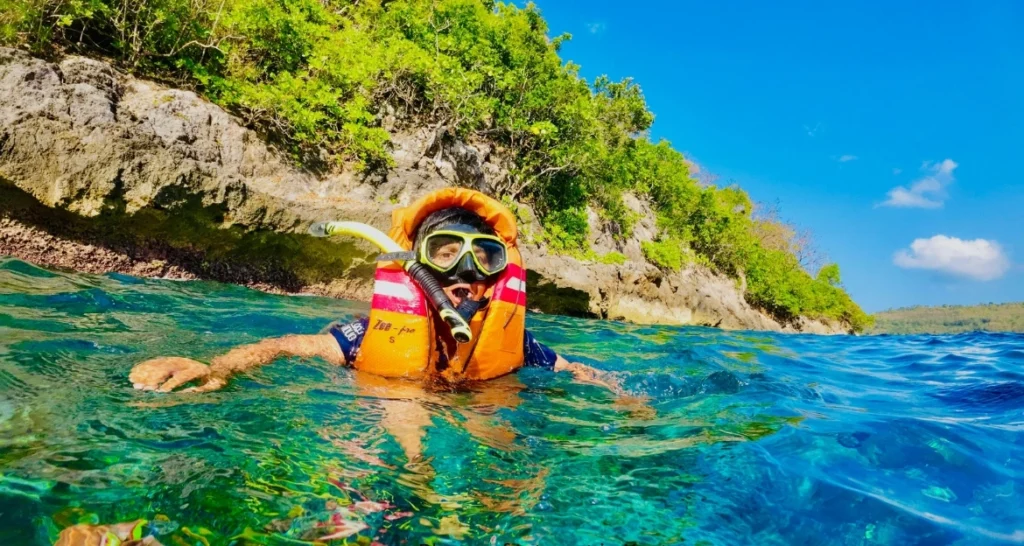
For travelers who cannot make it to Hawaii or the Caribbean, the best snorkeling in Continental US proves you do not need to leave the mainland for great reef time. The trade-off is real: continental water is generally cooler and, outside Florida, has fewer coral reefs than Hawaii’s tropical setting. What you gain is easy access, lower cost, and surprising variety, from Florida’s coral to California’s kelp.
Florida
Florida is the undisputed leader on the mainland, home to the only living coral barrier reef in the continental US. The Keys, Biscayne, and Dry Tortugas deliver warm, clear, tropical-style snorkeling, while Crystal River offers manatees and Devil’s Den offers a one-of-a-kind spring.
California
California trades warmth for wildlife. La Jolla and the Channel Islands serve up kelp forests, leopard sharks, garibaldi, and sea lions in cool, clear water that rewards anyone willing to wear a wetsuit.
Texas
Far offshore, the Flower Garden Banks National Marine Sanctuary in the Gulf holds genuine coral reefs, though it is a specialized boat trip usually paired with diving rather than a casual beach snorkel.
North Carolina
Off the Crystal Coast and around Cape Lookout, warm summer Gulf Stream water brings tropical fish and accessible shipwrecks close to shore, a little-known summer snorkel option on the East Coast.
US Virgin Islands
Technically a US territory rather than a state, the USVI belongs in any mainland-friendly plan because no passport is needed. Trunk Bay and the reefs around St. John and St. Thomas rank among the best snorkeling in the USA overall.
| Region | Water temp | Reef type | Wetsuit? | Best for |
|---|---|---|---|---|
| Florida Keys | Warm | Living coral | Optional | Tropical reef snorkeling |
| California | Cool | Kelp forest | Yes | Kelp, sea lions, sharks |
| Texas (offshore) | Warm | Coral banks | Optional | Serious reef day trips |
| North Carolina | Warm (summer) | Wrecks & fish | Optional | Summer wreck snorkeling |
| US Virgin Islands | Warm | Coral + trail | No | Easy tropical, no passport |
Best Time for Snorkeling
The best time for snorkeling depends on where you go, but the universal goals are calm water, good visibility, and comfortable temperatures. As a rule, aim for the drier, calmer months of each region and go early in the day before wind stirs up the surface.
| Season | Visibility | Crowds | Weather | Marine life |
|---|---|---|---|---|
| Spring | Good | Rising | Warming, variable wind | Reefs waking up, active fish |
| Summer | Very good | Peak | Warm, calm mornings | Peak fish activity, warm water |
| Fall | Excellent | Falling | Warm, often calm | Great water, fewer people |
| Winter | Region-dependent | Low (most) | Cooler, some swell | Manatees in Florida springs |
Regional quick guide: Hawaii is good year-round, with calmest south and west shores in summer. Florida reefs shine May to September; Crystal River’s manatee season is November to March. California kelp is clearest in late summer and early fall.
Common Beginner Mistakes
Almost every rough first snorkel comes down to the same short list of fixable errors. Avoid these and your learning curve shrinks to a single session.
- Using a poorly fitted or foggy mask, then giving up in frustration instead of re-fitting and defogging it.
- Holding their breath instead of breathing slowly and continuously through the snorkel.
- Touching or standing on coral, which kills it and can cut or sting you.
- Swimming too fast and thrashing, which burns energy and scares away wildlife.
- Ignoring currents, tides, and conditions instead of checking before entering.
- Wearing banned or reef-harming sunscreen instead of a reef-safe mineral formula.
- Snorkeling alone in unfamiliar water with no buddy, float, or plan.
Snorkeling Costs
One of snorkeling‘s best features is how little it costs to start. You can spend almost nothing by renting locally, or invest a few hundred dollars in gear that lasts years. Here is a realistic budget picture in US dollars.
| Item | Budget | What you get |
|---|---|---|
| Basic gear set (own) | $40–$120 | Entry mask, snorkel, fins |
| Quality gear set | $150–$300 | Trusted mask, dry snorkel, good fins |
| Daily rental | $10–$30 | Mask, snorkel, fins for a day |
| Guided boat tour | $60–$200 | Boat, guide, gear, often lunch |
| National park / preserve entry | $0–$35 | Access and lifeguards where applicable |
| Action camera (optional) | $150–$500 | Waterproof video and photos |
| Transportation | Varies | Rental car, fuel, parking, ferries |
Budget tip: Buy your own mask and snorkel for fit and hygiene, but rent fins on your first few trips until you know your size and style preference.
Complete Snorkeling Packing Checklist
Print or screenshot this list before any snorkeling trip so nothing gets left in the hotel room.
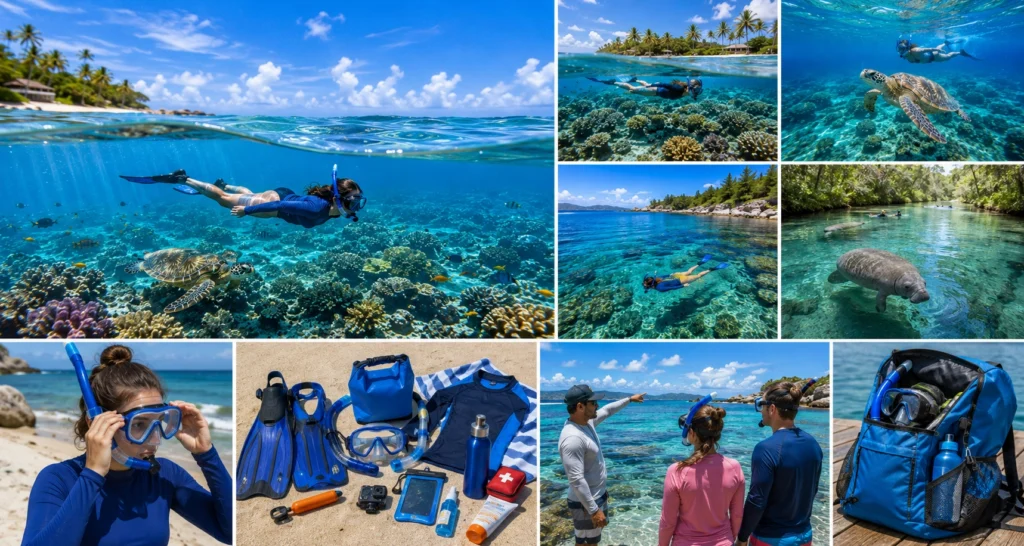
- Mask, snorkel, and fins (or confirmed rental)
- Snorkel vest or flotation aid
- Reef-safe mineral sunscreen (SPF 30+)
- Rash guard or sun shirt and a hat
- Underwater or action camera with float strap
- Waterproof phone pouch
- Water shoes for rocky entries
- Quick-dry towel and a change of clothes
- Dry bag for valuables and electronics
- Reusable water bottle to stay hydrated
- Anti-fog spray and a small first-aid kit
- Whistle and any required reservations or park passes
Responsible Snorkeling & Reef Conservation
Reefs are fragile, slow-growing ecosystems under pressure from warming seas and heavy tourism. Snorkeling responsibly keeps these places alive for the animals that depend on them and for the travelers who come after you.
- Never touch or stand on coral: even a light brush can kill years of growth and open the coral to disease.
- Respect wildlife: keep your distance, never chase, feed, or corner an animal, and let curious ones come to you.
- Take nothing, leave nothing: carry out all trash, and never collect shells, coral, or sea stars.
- Keep good distance and buoyancy: mind your fins so you do not kick sand onto the reef or strike it.
- Use reef-safe sunscreen: choose non-nano mineral formulas, or cover up with a rash guard instead.
- Support eco-tourism: book operators with sustainability practices and follow all local reservation and preserve rules.
FAQs
1. What is snorkeling?
Ans: Snorkeling is swimming at or just below the water’s surface while breathing through a tube called a snorkel, using a mask to see clearly and fins to move easily. It lets you watch reefs, fish, and marine life for long stretches without lifting your head or needing scuba gear.
2. Is snorkeling safe for beginners?
Ans: Yes. Snorkeling is very safe for beginners in calm, shallow, protected water. Use a snorkel vest for confidence, always go with a buddy, check conditions before entering, and build slow, steady breathing before adding reefs and currents.
3. Do you need to know how to swim to go snorkeling?
Ans: Basic swimming ability and comfort in water are strongly recommended. Weak swimmers can still snorkel safely in calm, shallow areas by wearing a buoyant snorkel vest and staying close to a partner, but you should never rely on the vest alone in deep or rough water.
4. What is the difference between snorkeling and free diving?
Ans: The main difference between snorkeling and free diving is breathing. Snorkelers stay at the surface and breathe continuously through a snorkel, while free divers hold their breath and dive down, sometimes very deep. Free diving needs formal training and a buddy because of blackout risk, whereas snorkeling needs none.
5. Where is the best snorkeling in USA?
Ans: The best snorkeling in USA includes Hanauma Bay and Molokini in Hawaii, John Pennekamp and the wider Florida Keys, Crystal River’s manatees, La Jolla and the Channel Islands in California, and Trunk Bay in the US Virgin Islands.
6. What is the best snorkeling in Continental US?
Ans: The best snorkeling in Continental US is in Florida, home to the only living coral barrier reef on the mainland, plus the Keys, Biscayne, Dry Tortugas, Crystal River, and Devil’s Den. California’s La Jolla and Channel Islands offer excellent kelp-forest snorkeling.
7. What is the best reef safe sunscreen for snorkeling?
Ans: The best reef safe sunscreen for snorkeling is a mineral formula whose only active ingredients are non-nano zinc oxide, titanium dioxide, or both, labeled broad-spectrum SPF 30 or higher. Avoid oxybenzone and octinoxate, which are banned in Hawaii and harmful to coral.
Conclusion
Snorkeling remains one of the best value adventures in the outdoors: minimal gear, no certification, and a straight line from the beach to a living underwater world. The USA makes it even better, packing tropical coral, spring caverns, kelp forests, and gentle giants into a single country.
The trips that go well are the ones matched to your skill level. Begin in calm, protected water like Hanauma Bay, Trunk Bay, or Devil’s Den, get your breathing and mask sorted, then work up to boat sites like Molokini and the Channel Islands as your confidence grows. Whether you chase the best snorkeling in USA or stay closer to home for the best snorkeling in Continental US, the fundamentals stay the same.
Invest in a mask that fits, protect your skin with the best reef safe sunscreen for snorkeling, capture the day with the best underwater camera for snorkeling, and above all snorkel responsibly. Keep your fins off the coral, your distance from wildlife, and your habits reef-safe. Do that, and you protect the very ecosystems that make snorkeling worth doing, so the next traveler, and the reef itself, gets the same chance you did. Pick a beginner-friendly spot, book your reservations early, and go meet the ocean.