

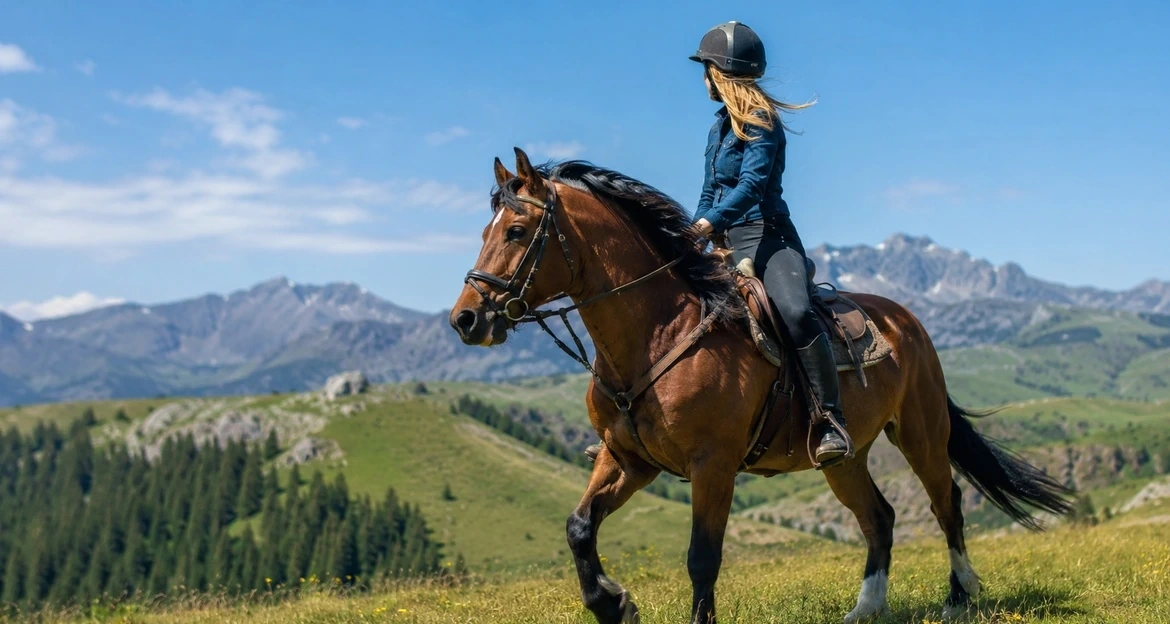
There comes that moment, usually on the second morning, when the soreness wears off and something clicks. The horse stops fighting you and moves with it. The reins go quiet in your hands. You look up, and instead of looking at the trail, you see the country open in front of you: a valley, a coastline, and a herd of wild horses grazing on a hillside that no road comes through. That is the moment good horse riding holidays are built around, and it is why riders keep chasing it across the world.
The guide includes ten places where that click happens faster than anywhere else. Some are gentle enough for a nervous first-timer. Others will test riders who have spent years in the saddle. All ten provide you something a car or a hiking trail never will, the chance to travel the way people traveled for thousands of years, at the pace of a walking horse, close enough to the land to smell the rain coming.
Horse riding holidays cover every continent and every comfort level, from a supported horse riding adventure deep in the wilderness to a gentle weekend of beach hacks. That is one of these horse riding trips you have to choose, the one that speaks to you and that you feel comfortable with, and that will do.
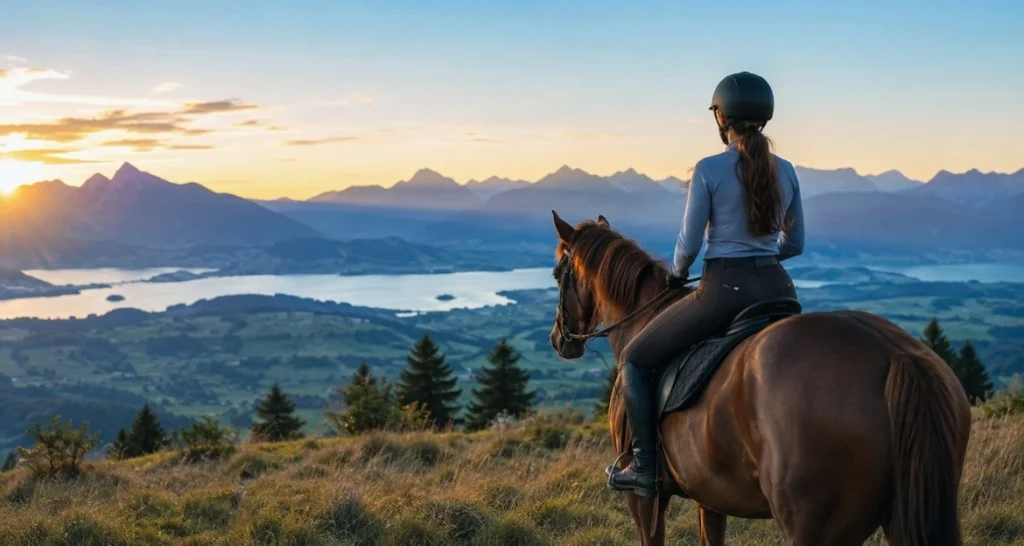
1. Iceland: Riding the Only Horse of Its Kind
Iceland runs on a strange and wonderful rule. No horse has been imported to the island since around 982 AD, and any Icelandic horse that leaves for a show abroad can never come home. A thousand years of isolation produced a breed found nowhere else on earth, and horse riding one is the whole reason to come.
The Icelandic horse has five gaits instead of three. The famous one is the tölt, a smooth four-beat gait so steady that riders say you can carry a whole glass without dropping a drop. On the highland trails around Landmannalaugar’s hills, where rhyolite mountains glow orange and green above steaming geothermal ground, you ride with a loose herd of spare horses running alongside you. When one tires, you swap and keep moving.
This is one of the best horse riding experiences in the world, though the highland routes are well suited for confident riders who can hold a fast trot for hours. If you are new to the saddle, short day rides out of Mosfellsbær and Laxnes near Reykjavík give you a taste without the commitment.
Good to know: Best from June to early September. Autumn visitors in late September can join the réttir, the traditional round-up when farmers ride into the hills to gather free-grazing horses before winter. The rider weight limit is usually 110 kg. Canter is rare here; the tölt does the work.
2. Mongolia: The Land of the Horse
Mongolians say children learn to ride before they learn to walk, and after a day on the steppe, you believe it. This is the most demanding horse riding adventure on the list and the most transporting. You cover roughly 20 miles a day on tough little native horses that live outside year-round, mostly unshod (and don’t have any problem with an impromptu gallop when their owners suggest one).
You sleep in gers, the round felt tents. nomad families have used for centuries, and you eat what they eat. Somebody will hand you a bowl of airag, fermented mare’s milk, and watch your face while you drink it. Herds move across grass that runs to the horizon in every direction. At night the sky is so thick with stars it feels close enough to touch.
Time your trip for July and you catch Naadam, the national festival based on the three manly games of wrestling, archery and horse racing where child jockeys thunder bareback across the plain. The riding season runs from May to September, with July being the busiest and wettest.
Good to know: For fit, confident riders comfortable at all paces on a forward horse. These are supported expedition rides with vehicles carrying camp and luggage. Mongolian tack often includes an Australian stock saddle, so bring padded riding tights.
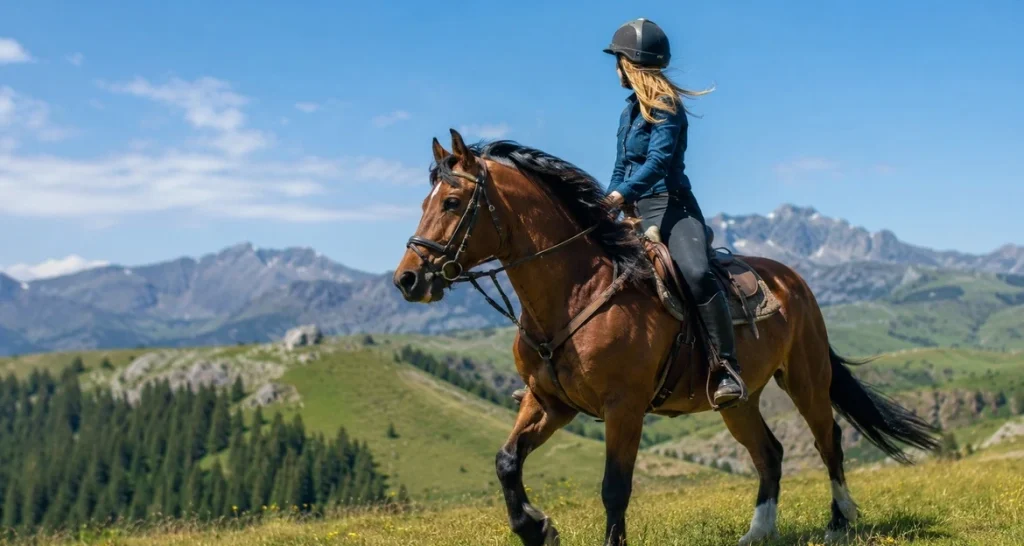
3. Spain: Andalusian Horses and Medieval Castles
Spain is where a lot of riders take their first serious European horse riding trip, and for good reason. The country breeds the Andalusian, one of the most recognizable horses alive, and the riding culture runs deep enough that you feel it in every village.
In Andalusia, you ride between whitewashed towns, through cork forests and olive groves, with Moorish history planted in the landscape. And go inland to the Sierra de Gredos, and the character changes. Here you follow old cattle paths and forest tracks that connect medieval villages, each one defended by a castle, stone bridge, or centuries-old church. The horse riding is varied and generous: long caners through open valleys, steady climbs through pine, and quiet stretches through farmland. Lunch is a traditional Spanish meal served outdoors, and dinner waits in a small country inn.
The horses are typically PRE (pure Spanish) with some Hispano-Arab crosses, serene and beautifully schooled. Spain is hard to top for riders who want a horse riding adventure with culture baked in. Evenings run on Spanish time, which means late, lingering, and lubricated with regional wine.
Good to know: Spring and autumn bring mild weather and wildflowers. Point-to-point routes suit experienced riders who can control a horse at a canter in open ground. Expect 4 to 7 hours in the saddle a day.
4. Botswana: A Horseback Safari in the Okavango Delta
Riding a game reserve rewrites what you thought a horse riding adventure could be. In the Okavango Delta, a UNESCO World Heritage Site the size of a small country, there is no engine and no metal between you and the animals. Zebra let you walk among them. Giraffes browse the tall trees and barely lift their heads. Because you arrive quietly on horseback rather than in a rumbling 4×4, the wildlife stays calm and lets you close in a way that vehicles never manage.
During the flood months from June to October, the water spreads across the plains, and the signature moment arrives: a long, splashy canter through shallow floodwater, spray soaking you head to toe, and a herd of lechwe scattering ahead. Riders describe it as a childhood dream they did not know they had. Many camps end the day with a slow sunset horse riding loop as the light goes gold and the game comes out to drink.
There is a serious catch. This is Big 5 country, home to elephant, lion, buffalo, and wild dog, so operators only take experienced riders who can gallop out of trouble on command. Non-riding partners can join by vehicle from the same camp.
Good to know: Flood season (June to October) delivers the best water canters and game viewing. You need to be fit and confident at all paces. Mashatu Game Reserve, the “Land of Giants,” is a slightly gentler alternative with huge elephant herds and baobab trees.
5. Jordan: Arabian Horses Through Wadi Rum and Petra
Few rides integrate landscape and history like Jordan. You spend your days on desert-bred Arabians, hardy and surefooted and always ready for a burst of speed, crossing the red sand and towering sandstone of Wadi Rum. Bedouin guides lead the way, pausing at Lawrence of Arabia’s ruined house and beneath the rock formation known as the Seven Pillars of Wisdom. Lunch stretches to two hours because desert culture treats the midday heat as a time to rest, not push on.
Nights are the payoff. You camp under a sky so clear it disorients you, eat around an open fire, and drink sweet sage tea while your guides tell stories. Most trips fold in a day at Petra, the rose-red Nabatean city carved into the cliffs, where you walk the narrow Siq and stand in front of the Treasury that Indiana Jones fans will recognize instantly.
This is the best place on the list for sunset horse riding. Cantering across open sand as the light turns the cliffs from ochre to deep crimson is the image you will carry home.
Good to know: April and the shoulder season in the fall are the kindest temperatures; summer is brutal. Rides cover 18 to 25 km a day over 4 to 6 hours for intermediate and advanced riders. English tack. A Jordan Pass covers your visa and entry into Petra and Wadi Rum.
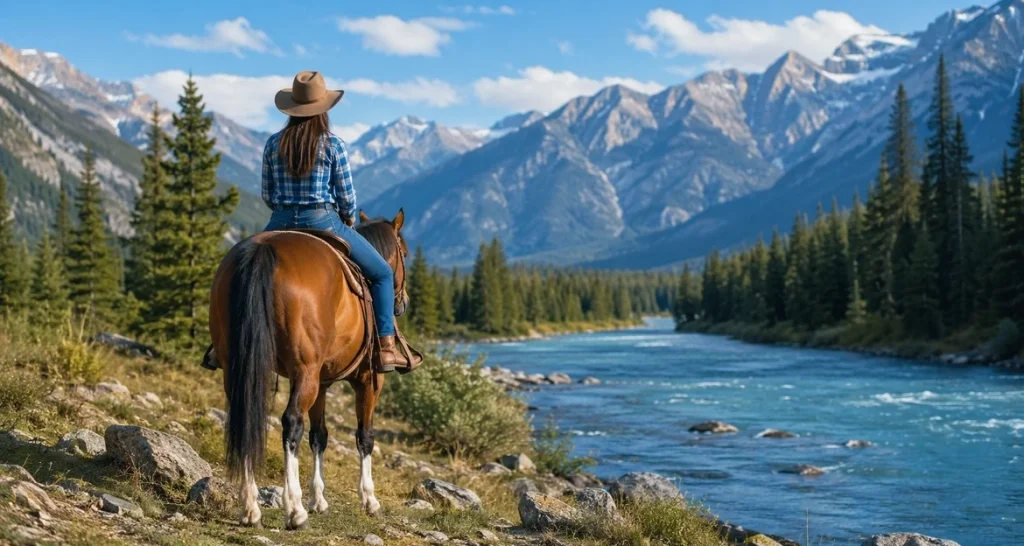
6. Argentina: Gauchos, Criollos, and Endless Asado
The Criollo is the national horse of Argentina and is descended from animals that escaped the first failed Spanish colony in Buenos Aires in the 1540s and turned feral on the pampas. Gauchos bred them back into the toughest, most willing trail horse you will ever sit on, capable of riding for days across brutal country.
Your saddle tells the story. The recado is made from layers of blankets, a leather seat, and sheepskin on top, and it is a gaucho’s bed out in the wilderness. Only the stirrups have buckles, and everything else is lashed with rawhide from the days when a broken buckle miles from anywhere could end you. On a working estancia you ride out with the gauchos on their daily rounds, help move cattle, and come home to an asado, cut after cut of home-reared beef grilled over coals and washed down with Malbec.
Patagonia offers the wilder version, horse riding Andean-Patagonian forests and high plains beside Lanín National Park, mostly at a walk because of the terrain, with canter where the ground allows. The pampas estancias run faster and welcome all levels.
Good to know: Estancia Base stays suit beginners through experts; Patagonia mountain trails reward the fit.Horse riding is western in style. Argentine seasons flip, and warm months are from October to April.
7. The American West: Dude Ranches and Cattle Drives
Wyoming did not earn the nickname “Cowboy State” by accident. A week on a Western guest ranch is the most accessible way to live the cowboy fantasy, and it works whether you have ridden for decades or never sat on a horse. Wranglers match you to a quarter horse by your size and experience, then take you out across open range under the kind of enormous sky that makes people go quiet.
The range runs from polished luxury lodges to working outfits where you earn your keep. On a working cattle ranch you ride out at dawn, help move the herd to fresh pasture, sort and doctor cattle, and share stories around a campfire cookout at night. Some historic ranches sit on land Butch Cassidy and the Sundance Kid once crossed. Days end with your boots off and your legs pleasantly ruined.
These are among the most family-friendly horse riding holidays anywhere, and the certified ranches take horse safety seriously enough to run multi-year training programs for their staff.
Good to know: Summer suits families and general trail horse riding; autumn brings real cattle work. Rates commonly run $300 to $1,000 a day depending on luxury. For experienced riders, spring and fall horse drives move loose herds at a fast, exhilarating pace.
8. Portugal: Lusitano Horses and Empty Atlantic Beaches
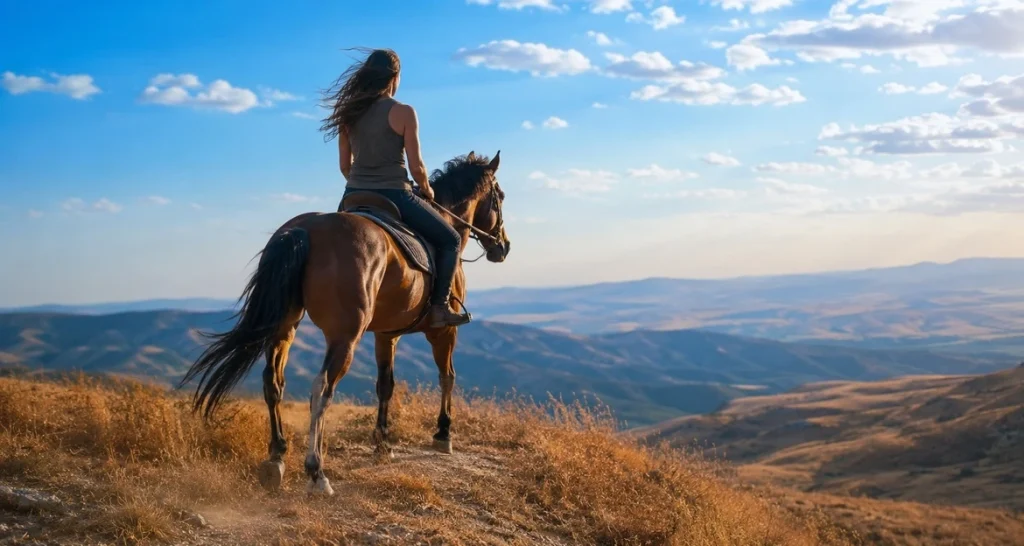
Portugal breeds the Lusitano, the baroque, brave, endlessly trainable horse at the heart of the Portuguese School of Equestrian Art. You do not need to be a dressage rider to enjoy one; these horses are calm, responsive, and a pleasure whether you are a rising intermediate or a seasoned trail rider.
The Alentejo coast is the draw. You ride through cork oak and eucalyptus forests, past rice fields and the flamingo-dotted Sado estuary, on a point-to-point trail that ends each day somewhere new. The highlight comes when you drop out of the hills onto the wide, deserted beaches near Comporta. Riders often set out at dawn to reach the sand before the crowds, then open up into a long canter along the shoreline with the Atlantic breaking beside them. Time it right in the evening instead, and you get sunset horse riding along an empty strand, which is hard to beat.
Portuguese military-style saddles with sheepskin covers keep long days comfortable, and the food leans into fresh Alentejo fish and local meats.
Good to know: Intermediate riders and up, comfortable at all paces in the open. Trails run in both directions, so you can choose your route. Beach canters may be scheduled for dawn in busier months.
9. Ireland: Atlantic Gallops on the West Coast
Ireland packages a European horse riding holiday with something more relaxed than the desert or the steppe: green boglands, ruined castles, and pub evenings that run long. It is one of the easiest horse riding holidays to reach from the UK or mainland Europe for a long weekend. The country’s real signature is the beach gallop. Along the west coast, on the wide Atlantic strands of Connemara and Sligo, you can push a sturdy Irish horse into a gallop across firm wet sand with the sea spray in your face and nothing ahead of you but coastline.
The horses fit the country. Connemara ponies, Irish Draughts, and Irish sport horse crosses are bred for exactly this kind of ground, sensible and bold in equal measure. Coastal trail rides thread through stone-walled fields and along quiet lanes between the beaches, and most operators cater to a real range of ability, from steady hacks for beginners to fast open gallops for confident riders.
Pack for weather that changes its mind hourly. The reward for the rain is that impossible green.
Good to know: Late spring through early autumn gives you the best chance of dry days, though never a guarantee. Beach gallops need at least solid intermediate confidence; gentler inland hacks welcome beginners. Waterproofs are not optional.
10. Australia: High Country in the Snowy Mountains
The Snowy Mountains carry a national myth. “The Man from Snowy River” turned the mountain cattlemen and their fearless descents into folklore, and horse riding the high country here means following in those hoofprints on an Australian Stock Horse, a breed built for stamina and steep, broken ground.
Few horse riding holidays feel as tied to a place and a story as this one. You ride across high plains dotted with old cattlemen’s huts, through snow gum forests, and up to ridgelines with views over Kosciuszko National Park. Trips often involve mustering and bush camping, boiling a billy for tea, and swapping yarns by the fire. The descents get steep, so operators favor riders who trust their balance and their horse.
Because Australia sits in the southern hemisphere, the seasons flip. The prime high-country horse riding season runs through the Australian summer, roughly December to March, when the mountain trails are clear of snow.
Good to know: Best for confident riders comfortable with steep terrain and long days. Southern-hemisphere summer (December to March) is the window. Expect basic, atmospheric bush camps rather than luxury lodges.
Which Trip Suits Which Rider?
Ten destinations is a lot to weigh, so here is a quick way to narrow it down before you commit to one of these horse riding trips.
| Destination | Best For | Riding Level | Signature Moment |
| Iceland | Gait lovers, highland adventurers | Confident (day rides suit beginners) | Tölting with a loose herd |
| Mongolia | Expedition seekers | Fit and confident | Galloping the open steppe |
| Spain | Culture and comfort | Intermediate to advanced | Canters between castles |
| Botswana | Wildlife and thrill | Experienced only | Splashy canters past elephants |
| Jordan | History and desert | Intermediate to advanced | Sunset across red sand |
| Argentina | Ranch life, food, culture | All levels (estancia) | Asado after a day with gauchos |
| American West | Families, first-timers | All levels | Moving cattle at dawn |
| Portugal | Beach riders | Intermediate and up | Canter along an empty Atlantic beach |
| Ireland | Europe is close to home | Beginner to advanced | Atlantic beach gallop |
| Australia | High-country adventurers | Confident | Steep descents in cattlemen’s country |
A Few Fun Facts About a Horse Before You Go
Every good trip is better with a little trivia to share around the campfire. A few fun facts about a horse worth knowing:
- They sleep standing up. Horses can lock their leg joints and doze on their feet, a survival trick that lets them bolt from danger instantly. They still need to lie down for deep REM sleep, just not for long.
- Their eyes are huge. A horse has the largest eyes of any land mammal, set on the sides of the head for nearly 360-degree vision. That is also why a sudden movement behind them can spook them.
- The Icelandic tölt is rare. Most horses have three gaits. The Icelandic breed has five, including the flying pace that can hit close to 48 km/h.
- Mongolian horses are almost never shod. They live out on the steppe year-round, and their hooves are hard enough to cross rock, sand, and unshod snow.
- “Criollo” means survivor. Argentina’s national breed traces back to horses that went feral in the 1540s and adapted to the pampas on their own.
What to Pack: Boots, Layers, and the Rest
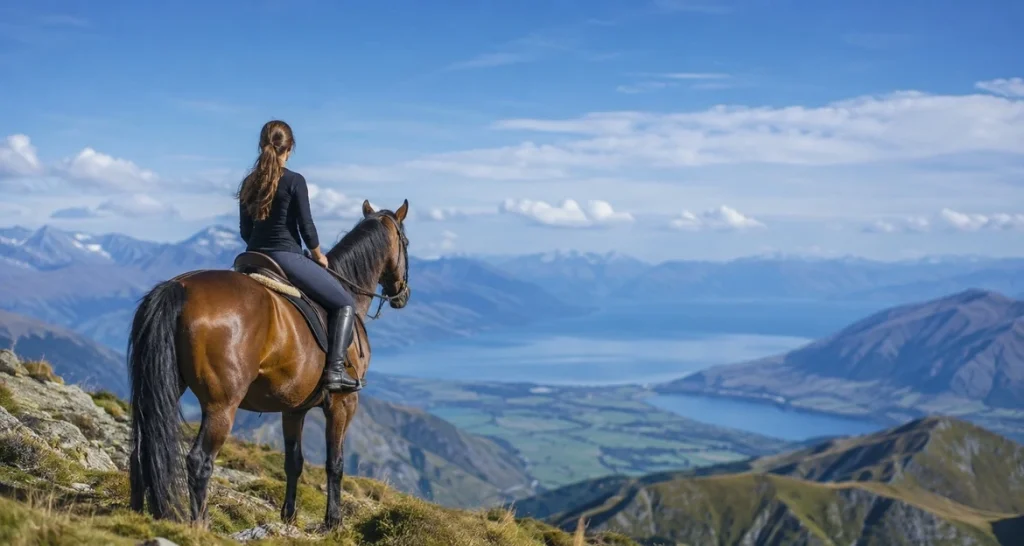
Gear matters more than beginners expect on horse riding trips, and getting it wrong can end a trip early. The single most important item is a proper pair of horse riding boots with a defined heel that stops your foot sliding through the stirrup. Short paddock boots work with half chaps; tall boots work on their own. Whatever you choose, break your horse riding boots in at home over several weeks, because a blister on day one of a week in the saddle is misery.
Beyond footwear, pack in layers you can add and shed as the weather turns, a well-fitted helmet (most operators supply them, but sizing varies, and bringing your own guarantees a fit), sun protection, a light waterproof, and padded riding tights or breeches for long days. A small backpack or bum bag, a portable charger, and far more phone storage than you think you need round it out. In Iceland and a few other places, a stop at a local tack store is part of the fun, and picking up a pair of horse riding boots or breeches there makes a good souvenir.
The Takeaway
The best horse riding holidays do the same thing whether you are galloping through Okavango floodwater or ambling a green Irish lane: they slow you down and hand you a view you earned. Match the destination to your nerve, be honest about your riding level, break in your boots, and go. That second-morning click, the one where you and the horse finally move as one, is waiting on every trail on this list. Choose a direction and start planning your next horse riding adventure.
FAQs
1. Do I need to be an experienced rider to book a horse riding holiday?
Ans: No. Destinations like the American West, estancia stays in Argentina, and gentle Irish or Icelandic day rides welcome complete beginners and match you to a calm, well-schooled horse. Others, including the Okavango Delta and Mongolia, need you to be fit and confident at all paces. Every good operator lists a clear riding level, so read it honestly and book for your real ability, not the ability you wish you had.
2. When is the best time of year to go?
Ans: It depends entirely on the destination. Europe (Spain, Portugal, and Ireland) and the Middle East (Jordan) are best visited in spring and autumn, avoiding summer heat and winter cold. Mongolia and Iceland are summer destinations. Botswana’s Okavango peaks during the flood from June to October. Australia’s high country flips to the southern hemisphere summer, December to March. Shoulder seasons usually mean better weather, fewer crowds, and calmer horses.
3. How much do horse riding holidays cost?
Ans: Horse riding trip prices range widely. Budget-friendly trips in Morocco, Bulgaria or a simple estancia will cost about $150 to $1,000 a day when you factor in meals and accommodation. European trail rides usually fall in between. Guest ranching in America ranges from $300-$1,000 per day depending on how luxurious you are looking for and remote safari or expedition rides are at the top end. Most of the prices quoted do not include flights and travel insurance, so budget for them all.
4. What should I wear and bring?
Ans: Proper riding boots with a heel are non-negotiable and should be broken in before you go out. Layer in layers, a fitted helmet, sun protection, light waterproof and padded breeches or riding tights, and if a support vehicle is bringing your luggage, a soft bag as space is usually tight. Check each operator’s packing list, as desert, mountain, and tropical trips necessitate different kits.
5. Is horse riding safe?
Ans: Riding carries real risk, so reliable operators require helmets, match riders with suitable horses, and travel and have medical insurance. The safest trips are the ones where you are booking to your true skill level and tell the operator what you know. Listen to your guides, especially in wildlife areas or steep country, and the odds are firmly in your favor.
6. Could I get a non-riding partner?
Ans: But yes, sometimes. Safari camps in Botswana offer vehicle game drives for non-riders, estancias in Argentina offer fishing and relaxing and many ranches and trail bases have lots to do off a horse. Some point-to-point trips are riding only by design, so make sure before you book if you are traveling with someone who plans to stay on the ground.