

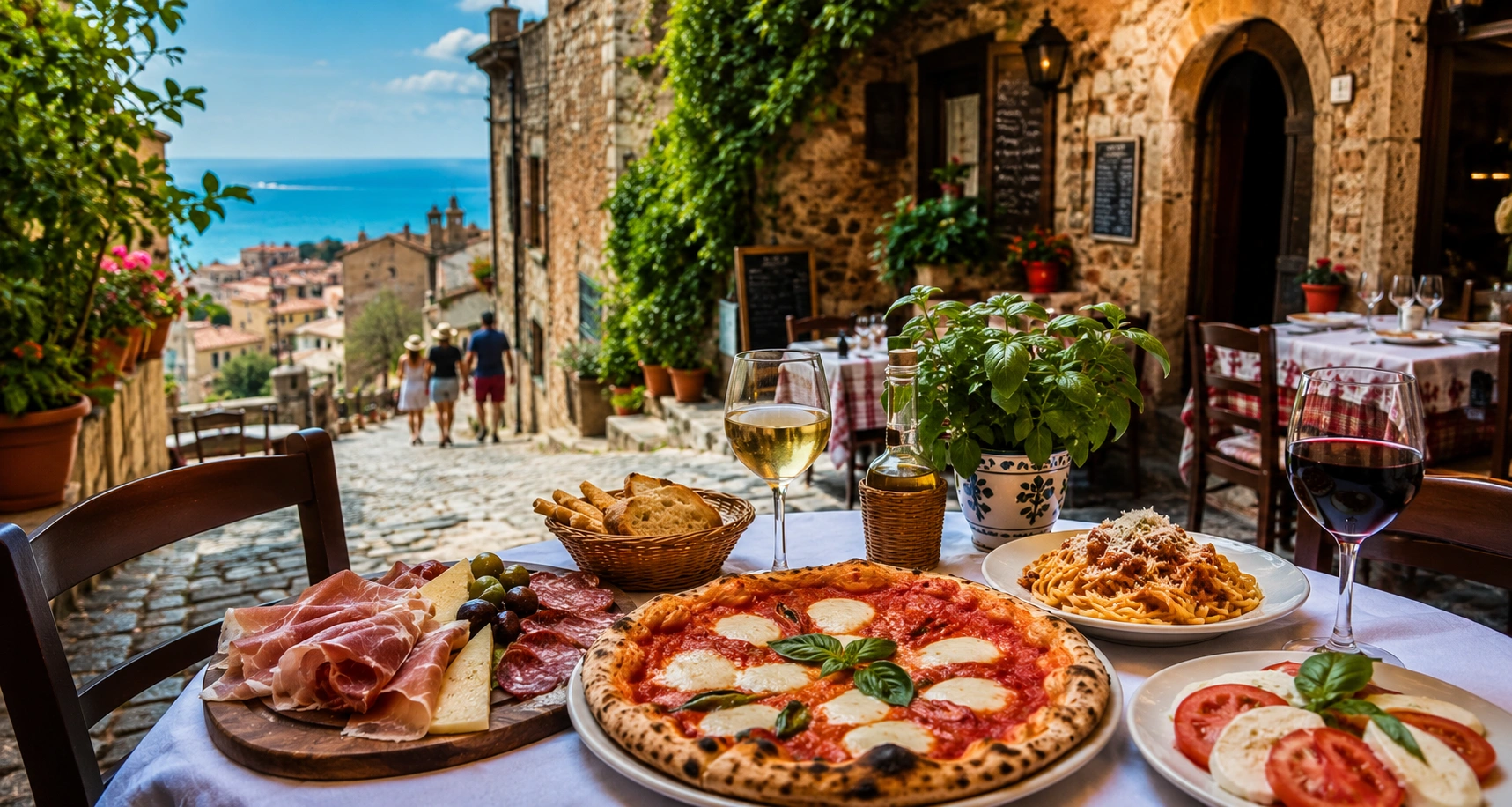
Italy is a wonderful place to eat. From handcrafted pasta in Bologna to wood-fired pizza in Naples, every city tells its story through its cuisine. Travelers do come to Italy and are always looking for a meal, but for the most part, they are at a table with local dishes, fresh ingredients, and generations-old recipes.
For you, the best food in Italy, you are not alone. Food tourism has become one of the biggest reasons travelers choose Italy, and for good reason. Each region has its own flavors, traditions, and unforgettable dining experiences that go far from typical tourist 5-star restaurants.
We are going to visit five great Italian cities that have great food, culture, and a community of people like this. And if you’re planning your first Italian trip, or when you’re going to go again for another culinary adventure, those cities should be on your itinerary.
Why Italy is a Food Lover’s Paradise
Italian cuisine is much more than pizza and pasta. The country’s culinary identity is deeply rooted in regional traditions. What you eat in Sicily is completely different from what you’ll find in Tuscany or Emilia-Romagna.
What makes Italy special is its commitment to:
- Fresh local ingredients
- Family-owned restaurants
- Regional cooking traditions
- Seasonal menus
- Artisan food production
And where regional specialties lie, they are the key to authentic experiences for the travelers who are looking for the best food in Italy.
1. Bologna: The Food Capital of Italy
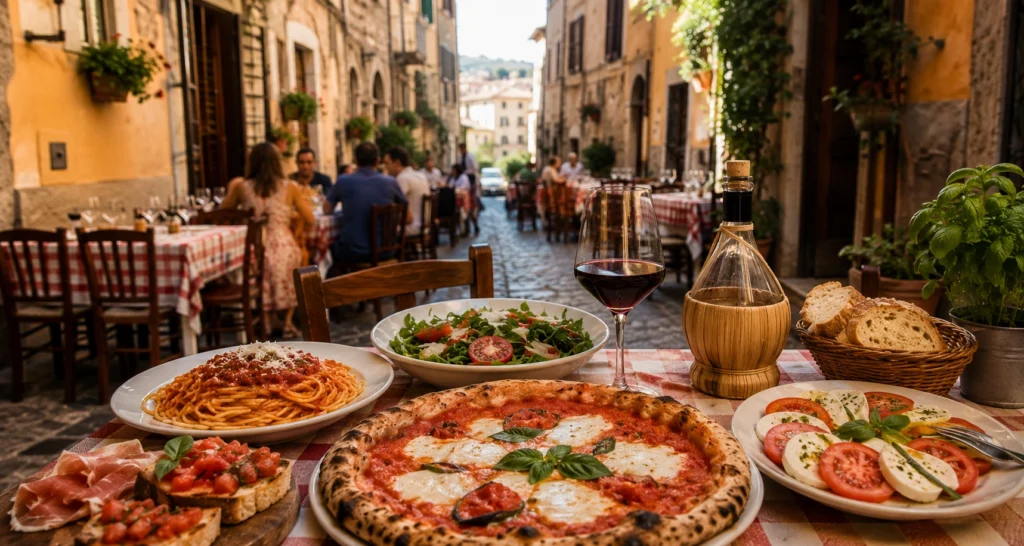
There is a reason why Italians nickname Bologna “La Grassa” (The Fat One). It is located in the heart of the Emilia-Romagna region, and it is considered by most culinary purists to have the best food in Bologna and, in fact, the whole country.
What is Bologna Famous For?
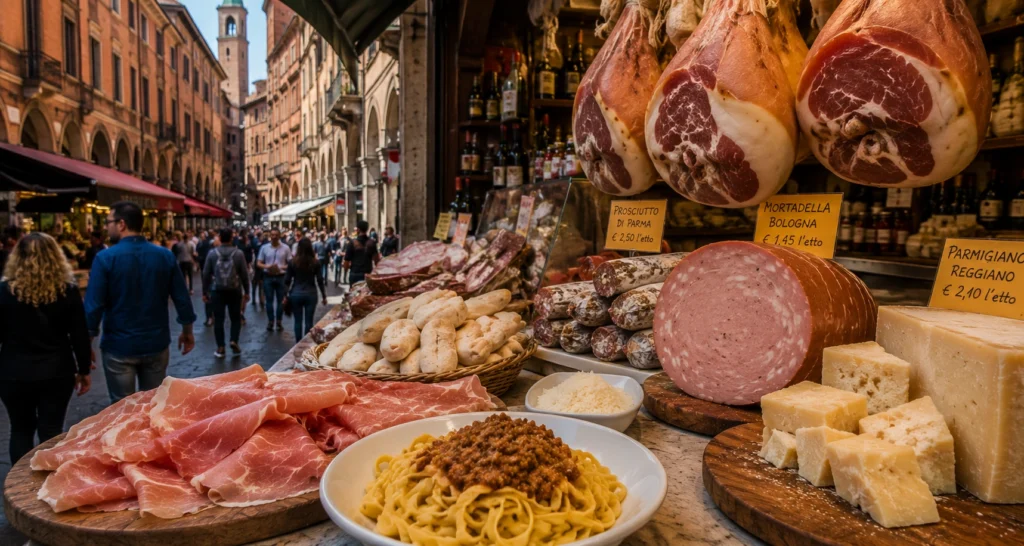
If you’re wondering what is Bologna famous for, it’s the holy trinity of Italian deli counters: Parmigiano-Reggiano, Prosciutto di Parma, and Mortadella. It is also the birthplace of real Ragù alla Bolognese (which, traveler tip, is never served with spaghetti here, always with fresh, silk-thin egg tagliatelle).
Exploring the Best Food in the Bologna Market
To understand the city, you need to walk through its markets. The air here smells like aged balsamic vinegar and cured meats, a sensory experience that sets the tone for your entire trip.
Where to Eat Like a Local in the Bologna Food Market
- The Quadrilatero & Bologna Food Market: For centuries, the narrow medieval alleys of the Quadrilatero have been the city’s beating culinary heart. Skip the formal sitting areas and head to Tamburini or Salumeria Simoni. Pick up a wooden board loaded with mortadella and aged cheese, order a glass of sparkling Pignoletto, and eat on the street.
- Trattoria di Via Serra: This is a modern-day temple of local slow best food in Italy. You will need to book weeks in advance to secure a table for their legendary hand-rolled tortellini in brodo (tiny pork-filled pasta hats served in a rich, comforting capon broth).
2. Rome: The Capital of Carbonara and Roman Street Food
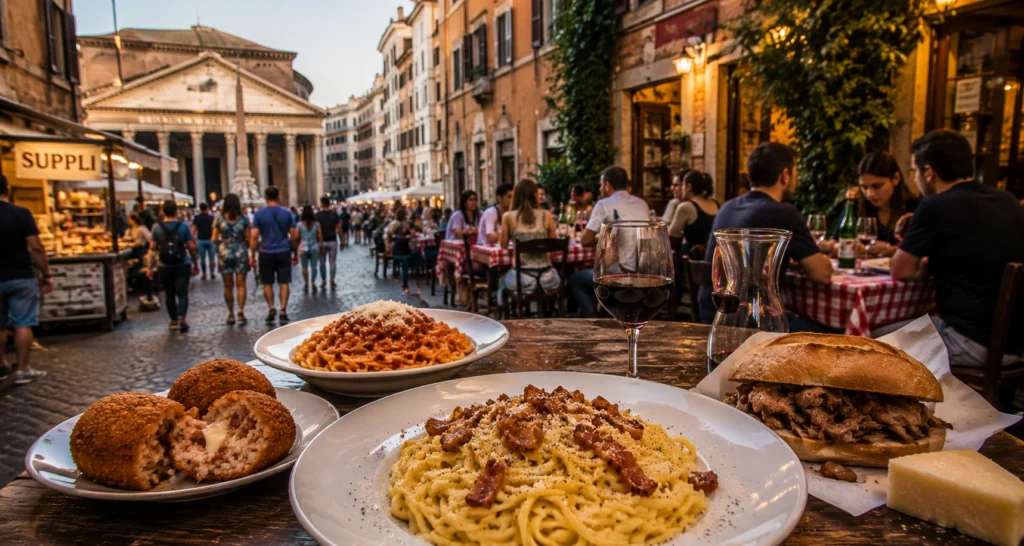
Rome’s culinary style is aggressive, peppery, and incredibly satisfying. It relies heavily on cucina povera (peasant cooking), where you can transform simple ingredients like sheep’s cheese, cured pork jowl, and offal into masterpieces. The city has lots of 5 Star restaurants, but the real beauty of Rome is the chaotic and family-run trattorias.
The Four Roman Pastas
You cannot say you’ve eaten at the best restaurants in Italy without mastering Rome’s iconic pasta lineup, which all evolved from one another:
- Gricia: Guanciale (cured pork jowl) and Pecorino Romano cheese
- Cacio e Pepe: Pecorino Romano and toasted black pepper.
- Carbonara: Gricia plus creamy egg yolks.
- Amatriciana: Gricia plus rich San Marzano tomatoes.
Deciphering the Roman Street Food Scene
Beyond pasta, Rome is also home to a legendary street best food in Italy scene that’s based in the Jewish Quarter and in ancient working-class areas. Look for supplì, fried rice croquettes stuffed with mozzarella that stretch like a telephone cord when pulled apart.
Where to Eat Like a Local in Rome
- Trattoria Da Enzo al 29 (Trastevere): There will be a wait, but it’s well worth it. Their Carbonara is bright yellow from high-quality egg yolks, perfectly glossy and studded with deeply crisped guanciale.
- Mordi & Vai (Testaccio Market): For a great lunch on the go, check out this stall in the historic Testaccio neighborhood. They scoop legendary simmered Roman meats, like oxtail (coda alla vaccinara) or tripe, into fresh, crusty panino rolls.
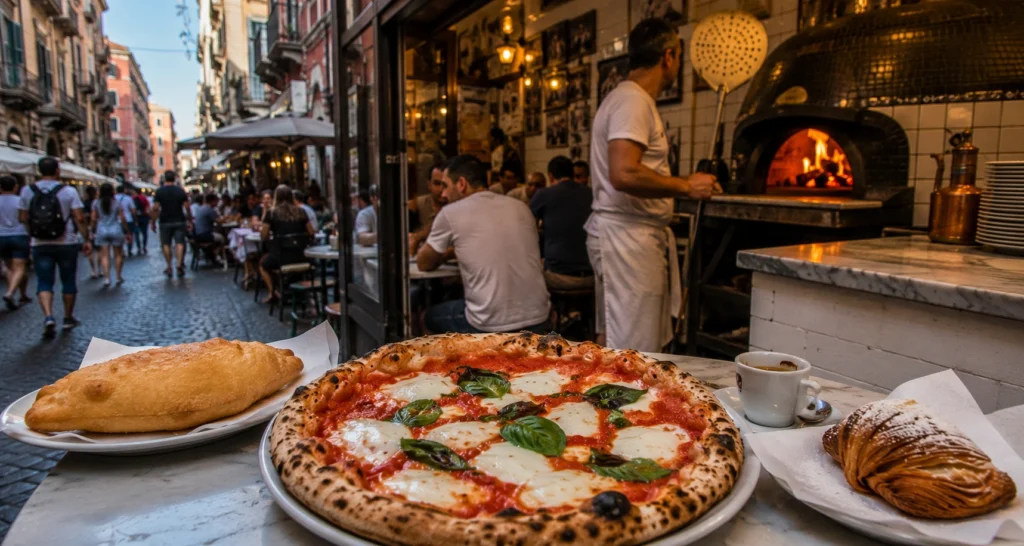
3. Naples: The Birthplace of Neapolitan Pizza
Naples is raw, high-energy, and totally unapologetic about its food. The city is the capital of pizza all the time, and its seafood and fried street snacks are equally memorable.
The Strict Rules of True Neapolitan Pizza
In Naples, pizza is protected by law. A real Pizza Napoletana must be baked in a wood-fired oven at blistering temperatures for no more than 60–90 seconds and result in a soft, pillowy, slightly charred crust. If it stays in the oven any longer, it simply isn’t authentic.
The Sweet Side of Naples
Don’t leave the city without trying their pastries. The sfogliatella, a shell-shaped, multi-layered pastry filled with sweet ricotta and candied orange peel, is best enjoyed warm with a shot of dark, thick Neapolitan espresso.
Where to Eat Like a Local in Naples
- Pizzeria Di Matteo or L’Antica Pizzeria da Michele: Da Michele became famous worldwide for Eat Pray Love, but many people still come to the restaurant for the simple, perfect pizzas: Margherita or Marinara. For something deeply local, try Di Matteo for pizza fritta (fried pizza dough stuffed with ricotta and pork cracklings).
- Trattoria Da Nennella: In the Spanish quarters, it’s loud, theatrical, and chaotic. Order the pasta e patate con provola (pasta and potatoes with smoky melted provola cheese), it’s thick, comforting, and incredibly cheap.
4. Florence and Tuscany: Home of Steak and Hearty Cucina Povera
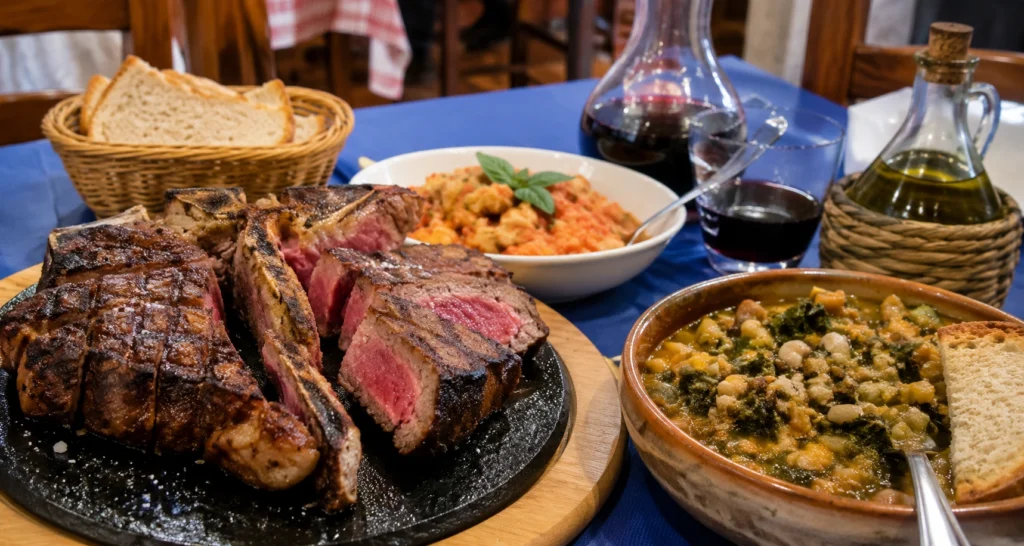
Tuscan best food in Italy is rustic, elegant, and connected to the land. It is based on high-quality olive oil, game meats, legumes, and unsalted bread (historically left unsalted so that medieval salt taxes could be avoided).
The Ritual of the Florentine Steak
The Bistecca alla Fiorentina is more than a meal; it is an event. It is a huge, thick-cut T-bone steak from the ancient Chianina cattle breed grilled over hot coals and seasoned with just sea salt, black pepper, and some local olive oil.
Tuscan Comfort Foods to Warm the Soul
When the weather cools down, look for Ribollita, a thick, comforting vegetable and bread stew that literally means “re-boiled.” Pappa al Pomodoro is another local staple made of fresh tomatoes and stale bread.
Where to Eat Like a Local in Florence
- Trattoria Mario: Open mainly for lunch near the Mercato Centrale, this no-nonsense spot has been serving shared tables since 1953. If you try to order your Bistecca medium-well, the kitchen might genuinely refuse; respect the product!
- Da Nerbone: While tourists queue for hours at the trendy street-side sandwich shops, head inside the Central Market to Da Nerbone for a classic panino con il lampredotto (a slow-cooked tripe sandwich dripping with spicy green salsa), a true Florentine rite of passage.
5. Palermo, Sicily: A Masterclass in Street Food Cultures
Sicily’s geographic location has made it a historical crossroads. Its food is a beautiful tapestry of Italian, Arabic, Greek, and Spanish flavors that you know to be impossible to find anywhere else on the mainland. Palermo is regularly ranked among the world’s best street food in Italy’s capital cities.
The Sweet and Savory Contrast of Sicilian Cuisine
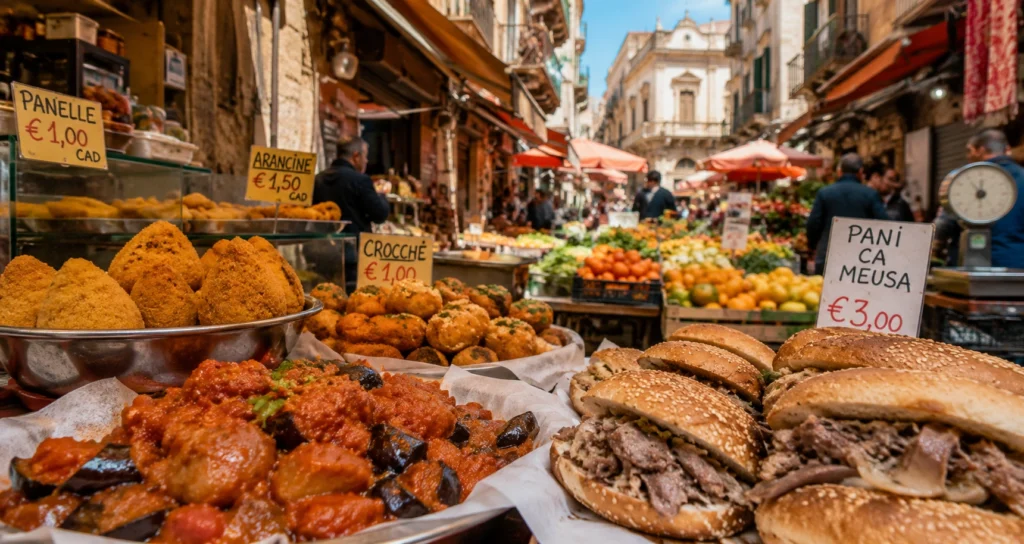
Sicilians are masters of the sweet-and-savory balance (agrodolce). You’ll taste this beautifully in Caponata (an eggplant relish) or in their street snacks like Arancine, deep-fried, saffron-infused rice balls stuffed with rich meat ragù or cheese.
Navigating Palermo’s Historic Open-Air Markets
The open-air markets of Palermo are more like North African souks than traditional European streets. The vendors sing out their daily specials in a melodic dialect, surrounded by towers of fresh citrus, whole swordfish, and bubbling vats of frying street snacks.
Where to Eat Like a Local in Palermo
- Mercato del Capo and Mercato di Ballarò: These are the best places to go with an open mind. Look for vendors selling panelle (chickpea fritters) and, for the adventurous, pani ca meusa (a sesame roll filled with boiled and lard-fried spleen).
- Osteria Ballarò: If you are looking for a sit-down dinner where these rustic street flavors can rise to a higher level of quality, this converted medieval stable near the market is wonderful.
Insider Tips: How to Spot a Genuine Local Italian Eatery
| Indicator | Tourist Trap | Authentic Local Spot |
| Menu Presentation | Giant photos of the best food in Italy; translated into 5 languages. | Short, printed daily on a single sheet of paper; often Italian-only. |
| The Visual Clues | A host outside waving you in; neon-colored gelato piles. | No host out front; gelato is stored flat under metal lids (pozzetti). |
| Location | Directly facing a major piazza or historic monument. | Tucked 2-3 alleys back into a residential neighborhood. |
| Timing | Open all day from 11:30 AM to midnight without a break. | Kitchen opens strictly for lunch (12:30–2:30) and dinner (7:30–11:00). |
Conclusion
Italy isn’t just a destination; it’s a culinary journey that unfolds one meal at a time. From the rich pasta traditions of Bologna to the pizzas of Naples, from the elegant flavors of Florence to the comforting classics of Rome and the vibrant street best food in Italy culture of Palermo, every city has something unique.
If your goal is to find the Best Food in Italy, then these five places are the perfect starting point. If you want to see places that you’re not familiar with and see those places and places on postcard displays, you can make memories around the table, in the markets, and at historic restaurants where recipes have been passed down for generations.
The best food in Italy often begins with a simple question: “What is the local specialty?” And you will get the true taste of Italy with the answer.
FAQs
Q1. What city has the absolute best food in Italy?
A. A taste is subjective, but best food in Italy writers and Italian locals generally say Bologna is the culinary capital of Italy because of its rich ingredients, its traditional pasta-making methods, and the necessity to preserve regional recipes.
Q2. Is tipping expected at the best local restaurants in Italy?
A. No, tipping is not a normal part of Italian best food in Italy culture. You may find a small charge on your bill called “coperto” (cover charge), and it covers bread and table setup. If the service was excellent, throwing a few loose Euro coins on the table is a nice gesture, but it shouldn’t be fixed.
Q3. What is the difference between an Osteria, a Trattoria, and a Ristorante?
A. Traditionally, an Osteria was a casual neighborhood wine bar that served short and simple menus. A Trattoria is a low-key restaurant in a mid-tier, family-run environment that serves local, home-style regional cuisine. A Ristorante is a more formal restaurant (with very good best food in Italy and a wide wine list).
Q4. Where can I find authentic food markets in Bologna?
A. The most famous historical cluster is the Quadrilatero, just off the Piazza Maggiore. A little more of a clean and casual neighborhood scene, where the locals are buying their groceries, is the Mercato delle Erbe.
Q5. Do I need to make reservations for traditional trattorias?
A. Yes! The best local spots are usually small, family-run spaces with limited seating. For legendary neighborhood joints like Da Enzo al 29 in Rome or Trattoria di Via Serra in Bologna, booking a few weeks ahead is highly recommended.