

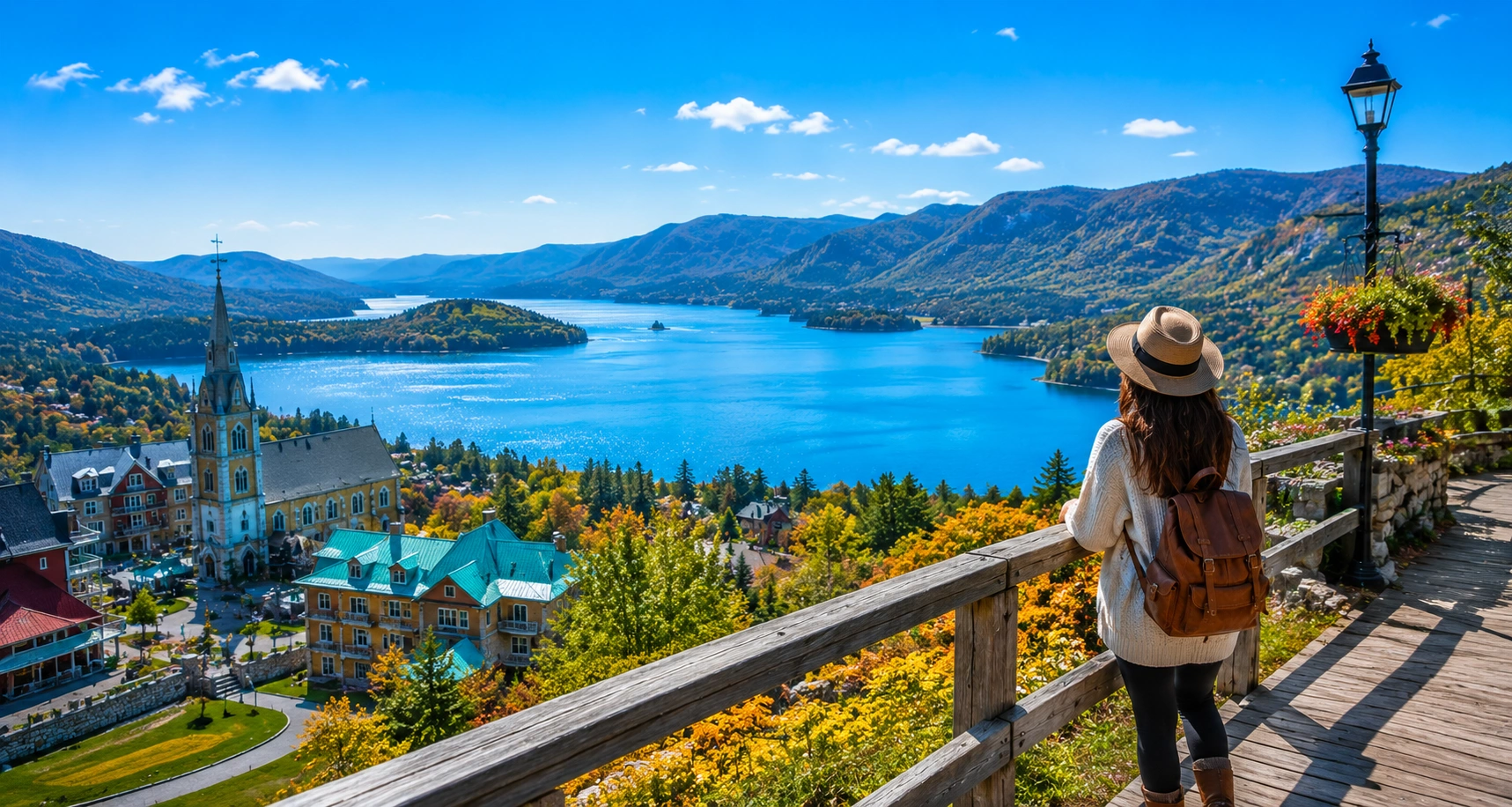
If you are looking for the best places to travel solo destinations for traveling alone, Canada has to be on top of that list. It’s a country where a first-time solo traveler can feel steady and confident within a day or two, while still offering enough scale and wilderness to satisfy someone on their tenth solo trip. Few destinations manage both ends of that spectrum this well.
What makes Canada stand out isn’t any single feature — it’s the combination. Consistently high safety rankings, locals who go out of their way to help rather than just tolerate questions, landscapes that shift from Pacific coastline to prairie sky to Atlantic fishing villages, and infrastructure (trains, transit, well-marked trails) that makes independent travel genuinely manageable rather than a logistical puzzle.
This guide is built for a wide range of solo travelers: first-timers who want a low-stress introduction, women looking for destination-specific safety guidance, backpackers working with a tight budget, adventure travelers chasing mountains and wildlife, and luxury travelers who want solitude without sacrificing comfort. No matter what category you are in, this tour has a version made for you.
Inside, you’ll find 20 of the best places to travel solo in Canada, organized comparisons by travel style, a hidden-gems section for travelers who’ve already done the obvious stops, ready-made itineraries from 5 to 14 days, real budget numbers, and dedicated safety guidance — including a full section on solo female travel. By the end, you’ll be able to match a destination to exactly what you want out of the trip, rather than guessing from a generic top-10 list.
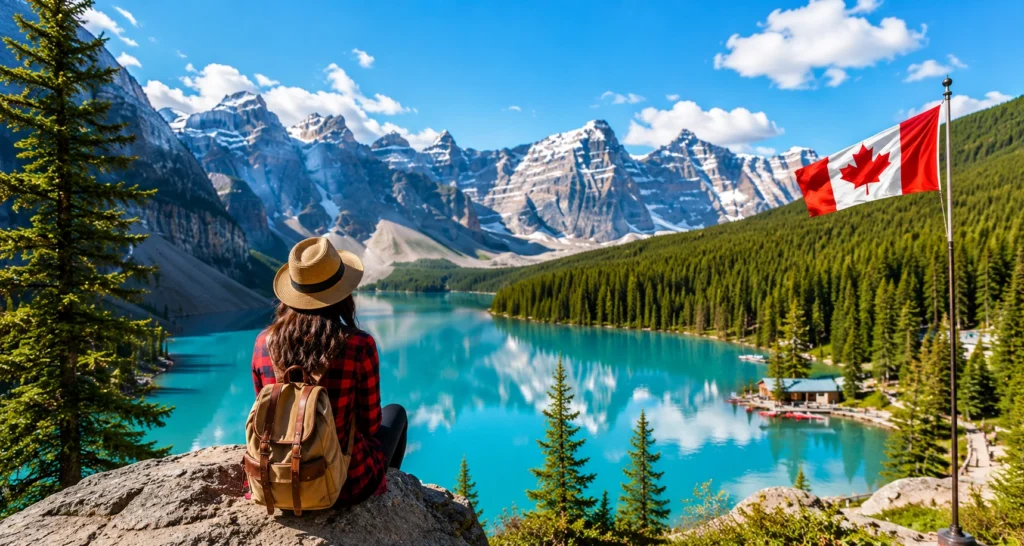
Why Canada Is One of the Best Places to Travel Solo
Why is Canada one of the best places to travel solo? Canada combines a low crime rate, friendly and approachable locals, reliable public transportation, and an unmatched range of landscapes — from mountains to coastlines to walkable historic cities — making it easy for a solo traveler to feel both safe and constantly engaged, regardless of experience level.
Friendly and welcoming locals
Canadians have earned their reputation for politeness. As you’ll lean on strangers more than you would in a group — for directions, recommendations, or just conversation — Canada delivers on that consistently.
One of the safest countries to visit
Canada regularly places among the top countries globally for safety and peacefulness. Violent crime against travelers is rare, and the practical risks solo travelers face tend to be weather- or wildlife-related rather than personal safety concerns.
Incredible variety of landscapes
You could build an entire best places to travel solo around mountains, another entirely around coastline, and another around cosmopolitan cities — and never repeat the same scenery twice.
Excellent public transportation
Major cities like Toronto, Vancouver, and Montreal have functional transit systems, and VIA Rail and intercity buses connect much of the rest of the country, so a rental car is optional rather than mandatory.
Activities for every traveler
Glacier hikes, polar bear tours, food crawls, historic old towns, ski resorts, whale watching — Canada’s activity range means solo travelers with completely different interests can build a trip that suits them specifically.
Easy to meet fellow travelers
Hostel life remains vibrant in urban areas and mountainous places, while high demand for tour packages in these areas allows travelers to embrace socializing based on their own preferences — as much or as little as they wish.
Is Canada Safe for Solo Travelers?
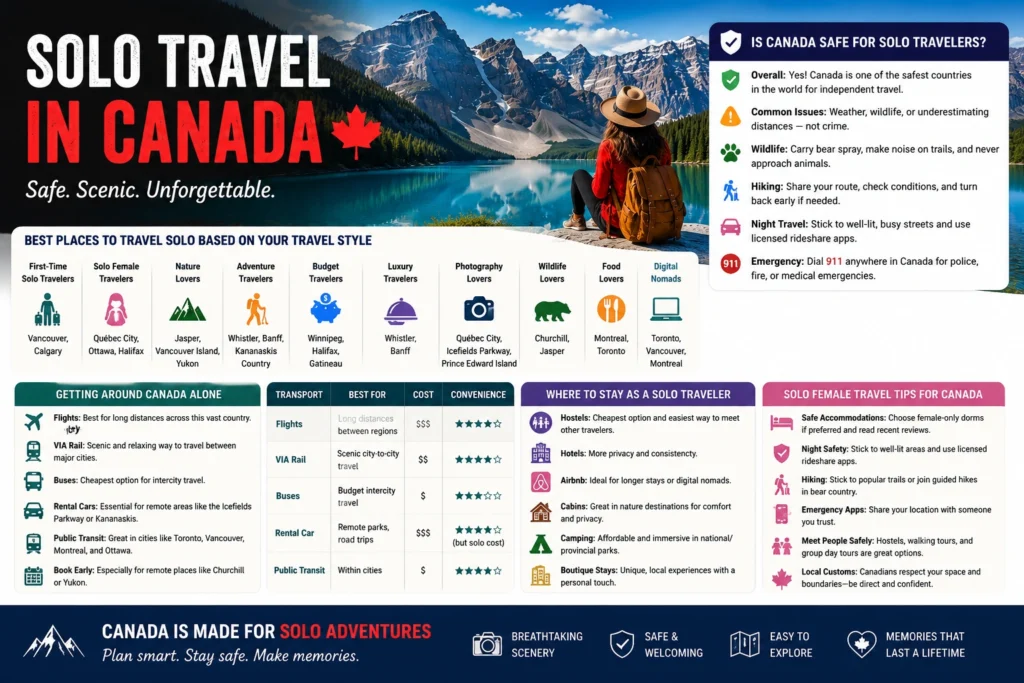
Is Canada safe for solo travelers?
Yes — Canada is one of the safest countries in the world for independent travel, with low violent crime rates, well-maintained infrastructure, and a strong tourism safety record. The most common issues If you are looking for the best places to travel solo destinations for traveling alone, Canada has to be on top of that list. It’s a country where a first-time solo traveler can feel steady and confident within a day or two, while still offering enough scale and wilderness to satisfy someone on their tenth solo trip. Few destinations manage both ends of that spectrum this well.
actually run into are related to weather, wildlife, or underestimating travel distances, not crime.
Overall safety
Petty theft in busy tourist areas is the most common concern, and even that remains relatively uncommon. Standard precautions — keeping bags zipped, not leaving valuables unattended — cover most of the realistic risk.
Solo female travel safety
Canada consistently ranks as one of the better countries worldwide for women traveling alone. A full breakdown of destination-specific and situational tips is covered later in this guide.
Wildlife precautions
Bears, moose, and elk are part of daily life in mountain destinations like Banff, Jasper, and Kananaskis. Carry bear spray on backcountry trails, make noise to avoid surprising animals, and never approach wildlife for photos, no matter how used to people they appear.
Hiking alone
This is where most best places to travel solo mishaps happen — not crime, but people misjudging trail length, elevation gain, or mountain weather. Check conditions at a visitor center, tell someone your planned route and return time, and turn back early if weather shifts.
Night travel
Stick to well-lit, busy streets, use licensed rideshare apps rather than hailing unmarked vehicles, and check with your accommodation about any specific areas to avoid after dark — most cities have a few blocks worth steering clear of at night.
Emergency contacts
Dial 911 anywhere in Canada for police, fire, or medical emergencies. It’s worth saving your destination city’s non-emergency police line as well, in case you need to report something that isn’t urgent.
| Situation | Safety Level | Tips |
|---|---|---|
| Walking downtown (76) | High | Normal precautions; keep bag zipped |
| Walking downtown (night) | Moderate–High | Stick to main, well-lit streets |
| Public transit | High | Sit near other passengers or the driver late at night |
| Solo day hiking | Moderate | Share your route and return time before heading out |
| Backcountry hiking | Moderate | Carry bear spray; consider a guided group option |
| Wildlife encounters | Moderate | Keep distance; never approach or feed animals |
| Solo road trips | Moderate–High | Plan fuel stops; check weather before mountain routes |
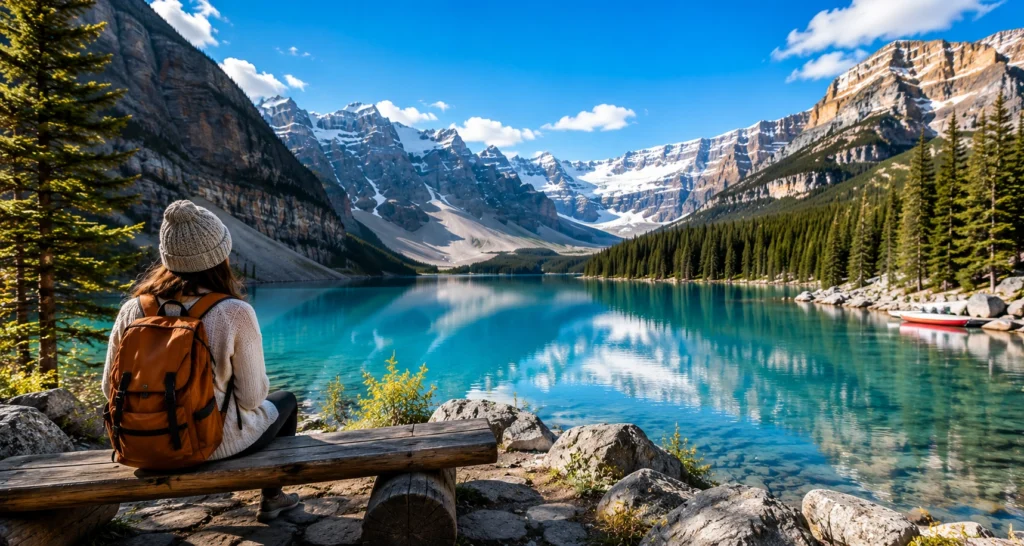
Best Time to Visit Canada for Solo Travel
The best season depends on the kind of trip you’re after. Summer gives you access to everything; the shoulder seasons trade a bit of convenience for lower prices and fewer crowds.
Spring (April–May)
Melting snow, early wildflowers, and pre-peak pricing make spring a good window for cities and lower-elevation destinations, though some alpine trails may still be closed.
Summer (June–August)
The most reliable season for full access to trails, parks, and festivals — also the busiest and most expensive, particularly around Banff and Jasper, so book well ahead.
Fall (September–October)
Widely considered the sweet spot: fall foliage across Ontario and Québec, thinner crowds in the Rockies, and still-comfortable hiking through most of September.
Winter (November–March)
A completely different Canada emerges — skiing in Whistler, the Northern Lights near Churchill and in the Yukon, and snow-draped versions of Québec City and Ottawa. Requires proper cold-weather planning.
| Season | Weather | Best Destinations | Activities |
|---|---|---|---|
| Spring | Mild, melting snow, coastal rain | Vancouver, Victoria, Toronto | City exploring, lower-elevation walks |
| Summer | Warm, long daylight hours | Banff, Jasper, PEI, Icefields Parkway | Hiking, road trips, festivals |
| Fall | Cool, crisp, colorful foliage | Québec City, Ontario, Banff | Scenic drives, photography, hiking |
| Winter | Cold, snowy, short daylight | Whistler, Churchill, Yukon, Québec City | Skiing, Northern Lights, winter markets |
20 Best Places to Travel Solo in Canada
What are the best places to travel solo in Canada? Banff, Vancouver, Toronto, Québec City, and Jasper are consistently the top-rated destinations for solo travel in Canada, thanks to strong infrastructure, walkable centers, and easy access to both cities and nature. Here’s a quick-scan comparison, followed by a closer look at each destination.
| Destination | Best For | Budget | Safety | Best Season |
|---|---|---|---|---|
| Banff National Park | Mountain scenery, hiking | $$$ | High | Summer/Fall |
| Jasper National Park | Wildlife, quiet trails | $$ | High | Summer |
| Vancouver | City + outdoors mix | $$$ | High | Spring–Fall |
| Vancouver Island | Coastal nature, wildlife | $$ | High | Summer |
| Whistler | Adventure sports, nightlife | $$$ | High | Winter/Summer |
| Calgary | Urban base, festivals | $$ | High | Summer |
| Toronto | Nightlife, culture, food | $$$ | High | Spring–Fall |
| Montreal | Food, nightlife, culture | $$ | High | Summer/Fall |
| Ottawa | History, budget-friendly | $$ | High | Fall |
| Québec City | Photography, historic streets | $$ | High | Fall/Winter |
| Halifax | Coastal charm, seafood | $ | High | Summer |
| St. John’s | Hidden gem, coastal hikes | $$ | High | Summer |
| Churchill | Wildlife (polar bears, belugas) | $$$$ | Moderate–High | Oct–Nov |
| Kananaskis Country | Hiking without Banff crowds | $$ | High | Summer/Fall |
| Icefields Parkway | Scenic road trip, glaciers | $$$ | High | Summer |
| Sunshine Coast | Relaxed coastal escape | $$ | High | Summer |
| Gatineau | Nature near Ottawa | $ | High | Fall |
| Winnipeg | Budget travel, culture | $ | High | Summer |
| Prince Edward Island | Beaches, small-town charm | $$ | High | Summer |
| Yukon & Whitehorse | Northern Lights, true wilderness | $$$ | High | Winter/Summer |
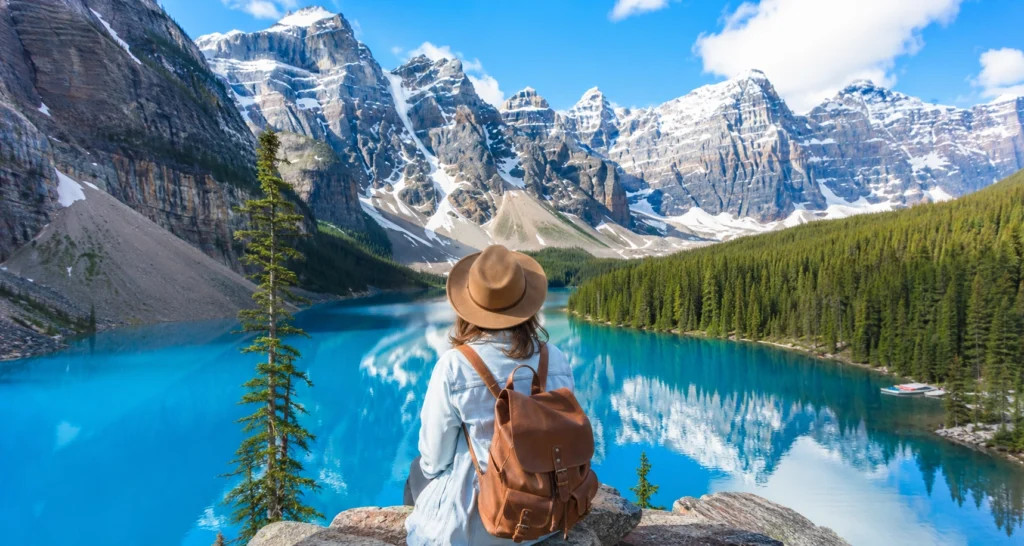
Banff National Park
Banff is the postcard version of Canada — turquoise lakes, jagged peaks, and a walkable town center. If you are looking for the best places to travel solo destinations for traveling alone, Canada has to be on top of that list. It’s a country where a first-time solo traveler can feel steady and confident within a day or two, while still offering enough scale and wilderness to satisfy someone on their tenth Best Places to travel solo. Few destinations manage both ends of that spectrum this well.
exploring genuinely easy.
- Top attractions: Lake Louise, Moraine Lake, Banff Gondola, Johnston Canyon
- Best activities: Day hiking, canoeing, wildlife spotting, soaking in Banff Upper Hot Springs
- Safety level: High • Avg. daily budget: $100–$150 CAD • Best time: June–September
- Recommended stay: 3–4 days • Best for: adventure travelers and nature lovers
Jasper National Park
Quieter and less commercialized than Banff, Jasper suits travelers who want fewer crowds and direct access to wildlife and dark-sky stargazing.
- Top attractions: Maligne Lake, Athabasca Falls, Jasper SkyTram
- Best activities: Wildlife tours, stargazing (Dark Sky Preserve), moderate hiking
- Safety level: High • Avg. daily budget: $90–$140 CAD • Best time: June–September
- Recommended stay: 2–3 days • Best for: wildlife lovers and stargazers
Vancouver
A walkable, bike-friendly city with mountains and ocean visible from downtown — one of the easiest cities in Canada for a first If you are looking for the best places to travel solo destinations for traveling alone, Canada has to be on top of that list. It’s a country where a first-time solo traveler can feel steady and confident within a day or two, while still offering enough scale and wilderness to satisfy someone on their tenth solo trip. Few destinations manage both ends of that spectrum this well.
trip.
- Top attractions: Stanley Park, Granville Island, Capilano Suspension Bridge
- Best activities: Seawall biking or walking, kayaking, exploring neighborhood food scenes
- Safety level: High • Avg. daily budget: $120–$180 CAD • Best time: May–September
- Recommended stay: 3–4 days • Best for: first-time If you are looking for the best places to travel solo destinations for traveling alone, Canada has to be on top of that list. It’s a country where a first-time Best Places to travel solo can feel steady and confident within a day or two, while still offering enough scale and wilderness to satisfy someone on their tenth solo trip. Few destinations manage both ends of that spectrum this well.
Vancouver Island
Home to Victoria and Tofino, trading city energy for rugged coastline, old-growth forest, and some of the best whale watching in the country.
- Top attractions: Butchart Gardens, Tofino beaches, Pacific Rim National Park
- Best activities: Whale watching, surfing lessons, coastal hiking
- Safety level: High • Avg. daily budget: $90–$140 CAD • Best time: June–September
- Recommended stay: 3–5 days • Best for: nature lovers and photographers
Whistler
Best known for world-class skiing, but summer brings mountain biking, hiking, and a village atmosphere that’s easy to socialize in Best Places to travel solo.
- Top attractions: Whistler and Blackcomb mountains, Peak 2 Peak Gondola, Lost Lake
- Best activities: Skiing/snowboarding, mountain biking, zip-lining
- Safety level: High • Avg. daily budget: $130–$200 CAD • Best time: Dec–Mar (ski), Jun–Aug (summer)
- Recommended stay: 2–4 days • Best for: adventure and luxury travelers
Calgary
A practical, friendly base city with a compact downtown, quick Rockies access, and one of Western Canada’s best festival calendars.
- Top attractions: Calgary Tower, Studio Bell, Prince’s Island Park
- Best activities: Urban walking tours, day trips to Banff/Kananaskis, the Calgary Stampede (July)
- Safety level: High • Avg. daily budget: $100–$150 CAD • Best time: June–September
- Recommended stay: 2 days • Best for: first-time Best Places to travel solo
Toronto
Canada’s biggest city delivers on food, nightlife, and neighborhood diversity, with a subway system that makes best places to travel solo simple.
- Top attractions: CN Tower, Kensington Market, Distillery District
- Best activities: Food crawls, live music, museum-hopping, waterfront walks
- Safety level: High • Avg. daily budget: $120–$180 CAD • Best time: May–October
- Recommended stay: 3–4 days • Best for: food lovers and digital nomads
Montreal
European-flavored streets, a serious food scene, and late-running nightlife — Montreal rewards travelers happy to wander without a fixed plan.
- Top attractions: Old Montreal, Notre-Dame Basilica, Mount Royal
- Best activities: Food tours, live jazz, exploring Plateau neighborhood cafes
- Safety level: High • Avg. daily budget: $100–$150 CAD • Best time: June–September
- Recommended stay: 3–4 days • Best for: food lovers and digital nomads
Ottawa
Canada’s capital is compact, more affordable than Toronto or Vancouver, and packed with free museums and historic architecture.
- Top attractions: Parliament Hill, Rideau Canal, ByWard Market
- Best activities: Museum visits, canal walks (or skating in winter), cycling
- Safety level: High • Avg. daily budget: $90–$140 CAD • Best time: May–October
- Recommended stay: 2–3 days • Best for: budget travelers
Québec City
The closest thing North America has to a walled European old town — compact, photogenic, and comfortable to explore entirely on foot.
- Top attractions: Old Québec, Château Frontenac, Montmorency Falls
- Best activities: Photography walks, winter carnival (Feb), historic tours
- Safety level: High • Avg. daily budget: $100–$150 CAD • Best time: September–February
- Recommended stay: 2–3 days • Best for: photographers
Halifax
- A relaxed, budget-friendly coastal city with strong maritime culture, easy pub-going, and quick access to Peggy’s Cove.
- Top attractions: Halifax Waterfront, Citadel Hill, Peggy’s Cove (day trip)
- Best activities: Seafood crawls, harbor walks, live folk music
- Safety level: High • Avg. daily budget: $80–$120 CAD • Best time: June–September
- Recommended stay: 2–3 days • Best for: budget travelers
St. John’s
Newfoundland’s capital is a colorful, hilly port city and one of Canada’s true hidden gems for travelers who want fewer crowds and more character.
- Top attractions: Signal Hill, Jellybean Row, Cape Spear
- Best activities: Coastal hiking, iceberg spotting (spring), live music in George Street pubs
- Safety level: High • Avg. daily budget: $90–$140 CAD • Best time: June–September
- Recommended stay: 2–3 days • Best for: travelers seeking hidden gems
Churchill
A remote Manitoba town that happens to be one of the best places on Earth to see polar bears in the wild, plus belugas in summer and aurora in fall.
- Top attractions: Polar bear tundra tours, beluga watching, Northern Lights
- Best activities: Guided wildlife tours (required — not a Best Places to travel solo hiking destination)
- Safety level: Moderate–High • Avg. daily budget: $250–$400 CAD • Best time: October–November (bears), July–August (belugas)
- Recommended stay: 3–4 days • Best for: wildlife lovers
Kananaskis Country
Right next to Banff but with a fraction of the crowds — where locals go for serious hiking without the tour-bus traffic.
- Top attractions: Kananaskis Country, Ha Ling Peak, Troll Falls
- Best activities: Hiking, canoeing, wildlife viewing with more solitude than Banff
- Safety level: High • Avg. daily budget: $90–$140 CAD • Best time: June–September
- Recommended stay: 1–2 days • Best for: nature lovers
Icefields Parkway
One of the most scenic drives in the world, connecting Banff and Jasper past glaciers, waterfalls, and turquoise lakes.
- Top attractions: Columbia Icefield, Peyto Lake, Athabasca Glacier
- Best activities: Scenic driving, short glacier walks, photography stops
- Safety level: High • Avg. daily budget: $100–$160 CAD • Best time: June–September
- Recommended stay: 1–2 days (as a drive) • Best for: photographers and road-trippers
Sunshine Coast
A laid-back stretch of coastline north of Vancouver, reachable only by ferry — which keeps it quieter than the mainland.
- Top attractions: Gibsons, Sechelt Inlet, Skookumchuck Narrows
- Best activities: Kayaking, beach walks, small-town exploring
- Safety level: High • Avg. daily budget: $90–$140 CAD • Best time: June–September
- Recommended stay: 2–3 days • Best for: travelers seeking hidden gems
Gatineau
Just across the river from Ottawa, Gatineau Park offers accessible nature and fall colors without needing to travel far from the capital.
- Top attractions: Gatineau Park, Mackenzie King Estate, Champlain Lookout
- Best activities: Hiking, cycling, fall foliage viewing
- Safety level: High • Avg. daily budget: $60–$100 CAD • Best time: September–October
- Recommended stay: 1 day (from Ottawa) • Best for: budget travelers
Winnipeg
An underrated budget stop with a genuinely interesting arts and history scene, plus one of the best human rights museums in the world.
- Top attractions: The Forks, Canadian Museum for Human Rights, Exchange District
- Best activities: Museum visits, riverside walks, cheap eats
- Safety level: High • Avg. daily budget: $70–$110 CAD • Best time: June–September
- Recommended stay: 1–2 days • Best for: budget travelers
Prince Edward Island
Red sand beaches, small fishing villages, and a laid-back pace make PEI one of the most underrated solo destinations in Atlantic Canada.
- Top attractions: Cavendish Beach, Green Gables Heritage Place, Charlottetown waterfront
- Best activities: Cycling the Confederation Trail, beach walks, lobster suppers
- Safety level: High • Avg. daily budget: $80–$130 CAD • Best time: June–September
- Recommended stay: 2–3 days • Best for: travelers seeking hidden gems
Yukon & Whitehorse
For Best Places to travel solo, chasing true wilderness and the Northern Lights, Yukon delivers a remoteness that few other Canadian destinations can match.
- Top attractions: Kluane National Park, Miles Canyon, SS Klondike
- Best activities: Aurora viewing, hiking, dog sledding in winter
- Safety level: High • Avg. daily budget: $110–$170 CAD • Best time: Aug–Apr (aurora), Jun–Aug (hiking)
- Recommended stay: 3–5 days • Best for: adventure travelers and photographers
Best Places to Travel Solo Based on Your Travel Style
Matching a destination to your travel style matters more than chasing a generic “best of” list. Here’s how to narrow it down.
Best for First-Time Solo Travelers
Vancouver and Calgary offer the easiest introduction — walkable, safe, well-connected, and close enough to nature that you don’t need to sacrifice one for the other.
Best for Solo Female Travelers
Québec City, Ottawa, and Halifax are frequently recommended for their compact, well-lit centers and strong reputations for women-friendly travel — see the dedicated section below for more detail.
Best for Nature Lovers
Jasper, Vancouver Island, and Yukon offer the most immersive wilderness experiences, each with a distinctly different landscape.
Best for Adventure Travelers
Whistler, Banff, and Kananaskis Country provide the highest concentration of hiking, biking, and adrenaline-driven activities.
Best for Budget Travelers
Winnipeg, Halifax, and Gatineau deliver strong experiences without the price tag attached to Banff or Vancouver.
Best for Luxury Travelers
Whistler and Banff both offer high-end lodges, spas, and fine dining for best places to travel solo who want comfort alongside adventure.
Best for Photography
Québec City’s old town, the Icefields Parkway’s glacial lakes, and Prince Edward Island’s red-sand coastline all offer strong, distinct visual identities.
Best for Wildlife Lovers
Churchill (polar bears and belugas) and Jasper (elk, bears, and dark skies) are Canada’s top wildlife-focused Best Places to travel solo.
Best for Food Lovers
Montreal and Toronto lead the country, with Montreal’s French-influenced bistro culture and Toronto’s sprawling range of global cuisines.
Best for Digital Nomads
Toronto, Vancouver, and Montreal offer the strongest combination of reliable internet, co-working spaces, and long-stay accommodation for remote work.
Hidden Gems for Best Places to Travel Solo
Once you’ve covered the well-known stops, these lesser-visited destinations offer the same quality of experience with a fraction of the crowds.
- Tofino, BC: A surf town on Vancouver Island’s west coast, known for storm watching, old-growth rainforest, and a slower pace than most coastal destinations.
- Cape Breton, Nova Scotia: Home to the Cabot Trail, one of the most scenic coastal drives in North America, with a strong Celtic cultural influence.
- Yukon: True northern wilderness with some of the best aurora viewing in the country and a fraction of the visitors of more southern parks.
- Prince Edward Island: Red sand beaches and small fishing villages that feel worlds away from Canada’s bigger cities, despite being easy to reach.
- Fundy National Park, New Brunswick: Home to the highest tides in the world, plus quiet hiking trails through Acadian forest.
- Gros Morne National Park, Newfoundland: A UNESCO World Heritage site with dramatic fjords and some of the most unique geology in North America.
- Waterton Lakes National Park, Alberta: Often overshadowed by Banff and Jasper, Waterton offers similar scenery with noticeably fewer visitors.
Sample Best Places to Travel Solo in Canada Itineraries
These itineraries are designed to minimize backtracking while covering a mix of cities and nature, scaled to however much time you have.
5-Day Trip
Best for a quick Rockies introduction flying in and out of Calgary.
| Day | Destination | Highlights |
|---|---|---|
| 1 | Calgary | Arrive, explore downtown |
| 2–3 | Banff | Lake Louise, Moraine Lake, town exploring |
| 4–5 | Kananaskis Country | Hiking, canoeing, drive back to Calgary |
7-Day Trip
Adds Jasper and the Icefields Parkway for a fuller mountain experience.
| Day | Destination | Highlights |
|---|---|---|
| 1 | Calgary | Arrive, explore downtown, Studio Bell |
| 2–3 | Banff | Lake Louise, Moraine Lake, hot springs |
| 4 | Icefields Parkway | Scenic drive to Jasper, glacier stop |
| 5–6 | Jasper | Maligne Lake, wildlife tour, stargazing |
| 7 | Calgary | Drive back, departure |
10-Day Trip
Combines the Rockies with a Vancouver and Vancouver Island coastal leg.
| Day | Destination | Highlights |
|---|---|---|
| 1–2 | Vancouver | Stanley Park, Granville Island |
| 3–4 | Vancouver Island | Victoria, Butchart Gardens, Tofino option |
| 5 | Calgary | Fly in, downtown evening |
| 6–7 | Banff | Lake Louise, hiking, hot springs |
| 8 | Icefields Parkway | Drive to Jasper |
| 9–10 | Jasper | Wildlife tour, departure |
2-Week Canada Adventure
A cross-country trip covering the West Coast, the Rockies, and a flight east to add Toronto and Montreal.
| Day | Destination | Highlights |
|---|---|---|
| 1–3 | Vancouver + Vancouver Island | City + coastal nature |
| 4–5 | Whistler | Hiking or skiing depending on season |
| 6 | Calgary | Transit day, downtown evening |
| 7–8 | Banff | Lakes, hiking, hot springs |
| 9 | Icefields Parkway | Drive to Jasper |
| 10 | Jasper | Wildlife, stargazing |
| 11–12 | Toronto | Fly east, city exploring, CN Tower |
| 13–14 | Montreal | Old Montreal, food tour, departure |
How Much Does Solo Travel in Canada Cost?
How much should I budget for a solo trip to Canada? Budget travelers can expect to spend $80–110 CAD per day, mid-range travelers $150–220 CAD per day, and luxury travelers $300+ CAD per day, once accommodation, food, transport, and activities are included.
Best Places to travel solo carries one built-in budget disadvantage: accommodation and rental cars are priced per room or per vehicle, not per person, so those costs land harder when you’re not splitting them. Hostels and public transit help offset this.
What typically makes up your daily spend
- Accommodation: $30–$50 (hostel dorm) to $150+ (hotel) per night
- Food: $25–$40/day budget, $50–$80/day mid-range
- Transportation: $10–$20/day for city transit; more for intercity travel
- Activities: $0–$50/day depending on tours and park fees
- SIM card: $30–$50 for a prepaid tourist SIM covering 1–2 weeks
- Travel insurance: $50–$120 for a 2-week trip depending on coverage
| Budget Type | Daily Cost | Suitable For |
|---|---|---|
| Budget | $80–$110 CAD | Hostel stays, self-catering, public transit |
| Mid-range | $150–$220 CAD | Hotels, restaurants, some guided tours |
| Luxury | $300+ CAD | Boutique hotels/lodges, private tours, fine dining |
Getting Around Canada Alone
Can I travel across Canada without a car? Yes, within and between major cities — flights, VIA Rail trains, and long-distance buses connect most popular destinations. A rental car becomes useful mainly for routes like the Icefields Parkway or exploring Kananaskis Country.
Flights
Given Canada’s size, domestic flights are often the most practical way to cover long distances, especially when combining the Rockies with an eastern city leg.
VIA Rail
Connects many major cities and offers a scenic, low-stress way to travel, particularly along the Toronto–Ottawa–Montreal corridor.
Buses
Regional operators cover routes that trains don’t reach, and are typically the cheapest way to travel between cities.
Rental cars
Essential for the Icefields Parkway and other spots without public transit. Since the cost isn’t split with a travel partner, factor this into your route planning.
Public transit
Toronto, Vancouver, Montreal, and Ottawa all have functional subway, streetcar, or light rail systems that make a car unnecessary within city limits.
Domestic flights
Worth booking early for routes to remote destinations like Churchill or Yukon, where flight availability is more limited than on major city routes.
| Transport | Best For | Cost | Convenience |
|---|---|---|---|
| Flights | Long distances between regions | $$$ | High |
| VIA Rail | Scenic city-to-city travel | $$ | Moderate–High |
| Buses | Budget intercity travel | $ | Moderate |
| Rental car | Remote parks, road trips | $$$ | High (but solo cost) |
| Public transit | Within cities | $ | High |
Where to Stay as a Solo Traveler
Your accommodation choice affects both your budget and how easy it is to meet other travelers along the way.
Hostels
The cheapest option and the easiest way to meet other best places to travel solo, especially in cities like Toronto, Montreal, and Banff.
Hotels
More privacy and consistency — useful after a few nights in hostel dorms or if you value a predictable, quiet space to recharge.
Airbnb
Good for longer stays or digital nomad-style trips where a kitchen and more space matter more than socializing.
Cabins
A strong option in mountain and lake destinations for travelers who want privacy and a closer connection to nature without full backcountry camping.
Camping
Canada’s national and provincial park campgrounds are affordable and well-maintained, though Best Places to travel solo backcountry camping requires more wildlife awareness.
Boutique stays
Small, independently run hotels and inns — common in Québec City and the Maritimes — offer a middle ground between hostel social energy and full hotel privacy.
Solo Female Travel Tips for Canada
What is the safest destination in Canada for solo female travelers? Québec City, Ottawa, and Halifax are frequently highlighted for their compact, walkable centers and strong safety records, though Canada’s overall safety makes most well-traveled destinations reasonable choices with standard precautions.
- Safe accommodations: Choose hostels with female-only dorms if you want that option, and check recent reviews specifically mentioning Best Places to travel solo female guests.
- Night safety: Stick to well-lit, busy streets, and use licensed rideshare apps rather than hailing unmarked vehicles.
- Hiking precautions: Stick to popular, well-trafficked trails rather than remote backcountry routes when hiking alone, or join a guided group hike in bear country.
- Emergency apps: Download a location-sharing app so a friend or family member can track your trip in real time.
- Meeting people safely: Hostel common areas, free walking tours, and group day tours are easy, low-pressure ways to meet people without needing a bar scene.
- Local customs: Canadians generally respect personal space and direct responses; you don’t need to over-explain if you want to end a conversation.
Canada Solo Travel Packing Checklist
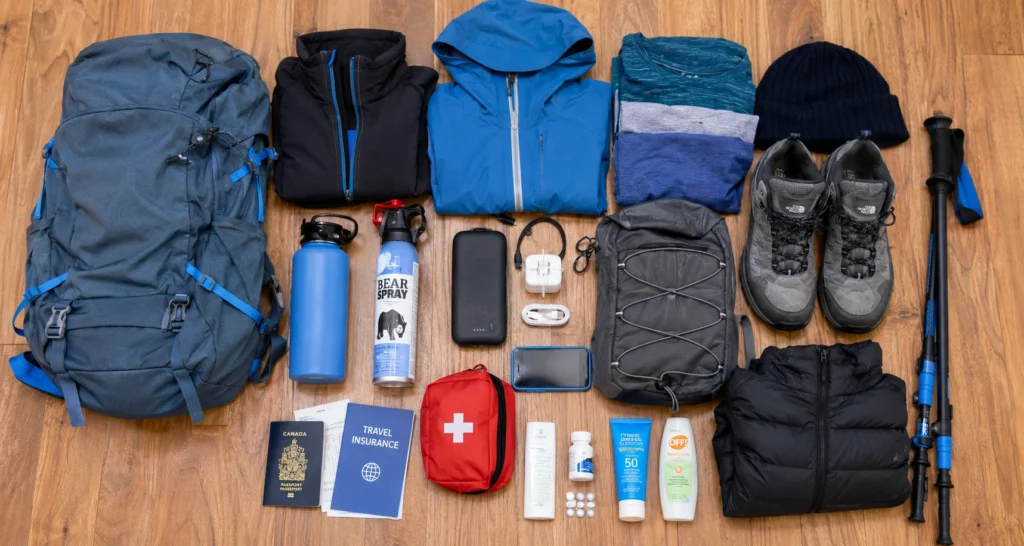
Layered clothing, a reliable rain jacket, sturdy footwear, a portable charger, and bear spray for mountain hiking are the essentials most best places to travel solo underpack.
Documents
- Passport (plus a photocopy stored separately)
- Travel insurance details
- Printed or downloaded accommodation and transport confirmations
Clothing
- Layered clothing system (base layer, insulating layer, waterproof outer layer)
- Comfortable walking shoes plus sturdy hiking shoes
- A packable rain jacket
Hiking gear
- Reusable water bottle
- Bear spray for mountain regions (purchase locally, not flown with)
- Daypack for trail essentials
Electronics
- Universal or North American plug adapter (if coming from outside North America)
- Portable charger/power bank
- Offline maps downloaded in advance
Safety essentials
- Location-sharing app set up before departure
- Emergency contact numbers saved offline
- Basic first aid kit with blister treatment
Winter gear (if traveling Nov–March)
- Insulated waterproof boots
- Heavy winter coat rated for sub-zero temperatures
- Thermal base layers, gloves, and a warm hat
First aid
- Any personal medications, in original packaging
- Sunscreen and insect repellent
- Pain relievers and motion sickness tablets
Common Mistakes to Avoid
- Underestimating travel distances: Canada is enormous — Vancouver to Toronto is a 4.5-hour flight, not a day trip. Plan realistic regional groupings instead of trying to see “the whole country.”
- Ignoring weather changes: Mountain weather can shift from sunny to snowing within hours, even in summer. Check forecasts the morning of any hike.
- Booking Banff too late: Summer accommodation in Banff and Jasper sells out months in advance. Book as early as possible if traveling June–August.
- Forgetting wildlife safety: Skipping bear spray or food storage knowledge is one of the most avoidable risks in the Rockies.
- Not purchasing travel insurance: Canadian healthcare is not automatically free for visitors, and emergency care costs can be high without coverage.
- Overpacking: Best Places to travel solo carry every bag themselves — pack for layers and versatility rather than a full outfit for every possible occasion.
FAQs
1. What are the best places to travel solo in Canada?
Ans: Banff, Vancouver, Toronto, Québec City, and Jasper are the top-rated destinations, offering a strong mix of safety, walkability, and easy access to both cities and nature.
2. Is Canada safe for solo travelers?
Ans: Yes. Canada has low violent crime rates, well-maintained infrastructure, and a strong reputation for safety among solo and first-time travelers. The main risks are weather- and wildlife-related rather than crime-related.
3. Which Canadian city is best for first-time solo travelers?
Ans: Vancouver and Calgary are the easiest starting points, thanks to walkable downtown cores, reliable transit, and quick access to nature without a steep learning curve.
4. What is the safest destination in Canada for solo female travelers?
Ans: Québec City, Ottawa, and Halifax are frequently recommended for their compact, well-lit centers, though most popular Canadian destinations are reasonable choices with standard precautions.
5. How much should I budget for a solo trip to Canada?
Ans: Budget travelers should plan for roughly $80–110 CAD per day, mid-range travelers $150–220 CAD per day, and luxury travelers $300+ CAD per day.
6. Can I travel across Canada without a car?
Ans: Yes — flights, trains, and buses connect most major cities and tourist destinations. A rental car is mainly useful for specific routes like the Icefields Parkway or Kananaskis Country.
Conclusion
Canada stands out among the best places to travel solo because it doesn’t force a trade-off between safety and adventure. You get both — a country secure enough for a first-time solo traveler and wild enough to satisfy someone chasing glaciers, polar bears, or the Northern Lights.
The right destination depends on what you’re looking for. Choose Banff, Jasper, or Kananaskis Country for adventure and hiking. Head to Toronto, Montreal, or Vancouver for city energy and food. Consider Churchill or Yukon for wildlife and remote wilderness, or Prince Edward Island and Québec City for a slower, more relaxed pace.
Whichever direction you go, plan around Canada’s realities: its size, its shifting mountain weather, and its wildlife. Book Rockies accommodation early if traveling in summer, buy travel insurance, and pack for layers rather than a single season.
From here, the next step is turning this guide into an actual itinerary — pick your regions, block out your days using the sample itineraries above, and start checking availability for your first stop. Canada rewards solo travelers who arrive with a rough plan and stay flexible enough to enjoy what’s around the next bend.