

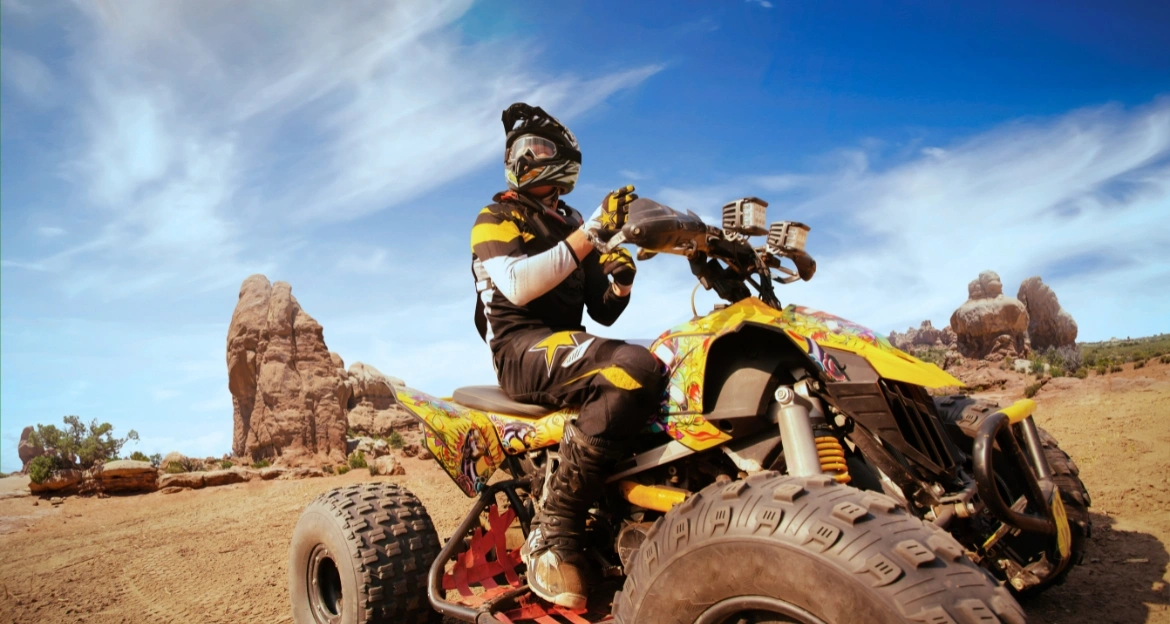
The first time you squeeze the thumb throttle on a 150cc quad biking, two things happen at once. The machine pulls forward with more urgency than you expected, and you grin like an idiot inside your helmet. That mix of mild panic and pure delight is why quad biking has quietly become one of the UK’s favorite ways to spend a muddy morning off-road and why a surprising number of people book a second session before they’ve even peeled off the overalls.
If you’ve never done it, the whole thing can feel a bit mysterious. Do you need a license? What on earth do you wear? Will the kids be allowed on? This guide covers all of it, from the first ten minutes of the briefing to the riding technique that separates a nervous wobble from a proper trek, plus where to go near London, the Midlands, or the Highlands if you want to make a weekend of it.

First, forget everything you think you know about speed
Here’s something nobody tells beginners: quad biking isn’t really a speed sport. People imagine a straight racetrack with engines screaming and mud flying. Most UK trek courses turn out to be a slow, technical puzzle. Second gear is a lot of work; you have to make a line through ruts and roots and read the ground ahead. First gear is too fast and abrupt for comfort, and you don’t need anything fast; it just works.
That’s the whole appeal, once you understand it. Good quad riding is about skill and tactics and working with a heavy machine rather than fighting it. Get that in your head before you arrive, and you’ll relax into it much quicker than the person next to you who turned up expecting a drag race.
The good news: you don’t need a license
This trips up almost everyone. Because quad bikes appear like something you would need paperwork for, people assume there’s a test involved. There isn’t, at least not for the kind of riding you’ll be doing.
Almost every UK quad biking center is on private land: farms, woodland, and disused estates. On private ground, no driving license is required at all. The only time a full UK license (category B or B1) comes into play is if you want to ride a quad biking on a public road, which recreational trek centers simply don’t ask you to do. So a complete beginner who has never driven anything in their life can turn up and ride.
But you will get sufficient instruction. Every reputable session begins with a safety briefing and then a short training loop on a practice area where an instructor watches you handle the throttle, the brakes, and a couple of turns. Only once they are happy do you go on the real trek. There are many centers that are relaxed about it and let nervous riders just spin around on some grassy test area with some cones for as long as they like before jumping into the woods.
What to wear, and what you’ll wish you’d worn
Quad biking is a messy business. You are going to get wet, muddy, and probably a bit cold if it isn’t summer. Dress for the worst version of the day.
The sensible kit list:
- Long trousers and long sleeves. No shorts, ever. Undergrowth, mud spray, and engine heat all make bare legs a bad idea.
- Sturdy closed-toe footwear. The old trainers with grip are good, but wellies or walking boots will do better. All of the clothes you wear get filthy, so don’t pick your favorites.
- Old clothes you truly don’t care about. Everything comes home a different color. A full change of clothes for after. A two-hour drive home in soaked, muddy jeans is nobody’s idea of fun.
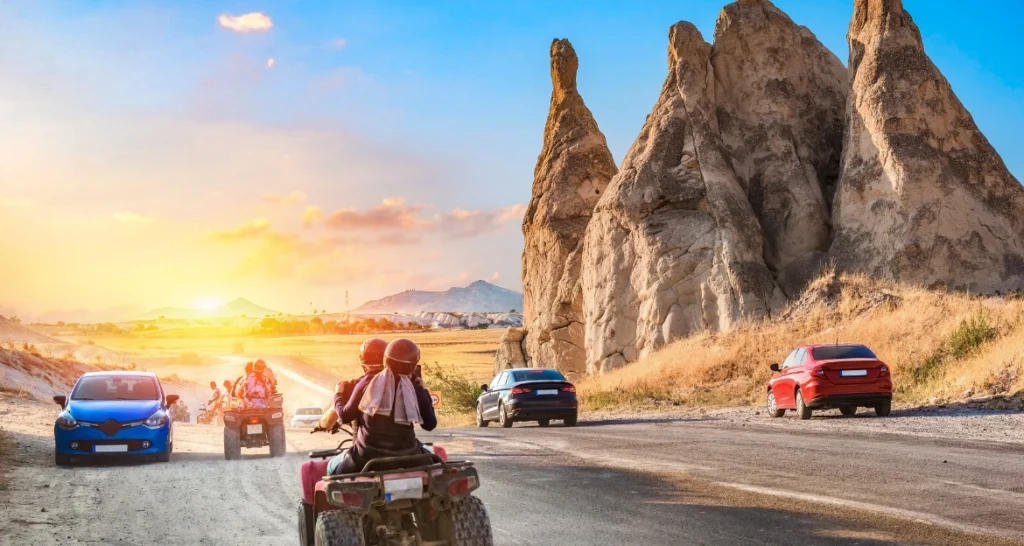
The center provides the essential protective gear. At some point, you’ll be fitted with a helmet, usually a full-face or ATV kind, and gloves to protect your hands from brambles and branches, and many places hand out overalls as well. Some ask you to wear a thin balaclava under the helmet for hygiene, and some charge a couple of pounds for overalls and shoe covers. If you own a modern, undamaged full-face helmet, you can sometimes bring your own, but always check with the venue first.
How does a session actually run
Turn up early. Most centers want you there 15 to 30 minutes before your slot to sign in and get kitted out, and if you roll in late, they may not hold your bike. There’s a two-part sign-in sheet: one section before you ride and a second after the initial training, once you’ve shown you can handle the controls.
The controls themselves are simpler than a car. You drive with handlebars, accelerate with a thumb throttle, and brake with hand levers and sometimes a foot pedal as well. Most trek bikes have automatic or electronic gear shifts, so there’s no clutch to worry about and no gears to stall. That’s a big reason Quad biking appeals to anxious first-time cyclists and kids alike.
Then you go off with the instructor at a pace they set for the group. Depending on what you’re booking, it could be a fast open circuit or a proper trek through woodland, streams, and the kind of churned-up field that paints your visor brown within minutes.
How to ride a quad biking: the technique that actually matters
Here’s what nobody explains until you’re already out there and wobbling.
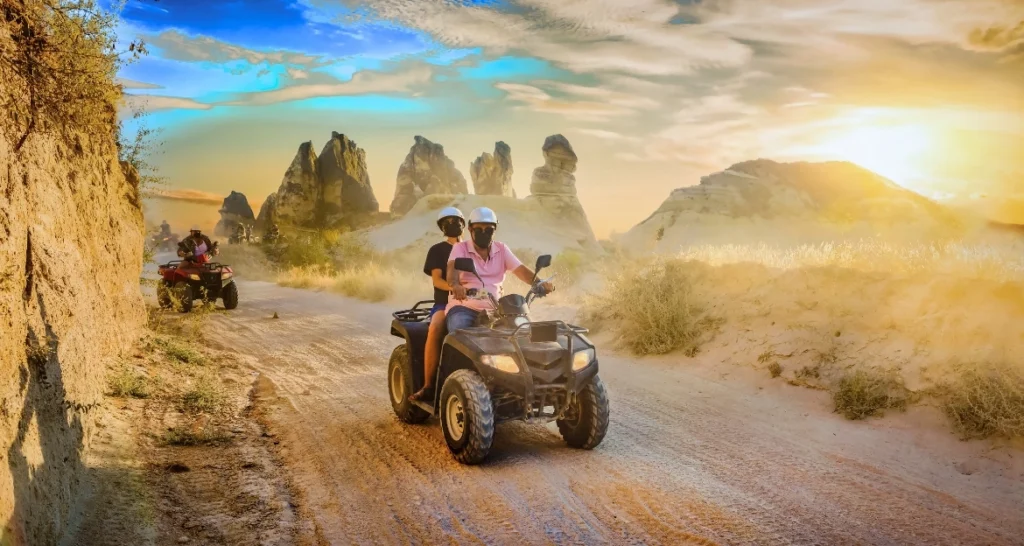
Sit forward, not back. When you are sitting in a rear-wheel-drive quad biking, keeping your weight toward the front, close to the fuel tank, keeps the center of gravity low and stops the front end from lifting up. If you sit too far back and hard acceleration becomes part of the equation, the nose will get stuck up. Nudge yourself forward, and most of that nervous instability goes away.
At first, it’s very twitchy. But use a gradual squeeze of the power, not a sharp one, and not stab it into it, especially on loose or wet terrain where the wheels can spin. The classic beginner mistake is jerky, kangaroo-hop starts. Smooth is fast and safe.
Let the gears go about their basic job. With an automatic or electronic shift, you won’t have to wrestle a clutch. On most machines, you will be in second gear, which is smooth and forgiving. If a bike has reverse, see where it is early, because it’s your best friend when you get bogged down.
Use both brakes and respect the fade. Pull the levers towards you in a smooth motion, and the quad biking will respond as you would want. One warning to take seriously: once you’ve passed through a few puddles and gathered a bit of mud, the brakes now bite much less aggressively than they did on the clean test lap. Leave a proper gap behind the rider in front and never tailgate through the wet sections.
Move your body on slopes. On flat ground, you can remain planted and steady, but when the terrain is tilted, you have to shift your weight to counterbalance it. Lean into corners instead of sitting bolt upright; lean forward uphill and settle back down. It’s more physical than it looks; your shoulders will tell you that when you wake up in the morning.
Look where you want to go. Target fixation is real. Look at the tree you want to avoid, and you’ll be steering yourself straight into it. Pick your line, lift your eyes, and let your hands follow your gaze.
Keep your momentum. This is the big one on a muddy trek. When you get to a boggy slope, you feel a tendency to start backing off the throttle, and that’s when you sink and stop. Keep rolling and keep the power flowing gently, and be ready to make the extra effort when the ground bumps the tires. Quad biking, tilting or sliding sideways, is scary, but tipping one over is hard to do. Trust the machine and keep moving.
None of this is complicated. Give it twenty minutes, and it turns into instinct. The riders who struggle are almost always the ones who tense up and fight the bike instead of flowing with it.
What to do when you get stuck (because you will)
Getting stuck is fun for sure, not a failure. On a two-wheel-drive quad biking, it usually happens when you stop or take off the throttle at an incorrect time in a rut, deep mud, or on a steep bit. Reach for reverse first. Select it, feed in gentle throttle, and try to ease yourself back out of the hole rather than gunning it. If you’re wedged in a rut, keep calm and continue to keep driving through steadily; panicking and grabbing a fistful of throttle is never going to make it work. Find the drier line through a boggy patch and, above all, follow the instructor’s wheel tracks, as they know which route through actually works.
Hills deserve their own respect. Do not try to accelerate up an incline to get faster if the base is at your back and you are slamming the front end, since it might knock your grip down. Instead, pick your route, hold on to it, and bring it on once you’re already climbing, moving your weight forward over the front wheels. If you do stall partway up, keep the brakes and take a turn straight back down or wait for the instructor to help you with the steps. You get a little push and a lot of pointing and laughter from your group. That’s it.
Quad biking London: where to ride near the capital
Let’s clear something up. There is no quad biking London track in Zone 1. You won’t be tearing across Hyde Park. The city is too dense, and the activity needs open and private land.
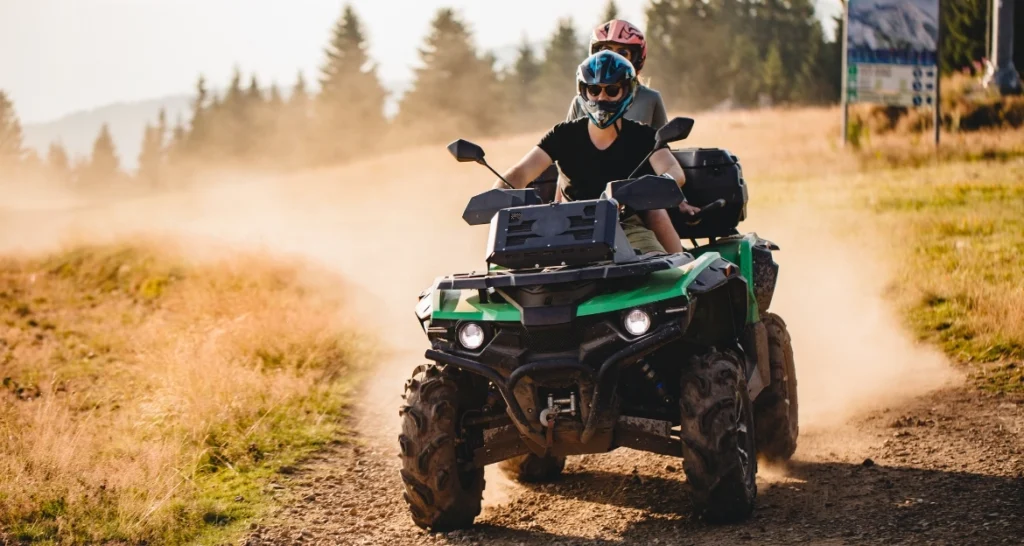
What you actually get is a fantastic ring of venues in the surrounding countryside. The nearest tracks are around 20 miles out, with more scattered across Kent, Sussex, and Essex within an hour’s drive. One common Kent site has about 200 acres of woodland and open muddy fields, the kind of terrain you’re after for a first trip, and there are very good off-road estate areas in Kent with safari-like tracks that run across open and wooded parkland.
Prices for quad biking in London and the South East typically start around £67 per person for a session and rise from there for longer or premium trips. Minimum ages vary a lot by venue, from 10 or 11 to 16, so if you’re bringing younger riders, that’s the first thing to confirm when you book. London riders are spoilt for choice, as long as they’re happy to drive out of town for an hour.
Quad biking Milton Keynes and the Midlands
To head northwest, the options are clear. Quad biking in Milton Keynes is a really good shout to anyone in Buckinghamshire, the wider Midlands, or even North London looking for something a little cheaper than the capital’s venues.
One well-known center is situated about ten minutes from Milton Keynes itself, in 14 acres of rugged Buckinghamshire countryside. The circuit can be dialed up or down according to the group, so it works for total novices and for those who have ridden before and want the hills and mud turned up. Sessions here start at around £43 per person, which comfortably undercuts a lot of the London-area pricing.
The Midlands generally punches above its weight for off-road centers. If quad biking in Milton Keynes doesn’t have a free slot on your date, there are lots of nearby alternatives to take place as well in a short drive around Bedfordshire, Oxfordshire, and Northamptonshire, several on sites of 200 acres or more.
The best places to go quad biking across the UK
There are a lot of off-road centers around the UK beyond London and Milton Keynes, and a change of location is half the reason for a ride. Near Birmingham, an adventure park 15 minutes from the center provides 120 acres of dense woodland trails, bridges, and water ditches, which are available to kids from around 11 years old.
Outside Chester, a 250-acre Cheshire site on the banks of the Gowy River has logs to climb and wetlands to swim through. A Welsh valley course of around 80 acres combines woodland and hills, and track riding is for children as young as 6 years old. There are also family favorites in Herefordshire, Dorset, Yorkshire, and Suffolk, many of them multi-activity parks that pair quads with karting or archery.
Then there’s the Highlands. A family-run center in Aviemore, in the Cairngorms National Park, has led scenic quad treks for over 25 years through woodland and moorland and a decent chance of finding Highland cows along the way. That is where quad biking becomes more than a hobby and becomes a real travel experience, and that is the full-day option.
Quad biking for kids: what parents need to know
Good news for families: this is not an adults-only pursuit. Quad biking for kids is offered at loads of UK centers, and watching a nine-year-old grow three inches of confidence over a single session is truly brilliant.
The key detail is the age and size rules, as they vary from venue to venue. Some centers take children from as young as 6 on small 50cc junior quad bike. A common setup runs 50cc bikes for roughly 6- to 9-year-old kids, 90cc bikes for 10- to 15-year-old kids, and full-size 250cc bikes for adults so that a whole family can ride together. There is often a minimum height, usually around 124 cm (about 4 feet 1 inch), as a child has to physically reach the controls.
There are a few things to know before you book quad biking for kids:
- Junior bikes are automatic, and there are no gears to change, making them much easier for small hands and short attention spans.
- Sessions are shorter and gentler. Kids under 12 are usually on a dedicated challenge circuit for around 30 minutes and never the whole adult trek.
- The instructor matches the bike to the child and not the other way around and will happily swap sizes if a quad bike looks too large or too small to ride safely.
- A kit is provided, but check ahead that the center has child-sized helmets and gloves.
As such, always confirm the minimum age with the venue instead of assuming. A center that welcomes six-year-olds and one that starts at 16 can be ten miles apart.
Full Day Quad Biking UK: Making a Proper Trip of It
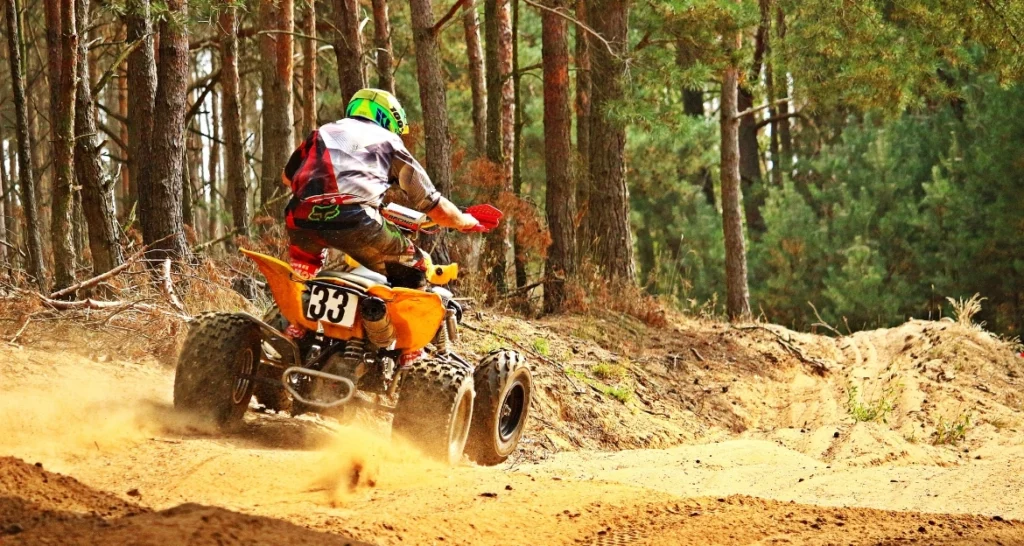
A 30-minute taster is a great introduction, but if you’ve caught the bug, going bigger is where it gets memorable. Full-day quad biking UK experiences turn a brief thrill into an actual day out, and they’re the sweet spot for stag dos, hen weekends, birthdays, and corporate away days.
What “full day” means varies. It might be an extended trip over a much larger estate, with 1,000-plus acres of Scottish loch views compared to a small circuit. For many, it’s a combination activity day that pairs quads with clay pigeon shooting, archery, or off-road buggies, so no one is waiting around. The average price for UK quad bike experiences is around £49 for short sessions and £259 for premium and full-day packages.
For a trail-less version, the Aviemore treks in the Cairngorms are hard to beat: the ride and the landscape in one hit, with woodland, open moor, wildlife, and an expert leader who knows the terrain. Add in a night nearby, and you’ve turned a full-day quad biking UK trip into a proper Highland mini-break.
If you’re planning a full day with a group, book well ahead because weekend slots at the good centers vanish fast, especially in summer. Ask about minimum and maximum group sizes, since on some trips a group needs at least four people, and check the weight limit (around 20 to 21 stone or 127 to 133 kg). Gift vouchers are a very common thing and are usually good for a year or two, which makes Quad biking a nice gift. Last but not least, centers run in most conditions, but severe weather can force a reschedule, so do check the policy before you drive two hours to a locked gate.
Final Thoughts
Quad biking is exactly what it promises and then adds a little more. No license, no experience, and no expensive gear of your own. So go up, listen to the briefing, sit forward, keep your thumb steady and your eyes up, and let the instructor do the rest.
Whether you’re chasing a first trek close to the capital, a cheaper run close to Milton Keynes, a family day the kids will talk about for weeks, or a full Highland adventure with mates, there’s a track and a bike waiting somewhere within a reasonable drive. Get muddy and put on the wrong shoes and get happy. The grin is guaranteed.
FAQs
1. Do I need to have any experience to go quad biking?
Ans: No. Beginners are the norm, not the exception. Every session starts with a safety briefing and a practice loop, and the instructor won’t send you out on the trek until you know the basics. Most people feel confident in the first twenty minutes.
2. Is quad biking safe for a first-timer?
Ans: It is considered a low-risk, high-adrenaline activity when done at a proper center. You ride with a helmet and gloves, an instructor sets the pace to your ability, and the bikes are automatic, so there’s less to go wrong. Safety gear and actually listening to a briefing cover most of the risk.
3. How much does quad biking cost in the UK?
Ans: Expect around £43 to £75 for a standard session and a full day, and combined activity packages for around £259. Location, session length, and size of the site determine the price. London locations are typically the ones that charge the most.
4. Can children go quad biking?
Ans: Yes, but the minimum age is dependent on the venue. Some take kids from 6 on 50cc junior quads; others start at 16, and there’s usually a minimum height of around 124 cm. Junior bikes are automatic, and sessions are shorter and gentler. Always check the age and size rules with the center before booking quad biking for kids.
5. What should I wear for quad biking?
Ans: Long trousers, long sleeves, and good closed-toe footwear like wellies or old boots. Use clothes you don’t want to ruin and pack an entire change for after. The center supplies the helmet, gloves, and often overalls too.
6. How long does a quad biking session last?
Ans: A short taster or ramble runs about 30 minutes on the bikes; a standard trek is around 40 to 90 minutes, including the briefing; and full-day experiences span several hours, often in addition to other activities.