

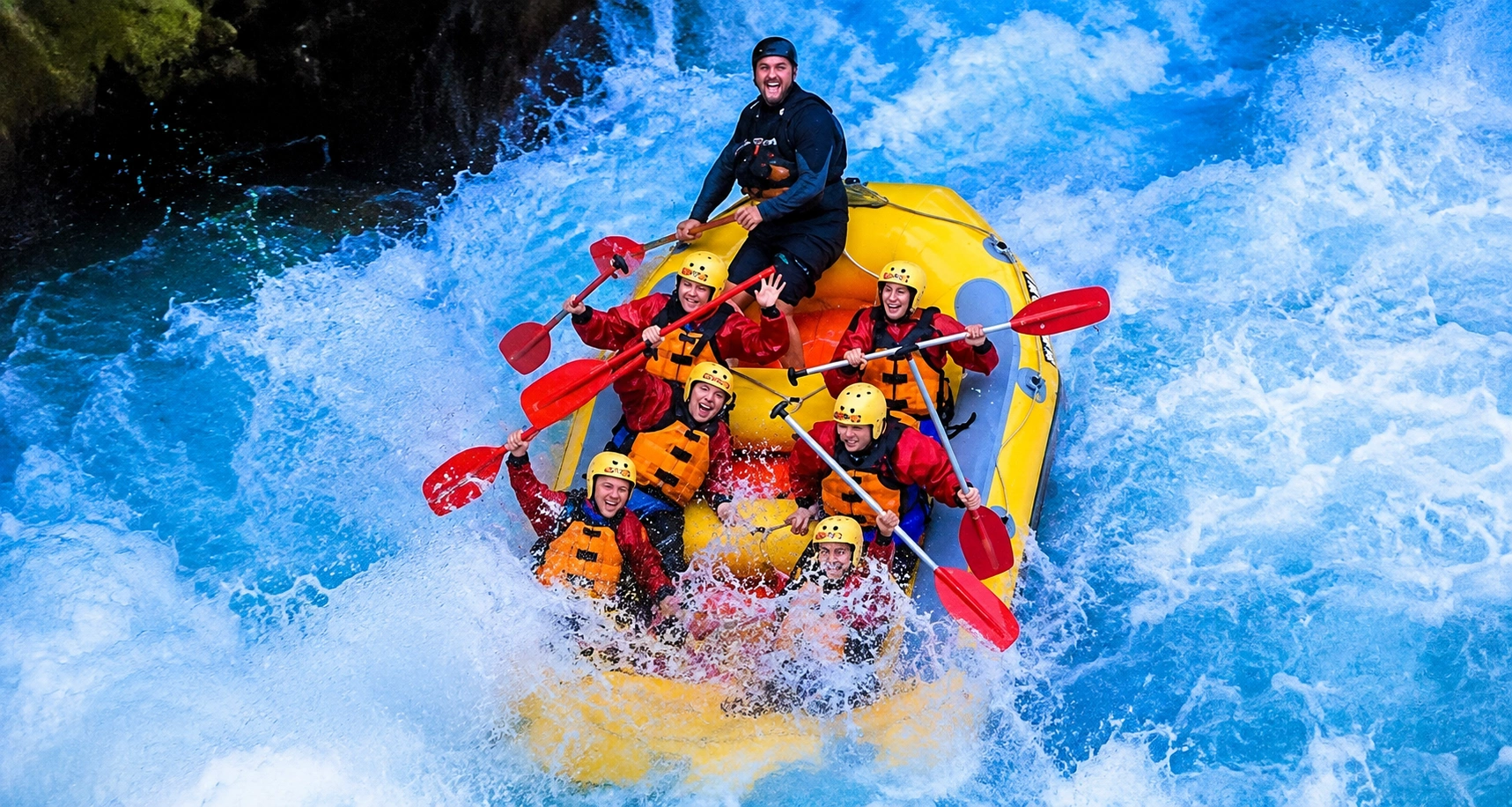
There’s a moment on the Kaituna River when your guide tells you to get down, tuck your chin, and hold the rope. The raft tips forward. For half a second, you see nothing but green water and a gap where the river disappears. Then the floor drops out, and you’re falling seven metres, the whole boat swallowed by whitewater, everyone screaming, before you punch back up into daylight, soaked and laughing.
That drop is Tūtea Falls, and going over it is the reason Rotorua white water rafting is on almost every North Island bucket list. It’s the highest commercially rafted waterfall, tucked away in a native bush gorge about 20 minutes from town. You don’t need any experience to do it. You do need a bit of nerve, a swimsuit, and a willingness to get very wet.
This guide also describes what the trip is like, how much it costs, whether it’s safe, when to go, and how the Kaituna stacks up against the rest of the country. No brochure gloss, just the details you’d want from a mate who’s already done it.
What makes Rotorua white water rafting different?
Most rafting trips give you rapids. The Kaituna gives you rapids plus a waterfall you can see from the road, and then asks you to paddle straight over it.
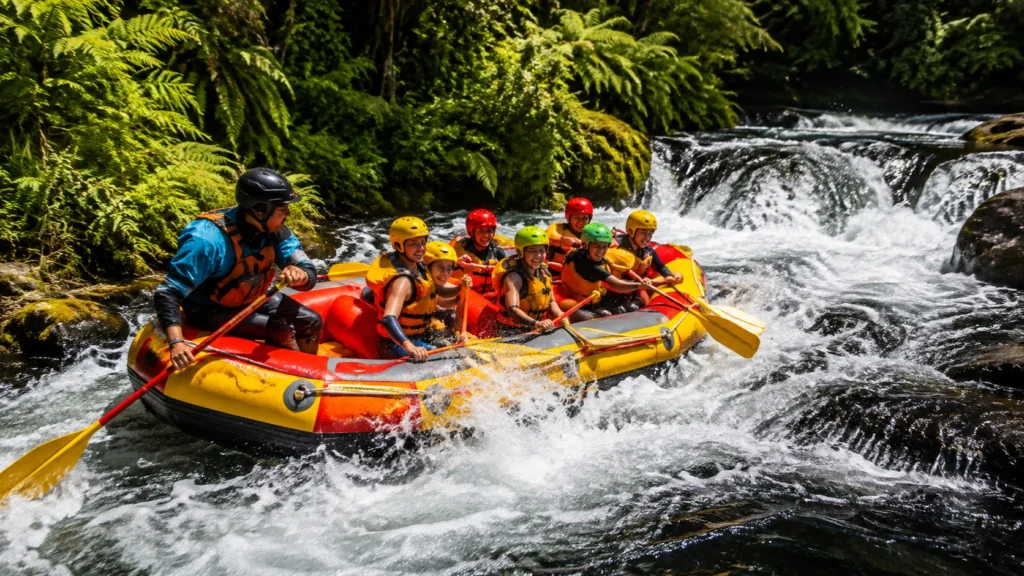
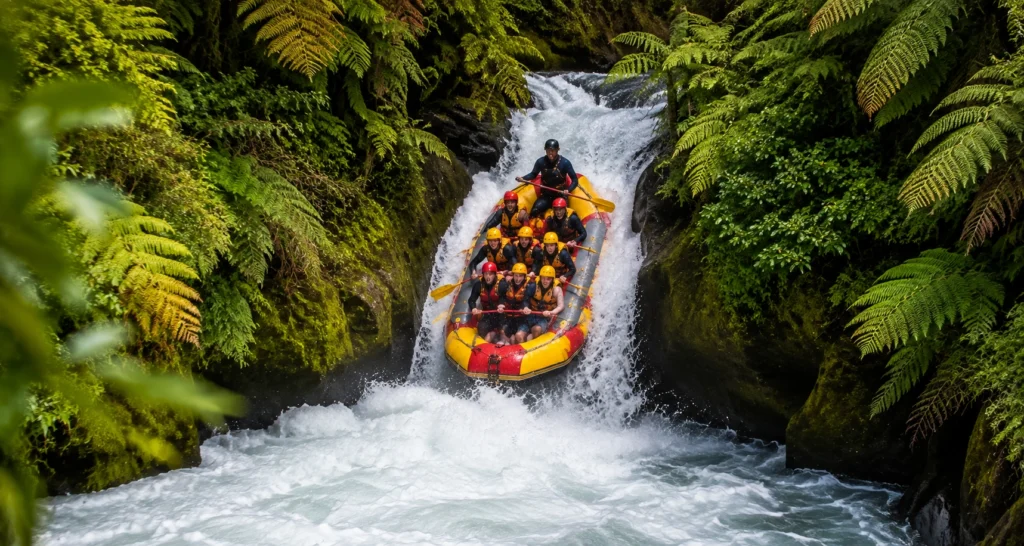
The river flows out of Lake Rotoiti, north of the city, down into a narrow volcanic canyon of ferns and native forest. Guides pack 14 rapids and three waterfalls in a segment that takes roughly 50 minutes to run. The star is Tūtea Falls, a 7-meter plunge that operators across Rotorua advertise as the world’s highest commercially rafted waterfall. That claim is well-supported: there’s no other drop this massive that allows paying guests to jump for a few minutes.
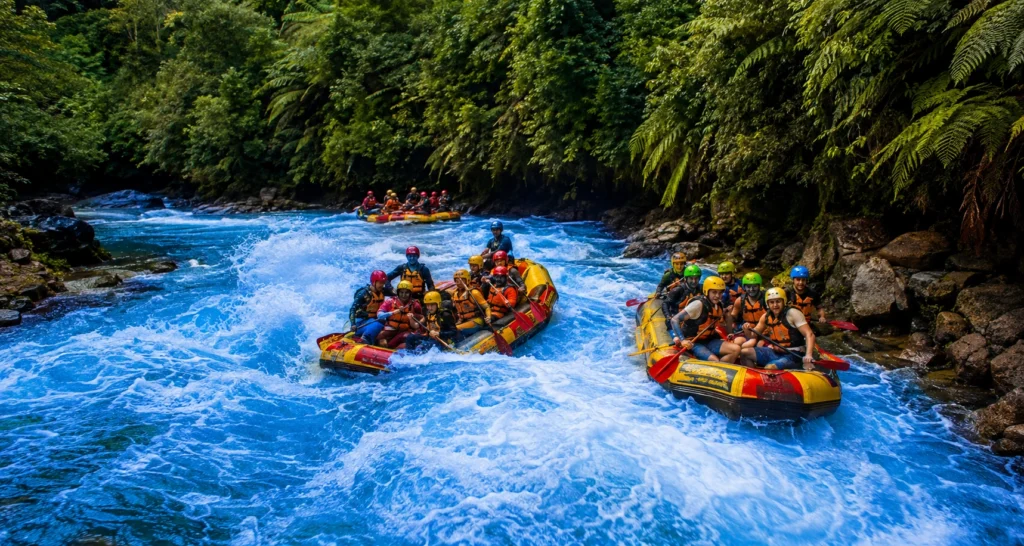
The Kaituna is also a “pool-drop” river. Each rapid is followed by a period of calm, deep water. You hit something heart-pounding; you take a breather to catch up, bail the boat, and reset before the next one. That rhythm is what makes a Grade 5 river forgiving enough for first-timers, which is unusual. On most Grade 5 water, one mistake leads straight into the next hazard. Here, the river gives you room to recover.
Then there’s the cultural layer. The Kaituna (aka Ōkere Awa) is sacred to local iwi, and good guides weave in kōrero about the river as you paddle: the stories of place, the customs connected to the water, the meaning the awa carries for the people who have lived alongside it for generations. It turns an adrenaline hit into something with more depth than a theme-park ride.
What’s it actually like to go over the 7m waterfall?
Your day begins at the base, not the river. You’ll put on a wetsuit, booties, a fleece, a splash jacket, a helmet, and a life jacket and load into a van for the short shuttle to the put-in. Before anyone enters the water, guides do 15 to 20 minutes of training. You learn paddle commands, what “get down” means, how to hold on, and what to do if you end up swimming. It’s key to the training here. The part that keeps the rest of the fun.
The first rapids ease you in. You paddle forward on command, the boat bucks, water comes over the front, and you start to trust the guide’s read of the river. By the time you get to the big one, you’ve had a few smaller drops to calibrate your nerves.
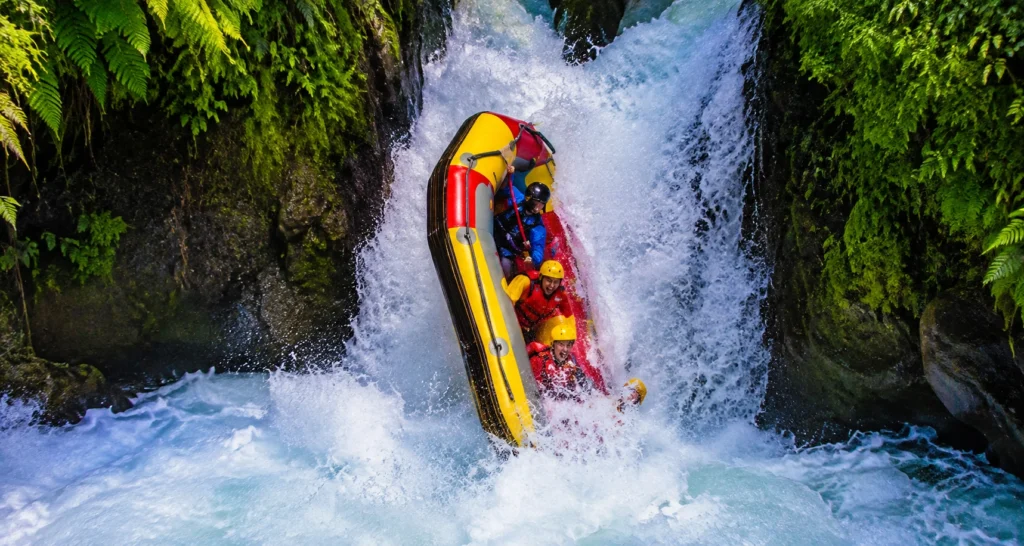
Rotorua white water rafting is up to Tūtea Falls, and the approach is the tense part. The guide lines the raft up, tells everyone to get low and tuck in, and there’s a beat of stillness at the lip. Then you go. The raft noses over, the world turns to foam, and for a moment you’re fully under the falls. Boats even flip here, which sounds alarming and is actually half of the appeal. Guides train for it, you’ve been briefed for it, and popping up in the calm pool below, whether you’re still in the boat or bobbing beside it, is the story you’ll tell for years.
After the falls, there is still river to run, plus time to swim, surf the current, and mess about in the water before the takeout. The total trip time is around three hours door to door. The wet, loud, terrifying, brilliant part in the middle lasts less than an hour, and it goes fast.
Is white water rafting dangerous?
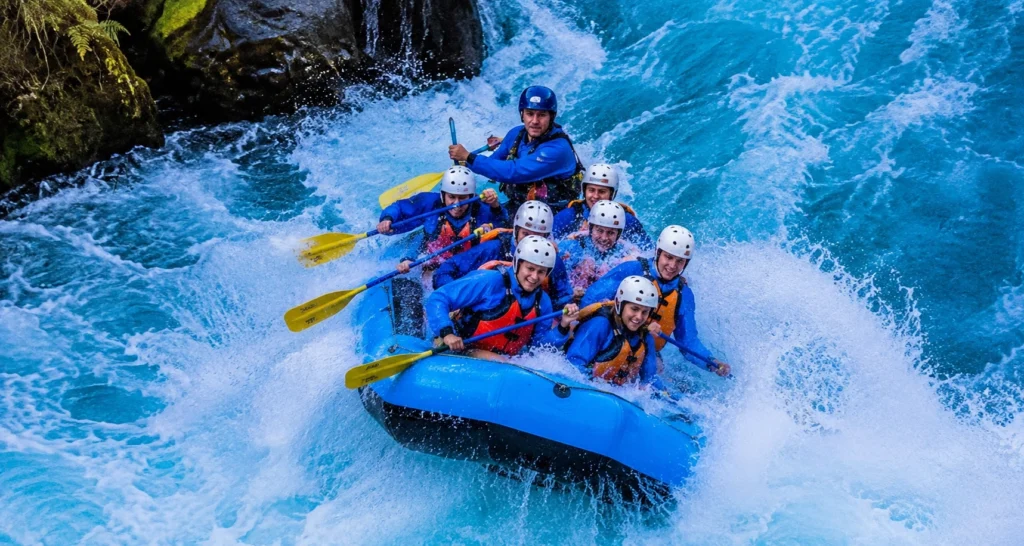
Short answer: yes, there’s real risk, and no honest operator will pretend otherwise. Is white water rafting dangerous enough to worry about? That depends almost entirely on who you raft with and whether you follow instructions.
Rafting is an adventure activity, and adventure activities are dangerous. Rafts flip. People fall out. On the rare occasions guests do get injured, usually from a stray paddle or not tucking their chin at a waterfall. Grade 5 water moves fast and hits hard, and the Kaituna is Grade 5 at its most intense point.
What changes the equation is New Zealand’s commercial rafting industry, which is one of the most heavily regulated in the world, and all commercial operators must have a WorkSafe certificate and Safety Operations Plan in place and staff trips with guides who meet the New Zealand Rivers Association criteria. Operators are accredited under the Adventure Activities regulations, audited with other organizations (e.g., AdventureMark), and are Qualmark-endorsed. The original Kaituna operator has been running trips since 1991 without major accidents, and another leading company has had over 10,000 trips with a strong safety history.
That regulation is the difference between “dangerous” and “well-managed.” The hazards on the Kaituna are known, mapped, and rehearsed. Your guide has run that exact line hundreds of times. You’re wearing gear that’s approved for the water, you’ve received a safety briefing, and there’s rescue equipment and trained staff in every boat.
The honest story: Rafting the Kaituna isn’t risk-free, and you shouldn’t book it expecting a gentle float. It is a controlled way of traveling on serious whitewater, and the odds are heavily in your favour if you listen to your guide and stay calm when the boat flips.
Where people get hurt is off the back of poor decisions: ignoring commands, panicking in the water, or booking with an unregulated operator. Stick with a certified Rotorua company, and the danger drops to something most fit, healthy adults can take on with confidence.
Is Rotorua rafting safe for beginners?
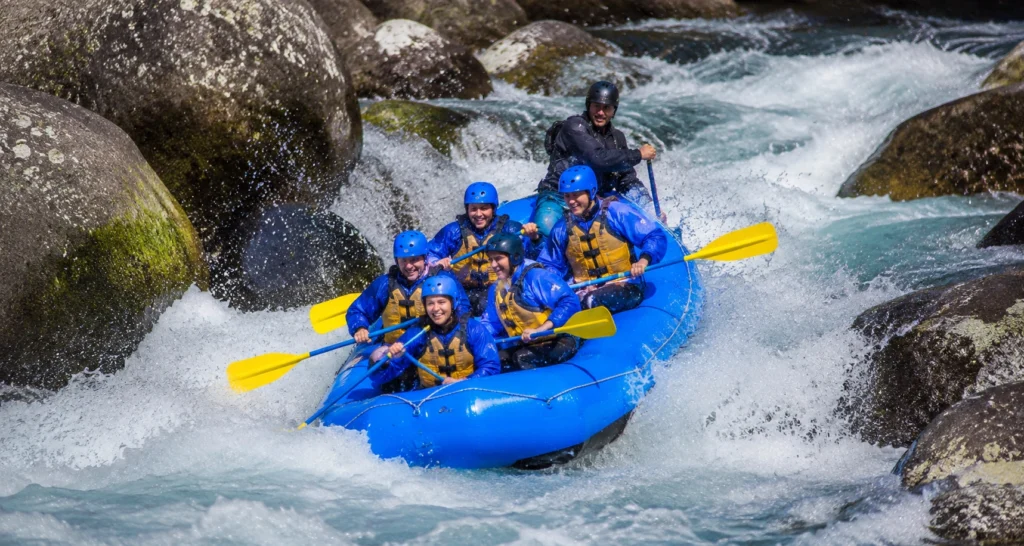
You don’t need any prior experience to raft the Kaituna. Most of your boat’s crew will be first-timers, and Rotorua White Water Rafting is built around that. The crews run beginners over the falls every day, and the whole system, from the training on land to the guide reading the river behind you, works to get nervous people through it grinning.
The pool-drop nature of the river does the bulk of the work. So do the briefing, the gear, and the guide behind you calling every move. Beginners worry about the same three things every time: falling out, the boat capsizing, and the sheer power of the rapids. All three are normal; all three are covered in your training, and guides would rather you ask the nervous question on land than freeze on the water.
But there are real requirements, and they exist for good reason. Here’s what most Rotorua White Water Rafting operators ask for on the full Grade 5 trip:
| Requirement | Standard for the Full River |
| Minimum Age | 13+ (a Grade 3 half-river option is available for ages 10–12, joining below the waterfalls) |
| Weight Limit | Around 120 kg with most operators; up to 140 kg with some |
| Fitness | Reasonable fitness; comfortable in deep water. A float test may be required |
| Health | Not suitable for pregnant guests or anyone with a heart condition |
| Swimming | You don’t have to be a strong swimmer, but you should be comfortable going underwater |
Call the operator before you book if you’re scared of fitness or have nerves. They do this every single day and would rather take you on the right trip and place you in the right place than go somewhere you’ll hate.
How much does Rotorua rafting cost?
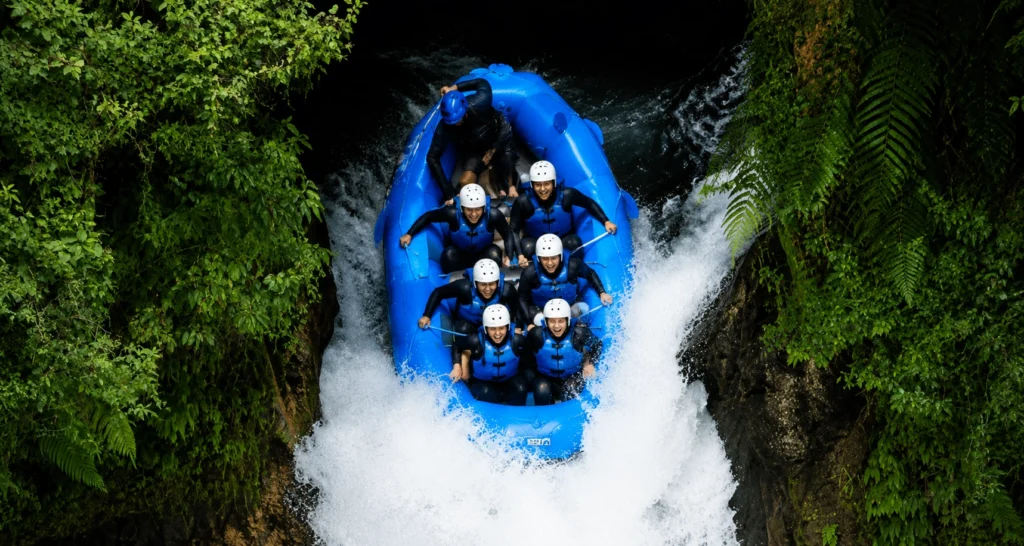
How much does Rotorua rafting cost on the Kaituna? For the flagship 7m waterfall trip, expect to pay somewhere in the region of NZD $95 to $145 per person, depending on the operator, the season, and how you book.
A local company is usually the best for a direct booking, and group discounts lower the price per head even further. A well-known Rotorua White Water Rafting operator lists a group rate of around $115 per person for six or more people. The grade 3 youth price for 10- to 12-year-olds is lower, around $80. International resellers with a large number of clients can raise the headline price considerably, usually around $145 NZD or approximately $85 USD once the currency is settled, but that list usually includes a hotel pickup fee as well.
| What You’re Paying For | Typical Kaituna Trip |
| Guided Grade 5 Rafting | 14 rapids, three waterfalls, ~50 minutes on the water |
| All Gear | Wetsuit, booties, fleece, splash jacket, helmet, life jacket |
| Safety Briefing & Training | 15–20 minutes before you launch |
| Duration | Around 3 hours door to door |
| Common Extras | Photo/video pack, GoPro chest-mount hire, hotel transfers |
A word on photos: nobody seems dignified going over a 7-meter waterfall, and that’s the point. The professional photo pack is the one add-on almost everyone ends up glad they bought. If you’re rafting as a group, split the cost between you, and it’s a bargain for a set of images you cannot fake.
Insider tip: Rafting with six or more people typically provides the cheapest per-person rate and the chance to share the photo pack. Choose a few friends to accompany you before you book rather than pay solo walk-up prices.
When’s the best time to go rafting in Rotorua?
The Kaituna runs 365 days a year. Council-controlled floodgates keep the water at reliable levels, so unlike a lot of rivers, this one doesn’t shut down for the season. And yet each season has its own character.
| Season | Water Temperature | What to Expect |
| Summer (Dec–Feb) | Around 24°C (75°F) | Warmest water, longest days, peak crowds, buzzing base |
| Autumn (Mar–May) | Cooling | Local favorite: stable weather, thinning crowds, deep forest colour |
| Winter (Jun–Aug) | Around 12°C (54°F) | Higher, bolder water, mist through the gorge, fewest people |
| Spring (Sep–Nov) | Warming | Kaituna is often the warmest NZ river, with a lush green gorge and frequent rain |
Paraphrased Text:
Summer is peak for obvious reasons. Warm water, long nights and a lively atmosphere at the base make it the default choice for families and travellers ticking Rotorua White Water Rafting off a North Island road trip.
Winter is the underrated pick. The wetsuit means you’re already going to be wet and warm; operators are giving extra thermal layers, and the sheltered canyon holds heat much better than you thought. What you end up with is a river that is a bit higher and faster after winter rain, cool mist in the gorge, and a little bit of the crowd. If you want the moody, cinematic drop with the boat almost on your own, book between June and August.
Spring deserves a mention too. The Kaituna is often the warmest raftable river in the country, and the rain that rolls through Rotorua White Water Rafting in spring makes the surrounding bush glow and the gorge look its best. Whatever month you pick, Rotorua white water rafting on the Kaituna runs rain or shine, so the weather forecast rarely alters your plans. You’re going to be soaked either way, and a grey, misty day over the gorge looks more dramatic than a blue sky.
Which Rotorua rafting company should you pick?
Rotorua White Water Rafting has a number of well-known Kaituna operators, and they are all certified, all experienced, and all run essentially the same river. The difference is heritage, vibe, and extras, not the core trip.
The longest-running company opened up the Kaituna back in 1991 and consistently ranks number one on TripAdvisor, banking on decades of local knowledge. One was founded in 2011 by a four-time Extreme Kayaking World Champion and leans into a sustainability story, offsetting well over 100% of its emissions and restoring native habitat along the riverbank. Another is Māori-owned and puts cultural storytelling front and center. Kiwi and Māori river crew share the meaning of the awa as you paddle.
Any of them will get you safely over Tūtea Falls. When comparing, look at departure times that fit your day, whether hotel pickup is included, group rates if there are a few of you, and whether the cultural or eco angle matters to you. Read recent reviews rather than old ones, because guide quality is the single biggest factor in how good your trip feels, and crews change.
What to bring and how to prepare
The genius of rafting is that you barely need to pack. Everything technical is provided by the operator. You bring the basics and a good attitude.
Bring with you:
- Swimwear to wear under the wetsuit (your underwear works fine too).
- A towel and a full change of warm, dry clothes for afterwards.
- A GoPro only if you have a proper chest-mount harness; loose cameras and phones stay on land.
Provided at the base:
- Wetsuit, booties, fleece top, splash jacket, helmet, life jacket.
- All paddles and safety equipment.
- Lockers for your valuables during the trip.
A few practical notes. Eat something beforehand, but don’t stuff yourself. Use the bathroom at the base, as there’s no stopping once you’re on the river. Leave behind jewelry and anything that can slip off underwater. Arrive 15 to 30 minutes before your departure time, as operators need you geared up and briefed before the boat leaves.
How does the Kaituna compare to the best white-water rafting in NZ?
Ask around, and you’ll hear a fair claim that the Kaituna is the best white water rafting NZ has to offer, at least for the money and the payoff. The seven-meter waterfall is the headline no other commercial river in the country can match.
It’s worth knowing the alternatives because white-water rafting in New Zealand covers a lot of ground. Near Rotorua White Water Rafting, the same operators often run two other rivers. The Wairoa near Tauranga is a dam-released Grade 5 run that only opens around 26 days a year, prized by locals as one of the most exciting commercial trips in the country. The Rangitāiki is a gentler Grade 3 to 4 half-day option, and it doubles as the backup when heavy rain floods the Kaituna.
Further afield, the South Island’s Shotover and Rangitata rivers provide longer, more remote, more scenic multi-hour trips through dramatic gorges. Those trips win in terms of wilderness and duration. What they don’t have is Tūtea Falls.
That’s the honest trade-off. If you want the biggest adrenaline moment in New Zealand rafting, packed into a half-day within reach of Rotorua White Water Rafting geysers and hot pools, the Kaituna is unbeatable. If you want a longer day deep in South Island backcountry, look south. For most travellers building a North Island itinerary, Rotorua white water rafting on the Kaituna is the one that delivers the most thrill per dollar and per hour.
The Takeaway
Few things you can book on a New Zealand holiday deliver a moment like the drop over Tūtea Falls. It’s loud, it’s genuinely scary at the lip, and it’s over in a heartbeat, and almost everyone climbs out of the boat wanting to go again. Rotorua White Water Rafting packages are for a half-day that you can slot between a morning at the geothermal parks and an evening in the hot pools.
You don’t need experience. You need to book with a certified operator, show up with a towel and a bit of courage, and trust the crew who run that river every single day. Pick your season, gather a few friends to unlock the group rate and share the photos, and tuck your chin over the highest rafted waterfall on Earth.
Prices and departure details change with season and operator. Confirm current rates, age and weight limits, and pickup options directly with your chosen Rotorua White Water Rafting company before you book.
Frequently Asked Questions
1. Do I need to know how to swim to raft the Kaituna?
Ans: You don’t have to be a strong swimmer, but you should be comfortable in deep water and okay with going under briefly. Some operators run a short float test. Your life jacket keeps you buoyant, and if you fall out, the guides are trained to get you back in quickly.
2. What happens if the raft flips at the waterfall?
Ans: It’s common enough that guides plan for it. You’ll have been briefed on exactly what to do: hold your breath, stay calm, and let your life jacket bring you up in the calm pool below the falls. Crews recover swimmers quickly, and many people rate the flip as the best part.
3. How cold is the water?
Ans: It ranges from around 24°C (75°F) in summer down to about 12°C (54°F) in winter. The wetsuit and thermal gear the operator provides keep you comfortable year-round, and the sheltered gorge holds warmth better than open water.
4. Can kids do Rotorua white-water rafting?
Ans: The full Grade 5 river is for ages 13 and up. Children aged 10 to 12 can join a Grade 3 half-river option that starts below the waterfalls, so younger kids still get a taste without the biggest drop.
5. How much does Rotorua White Water Rafting cost for a family or group?
Ans: Individual trips typically run NZD $95 to $145 per person. Groups of six or more usually receive a lower rate, often around $115 per person, and the Grade 3 youth option is near $80. Booking direct and splitting the photo pack keeps the cost down.
6. Is white water rafting dangerous for a total beginner?
Ans: It carries real risk, but with a certified Rotorua White Water Rafting operator, a full briefing, and proper gear, it’s a well-managed adventure that thousands of beginners complete safely every year. The main thing standing between you and a great day is whether you listen to your guide.