

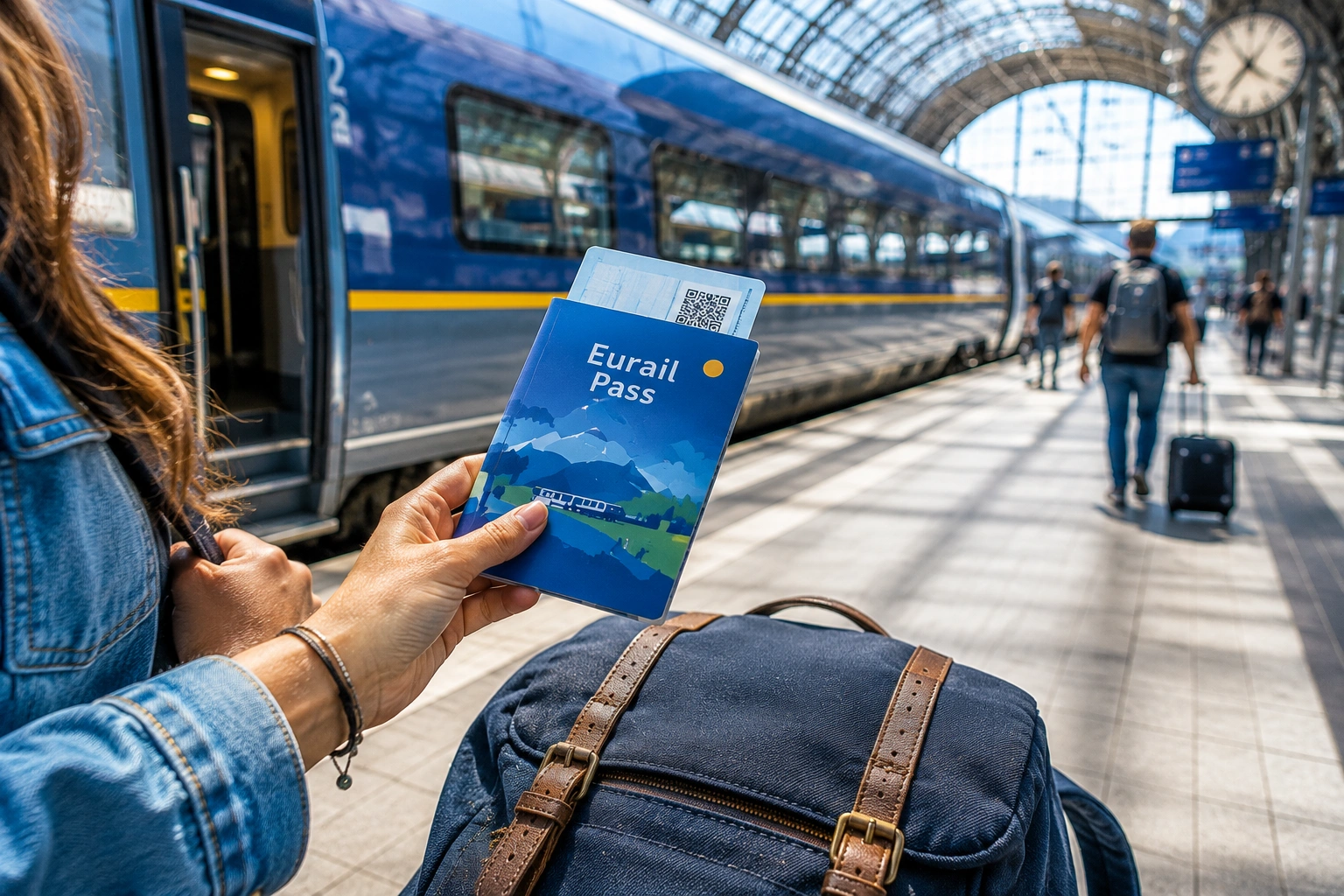
The first time you actually hold a Eurail Pass, it feels like someone handed you the keys to Europe: thirty-three countries, the Alps, the Mediterranean coast, whatever city square you happen to wander into next. That feeling is mostly accurate. What it doesn’t tell you is that the pass alone won’t get you a seat.
This trips up a lot of first-time users. The assumption is that buying a Eurail Pass means you can just show up and travel, with no planning required. Then they get to the station and find out every passholder seat on that train was booked days ago, and a valid pass in your pocket does not put you on that train.
That’s the gap this guide is meant to close: which trains actually require a reservation, what they cost, how to book one without overpaying, and the small habits that keep a Eurail Pass running on schedule instead of turning into a scramble at the ticket counter.
What a Eurail Pass actually gets you
A Eurail Pass is built for travelers who don’t live in Europe. If you’re based in the US, Canada, Australia, or pretty much anywhere outside the continent, this is your version of the pass. European residents use the nearly identical Interrail Pass instead: same trains, same rules, different eligibility.
It covers train travel, plus select ferry routes, across 33 countries: Portugal, Norway, Greece, and everywhere in between. Instead of buying a ticket for every leg of a trip, you buy one pass and travel on the days you choose. Think of it less as a ticket and more as a permission slip: it gets you onto the train, but on some routes you still have to reserve where you’ll actually sit.

The two main pass formats
Before you get anywhere near reservations, you need to pick the right Eurail pass benefits format for your trip, because it changes how you’ll plan everything else:
- Continuous Pass: Valid for an unbroken stretch of days (15 days, 22 days, 1 month, 2 months, or 3 months). Ride as many trains as you like, every day, for the life of the pass. Good for people who are moving constantly.
- Flexi Pass: A set number of travel days within a longer window, say 7 travel days inside 1 month or 15 inside 2 months. Better if you’d rather settle into a city for a few days at a time instead of moving daily.
Price also depends on age and class. Youth passes (12-27) run cheaper than adult passes (28 and up), and senior passes (60+) get a discount too. Kids under 4 travel free, and children 4-11 can travel free alongside a paying adult, up to two kids per adult, with a complimentary Child Pass. Prices shift with season and promotions, so check the official Eurail site for current numbers rather than trusting a figure from a two-year-old forum post.
One detail that catches people out: you don’t have to use the pass the moment you buy it. You typically get about 11 months from purchase to activate it, which is useful if you’re booking a trip well in advance.

The part everyone misunderstands: seat reservations aren’t included
Here’s the single most important thing to understand about Europe train travel with a Eurail Pass: the pass makes you eligible to ride, not guaranteed a seat. Reservations are a separate charge, set by the individual rail operator, and whether you need one depends entirely on the train.
Broadly, trains split into three categories:
- No reservation needed: board, find any open seat, and show your pass if the conductor asks. Most regional and local trains, plus the bulk of trains in Germany, Switzerland, Austria, Denmark, and much of Central and Eastern Europe, work this way.
- Optional reservation: you can board without one, but a small fee (often €3-€7) locks in a specific seat. Worth paying during peak travel periods, or if you just want the certainty.
- Compulsory reservation: you cannot board without one, period. This covers most high-speed trains, many international routes, and every overnight sleeper.
The line between these categories moves by country and by season, sometimes on the exact same route. A train that’s optional in November can turn compulsory in the middle of summer. Treat “no reservation needed” as a helpful default, not a promise, and check the specific route before you travel.
Where reservations are almost always compulsory
Build your Eurail train ticket plan around these known trouble spots:
- French TGVs: reservations are compulsory, and getting one isn’t cheap or guaranteed. Passholder seats are capped (often around 50 per train) and priced on a tier: roughly €10 while passholder seats last, jumping to about €20 once they sell out. In peak season that quota can vanish weeks ahead of time, so book the moment your dates allow it, typically around four months out for domestic SNCF routes. One trap worth knowing: the pass is not valid on Ouigo, SNCF’s budget high-speed brand, even though it runs on the same tracks.
- Eurostar (London-Paris, Brussels, Lille, Amsterdam): you’ll need a specific passholder fare rather than a plain reservation fee, generally around €35 in second class or €40 in first.
- Former Thalys routes (Brussels-Amsterdam, Brussels-Cologne), now part of the Eurostar network, carry a compulsory reservation and their own fee.
- Night trains aren’t just about a seat; you’re paying for a couchette or a private sleeper berth, anywhere from around €39 for a basic couchette to over €100 for a two-bed compartment.
- High-speed trains in Italy and Spain (Frecciarossa, AVE): reservation is mandatory, and the fee depends on the route and how early you book.

Where you can usually relax
In the Benelux countries, Switzerland, Germany, Austria, Denmark, and much of Central and Eastern Europe, you can usually just walk onto a train, take any open seat, and show your pass if asked. No booking, no stress. This is the part of the Eurail Pass experience that actually matches the marketing.
How to actually book a seat reservation
Once you know a train needs a reservation, here’s how to get one:
- The Eurail app or website. The most universal option, and it works for most compulsory-reservation routes. Eurail Pass usually tacks on a small booking fee, around €2 per traveler per train, on top of the reservation itself.
- The national rail operator’s own site, such as SNCF (France), Deutsche Bahn (Germany), Trenitalia (Italy), or Renfe (Spain). Sometimes skips the Eurail booking fee, though not every operator’s system handles international passholders smoothly, so budget some patience.
- A staffed ticket counter. When online passholder booking is glitchy or down, which happens more often than you’d hope, a person at the counter can usually sort it out.
- The operator’s telesales line. Old-fashioned, but a solid backup when the digital options fail you.
Good Eurail travel planner habit: book reservations on the same timeline you’d book flights, not as an afterthought. The moment a route opens for booking, reserve it, especially for France, Italy, and anything overnight, where passholder seats go fast in high season.

Tips for a smoother Eurail trip
A handful of habits separate the travelers who glide through Europe from the ones who spend their trip arguing with conductors:
- Download the Eurail Rail Planner app before you leave home. It works offline, stores your pass and reservations, and lets you check timetables without burning data roaming.
- Activate your pass through the app, since most Eurail passes are mobile now rather than paper. Confirm it’s active before you board your first train, not after.
- Build in buffer time between connections, especially across borders. European trains run reliably, but a 10-minute delay can eat a 20-minute connection window fast.
- Pack lighter than you think you need to. Cobblestones, station stairs, and narrow luggage racks are not kind to an overpacked suitcase.
- Save your reservations offline, not just inside the app. Station Wi-Fi has ruined more than one boarding.
- Check the seasonal reservation rules before each leg, since routes can flip from optional to compulsory over summer.
None of this shows up in the marketing photos, but it’s the quiet groundwork that keeps the romantic part of the trip actually happening on schedule.
Is a Eurail Pass worth it?
It depends on how you travel. If your itinerary involves frequent, somewhat improvised moves between cities and countries, a pass usually beats booking individual point-to-point tickets on both price and flexibility, especially since last-minute European train fares can get expensive fast. If you’ve already locked in a fixed itinerary with only a few train legs, it’s worth spending ten minutes comparing the pass price against advance-purchase fares booked separately; sometimes those come out cheaper.
Really, the pass pays for itself through flexibility more than raw savings. Being able to change your mind, take the slower route through the mountains, or stay an extra night in a city you didn’t expect to love—that’s the real case for traveling Europe by rail with a Eurail Pass.
Conclusion
A Eurail Pass is one of the more freeing ways to see Europe, but that freedom still needs a little structure underneath it. Once you know which trains require a reservation and which ones you can just hop on, the continent opens up the way it’s supposed to: spontaneous, scenic, and refreshingly simple. Book the trains that need booking, don’t worry about the ones that don’t, and let the rest of the trip unfold one platform at a time.
FAQs
Q1. Does every train require a seat reservation with a Eurail Pass?
A. No. Most regional and local trains across Europe need no reservation; you just board and find a seat. Reservations are mandatory on high-speed trains, some international routes, and all overnight sleepers.
Q2. How much do Eurail seat reservations typically cost?
A. It varies by country and train type. Regional reservations usually run €3-€7, French TGV passholder reservations €10-€20, and premium international or night train berths from around €39 up to nearly €100.
Q3. Can I book Eurail seat reservations online in advance?
A. Yes. You can reserve through the official Eurail website or app, or directly through national rail carriers like SNCF, Deutsche Bahn, and Trenitalia. Book popular routes as early as you can; French TGV and overnight trains sell out their passholder seats fastest.
Q4. What’s the difference between the Eurail Pass and the Interrail Pass?
A. They cover the same trains and rules. The difference is eligibility: Eurail is for non-European residents, Interrail is for people who live in Europe.
Q5. Is the Eurail Pass a physical ticket or digital?
A. Most Eurail passes today are mobile, activated and stored in the Eurail Rail Planner app, which also works offline for checking schedules and reservations.
Q6. What happens if I board a compulsory-reservation train without one?
A. You can be refused boarding or removed from the train, even with a valid pass. Check reservation rules before you get to the station, especially for French TGVs, Eurostar, and overnight trains.