

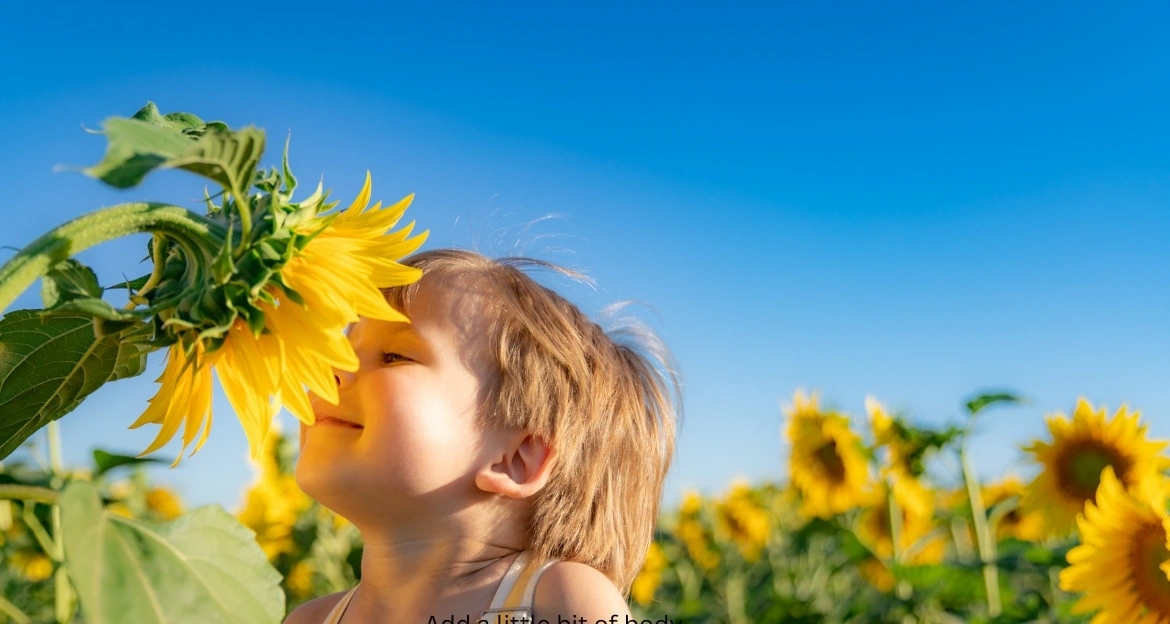
Somewhere between the Darling Downs and the Scenic Rim, entire paddocks turn gold every summer, and for a few short weeks, Queensland looks like it belongs on a postcard. That is the quiet pull of Sunflower Fields in this part of Australia — a mix of open sky, warm light and rows of flowers that seem to follow the sun on purpose.
Unlike the sunflower farms you see in Europe or the US, Australia’s sunflower season is a smaller, more local affair. Most of the well-known fields sit within a two- to three-hour drive of Brisbane, tucked along country roads in Warwick, Allora, Clifton, Nobby, Kalbar and the border towns near the Gold Coast. Some are free roadside paddocks planted by working farmers; others are ticketed farm experiences with proper parking, photo props and food trucks.
What makes this trip worth planning properly is the timing. Sunflowers do not wait — a field that is glowing gold one week can be brown and cut down the next, depending on rain, heat and harvest schedules. This guide breaks down exactly when to go, where the best fields are this year, how to photograph them well, and how to build a day trip or weekend itinerary around Queensland’s short but spectacular sunflower season.
When is Sunflower Season in Australia?
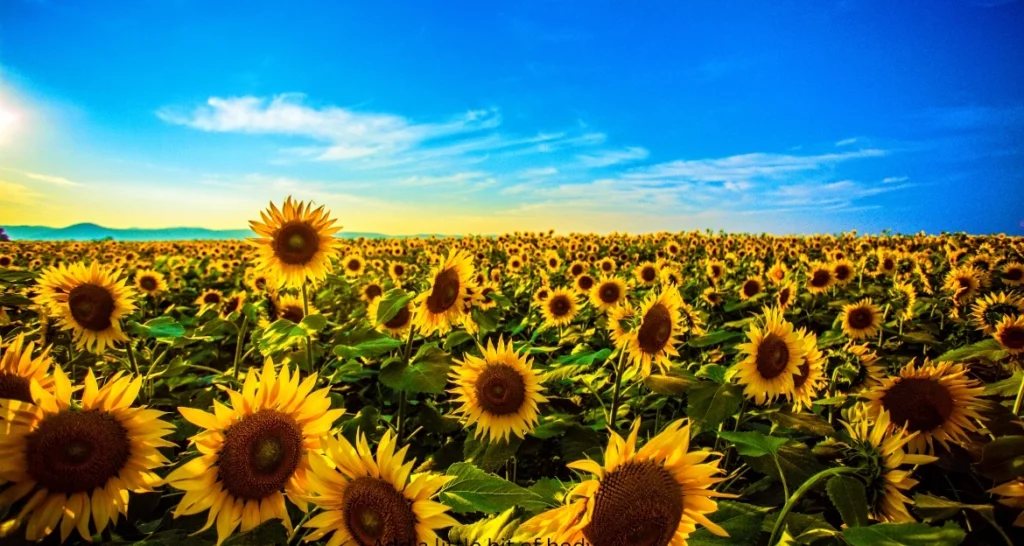
Quick Answer: The best time to see sunflowers in Australia is generally mid-January to late February, when the Southern Downs, Darling Downs and Scenic Rim regions of Queensland hit peak bloom, depending on rainfall.
Sunflower season in Australia runs opposite to the Northern Hemisphere. Because farmers here plant in spring and the flowers need warm, dry conditions to open, the bloom window falls across the Australian summer rather than autumn.
Best Time to See Sunflowers (Month by Month)
- November to December: Early plantings begin flowering in some Southern Downs paddocks, though this varies year to year.
- January to February: This is the core bloom window for most Queensland farms, including Warwick, Allora, Clifton and Nobby.
- February to March: Later-planted fields, including some around Kalbar in the Scenic Rim, often peak slightly later than the Darling Downs.
Because sunflowers are grown as a working crop and not purely for tourism, the exact bloom dates shift with rainfall and temperature. A dry spring can push flowering earlier; a wet one can delay it by weeks. In short, sunflower season is short and weather-driven, so it is worth checking a farm’s social media or Google listing the week before you travel, since fields can go from bud to full bloom to harvested in under a month.
Best Time of Day to Visit
Sunflowers face east in the morning and gradually track the sun through the day, which changes both the look of the field and the quality of your photos.
- Sunrise: Softer light, cooler temperatures, and flowers facing the camera if you are shooting from the east — plus far fewer crowds.
- Sunset: Warmer, golden tones and dramatic backlighting, though by late afternoon many flowers have turned away from an east-facing lens.
If photography is the main goal, sunrise generally gives more consistent results, especially in the peak of summer when midday heat is harsh, and fields get crowded fast.
Best Sunflower Fields Near Brisbane (By Region)
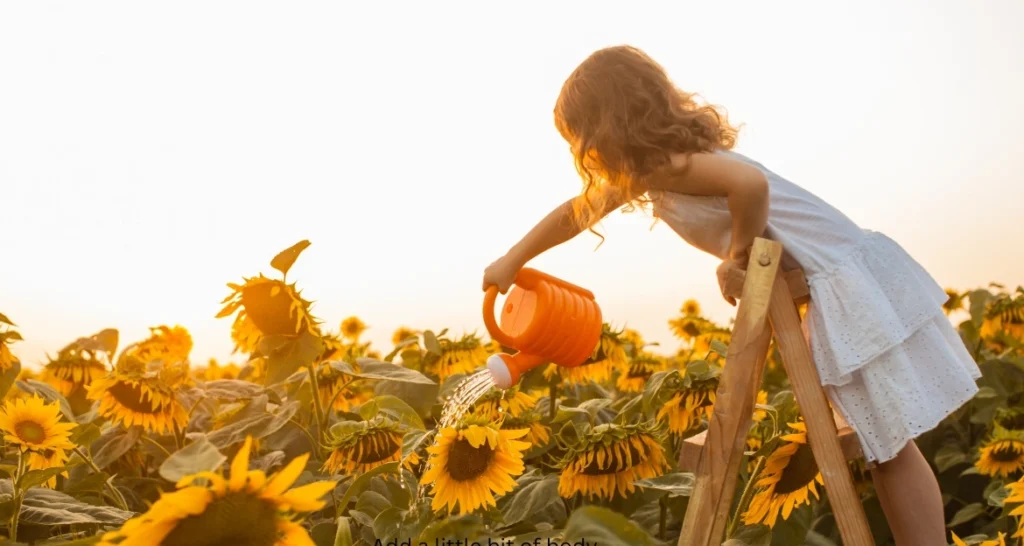
Queensland’s Southern Downs, Darling Downs and Scenic Rim regions hold the country’s most reliable and photogenic Sunflower Fields, with a smaller cluster near the Gold Coast hinterland. Among the sunflower farms, this cluster around Brisbane is by far the most accessible for a weekend trip. Here is where to look, region by region.
Southern Downs (Warwick & Allora, QLD)
The Southern Downs is where most Brisbane day-trippers head first, and for good reason — this region has the highest concentration of roadside sunflower paddocks in Queensland.
- Freestone Road fields: A well-known stretch just outside Warwick where paddocks often run gold in January, visible right from the roadside.
- Cunningham Highway junction fields: Several farms along this route plant sunflowers close enough to the highway for an easy stop without detouring far.
- Emu Vale region: A quieter, less-photographed pocket south of Warwick, good for travellers who want space away from weekend crowds.
Most of these are working farm paddocks rather than dedicated tourist attractions, so access is informal — pull over safely, stay off private land unless invited, and never walk into a field without permission.
Darling Downs Sunflower Route (Toowoomba Region)
West of Toowoomba, the Darling Downs turns into a loose, self-guided sunflower trail through small farming towns.
- Clifton and Nobby: Two of the most consistent towns for spotting sunflower crops, often visible from the main road through town.
- Side road exploration: Some of the best fields in this region are not on the highway at all — driving slowly down side roads between Clifton and Nobby in peak season often turns up paddocks the main routes miss.
Because this area is spread across several small towns rather than one single farm, treat it as a driving route rather than a single destination — budget half a day to explore properly.
Scenic Rim Sunflower Farms (Kalbar Focus)
Of all the Sunflower Fields Scenic Rim has to offer, Kalbar has become the most tourism-ready destination in South East Queensland, with farms running dedicated sunflower events rather than relying on roadside spotting.
- Kalbar sunflower farm experiences: These typically run as seasonal, ticketed events with designated parking, marked walking rows and photo areas.
- Festival-style visits: Expect food trucks, flower-picking options and family activities layered around the Sunflower Fields during peak weekends.
- Entry fees and seasonal events: Tickets are usually sold per person, with pricing and exact dates changing each year — always check the farm’s official page before driving out.
Because Kalbar’s farms are set up specifically for visitors, they tend to manage crowds better than roadside spots — but they also get busy fast on weekends, so early arrival matters.
Gold Coast & Border Sunflower Fields
Closer to the coast, Cudgen near the Queensland–New South Wales border offers another accessible option for travellers based around the Gold Coast.
- Farm & Co-style sunflower experiences: Smaller, often organic-focused farms with a paid entry model.
- Accessibility from Brisbane: Roughly two to two and a half hours south, making it a realistic day trip alongside a Gold Coast hinterland visit.
These farms tend to be smaller in scale than the Darling Downs paddocks, but they make up for it with easier parking and a more curated visitor experience.
Sunflower Fields Map Overview
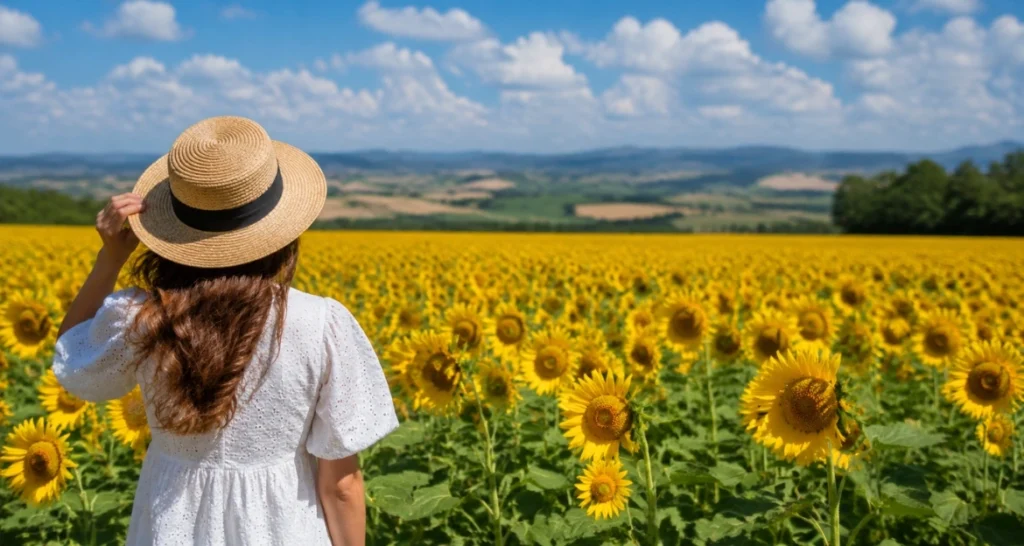
Here is a quick comparison of the main regions, so you can match your available time to the right location.
| Region | Best Location | Travel Time from Brisbane | Entry Type | Best Season |
|---|---|---|---|---|
| Southern Downs | Warwick & Allora | 2–2.5 hrs | Free roadside | Jan–Feb |
| Darling Downs | Clifton / Nobby | 2 hrs | Free | Jan–Feb |
| Scenic Rim | Kalbar | 1.5–2 hrs | Paid / Festival | Feb–Mar |
| Gold Coast Border | Cudgen | 2–2.5 hrs | Paid farm | Jan–Feb |
If you only have one day, the Scenic Rim’s Kalbar farms are the easiest option from Brisbane, since access and parking are already set up for visitors. If you want the classic wide-open paddock look, the Southern Downs and Darling Downs give a more authentic, working-farm feel.
Sunflower Photography Guide
Some of the best sunflower photography has to offer are the very fields covered above — wide, open paddocks with few obstructions and strong natural light.
Quick Answer: Shoot Sunflower Fields in the first hour after sunrise using a mid-range aperture around f/11 for landscape shots, or a wide aperture like f/2.8 to blur the background behind a single flower or a person.
Best Camera Settings
- Aperture (landscape shots): Around f/8 to f/11 keeps the full field and sky in sharp focus.
- Aperture (portrait/close-up shots): f/2.8 to f/4 blurs the background and makes a single flower or subject stand out.
- Golden hour: Shooting within an hour of sunrise or sunset gives softer shadows and warmer tones than harsh midday sun.
Composition Tips
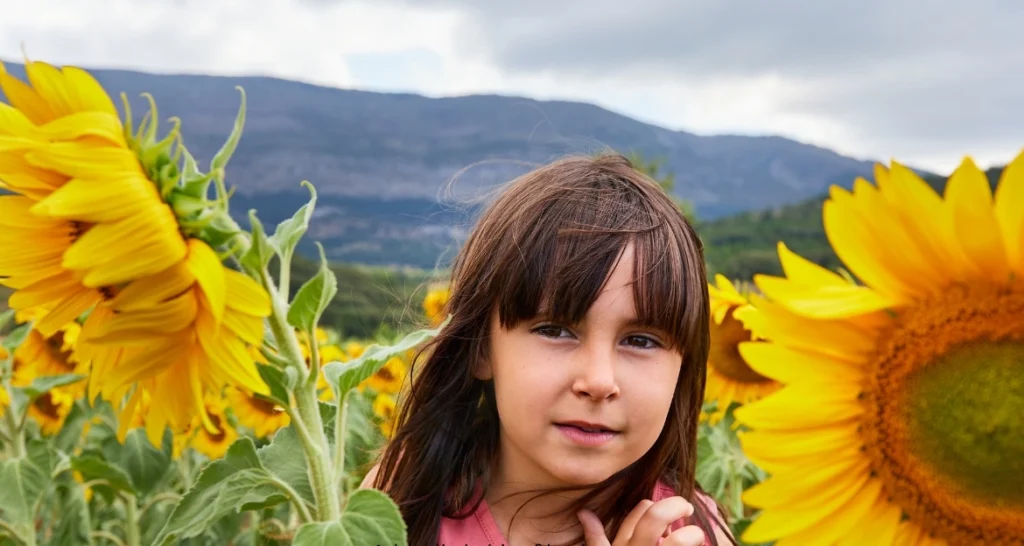
- Human subject contrast: Placing a person in bright clothing against the yellow field adds scale and a focal point.
- Leading rows: Shooting down a planted row draws the eye through the frame toward the horizon.
- Depth layering: Combining a close, in-focus flower with a soft, blurred field behind it gives images more depth than a flat wide shot.
A polarising filter is worth packing too — it cuts glare off the petals and deepens the blue of the sky, which matters a lot under Queensland’s strong summer sun.
Travel Tips for Visiting Sunflower Fields
- Gumboots or old sneakers: Fields are often muddy after rain, even when the surface looks dry.
- Sun protection: Hat, sunscreen and water are essential — most fields offer zero shade.
- Bug and bee precautions: Sunflowers attract bees in large numbers; move calmly and avoid strong perfume.
- Parking and roadside safety: Never stop directly on the highway shoulder; use designated parking or a clearly safe pull-off.
- Permission etiquette: Roadside paddocks are still private property — ask before entering, and stick to marked or ticketed areas at paid farms.
Sunflower Field Road Trip Itinerary
Sample 1-Day Itinerary
- Morning: Start with the Darling Downs route through Clifton and Nobby while the light is still soft.
- Afternoon: Head to the Warwick and Allora fields along Freestone Road.
- Sunset: Finish at Emu Vale for a quieter, golden hour close to the day.
Sample 2-Day Itinerary
- Day 1: Base yourself in the Scenic Rim and spend the day at Kalbar’s sunflower farms.
- Day 2: Drive out to the Southern Downs for Warwick and Allora before heading back to Brisbane.
| Stop | Suggested Time | Approx. Duration |
|---|---|---|
| Darling Downs (Clifton/Nobby) | 7:00 AM – 10:00 AM | 3 hrs |
| Warwick & Allora fields | 11:30 AM – 2:00 PM | 2.5 hrs |
| Emu Vale | 5:00 PM – 6:30 PM | 1.5 hrs |
Farm Rules & Etiquette
- No crop damage: Sunflowers are a real, working crop for most farmers — treat every field like someone’s income, because it is.
- Respect private farmland: Free roadside fields are not automatically open for visitors to walk into.
- Stay on marked areas: At ticketed farms, keep to designated rows and paths.
- Ask permission where required: If a field looks accessible but has no signage, it is always safer to check with the farmer first.
Final Thoughts: Planning Your Sunflower Fields Trip
Australia’s sunflower season may be short, but it is one of the most rewarding times to get out of the city and onto the backroads of Queensland. From the free roadside paddocks around Warwick and Allora, to the self-guided Darling Downs route through Clifton and Nobby, to the festival-style farms at Kalbar and the coastal option near Cudgen, there is a sunflower field for every kind of traveller — whether you want a quiet, unpolished paddock or a full day-trip experience with food and photo spots.
The window to catch them at their best is narrow, usually stretching from January into February and sometimes into March depending on rainfall, so a little planning goes a long way. Check bloom updates the week before you travel, go early for the best light, and treat every field — free or paid — as someone’s working farmland. Planning a longer trip? Browse more places to visit in Australia to build a full itinerary around your sunflower season getaway.
Pack the sunscreen, fill the tank, and let a Queensland summer road trip end exactly where it should: standing in a sea of gold, camera in hand, chasing the last of the season before the fields turn again.
Sunflower Fields FAQs
1. When is the best time to visit Sunflower Fields in Australia?
Ans: The best window is generally mid-January through February, when most Queensland farms hit peak bloom, though exact timing shifts with rainfall each year.
2. Where can I see Sunflower Fields near Brisbane?
Ans: The closest reliable options are in the Scenic Rim (Kalbar), roughly 1.5–2 hours away, and the Southern Downs (Warwick and Allora), around 2–2.5 hours from Brisbane.
3. Are sunflower farms in Australia free to visit?
Ans: It depends on the location. Roadside paddocks in the Southern Downs and Darling Downs are typically free to view from public roads, while farms like those in Kalbar often run paid, ticketed entry.
4. How long do sunflowers stay in bloom?
Ans: A single sunflower field usually stays in full bloom for around two to three weeks before the flowers begin to droop and the crop is harvested.
5. Can you walk inside Sunflower Fields?
Ans: Only where it is explicitly allowed, such as ticketed farms with marked rows. Roadside paddocks are private property, and walking in without permission can damage the crop.
6. What should I wear when visiting Sunflower Fields?
Ans: Closed shoes or gumboots, a hat, sunscreen, and light, breathable clothing are recommended, since fields offer little shade and can be muddy after rain.
7. Are Sunflower Fields open all year round in Australia?
Ans: No. Sunflowers are a seasonal crop, generally visible only from late November through March, depending on the region and that year’s planting schedule.