

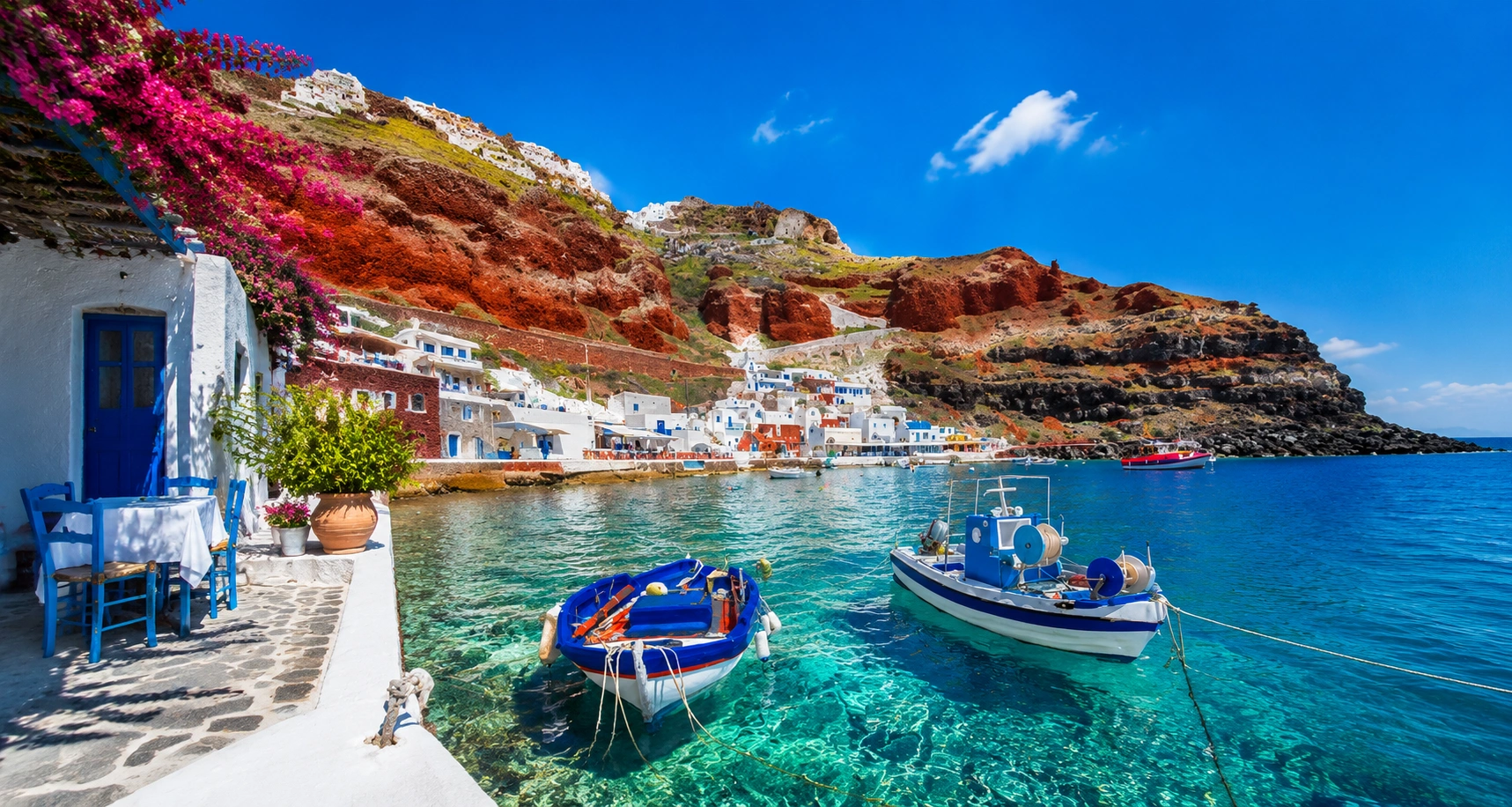
Santorini travel guide has a way of looking exactly like its photographs and still catching you off guard. The whitewashed villages spill down the edge of a volcanic caldera, blue-domed churches catch the last light of the day, and the sea drops away into deep blue nothing a few hundred metres below your hotel balcony. It’s one of the few places that genuinely earns its reputation.
But Santorini is also a small island trying to host an enormous number of visitors, and that creates real friction. Cruise ships can dump thousands of day-trippers into Fira and Oia by mid-morning, hotel prices swing wildly between June and November, and the road network, transfers, and ferry schedules can turn a relaxing holiday into a logistics puzzle if you show up unprepared.
This Santorini travel guide is built to solve that problem. It walks through everything you need before you land: the best time to visit Santorini, where to stay in Santorini depending on your budget and travel style, how to get around Santorini without overpaying for taxis, the things to do in Santorini that are actually worth your time, the best beaches in Santorini, and a ready-made Santorini itinerary you can follow for 2, 3, or 5 days.
Whether this is your first trip to the Cyclades or you’re returning to see a different side of the island, the goal here is the same: plan it right before you go, so you spend less time figuring things out on the ground and more time watching the sun drop behind the caldera with a glass of Assyrtiko in hand.
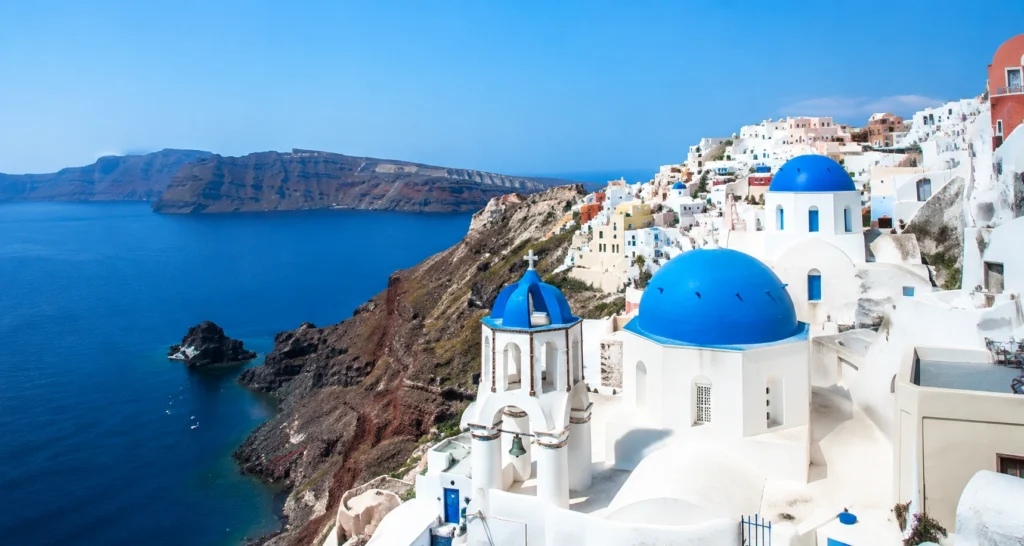
Best Time to Visit Santorini
Timing is the single biggest factor in how your trip actually feels. The island itself doesn’t change much between April and October, but the crowds, prices, and comfort levels do — dramatically. Here’s how the three main travel windows compare.
Peak Season (June–August)
This is Santorini Travel Guide at full capacity. Temperatures regularly climb past 30°C, hotel rates in Oia and Imerovigli can double or triple compared to spring rates, and multiple cruise ships often dock on the same day, pushing thousands of extra visitors into Fira’s narrow streets between 10 am and 4 pm.
Sunset spots in Oia get genuinely crowded — people start claiming a spot at the castle viewpoint up to two hours early. If you’re set on visiting in summer, book accommodation and any boat tours at least two to three months ahead, and plan to see Oia early in the morning or very late at night to dodge the worst of the crowds.
Shoulder Season (April–May & September–October) — Best Overall
This is the window most travel writers and repeat visitors quietly agree on, and for good reason. Daytime temperatures sit comfortably between 20–26°C, the sea is warm enough to swim in from late May through October, hotel prices are noticeably lower than peak summer, and popular viewpoints are still busy but manageable.
Late September into early October is arguably the sweet spot: the crowds thin out after the European school-holiday rush, but almost everything — restaurants, boat tours, ATV rentals, wine tastings — is still fully open and running normal hours.
Off Season (November–March)
Santorini Travel Guide quiets down dramatically in winter. Many hotels, especially smaller family-run properties in Oia and Imerovigli, close completely between November and March or April. Ferry schedules are reduced and more vulnerable to cancellation from strong winds, and several restaurants and tour operators shut for the season.
Winter can still work well for photographers, remote workers, or anyone who genuinely just wants a quiet, moody version of the island with rock-bottom prices — but it requires more research to confirm what’s actually open before you book flights.
| Month | Avg. Temp (°C) | Sea Temp (°C) | Crowd Level | Notes |
|---|---|---|---|---|
| April | 17–20 | 16 | Low | Wildflowers bloom, some hotels still reopening |
| May | 20–24 | 19 | Low–Medium | Great value, warm days, cool evenings |
| June | 24–28 | 22 | High | Peak season begins, book early |
| July | 27–30 | 24 | Very High | Hottest month, heavy cruise traffic |
| August | 27–31 | 25 | Very High | Busiest month of the year |
| September | 24–28 | 24 | Medium–High | Warm sea, thinning crowds late in month |
| October | 20–24 | 21 | Medium | Best value shoulder-season month |
| November | 16–19 | 19 | Low | Many hotels start closing |
| December–February | 10–15 | 16 | Very Low | Most tourist infrastructure closed |
| March | 13–16 | 16 | Low | Island slowly reopening for the season |
Featured Snippet Answer: The best time to visit Santorini is late April to May or September to early October, when the weather is warm, the sea is swimmable, and crowds are noticeably lighter than peak summer.
How Many Days Do You Need in Santorini?
Santorini Travel Guide is small — you can drive from one end to the other in under an hour — but how much time you need depends entirely on your pace and priorities.
2 Days (Rushed Highlights)
Two days is enough to see Oia, catch one sunset, walk part of the caldera path, and spend an afternoon at a beach. It’s a workable option if Santorini Travel Guide is one stop on a wider Greek islands trip, but you’ll be moving fast and skipping most of the smaller villages.
3–4 Days (Recommended)
This is the range most first-time visitors land on, and it’s genuinely the right amount of time. Three to four days lets you comfortably split time between Oia, Fira, and Imerovigli, fit in the Fira to Oia hike, take a caldera boat tour, visit Akrotiri, and still have a slower beach day without feeling rushed.
5+ Days (Slow Travel + Hidden Gems)
Five days or more opens up the quieter side of the island — Pyrgos, Megalochori, Vlychada, and a proper wine-tasting afternoon — without cramming everything into back-to-back days. It’s the better option if you want downtime by the pool as much as sightseeing.
Featured Snippet Answer: The ideal number of days in Santorini Travel Guide is 3 to 5 days for first-time visitors — enough time to see the main villages, hike the caldera path, and fit in at least one boat tour or beach day without rushing.
Where to Stay in Santorini
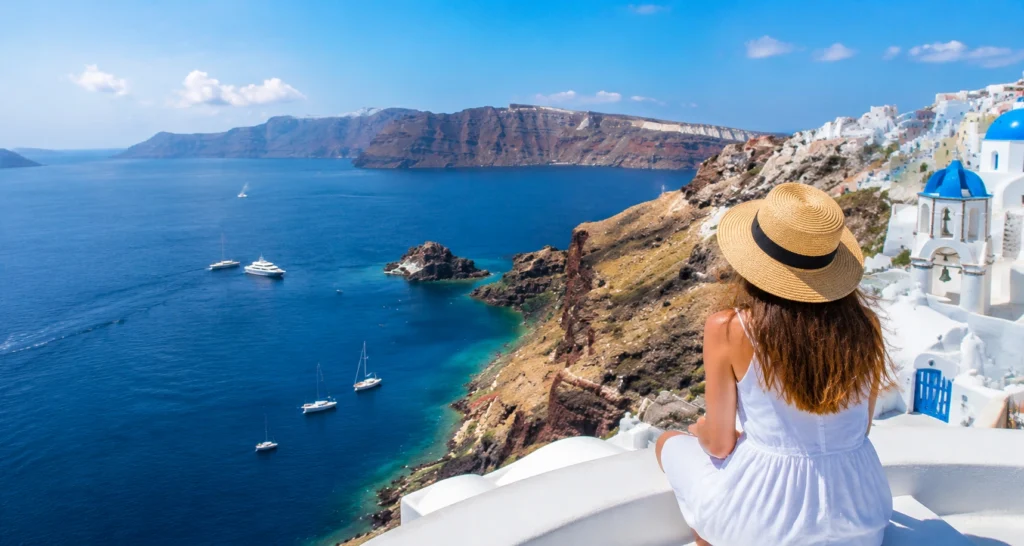
Picking where to stay in Santorini matters more here than on most islands, because the town you choose shapes your whole trip — your sunset view, how far you’ll walk each day, and how much you’ll spend on transfers.
Oia — Luxury + Sunset Views
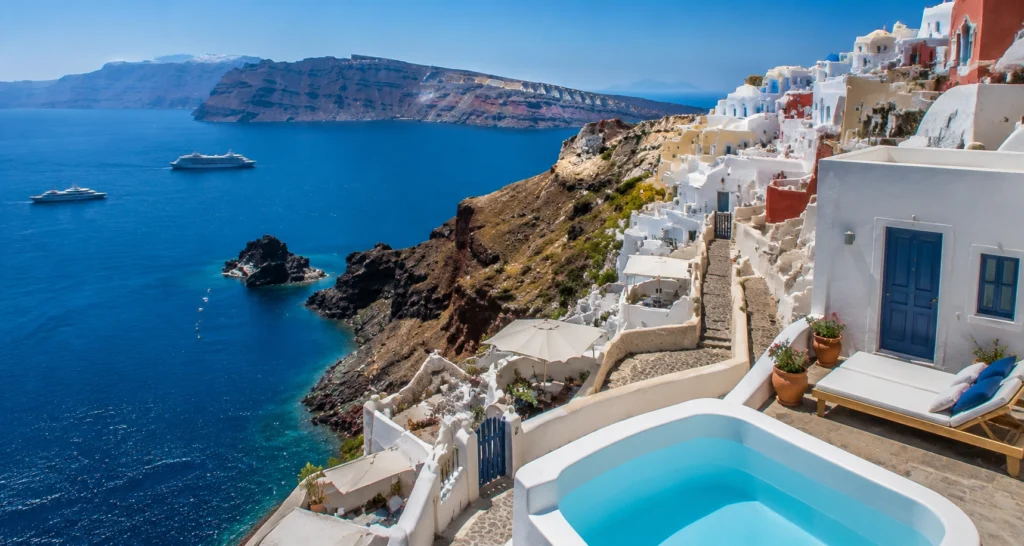
Oia is the postcard: cave suites carved into the cliff, infinity pools facing the caldera, and the most famous sunset viewpoint on the island. It’s also the most expensive base by a wide margin, and the village gets seriously crowded with day-trippers between late morning and early evening.
Best for: honeymooners, luxury travellers, and anyone whose main priority is a caldera-view sunset from their own balcony.
Imerovigli — Best Views + Romance
Sitting on the highest point of the caldera rim, Imerovigli offers arguably better, less obstructed views than Oia, with a fraction of the foot traffic. It’s quieter in the evenings and closer to Fira’s restaurants and nightlife than Oia is, at a slightly lower price point.
Best for: couples who want caldera views without Oia’s crowds or price tag.
Fira — Best for First-Time Visitors + Budget Balance
Fira is the island’s hub — the main bus terminal, the widest choice of restaurants and bars, and the easiest access to day trips and car rental offices. It’s not the quietest or most romantic base, but it’s the most practical, and hotel prices span a much wider range than Oia’s.
Best for: first-time visitors, solo travellers, and anyone who wants easy access to transport without booking a car.
Firostefani — Quiet + Central
A short, flat walk from Fira, Firostefani offers caldera views and a noticeably calmer atmosphere while still keeping you close to Fira’s restaurants and bus connections. It’s an underrated middle ground that rarely gets mentioned in guides.
Best for: travellers who want Fira’s convenience with a quieter home base.
Kamari / Perissa — Beach Budget Option
These black-sand beach towns on the island’s east and south coasts sit at sea level rather than on the caldera rim, which means significantly cheaper accommodation and direct beach access, at the cost of the classic clifftop view.
Best for: families, budget travellers, and anyone prioritising beach time over caldera views.
Megalochori & Pyrgos — Traditional Villages
Inland and largely untouched by mass tourism, these villages offer narrow stone lanes, traditional architecture, and some of the island’s best wineries within walking distance. There’s no caldera view, but there’s also none of the crowding.
Best for: slower trips, wine lovers, and travellers who’ve already seen the caldera towns on a previous visit.
| Area | Price Level | Crowd Level | View Quality | Transport Ease |
|---|---|---|---|---|
| Oia | $$$$ | Very High (daytime) | Excellent | Moderate — bus/car needed |
| Imerovigli | $$$ | Low–Medium | Excellent | Moderate — bus/car needed |
| Fira | $$–$$$ | High | Very Good | Easiest — main bus hub |
| Firostefani | $$–$$$ | Low–Medium | Very Good | Easy — near Fira |
| Kamari / Perissa | $–$$ | Medium | None (sea level) | Easy — regular buses |
| Megalochori / Pyrgos | $–$$ | Low | None (inland) | Car recommended |
Featured Snippet Answer: The best place to stay in Santorini Travel Guide depends on your travel style: choose Oia for luxury caldera views, Fira for convenience and nightlife, Imerovigli for quieter romance, or Kamari and Perissa for a cheaper, beach-focused base.
How to Get Around Santorini
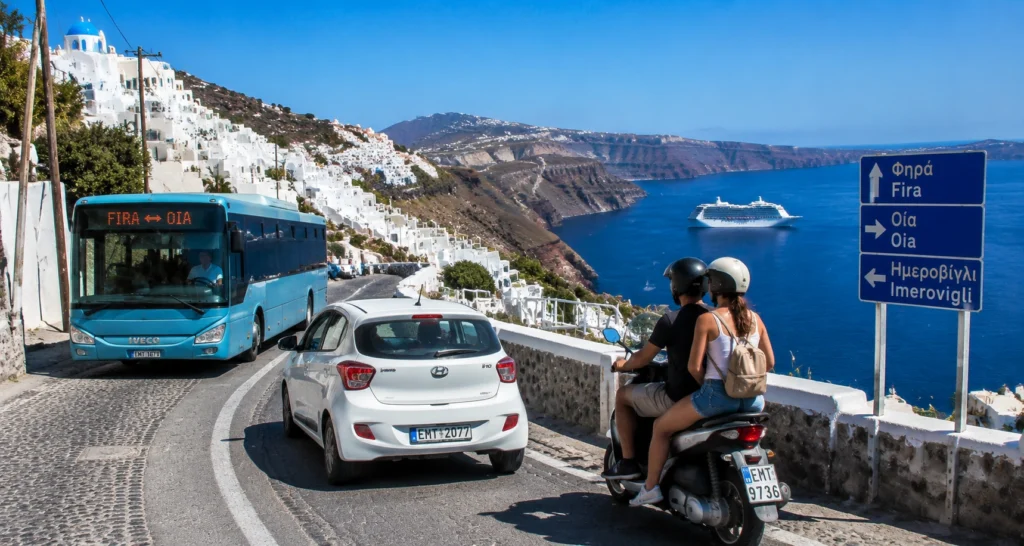
Figuring out how to get around Santorini early saves both money and time. The island is compact, but the caldera-rim road is narrow, winding, and gets congested in peak months, so the right transport mix depends on how many villages you plan to cover.
Bus System — Cheapest Option
KTEL buses connect Fira to almost every major village and beach, running frequently in summer and less often off-season. Tickets are inexpensive and bought on board, but buses can be packed at peak times and don’t run late into the night from every route.
Car Rental — Best Flexibility
Renting a car gives you full control over timing, which matters most for catching sunrise at Pyrgos or sunset in Oia without competing for bus seats. Parking in Oia and Fira is limited during the day, so plan to arrive early or park slightly outside the village centre.
ATV & Scooter — Tourist-Friendly but Risky
Quad bikes and scooters are a popular, cheaper alternative to a car, and they’re easier to park. They also come with real risk — the caldera roads have sharp drops, loose gravel, and unpredictable tour buses, and this is where a large share of tourist injuries on the island happen. A full licence is legally required to rent one.
Taxi & Transfers — Expensive but Convenient
Santorini Travel Guide has a genuinely limited taxi fleet for its visitor numbers, so prices are high and availability can be tight during peak sunset hours. Pre-booking an airport or ferry transfer in advance is far more reliable than trying to flag one down in town.
Walking Routes — The Fira to Oia Hike
The caldera-edge footpath connecting Fira to Oia is free, scenic, and doesn’t require any vehicle at all — just sturdy shoes and an early start before the heat sets in.
| Transport Option | Approx. Cost | Best For | Downsides |
|---|---|---|---|
| Local Bus | €1.80–€2.50 per ride | Budget travel, Fira-based stays | Can be crowded, limited late routes |
| Car Rental | €35–€70 per day | Full-island flexibility | Limited parking in Oia/Fira |
| ATV / Scooter | €20–€40 per day | Short hops, budget flexibility | Higher accident risk, license required |
| Taxi | €15–€40 per trip | Late-night transfers, convenience | High demand, limited supply |
| Walking (Fira–Oia) | Free | Scenic, active travellers | 3–4 hours, exposed to sun/heat |
As a rough travel-time guide: Fira to Oia is about 30 minutes by car or bus (or 3–4 hours walking the caldera path), Fira to Akrotiri is roughly 25 minutes, Fira to Kamari is 15 minutes, and Fira to Pyrgos is about 10 minutes — the whole island fits inside a one-hour drive end to end.
Featured Snippet Answer: The best way to get around Santorini Travel Guide for most visitors is a mix of buses for short daily trips and a rental car for 1–2 days to reach sunrise, sunset, and wine-region spots on your own schedule.
Top Things to Do in Santorini
There’s plenty to fill a week here, but a handful of experiences make up the core of most people’s list of things to do in Santorini. Here’s what’s actually worth your time — and how to do each one well.
Walk the Fira to Oia Hike
The Fira to Oia hike runs roughly 10 km along the caldera rim, passing through Firostefani, Imerovigli, and a quiet stretch before Oia. It’s a moderate walk — mostly flat with a few steep sections — and takes 3 to 4 hours at an easy pace. Start by 8 am in summer to avoid the worst heat, carry water, and wear proper shoes rather than sandals; parts of the path are loose gravel.
Watch Sunset in Oia
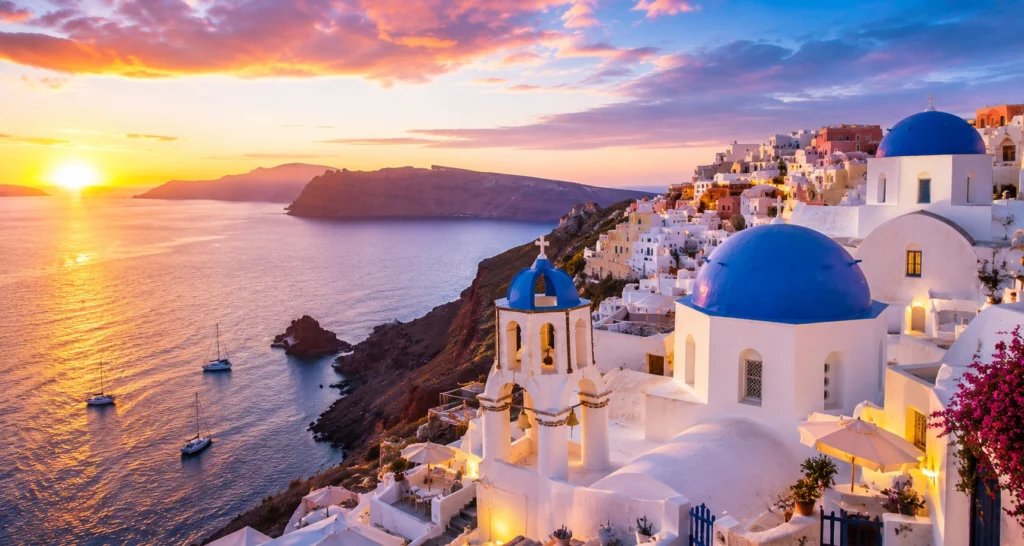
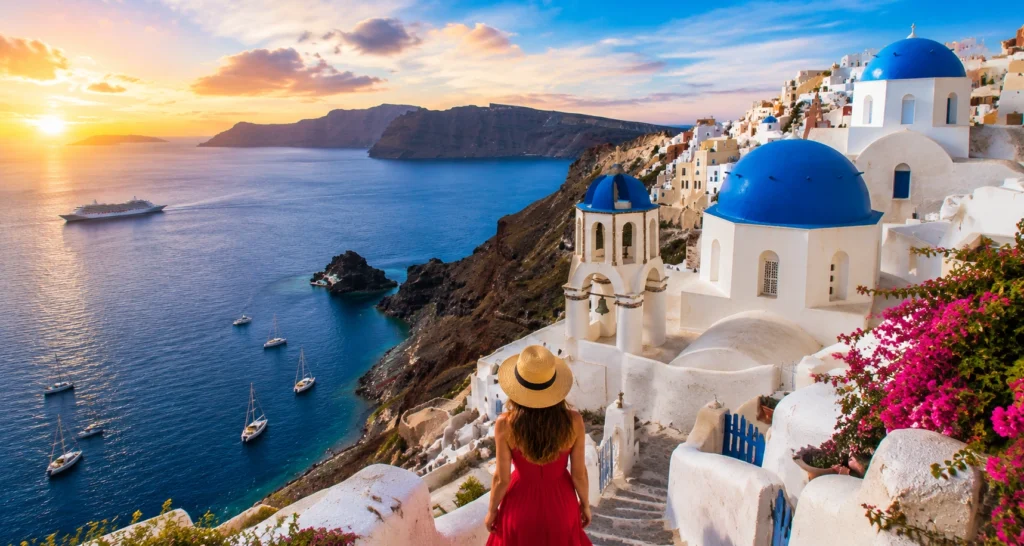
The Oia sunset is the island’s single most photographed moment, and there’s more than one way to experience it. The ruined Byzantine Castle viewpoint is the classic (and most crowded) spot; a caldera-view restaurant with a reserved table is a calmer, paid alternative; and a sunset boat cruise puts you on the water looking back at the village instead of standing shoulder-to-shoulder in the crowd.
Caldera Boat Cruise
Most caldera cruises combine a stop at the still-active Nea Kameni volcano, a swim in the naturally warm (and slightly sulphurous) waters near Palea Kameni, and a stop in Thirassia before sailing back for sunset. Half-day and full-day options are both widely available from Fira, Ammoudi, and Vlychada.
Explore Oia Village
Beyond the sunset crowd, Oia’s blue-domed churches, narrow whitewashed alleys, and small art galleries reward an early-morning or late-evening wander when the day-trip crowds have thinned out. It’s genuinely one of the most photogenic villages in the Mediterranean.
Visit Fira & Imerovigli
Fira has the island’s best concentration of restaurants, rooftop bars, and nightlife, plus the cable car down to the old port. Imerovigli, just a short walk away, offers some of the best uninterrupted caldera views on the island without Oia’s density of crowds.
Akrotiri Archaeological Site
Often called the “Greek Pompeii,” Akrotiri is a Minoan-era settlement that was buried and remarkably preserved by volcanic ash from the same eruption that shaped Santorini Travel Guide caldera around 3,600 years ago. A covered walkway lets you see multi-storey buildings, frescoes, and streets largely intact — it’s one of the most significant archaeological sites in the Aegean.
Wine Tasting Tour
Santorini Travel Guide: Volcanic soil produces genuinely distinctive wines, especially the crisp, mineral Assyrtiko whites grown in low, basket-shaped vines that protect the grapes from wind. Santo Wines, perched on the caldera rim, is the island’s largest and most visited winery, but smaller family estates around Pyrgos and Megalochori offer a more intimate tasting experience.
Pyrgos & Megalochori Villages
These inland villages preserve the traditional Cycladic architecture that Oia and Fira have largely built over with hotels and shops. Climbing to the Venetian castle ruins above Pyrgos gives a 360-degree island view that rivals the caldera towns, without the crowds.
Ammoudi Bay Experience
Down a steep set of steps below Oia, Ammoudi Bay is a small fishing harbour lined with excellent seafood tavernas right at the water’s edge. It’s also a popular spot for cliff jumping off the rocks near the small chapel — a fun stop, but one to approach carefully and only where locals are already jumping.
Featured Snippet Answer: The top things to do in Santorini include watching the Oia sunset, hiking the Fira to Oia caldera path, taking a volcano and hot-springs boat tour, visiting Akrotiri, and tasting Assyrtiko wine at a caldera-view winery.
Best Beaches in Santorini
Because of its volcanic origin, the best beaches in Santorini look nothing like the white-sand beaches elsewhere in the Cyclades — think red, black, and dark grey volcanic sand and pebbles instead.
Red Beach — Unique Cliffs
Backed by dramatic rust-red volcanic cliffs near Akrotiri, Red Beach is small, striking, and one of the most photographed beaches on the island. It gets crowded fast and has limited shade and facilities, so an early visit works best.
Perissa & Perivolos — Best Black Sand Beaches
These connected south-coast beaches offer long stretches of black volcanic sand, organised sunbeds, and a solid strip of beach bars and restaurants — the most developed and comfortable beach setup on the island.
Kamari Beach — Family-Friendly
Kamari’s black sand beach has a long promenade of restaurants and shops right behind it, calm, shallow water in sections, and easy bus access from Fira, making it a solid, low-effort choice for families.
Vlychada Beach — Quiet + Scenic
Vlychada is known for its striking, wind-carved lunar-looking cliffs and a noticeably quieter atmosphere than Perissa or Kamari, plus a small marina nearby if you’re departing on a boat tour from this side of the island.
| Beach | Sand/Surface Type | Crowd Level | Facilities |
|---|---|---|---|
| Red Beach | Red volcanic pebble/sand | High | Minimal — limited shade |
| Perissa / Perivolos | Black sand | Medium–High | Extensive — sunbeds, bars, restaurants |
| Kamari | Black sand | Medium | Good — promenade, family-friendly |
| Vlychada | Grey sand, carved cliffs | Low | Limited — a few beach bars |
Suggested 2–5 Day Santorini Itinerary
Here’s a practical Santorini itinerary built around sunrise, sunset, and realistic transport timing rather than an impossible checklist.
2-Day Itinerary (Quick Highlights)
- Day 1: Arrive, settle into Fira, explore Fira & Imerovigli in the afternoon, sunset from Imerovigli.
- Day 2: Morning at Akrotiri or Red Beach, afternoon in Oia village, sunset at the Oia castle viewpoint.
3-Day Itinerary (Balanced)
- Day 1: Arrive, explore Fira, sunset in Firostefani or Imerovigli.
- Day 2: Morning caldera boat cruise (volcano + hot springs), evening free in Oia.
- Day 3: Fira to Oia hike in the morning (start early), afternoon rest, sunset at Oia Castle.
5-Day Itinerary (Full Experience)
- Day 1: Arrive, settle in, sunset in Fira.
- Day 2: Akrotiri archaeological site + Red Beach.
- Day 3: Caldera boat cruise with volcano hike and hot springs swim.
- Day 4: Fira to Oia hike, afternoon rest, sunset at Oia Castle.
- Day 5: Wine tasting around Pyrgos/Megalochori, sunset dinner in Imerovigli.
Santorini Budget & Costs
Your Santorini Travel Guide will vary enormously depending on where you stay — a caldera-view suite in Oia can cost five times as much as a comparable room in Kamari.
Hotel Prices
Budget rooms away from the caldera start around €60–€100 a night, mid-range caldera-adjacent hotels run €150–€300, and luxury caldera-view suites in Oia regularly exceed €400–€800 in peak season.
Food Costs
A casual taverna meal runs €12–€20 per person, while caldera-view restaurants in Oia or Imerovigli often charge €40–€70 per person for dinner with a view.
Transport Costs
Buses cost roughly €2 per ride, car rental averages €35–€70 per day, and airport or port transfers typically run €20–€40 depending on distance.
Tour Costs
A half-day caldera boat cruise typically costs €60–€100 per person, wine tastings run €25–€60 depending on the winery, and ATV rentals cost roughly €20–€40 per day.
| Category | Budget (per day) | Mid-Range (per day) | Luxury (per day) |
|---|---|---|---|
| Accommodation | €60–€100 | €150–€300 | €400–€800+ |
| Food | €25–€40 | €60–€100 | €120–€200+ |
| Transport | €10–€20 | €35–€70 | €70–€120 (private transfers) |
| Activities/Tours | €0–€30 | €60–€100 | €150+ |
| Estimated Total | €95–€190 | €300–€570 | €740–€1,200+ |
Travel Tips & Mistakes to Avoid
Don’t Stay Only in Oia
Basing yourself exclusively in Oia means paying peak prices and dealing with the heaviest crowds on the island. Splitting a longer stay between Oia and Fira or Imerovigli gives a more balanced trip.
Don’t Rely on Taxis
The taxi fleet is small relative to demand, especially around sunset. Book transfers in advance or plan around the bus schedule rather than assuming a taxi will be available on short notice.
Book Sunset Restaurants Early
Caldera-view tables for sunset dinner in Oia and Imerovigli can book out weeks ahead in peak season. Reserve as soon as your dates are confirmed.
Avoid Peak Sunset Crowd Timing Mistakes
Arriving at the Oia castle viewpoint less than an hour before sunset in summer usually means no clear view. Arrive at least 90 minutes early, or choose a quieter alternative viewpoint in Imerovigli or Firostefani instead.
Plan Ferry Transfers Carefully
Ferries between the Greek islands can be delayed or cancelled due to wind, particularly in shoulder season. Avoid booking a same-day flight connection right after a ferry arrival, and build in a buffer day where possible.
FAQs
1. How many days do you need in Santorini Travel Guide?
Ans: Most first-time visitors should plan for 3 to 5 days — enough time to see Oia, Fira, and Imerovigli, fit in the caldera hike, and take at least one boat tour without rushing.
2. What is the best time to visit Santorini Travel Guide?
Ans: Late April to May and September to early October offer the best balance of warm weather, swimmable seas, and lighter crowds compared to the June–August peak season.
3. Is Santorini Travel Guide expensive?
Ans: It can be, particularly for caldera-view accommodation in Oia. Budget travellers can still manage a comfortable trip for under €100 a day by staying in Kamari or Perissa and eating at local tavernas.
4. What is the best area to stay in Santorini Travel Guide?
Ans: It depends on your priorities: Oia for luxury and sunset views, Fira for convenience and nightlife, Imerovigli for quieter caldera views, or Kamari/Perissa for a cheaper beach-based stay.
5. Do you need a car in Santorini Travel Guide?
Ans: Not strictly, since buses connect the main villages, but a rental car for a day or two gives far more flexibility for sunrise, sunset, and wine-region visits on your own schedule.
6. What is Santorini Travel Guide famous for?
Ans: Santorini Travel Guide is best known for its volcanic caldera, whitewashed cliffside villages, blue-domed churches, and the Oia sunset — plus the ancient Akrotiri site and its distinctive volcanic-soil wines.
Conclusion
Santorini’s appeal isn’t really about ticking off a list — it’s the caldera view from your balcony at breakfast, the walk between whitewashed villages, and the moment the sky turns orange over the volcano every evening. That’s the experience most people come for, and it holds up in person.
The difference between a stressful trip and a genuinely relaxing one usually comes down to planning: picking the right season, choosing a base that matches your travel style, and building in enough time to slow down rather than rushing between viewpoints.
If you can manage it, give the island 3 to 5 days. It’s enough time to see the highlights this Santorini travel guide covers, and still leave room to sit somewhere quiet, order a glass of local Assyrtiko, and just watch the caldera do its thing.